When pallet labels start failing, the whole floor feels it
In a busy warehouse, barcode labels carry more than a product code. They link receiving, put-away, bin checks, picking, packing and dispatch. If a label lifts on a coldroom crate, smudges on a humid shift, or prints with a poor scan line, staff lose time and stock counts drift. We work with label stock and roll formats that suit the pace of warehouse movement in Durban, Johannesburg, Cape Town, Pretoria and Pietermaritzburg.
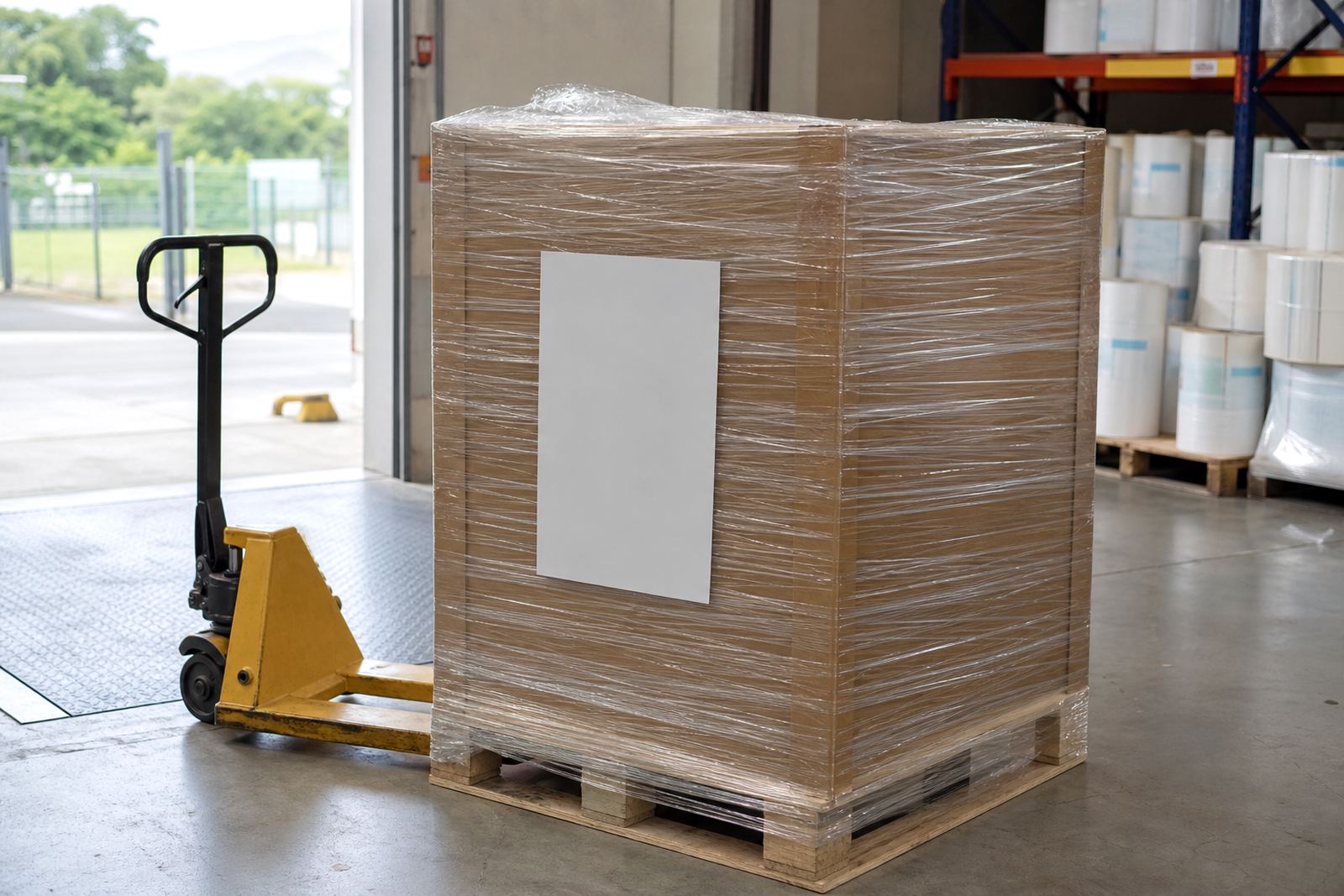
Most warehouse set-ups need labels that read well on corrugate, plastic tubs, shrink-wrapped pallets and shelf edges. The paper or synthetic face stock must suit the surface, while the adhesive needs enough grip for dusty cartons, cool rooms or oily containers. In coastal areas, higher humidity can weaken light adhesives, so the right stock matters. We also look at ribbon type, scanner readability and how the label behaves after handling, stacking and transport.
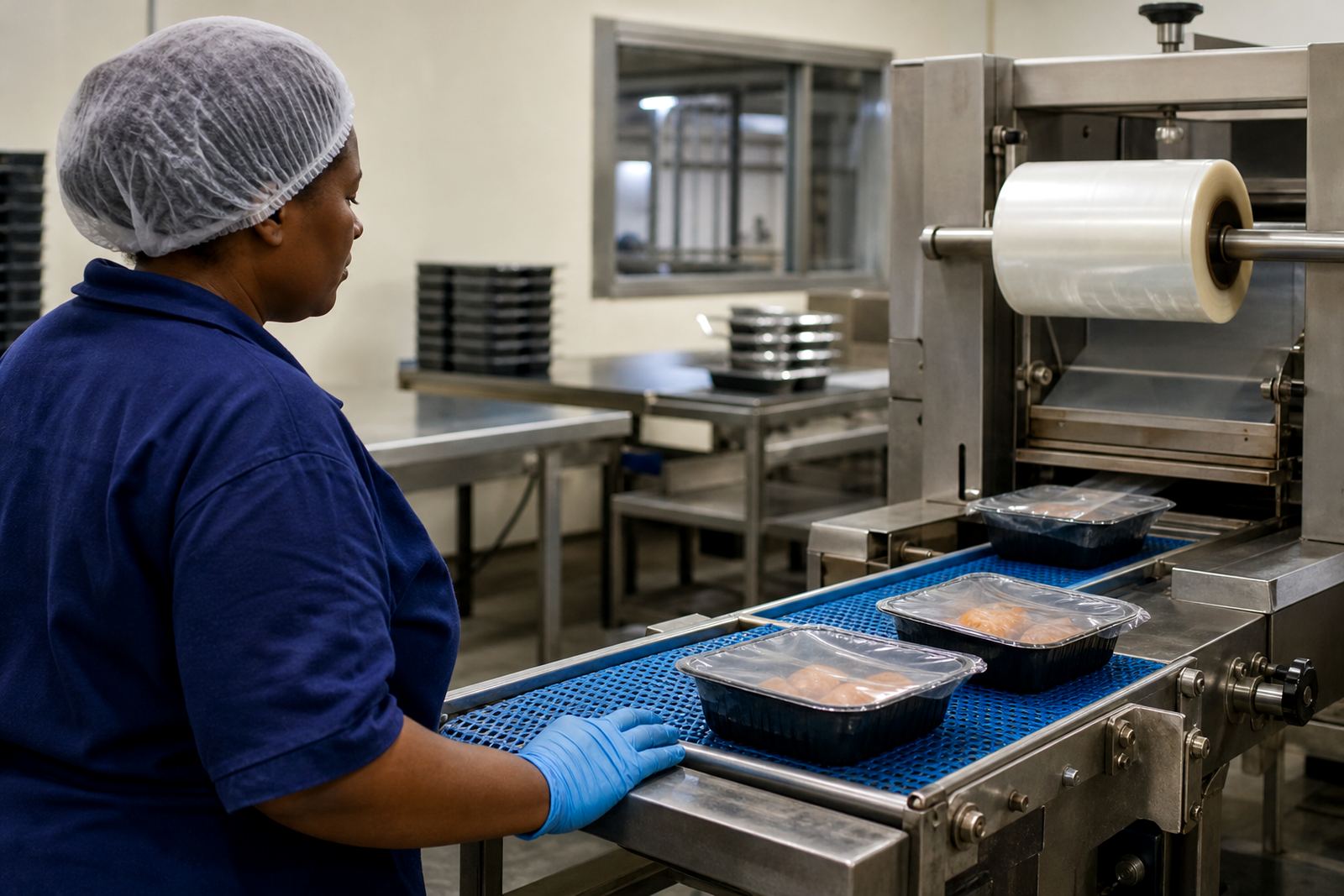
The print set-up that usually sits on the packing line
Warehouse barcode work is normally built around thermal printing. Direct thermal rolls are used where labels only need a short life, such as dispatch labels, shelf tickets and same-day movement labels. Thermal transfer rolls are used where the barcode must stay sharp for longer periods, especially on stock that is stored, frozen, moved between sites or checked more than once. The printer choice, ribbon match and label material all need to line up, otherwise the barcode can look fine at first and then fade or lift later.
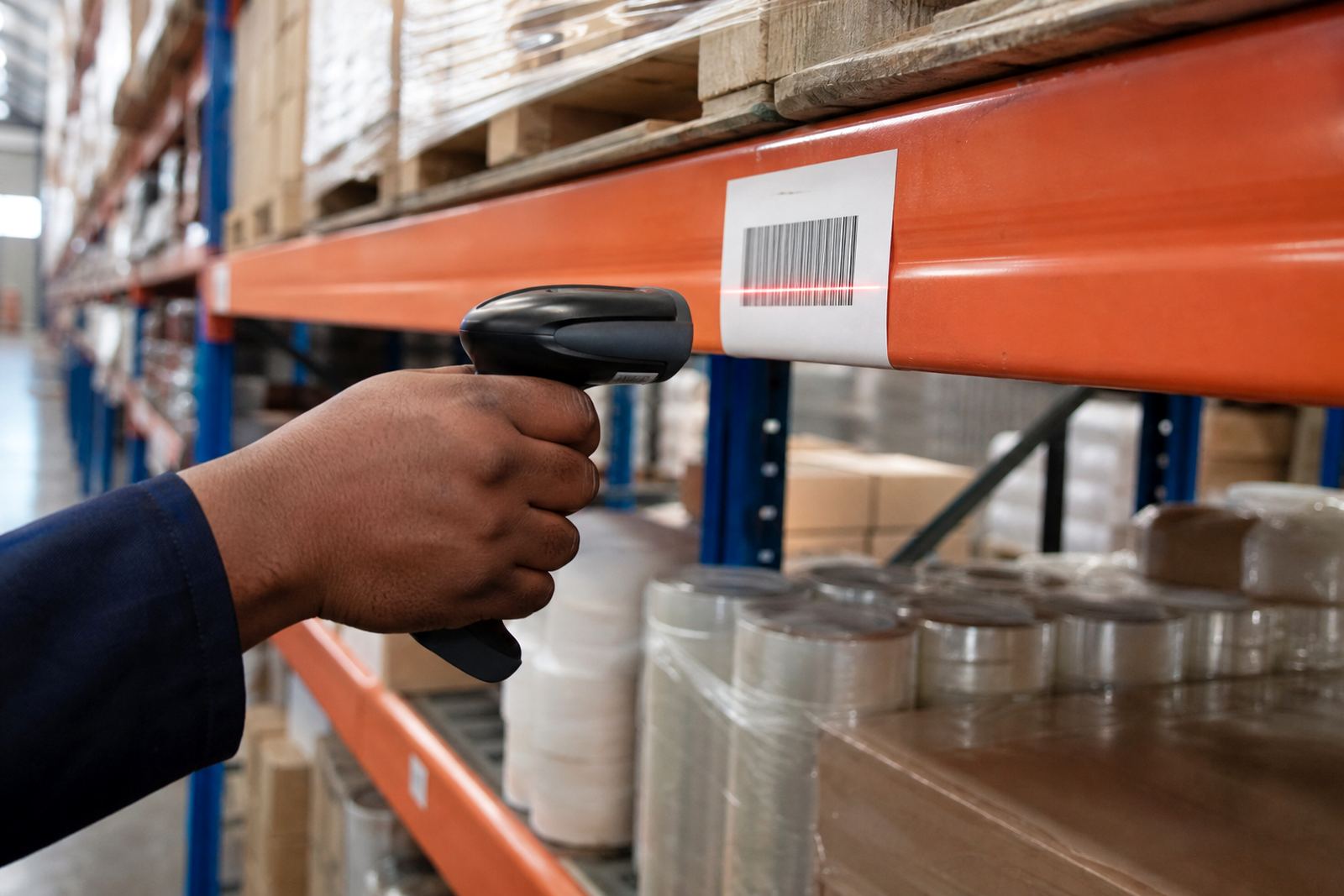
Typical equipment includes benchtop and industrial thermal printers, handheld scanners, conveyor print stations and manual applicators. Core size must match the printer, and roll diameter must suit the holder and the operator's workflow. Some printers take 25 mm cores, others use 40 mm or 76 mm cores, with different outer roll limits. We help with printer fit checks, winding direction and roll length planning so the label feed stays steady instead of jamming mid-shift.
- Direct thermal for short-life labels and fast dispatch areas
- Thermal transfer for longer-lasting barcodes and storage labels
- Permanent adhesive for most warehouse cartons and racking labels
- Removable adhesive for temporary bin moves and stock checks
- Synthetic face stock where moisture, rubbing or handling is heavier
How to plan labels for bins, racks and dispatch lanes
A warehouse barcoding layout should be planned around how staff move, not only around the printer. Bin labels need to be readable from the aisle, pallet labels need to scan without lifting a load, and dispatch labels need enough space for code bars, item text and route notes. Small layout errors can create scanning failures, repeated reprints and confusion on the floor. We usually recommend a sample roll before full run so the warehouse team can test size, contrast and placement on the actual packing surface.
Face stock selection depends on the job. A smooth top-coated paper can be enough for dry carton work, while a synthetic face stock is often better for chilled stores, damp loading bays or areas with frequent rubbing. Adhesive matching is just as important. Too weak and the label peels at the corner; too aggressive and it tears the carton fibre on removal. If your operation uses mixed carton sizes or container types, roll length planning and custom slitting can help keep label changes less frequent during peak periods.
- Check label size against scanner distance and barcode height
- Allow space for human readable text, batch notes and location codes
- Test on the exact carton, crate or tote used in the warehouse
- Match label width to printer guides and media sensors
- Plan for night shift printing where lighting and speed affect reading
Common mistakes that slow a warehouse down
One of the biggest mistakes is choosing a label only by price. A roll that prints cheaply but fails on dusty cartons or in a chilled room costs more once staff start reprinting and relabelling. Another common issue is using the wrong adhesive for the surface. Some cartons have recycled fibres, some plastics carry release agents, and some crates flex under load. If the label stock is not matched to the surface, the barcode may look fine in the office but fail on the floor.
Another error is ignoring printer compatibility. Wrong core size, poor winding direction or roll length that is too large for the printer can create feed problems. In a rush, people also forget to check if the barcode orientation suits the scanner lane or if the label will fold over a pallet edge. That leads to missed scans, wrong picks and extra time on the forklift. We often see this after a warehouse changes suppliers without checking the full set-up, which is a costly detour.
What the price picture usually looks like in Rand
Warehouse barcoding budgets depend on label size, material, adhesive type, roll length and whether you need direct thermal or thermal transfer stock. Short-life direct thermal rolls for dispatch use are usually more economical than synthetic thermal transfer labels with ribbon, but they are not suitable for every site. A small operation may only need a few core sizes and standard carton labels, while a larger warehouse might need multiple widths for racks, bins, pallets and dispatch lanes.
As a working guide, many operations start with a lower-budget pack for day-to-day dispatch labels, then move into a mid-range setup for bin and location labels that must last longer. Heavier-duty synthetic face stocks, stronger adhesives and custom slitting push the spend up, but they can reduce waste and rework over time. We can help plan usage so you are not buying oversized rolls that sit unused, or too-small rolls that run out mid run. Budgeting is easier when the print volume, label life and storage conditions are clear.
- Entry level: short-run direct thermal labels for fast dispatch lines
- Mid-range: mixed carton, shelf and bin labels with better adhesive control
- Higher spec: synthetic labels for chilled, damp or high-handling areas
- Custom work: slitting, rewinding, core sizing and repeat order planning
The checks worth doing before a new label run starts
Before a Westmead warehouse places another order, it helps to look at the exact use case. Is the label meant for same-day despatch, long-term racking, or moving goods between branches? Does the site sit near the coast, where damp air can affect adhesion, or is it inland with dust and heat? Those details shape the right label stock choice. A bit of planning here prevents a lot of hassle later.
We supply sample rolls, printer fit checks, usage review and dispatch packing from Westmead, Pinetown to warehouses across South Africa. The team, led by Sibusiso Lourens with support from Naledi Mdlalose, Johan Reddy, Ayanda Ntsele, Megan Moonsamy and Themba Kotze, handles order planning around the way your site actually works. Clients reach us through the enquiry form on our contact page, and we keep the process practical: the right face stock, the right adhesive, the right core, and the right roll for the job.