
When a pallet has to speak for itself
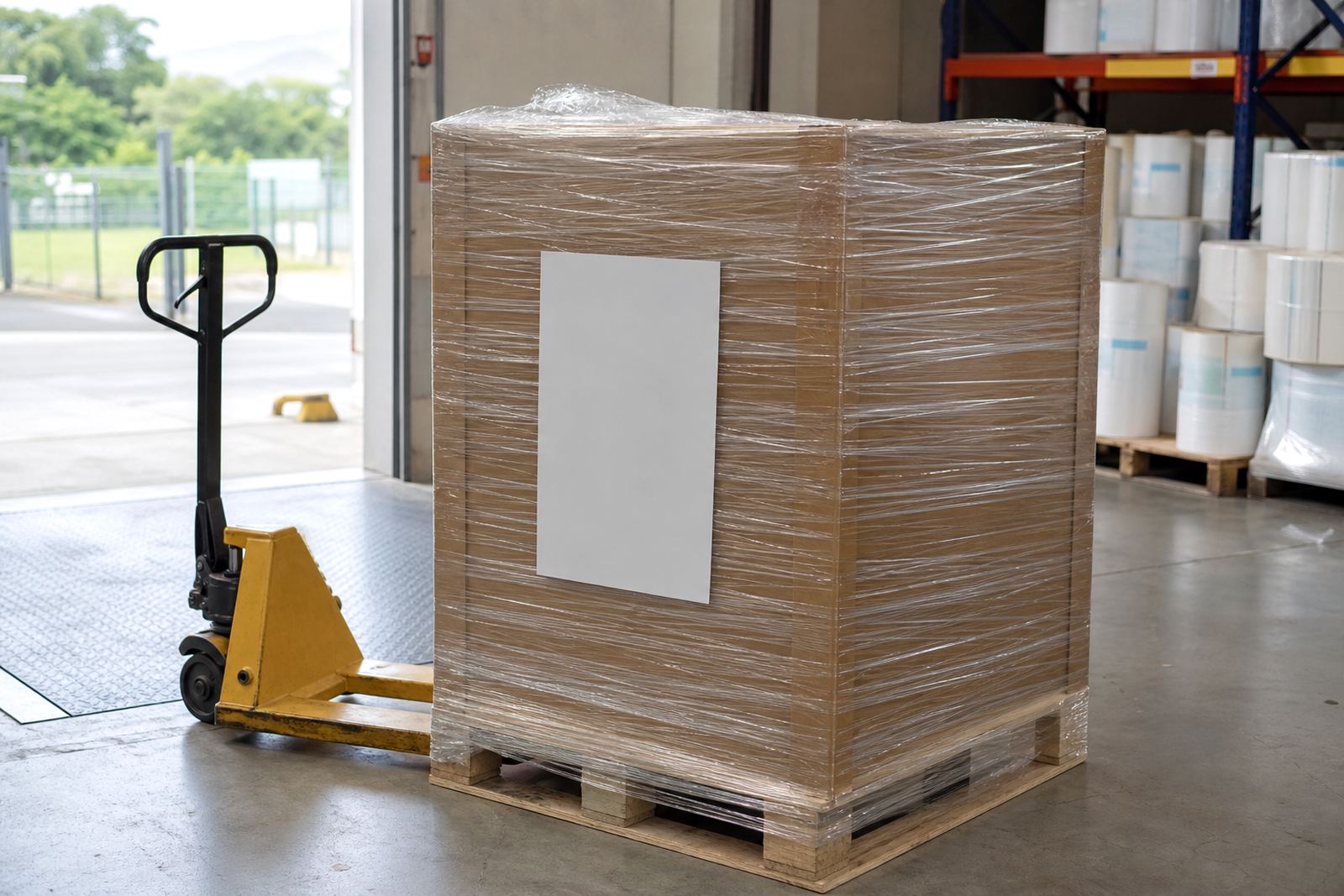
In a busy warehouse, a pallet label has to do more than carry a number. It needs to show where the load is going, what is inside, which bay it came from, and whether it is going straight to dispatch or into temporary storage. If the label smudges, peels at the corner, or disappears under wrap, the whole movement slows down and someone ends up rechecking the load by hand.
For pallet tracking, the label size is usually larger than a carton label so it can be read from a forklift seat or from a walking inspection point. Many sites in Durban, Johannesburg and Cape Town also need labels that hold up in changing temperatures, especially where goods move from ambient storage to chilled rooms, or from a humid yard into a covered stack. In coastal areas, moisture can soften the wrong adhesive very quickly.
We work with clients who need labels for warehouse transfer records, route destinations, receiving notes, and pallet numbers that need to stay legible until the load is unpacked. The exact mix depends on the face stock, adhesive and printer setup. A label that works on a dry warehouse floor may not suit a site with cold rooms, condensation, or repeated handling on rough timber pallets.
The print setup that normally works best
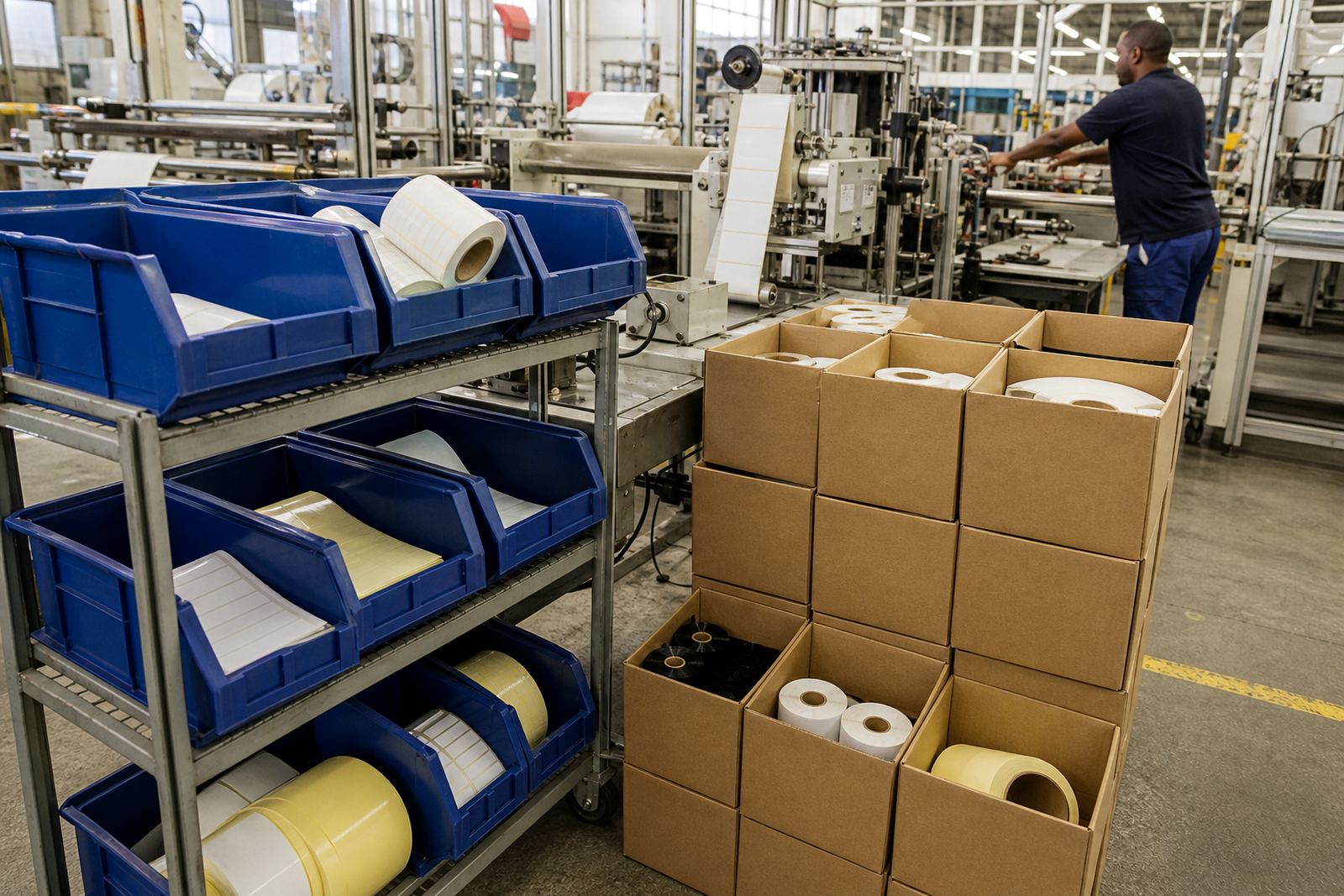
Most pallet tracking jobs use either direct thermal rolls or thermal transfer rolls. Direct thermal is often chosen for short to medium life labels where speed matters and the label will be used within a limited period. Thermal transfer is better where the pallet label must stay readable for longer, or where it must survive more handling, sunlight near loading bays, and the abrasion that comes from moving wraps and straps.
Thermal transfer printing uses a ribbon with the label stock, which gives better resistance to scuffing and fading. Direct thermal has no ribbon, so it can be quicker and less fussy for fast-moving dispatch lines, but the face stock must be suitable for heat and storage conditions. Printer compatibility matters too. We check core size, roll diameter, winding direction and sensor spacing so the roll feeds cleanly through the machine and does not create stoppages.
- Benchtop printers usually take smaller core sizes and narrower rolls for limited runs.
- Industrial printers are better for higher volumes and wider pallet labels.
- Some sites need centre wound rolls, while others need a specific unwind direction for applicators.
- Labels with strong print contrast help scanners and manual reading at a glance.
Face stock, adhesive and liner choices that hold up on pallets
The face stock is the top layer that takes the print. For pallet tracking this is often a coated paper stock for general warehouse use, or a synthetic face stock where moisture, scuffing or outdoor exposure is part of the job. If the pallet is likely to be wrapped, stacked, or moved through a humid yard in places like Pinetown or Hammarsdale, the face stock has to stay flat and readable rather than curl at the edges.
Adhesive choice matters just as much. A permanent adhesive suits most pallet labels because the label should stay put until the unit is broken down. A stronger adhesive may be needed for rough timber, recycled pallets or cold surfaces. In some cases a removable adhesive is useful for reusable totes or temporary transfer labels, but that is less common for core pallet tracking. The liner also matters because it affects dispensing, waste and how neatly the label comes off the roll.
- Paper face stock for dry indoor pallet work.
- Synthetic face stock for moisture, scuffing and longer handling time.
- Permanent adhesive for standard warehouse use.
- Higher tack adhesive for rough, dusty or cold pallet surfaces.
Layout planning for route tags and transfer records
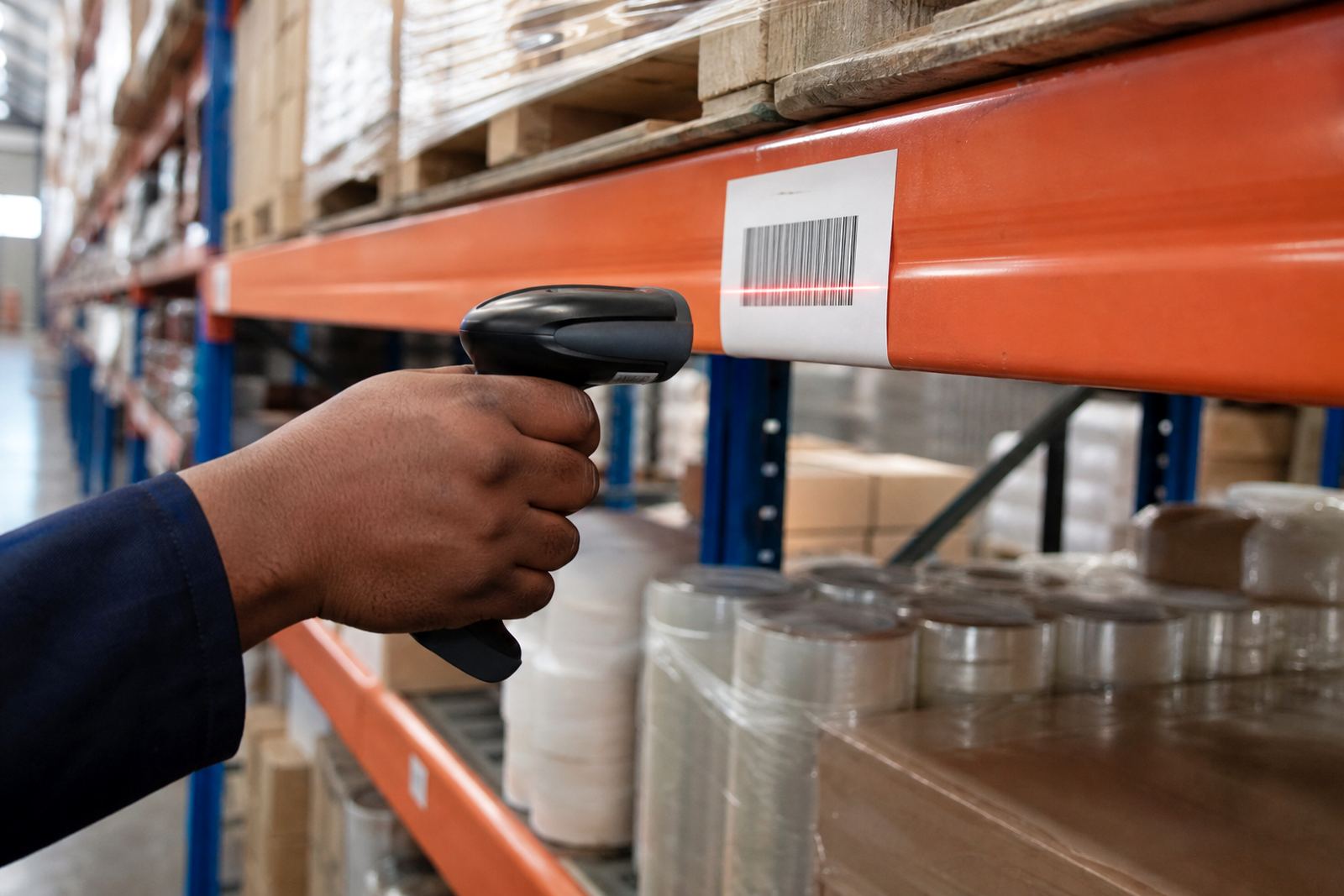
A pallet label should be planned around how people actually use it. If the load is checked from a distance, the pallet number and destination need to be the largest items on the face. If the site uses barcodes or QR codes, those must be placed with enough quiet space around them so scanning remains reliable. Small text can be included for batch or transfer detail, but it should not carry the whole job on its own.
We normally look at the label width, height, print orientation and where it will sit on the pallet. Some customers place the label on the front face, others on the side wrap, and some need repeat labels on two sides for easier identification in racking. The layout should also match the printer and the scanning process, not just the artwork. A neat layout can save time at receiving, but a cramped one can cause mistakes and reprints.
For sites running multiple depots across South Africa, a practical label structure helps staff separate local transfer pallets from long-haul loads. That can include destination codes, store names, line numbers and simple handling notes. If the wording is too long, the label becomes cluttered and slower to read. Keeping the format consistent across branches makes a real difference when work shifts between Durban, Pretoria and Cape Town.
Common slip-ups we see on pallet labels
The most common problem is choosing a label that looks fine on paper but fails on the floor. A pallet label that is too small, too weak in adhesive, or printed on the wrong stock will create avoidable rework. Another issue is using a roll that does not match the printer core size or winding direction, which leads to feed problems and wasted stock.
Another mistake is treating all pallets as if they spend the same time in the warehouse. A load that moves out in two hours does not need the same label spec as one that may sit in a yard overnight or transfer between sites.
- Using direct thermal for loads that need longer shelf life.
- Placing critical data in small print that cannot be read from the forklift.
- Ignoring humidity, cold rooms or dust near loading bays.
- Ordering a roll width that does not suit the printer or applicator.
- Mixing label formats between sites, which confuses warehouse teams.
What pallet tracking usually costs in Rand
Budgets depend on size, material, adhesive strength, print method and how many labels are on each roll. For straightforward pallet tracking on standard paper face stock, costs can start at a modest level for short runs and increase when the job needs synthetic material, special adhesives or a specific core size. Larger industrial rolls with thermal transfer stock normally cost more than short direct thermal rolls because the material and setup are more demanding.
As a working guide, smaller trial batches for one warehouse line may sit in the low hundreds of Rand, while higher volume repeat supply for multiple depots can move into the low thousands per order depending on spec and quantity. If the pallet label must match a scanner process, a barcode layout, or a repeat transfer format, there may also be planning involved in the roll length, winding direction and printer fit. We keep the supply practical so clients can plan around actual usage rather than guesswork.
For regular pallet tracking in retail distribution, manufacturing and logistics, the best value usually comes from matching the label spec to the real handling conditions instead of over-specifying every roll. A short review of the pallet size, printer model and storage conditions is often enough to narrow it down properly.
How we handle pallet label supply from Westmead
From Westmead, Pinetown, we supply self-adhesive label stock and thermal rolls across South Africa, including Durban, Johannesburg, Cape Town, Pretoria and Pietermaritzburg. Our team can help with sample rolls, printer fit checks, adhesive matching, face stock selection, core sizing, roll length planning and winding direction so the labels suit the way your warehouse actually runs.
For pallet tracking jobs, that usually means checking whether you need a short-life direct thermal roll or a longer-life thermal transfer stock, then confirming the label size and print layout before supply. If your site uses more than one printer or handles transfer pallets in different depots, we can also help with repeat order planning so the same format is used consistantly across runs. That keeps receiving and dispatch a lot easier to manage.
If you need pallet numbers, route destinations or warehouse transfer records on larger labels, we can help you match the stock to the process, not the other way round.