
Packed trays, tubs and cartons need markings that hold their place
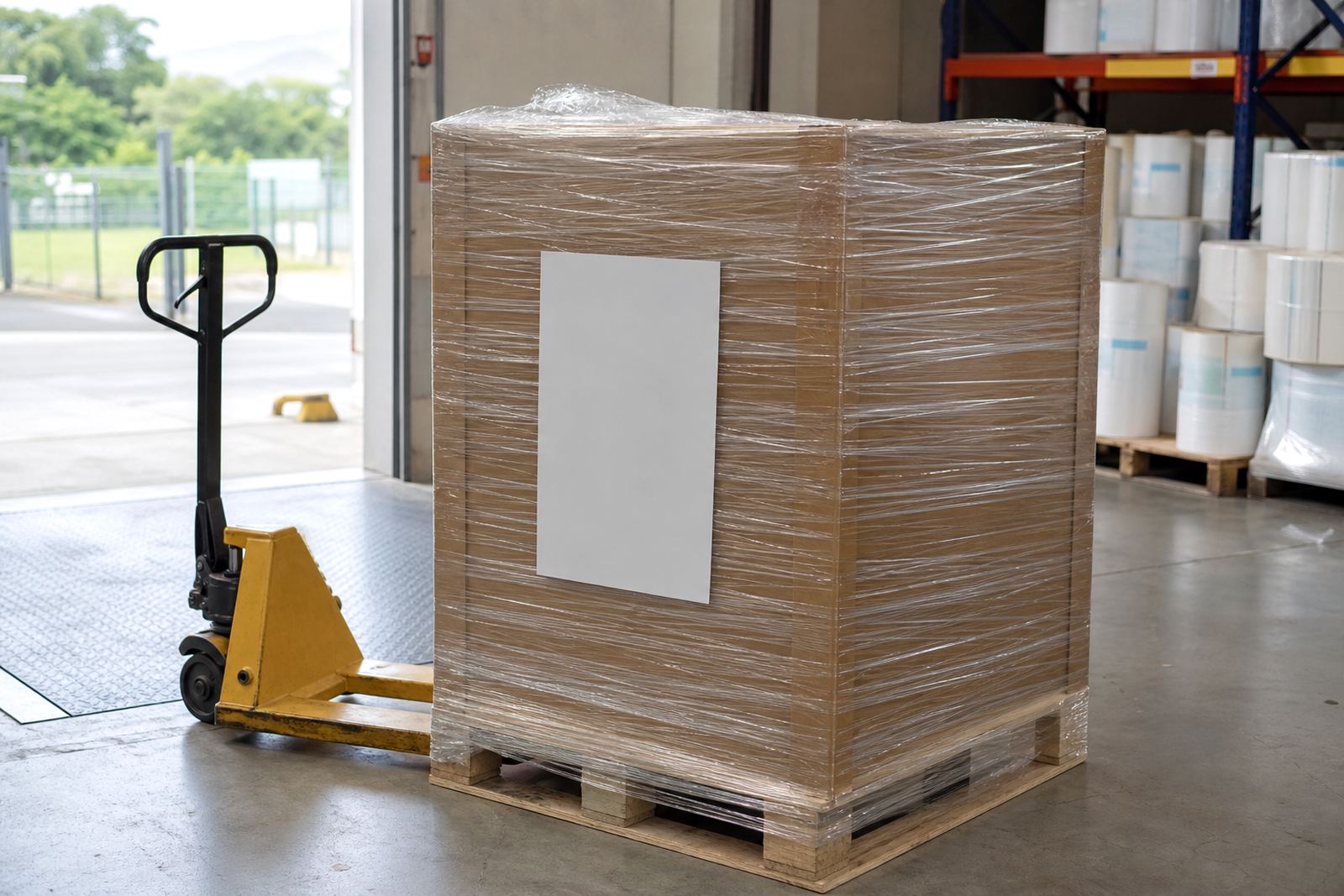
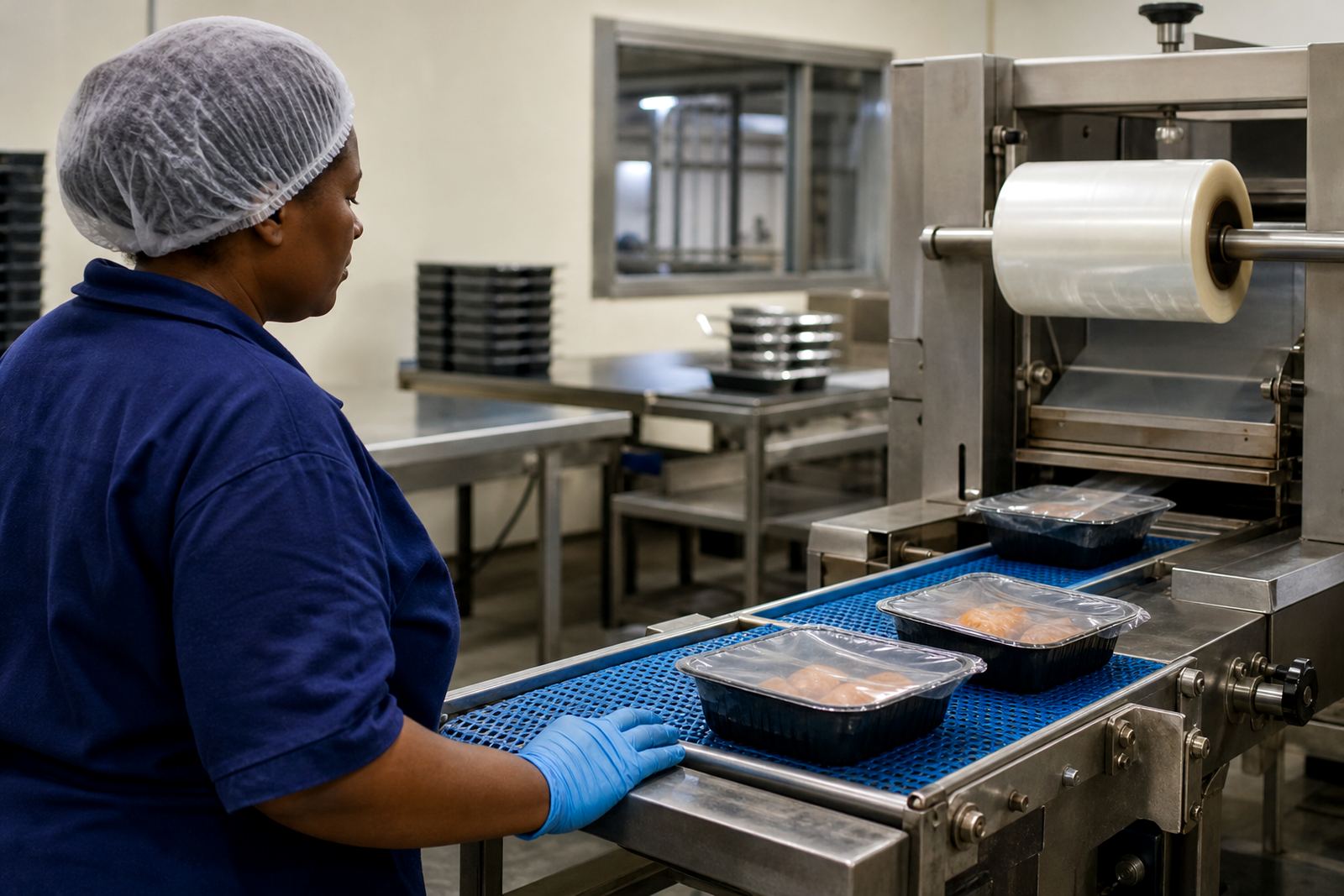
Food pack dating is usually about speed, clarity and staying legible on a busy packing line. Whether you are sealing trays of meat, labelling deli tubs, or marking cartons leaving a cold room in Durban, the label has to carry batch details, packed-on dates and basic traceability without smudging or lifting at the edges.
We supply self-adhesive label stock and thermal rolls for operations that work with chilled foods, dry goods and fast-moving dispatch. In many pack rooms, the label only has a few seconds to get applied before the pack moves on, so face stock choice, adhesive strength and roll winding all matter more than people expect. A neat label also helps with shelf presentation, stock rotation and municipal inspection records when goods move through retail or wholesale channels.
Picking the right label build for cold rooms, cartons and sleeves
For food packs, the usual label build starts with a face stock, an adhesive layer and a liner. Paper face stock works well for short-life cartons and outer packs, while coated papers and synthetic face stocks handle moisture, rubbing and cooler conditions better. Adhesives can be permanent, removable or freezer-grade, and the right choice depends on whether the pack sits in a chiller, a freezer, or on a shelf in warm inland conditions.
In coastal areas like Pinetown and Durban, humidity can affect how labels release from the liner and how they stick to chilled surfaces. In Johannesburg or Pretoria, the bigger issue is often dry air, dust and fast line speeds. Adhesive matching matters because one pack may need to stay in place on a plastic tub, while another must come off a returnable crate without leaving residue.
- Paper face stock for dry, short-life food packs
- Coated paper for better print clarity and handling
- Synthetic face stock for moisture and rubbing resistance
- Permanent adhesive for cartons and sealed packs
- Freezer-grade adhesive for low temperature storage
- Removable adhesive for returnable trays and tubs
Direct thermal or thermal transfer for date coding
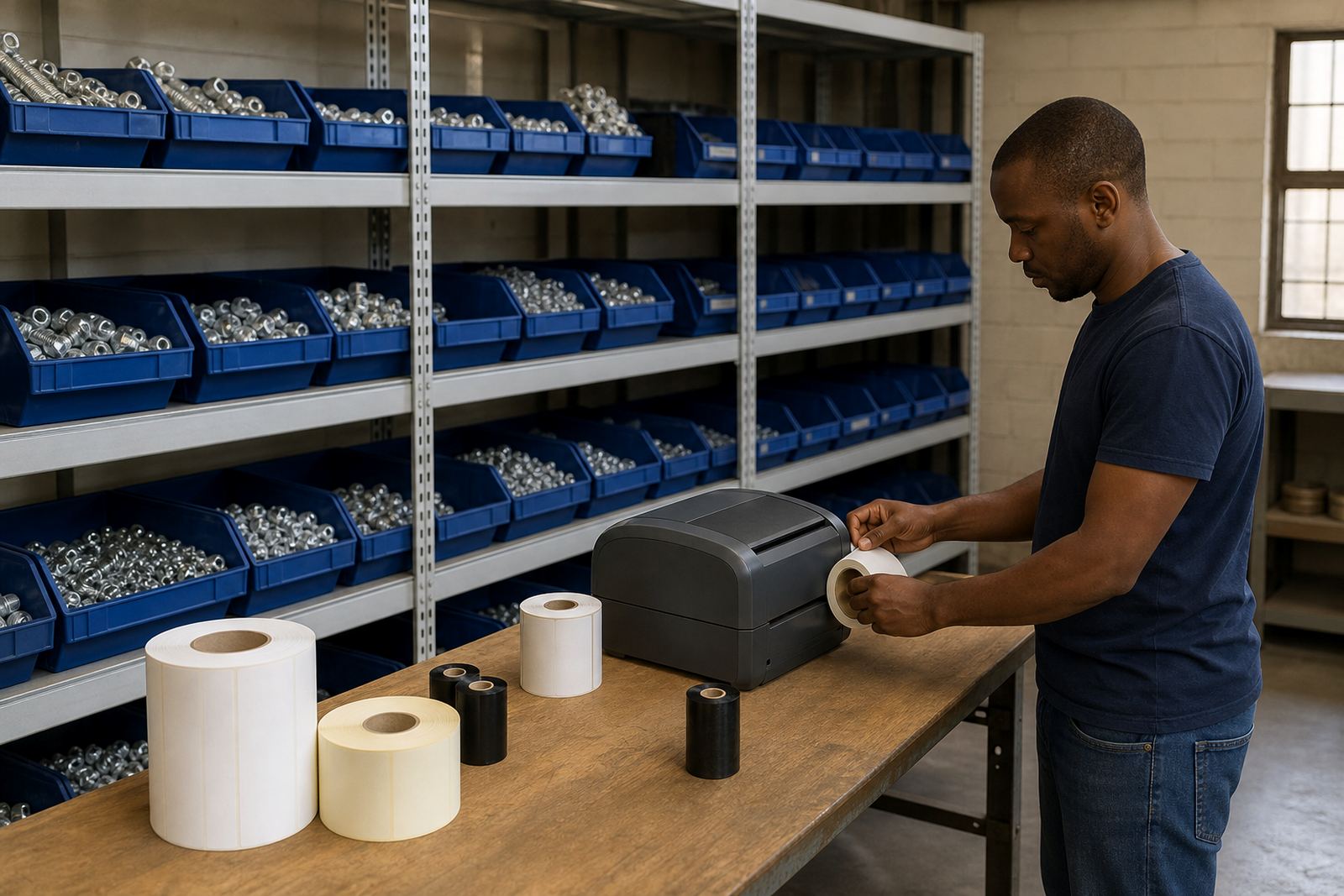
Direct thermal rolls suit short to medium shelf-life applications where the print does not need to last for months under sun or heat. They work well for packed foods that move quickly through the chain, especially where the label only needs to show a batch code, packed date, best-before date or shift code. They are popular because they keep the set-up straightforward and there is no ribbon to manage.
Thermal transfer rolls are a better fit when the print must last longer, or where a more resistant image is needed. In a food environment this can matter for outer cases, traceability labels and logistics labels that need to survive cold rooms, handling and transport. If your printer uses a 25 mm, 38 mm or 76 mm core, the roll has to match that size and the unwind direction must suit the printer path. A wrong core or winding direction can waste time and cause misfeeds, which is never welcome during the morning pack run.
- Direct thermal for fast date, lot and shift marking
- Thermal transfer for longer-lasting barcodes and handling labels
- Core sizing to suit benchtop, industrial and near-line printers
- Winding direction matched to the printer sensor and feed path
A practical pack line set-up from Westmead to the warehouse
Most food dating jobs work best when the label size is set around the actual pack face, not just the printer width. A label that is too large can wrap or wrinkle on a small tub, while one that is too small can crowd the date and batch text. For trays and film packs, a neat layout often leaves enough space for the product name, code and use-by date in a clear font with high contrast.
We help with roll length planning and printer fit checks so the rolls are not too short for the shift or too wide for the machine. If you are printing from a small benchtop unit, the wrong roll can jam quickly. If you are using an industrial printer on a packing line, a poorly planned roll can slow dispatch and create unnecessary stoppages. This kind of planning also helps when one site in Pinetown prints for several depots in Durban, Johannesburg or Cape Town.
- Keep date fields in a fixed place on the label
- Use clear contrast, black on white is still the safest choice
- Leave space for human-readable text and barcode zones
- Match label width to the pack face and printer width
- Test peel and stick performance on the real pack material
Mistakes that show up after the first chill cycle
Many problems with food labels only show after the product has cooled, been moved or stacked. A label that looked fine on the bench can lift at the corners once it meets condensation. Another common issue is choosing a face stock that prints well but then rubs off in crates or during packing. If the label is for a moist or oily surface, adhesive choice is just as important as the print method.
Another frequent issue is using the same roll spec across every pack type. A label that works for dry bakery cartons may not suit chilled dairy tubs or frozen goods. Barcode density can also become a problem if the print is too small for the scanner setup. For food pack dating, a short sample run is usually cheaper than reworking a whole lot after the pack line has already started. It is worth checking the label under the same conditions that the product will face in storage and transport.
Rand ranges that make sense for a food line
Budget depends on size, material, adhesive and whether the order is for sample rolls or production quantities. For smaller test runs, basic direct thermal rolls can sit in the lower hundreds of Rand per roll, while specialist freezer-grade or thermal transfer stock can move into the mid hundreds and higher depending on dimensions and quantity. Custom slitting, rewinding and core sizing can affect the final figure too.
For many food businesses, the better question is not only the roll cost but the cost of waste, line stoppage and relabelling. A slightly better matched stock can save more than a cheaper roll that peels, fades or jams. We also assist with repeat order planning so the same pack spec can be reordered without starting from scratch each time. That helps when volumes shift between quiet weeks and public holiday peaks.
- Sample rolls for testing fit, stick and print quality
- Short production runs for new food pack sizes
- Bulk orders for steady retail and logistics output
- Custom slitting when a non-standard width is needed