When every shelf tag has to do more than one job
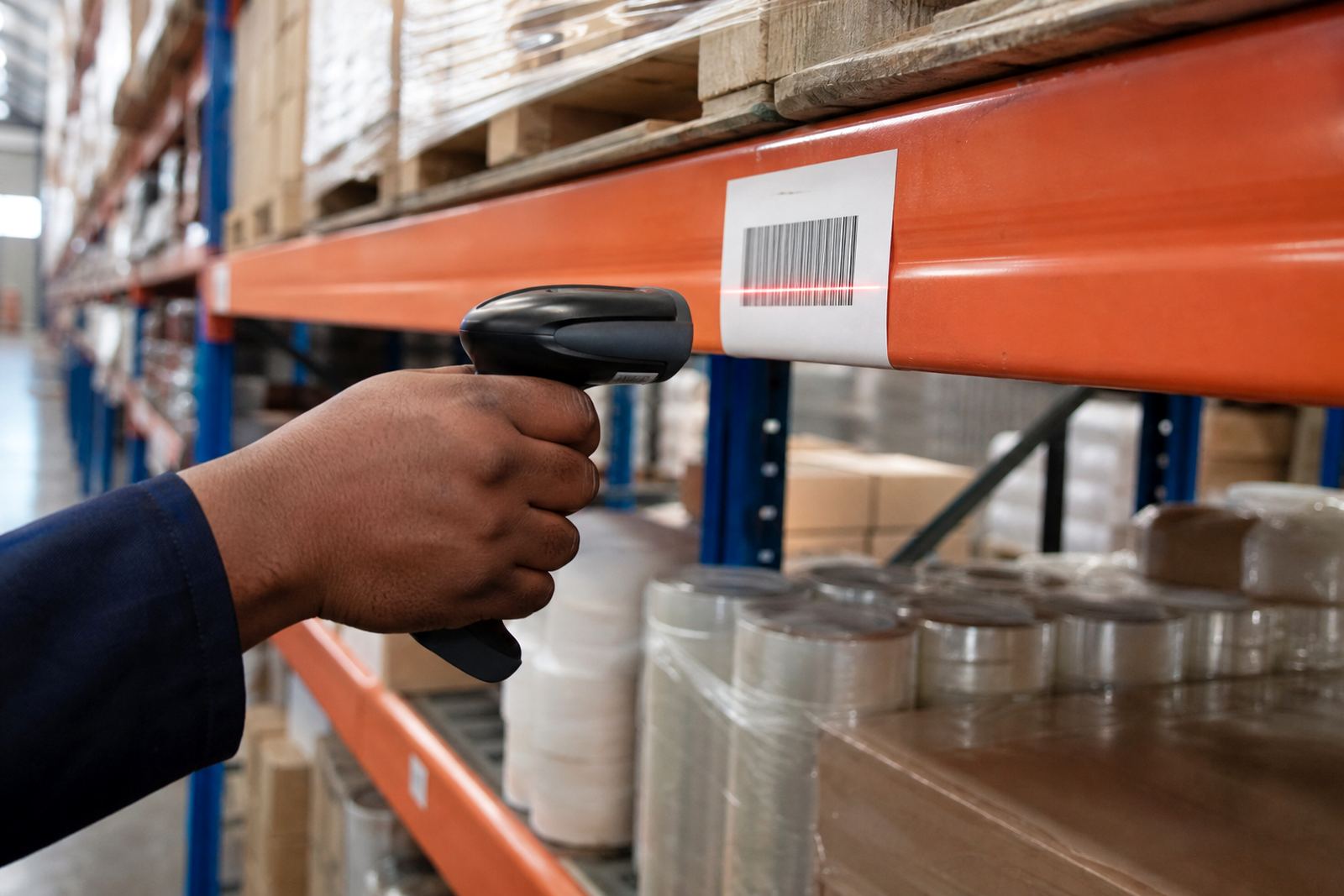
In a pharmacy, a shelf label is not only a price marker. It also helps staff identify stock, separate strengths and pack sizes, and keep fast-moving items in the right place. When labels are too large or curl at the edges, the shelf starts looking untidy and the wrong item can be put back in the wrong bay.
For this use, the better choice is usually a neat small-format label with a clean face stock and an adhesive that stays put on melamine, powder-coated shelving, plastic bins and cardboard cartons. In busy stores in Durban, Johannesburg or Pietermaritzburg, the label also needs to cope with frequent handling and a fair bit of dust from daily stock rotation.
Picking the right face stock for clean shelf reading
Face stock is the top layer that carries the print. For pharmacy shelves, paper face stocks are often used for short to medium life labelling where the shelf strip stays indoors and away from direct moisture. A smoother coated paper can give clearer small text, while a synthetic face stock is better where cleaning is frequent or the area gets humid, especially near coastal branches.
Direct thermal stock prints without a ribbon and is handy for fast issuing, but the print can darken over time if it sits in heat or sunlight. Thermal transfer stock uses a ribbon and is generally better where the label must hold sharp text for longer, including batch reference notes, shelf codes and expiry support. The right choice depends on how long the label must last and how often the shelf gets wiped down.
- Paper face stock for short-term shelf pricing and stock rotation
- Synthetic face stock for better moisture resistance and cleaner wiping
- Direct thermal for fast printing and lower running steps
- Thermal transfer for longer-lasting print quality and finer text
Adhesive strength for painted shelves, plastic tubs and cartons
The adhesive matters just as much as the print. Pharmacy shelving often has smooth painted surfaces, glass fronts, laminate edges and plastic container faces, so a general purpose adhesive may be enough in some areas and not enough in others. If a label is only meant to sit on a carton for a short period, you do not need the same tack as you would for a shelf edge label that must stay neat for months.
We help with adhesive matching for different surfaces and usage patterns. That includes permanent adhesive for long placement, removable options where shelves are changed often, and stronger holding options where labels face repeated cleaning. In a back room, where light spills and stock dust are common, the bond needs to stay flat without lifting at the corners.
- Permanent adhesive for shelf strips and long placement
- Removable adhesive for short-term planogram changes
- Stronger tack for plastic and slightly textured surfaces
- Cleaner removal where shelves are relabelled often
Core size, roll length and printer fit checks that save time
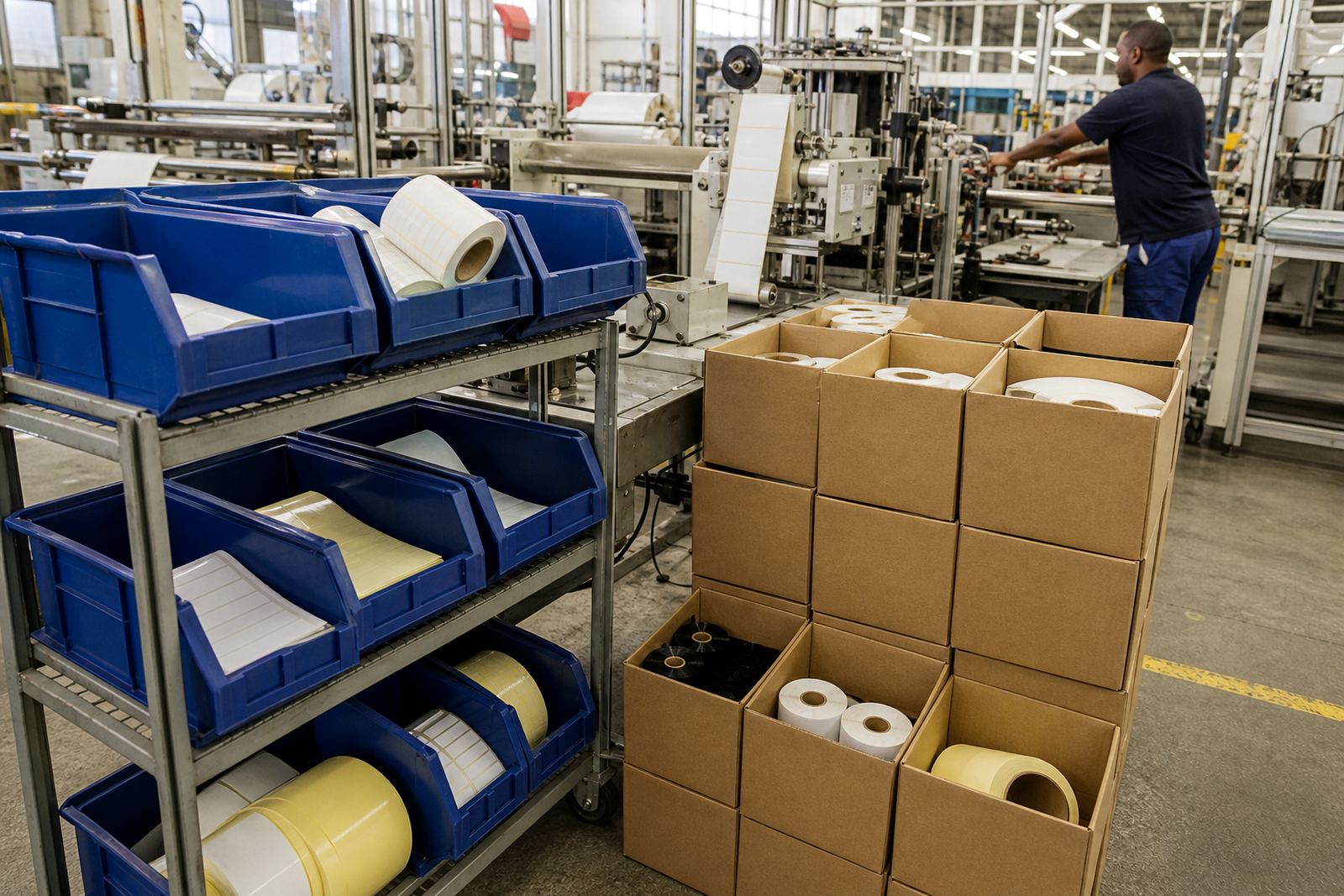
Small-format pharmacy labels are often printed on benchtop or bench printers, but fit still has to be checked properly. Core size, outer roll diameter, winding direction and gap sensing all affect whether the roll feeds smoothly. A label that fits one printer well can jam another if the core or winding direction is wrong.
We plan rolls around the equipment in use, whether the job runs on direct thermal or thermal transfer printers. Common setups use narrow label widths for shelf strips and wider rolls for carton labels or dispatch marking.
- Check core size before ordering, usually for benchtop printer compatibility
- Match roll length to how often the operator changes rolls
- Confirm winding direction and face-out or face-in feed
- Set the label width for readable text, not just for space savings
Layout habits that keep a pharmacy shelf tidy
Good shelf labels work best when the layout is planned before printing starts. Keep the product name, strength, pack size and price in a fixed order so the eye can pick it up quickly. In a dispensary or retail pharmacy, the smallest labels should still leave enough white space to stop the print from looking crowded.
For many stores, the best result comes from using one label family across the branch and only adjusting length or width for special items. That makes reordering easier and keeps the shelf look consistent from Westmead to Cape Town. If the store uses a mix of shelving and drawer fronts, the same face stock can often be adapted with a different cut size or adhesive choice.
- Use one print layout for all shelf groups where possible
- Keep font sizes clear enough for quick reading at arm’s length
- Leave space for price changes and unit details
- Use sample rolls before committing to a large run
Where shelf labels go wrong in busy dispensary areas
The usual mistakes are easy to spot. Labels are cut too long and wrap over the edge, the adhesive is too weak for the surface, or the print is chosen for speed instead of durability. Another common problem is using direct thermal stock where the label sits near warmth, sunlight or bright display lighting, which can cause the print to fade or darken unevenly.
There is also the issue of over-labelling. If every shelf has too many line items, the team spends time reading instead of serving customers. A cleaner label plan with the right stock and the right winding saves time, and it looks more organised too, even when the store is under pressure after a power cut or a delivery rush.
Budget ranges that make sense for small label runs
Pharmacy shelf labels can be kept modest in cost when the format is standard and the print requirements are clear. Small paper labels for short-term shelf use are usually the lowest-cost option, while synthetic face stock, stronger adhesives and thermal transfer ribbons add to the budget. The final figure also depends on width, length, core size and whether the order needs slitting or rewinding.
For planning purposes, many small pharmacy runs may sit in the lower hundreds of Rand, while larger or more specialised orders can move into the higher hundreds or beyond depending on quantity and materials. We help with roll length planning, usage review and repeat order planning so the same pharmacy does not keep guessing each time stock changes. That is especially useful for branches in Johannesburg, Pretoria and Durban where reordering needs to be steady and predictable.
Clients reach us through the enquiry form on our contact page, and we use that to confirm the shelf size, printer type, adhesive needs and dispatch details before production.