Where the line slows down if the label fails
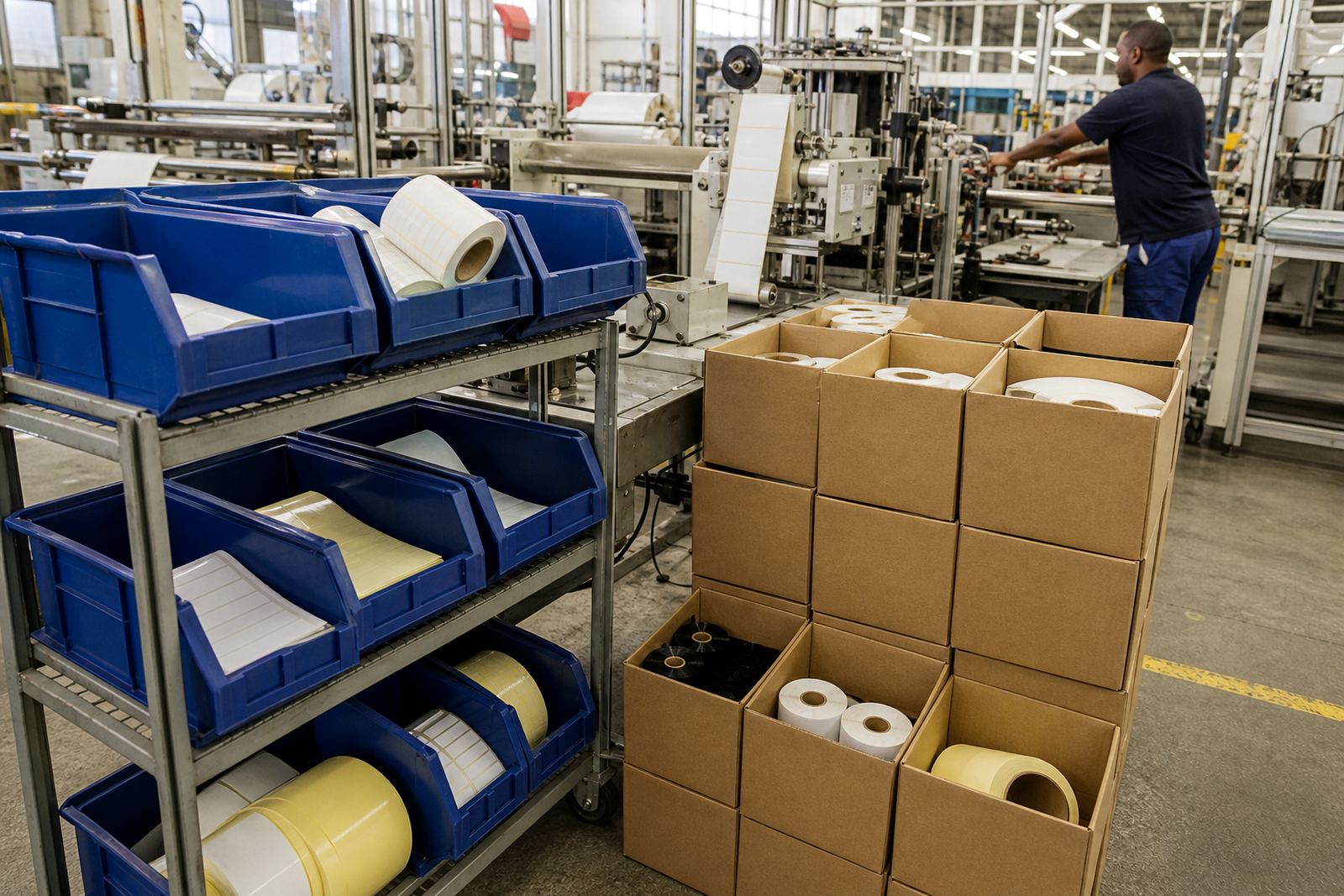
Self-adhesive label stock is built from three parts. The face stock carries the print, the adhesive holds the label in place, and the liner lets the label run through the printer and be dispensed neatly. Paper face stocks are often used for general warehouse and carton work. Synthetic face stocks suit damp areas, chilled storage and heavier handling where scuffing is common.
Adhesive choice is just as important. A permanent adhesive suits most carton and tote labelling. A removable adhesive can help when bins are reused or when temporary production staging labels must come off cleanly. For rough cartons, dusty surfaces or slightly curved containers, a stronger adhesive may be needed. In coastal areas like Durban and Pietermaritzburg humidity can affect tack, so the adhesive must be matched properly or the edge starts lifting.
- Paper face stock for cartons, shelves and general production labels
- Synthetic face stock for moisture, abrasion and longer handling times
- Permanent adhesive for most fixed identification uses
- Removable adhesive for returnable bins and temporary staging
- Glassine or other release liners chosen for clean feeding and accurate peeling
Direct thermal or thermal transfer for the same floor
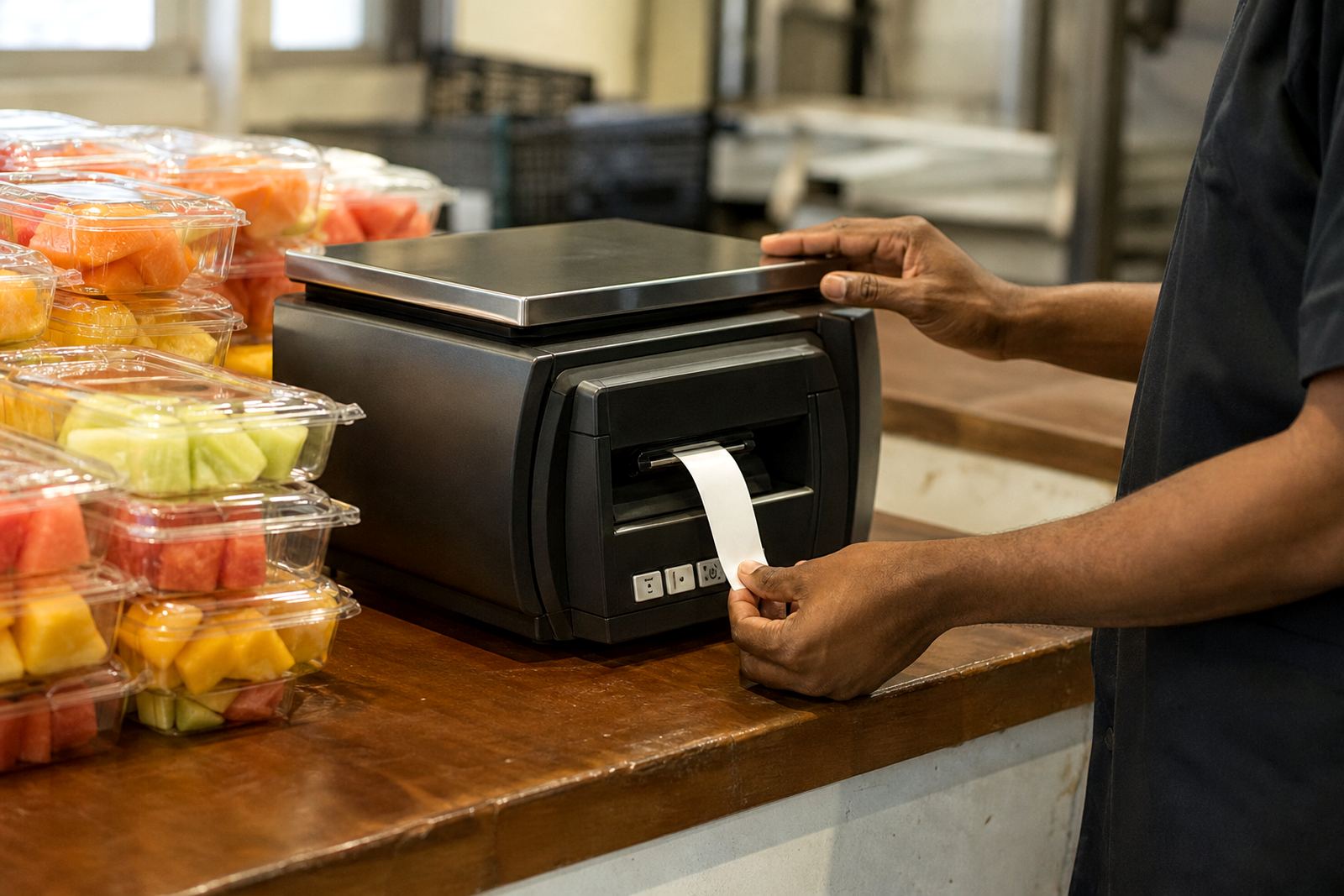
Direct thermal rolls print without a ribbon and are often used for short-life labels, courier work and fast moving dispatch areas. They are cost-effective, but the print can fade with heat, sunlight or rubbing. Thermal transfer rolls use a ribbon and produce a print that lasts longer, which is useful for WIP labels, product identification and bin markers that need to stay legible over time.
For production staging, thermal transfer is often the safer option when the label must survive warehouse dust, pallet friction or a week on the shelf. Direct thermal still has a place where the label is used quickly and replaced often. If the job changes from shift to shift, it is worth planning for both systems rather than forcing one roll type to do every job.
- Direct thermal for short-term dispatch and quick turn labels
- Thermal transfer for longer life, barcode clarity and handling resistance
- Ribbon selection matched to the face stock and printer heat settings
- Core size checked so the roll fits the printer spindle properly
Printer fit, roll size and winding direction
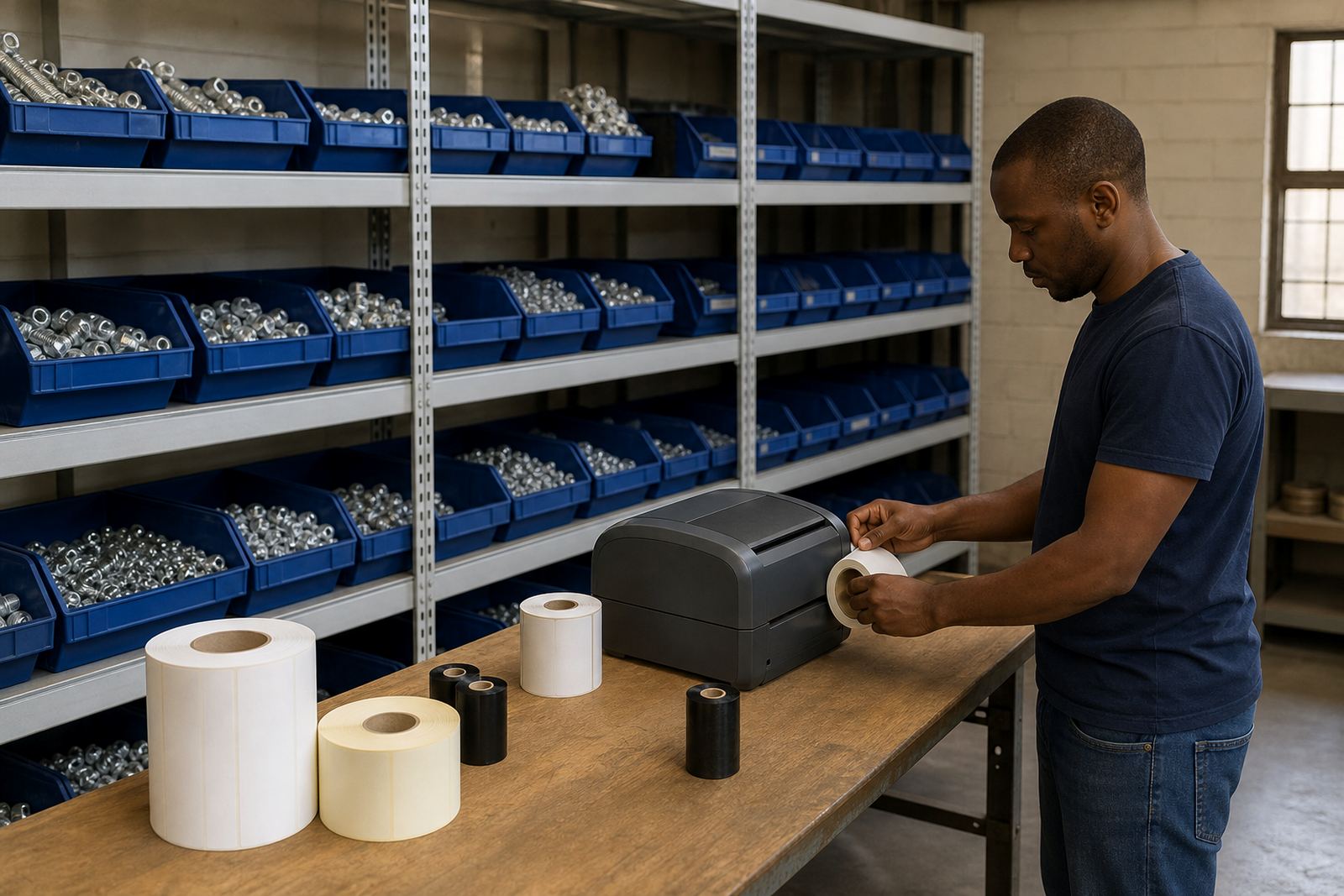
Printer compatibility is where many orders go wrong. Benchtop printers, industrial printers and applicators often need different core sizes, roll diameters and winding directions. A roll that looks correct in the pack room can still jam if the core is too small, the winding is reversed, or the label gap is not set for that machine. This is why a proper printer fit check saves time later.
We plan rolls around the equipment in use, whether the site runs a compact bench printer or a larger floor unit. Common core sizes include 25 mm, 40 mm and 76 mm, with roll lengths adjusted to the label size and how often the line stops for changeovers. For busy plants in Gauteng or the Cape, longer rolls can reduce stoppages, but only if the printer and spindle can carry them safely.
- Core size matched to printer spindle and holder width
- Winding direction set for easy peel off and correct feed path
- Roll length planned to reduce mid-shift changeovers
- Gap, black mark or continuous format checked before full production
Staging labels that actually help the floor move
The biggest mistake is choosing one label to do every job. A carton label, a freezer label and a bin marker do not need the same adhesive or face stock. Another common issue is ordering by size only and ignoring the printer model. A roll can be the right width yet still fail because the core or unwind is wrong.
We also see labels specified without checking the actual surface. Light dust, oil residue or condensation can break adhesion. In Westmead and Hammarsdale, many plants work across mixed storage areas so the label must cope with cartons, plastic tubs, painted steel and stretch wrap. A sample roll helps catch those problems before the full run starts.
- Surface not tested, so labels lift on dust or cold plastic
- Wrong printer fit, causing skewed feed or wasted rolls
- Using direct thermal where the print needs to last longer
- Choosing one adhesive for every surface and every temperature
- Not planning enough stock for shift changes and reprints
Budget bands for Westmead plants and regional supply
Budget depends on size, material, print method and how the rolls will be finished. A small trial batch for a local packing room may sit in the low hundreds of Rand, while larger planned runs with custom slitting, rewinding and matching can move into the thousands. Thermal rolls for high volume use are usually priced by width, length and core spec, so it pays to define the printer first.
For many factories, the useful starting point is a sample roll, a printer fit check and a small usage review before committing to a full order. That approach helps when the site has more than one line, or when Durban Supply, Johannesburg Supply and Cape Town Supply all need similar but not identical label stock. Once the format is settled, repeat order planning is easier and waste drops. If the requirement changes later, we can adjust the roll length, winding direction or adhesive match without starting from scratch.