
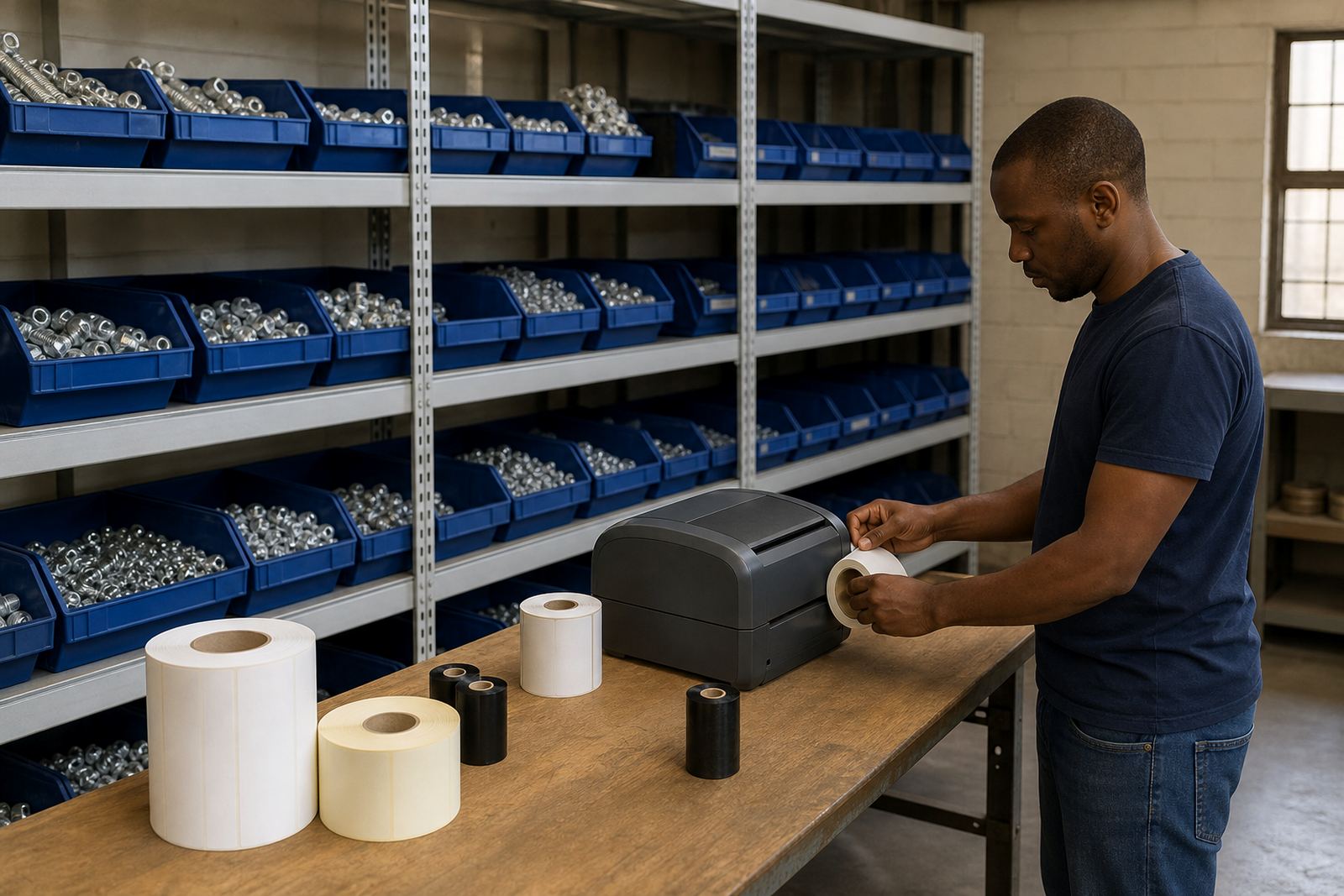
Bin fronts that still read after the third shift
Hardware bin labels are usually the first thing a picker, storeman or technician checks, so the label has to hold up to repeated touch, cleaning and the odd scrape from a box edge. In workshops and parts rooms around Pinetown, Durban and inland depots, the common problem is not print quality on day one, it is the label lifting at the corners, fading under fluorescent lighting or going soft where hands have left oil on the plastic bin.
For this use, we help match the face stock and adhesive to the surface rather than treating every bin the same. Flat polypropylene bins, powder coated racking, painted steel drawers and corrugated shelf fronts all behave differently. If the surface is dusty or lightly textured, a more aggressive adhesive may be needed. If the bins are changed often, a cleaner release is useful so the label can be removed without tearing the backing all over the place.
- Common uses: parts bins, stock totes, rack ends, drawer fronts and replenishment trays
- Common environments: warehouses, fitment bays, fabrication shops and maintenance stores
- Common problems: edge lift, barcode scuffing, smudging and labels falling off in heat or damp
Choosing the face stock by the way your team works
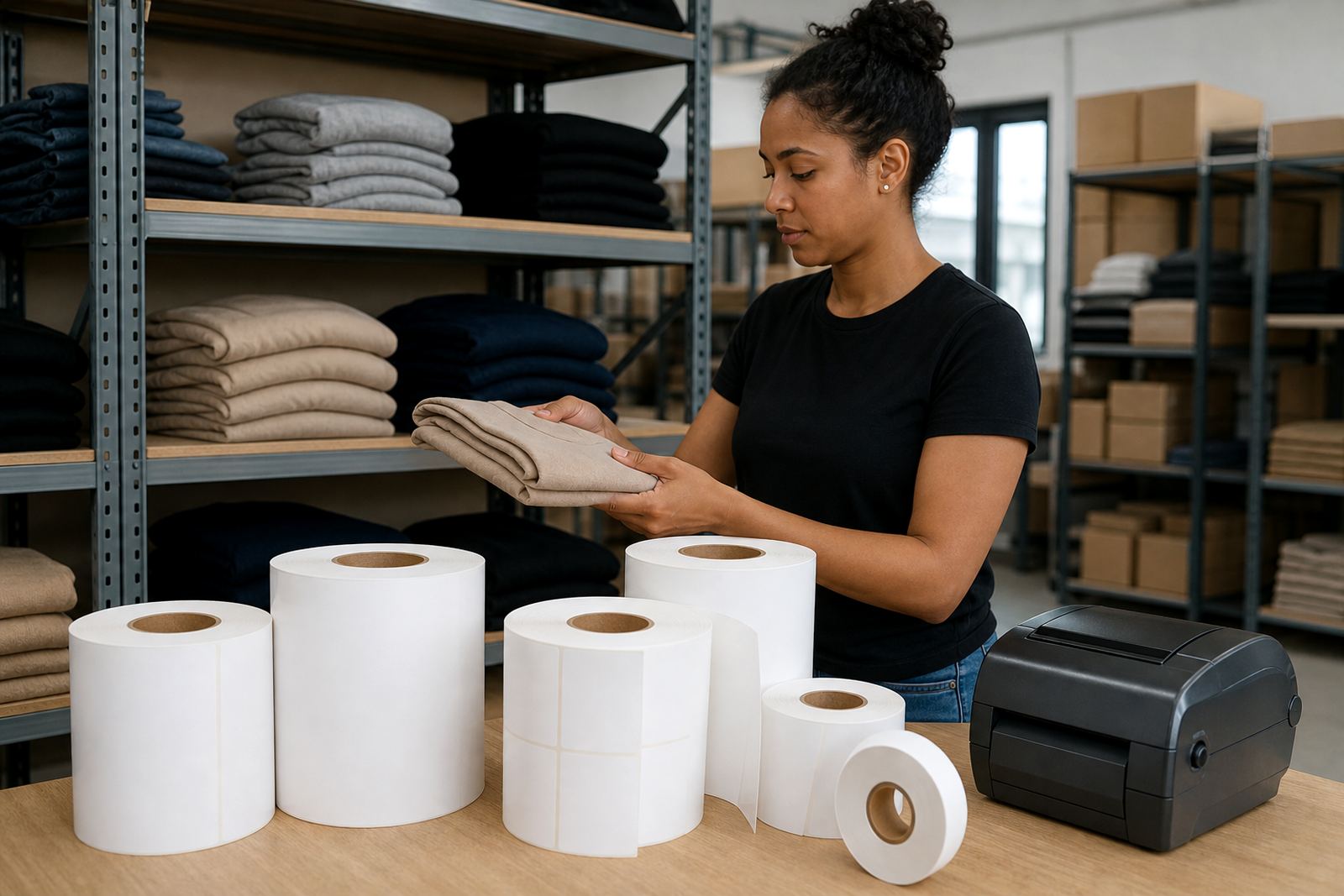
Self-adhesive label stock for hardware bins can be supplied in paper or synthetic face stocks, each with a different feel and life span. Paper is often suitable where the bins stay inside, stay dry and are replaced fairly often. Synthetic stock is a better fit where humidity, handling and cleaning are part of the daily routine, especially along the coast where moisture can creep into a stock room overnight.
The adhesive matters just as much. A permanent adhesive suits fixed bin maps and long-term location labels. A removable or semi-permanent adhesive is useful where trays are relabelled as stock lines change. The liner also matters for print handling and strip-off. A stable liner helps on narrow labels and smaller cutter settings, which is useful when a workshop team is printing short runs for many part numbers.
- Paper face stock for dry indoor storage and lower-cost turnover
- Synthetic face stock for moisture, handling and longer life
- Permanent adhesive for fixed locations and rack identification
- Removable options for changing bin layouts and temporary jobs
Direct thermal or thermal transfer, depending on the shelf life
For hardware bin labels, the print method usually comes down to how long the information must last. Direct thermal rolls are printed without a ribbon, so they suit shorter-life labels, bin rework or internal use where labels are replaced regularly. They are practical for fast printing in receiving areas and picking zones, but they can darken or fade if stored in heat or exposed to sunlight for too long.
Thermal transfer uses a ribbon and is better where the label must survive longer periods, more rubbing and tougher conditions. It is the safer choice for bin IDs, rack labels and workshop inventory markers that stay in place for months or years. We also check the printer fit, because core size, roll diameter and winding direction must match the machine. A wrong fit can cause feeding trouble, wasted labels and unnecessary downtime when the store is already busy.
- Direct thermal: quick print, no ribbon, suited to shorter-term labels
- Thermal transfer: ribbon-based, suited to longer-term durability
- Core sizes and roll length need to suit the printer model
- Winding direction matters for correct feed and clean dispensing
How to lay out a bin system that crews actually follow
A good label layout does more than look tidy. It has to support the way the store works when stock is moving and the loader is waiting. For most hardware bin systems, the label should keep the part code large, the description short and the barcode clear enough to scan without hunting around. If your team works across split shifts or uses seasonal labour, the layout must be plain and repeatable. Overcrowded labels slow everyone down.
We often advise clients to standardise the label size for each bin type, then plan the text hierarchy before printing. Larger bins can carry a bigger code, a short description and a location reference. Smaller drawers may only allow a code and a barcode. The goal is to reduce confusion in replenishment and picking, especially where similar fasteners, fittings and consumables sit side by side.
- Use the same label size across a rack where possible
- Keep part codes prominent and descriptions short
- Leave enough quiet space around barcodes for scanning
- Match label size to bin face height and viewing distance
Mistakes that cost time in the store room
The most common mistake is choosing a label stock for office use and expecting it to survive a workshop. Another is printing labels too small for the distance at which they are read. In a busy hardware store or factory, a label that looks fine at arm’s length may be useless from the aisle. We also see labels fitted to dusty, oily or uneven surfaces without proper adhesive matching, which leads to lifting at the edges within a few weeks.
Other problems include changing roll length without checking the printer, using the wrong core size, or forgetting that label stock must suit the speed of the production line. If labels are packed poorly, the edges get damaged before they even reach the bins. That is a waste of time and money and it creates confusion in the system.
- Wrong adhesive for the bin surface
- Label text too small for quick reading
- Printer and roll mismatch
- Poor packing that damages edges before use
Budget ranges for a practical label rollout
Budget usually depends on how many bin faces, racks and drawers need labels, whether the stock is paper or synthetic, and whether the job is for a short run or an ongoing replenishment system. Smaller in-house refreshes can often be handled at a modest cost, while tougher industrial label sets with longer-life material and careful roll planning will sit higher. As a rough working range, many South African hardware bin projects start in the low hundreds of Rand for sample and trial quantities, then move into the low thousands when the full system is rolled out across a store or workshop.
For sites in Durban, Johannesburg, Cape Town, Pretoria and Pietermaritzburg, we usually plan around the printer already in use, the expected replacement cycle and the storage conditions on site. If the labels sit near loading bays, wash areas or coastal air, it is worth allowing more for a stronger face stock and the right adhesive. That tends to save money later, because the labels stay in place and the team does not keep relabelling the same bins.
- Trial runs and sample rolls for fit checks
- Mid-range budgets for regular indoor bin systems
- Higher budgets where moisture, heat or heavy handling are involved
- Allowance for reorders and steady restocking