When the scale line has no time for messy labels
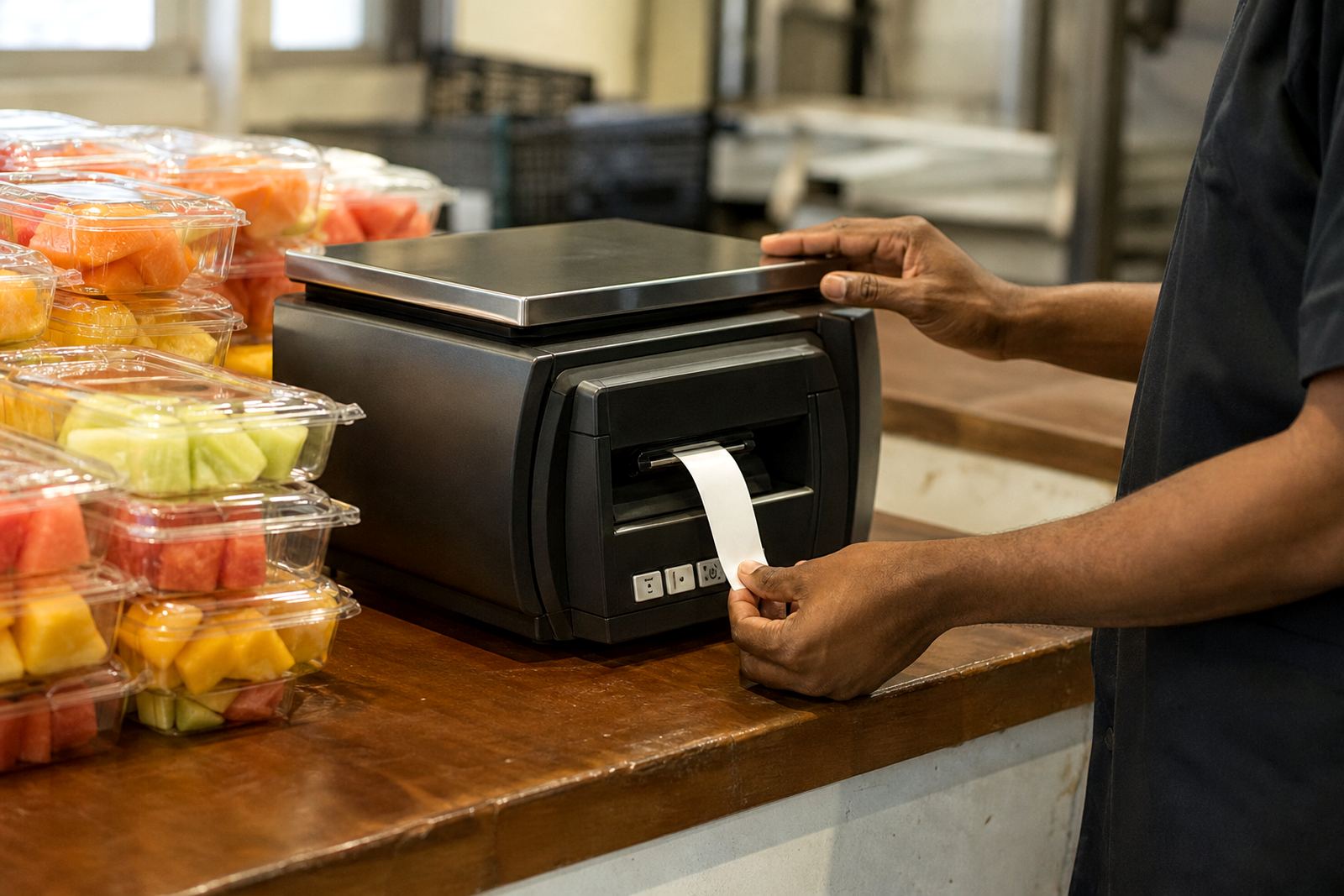
Produce scale labelling is usually about speed, legibility and consistent weight marking on fresh goods. In a packhouse, butcher room, greengrocer or supermarket prep area, labels need to come off the printer cleanly, scan first time and hold through cold rooms, condensation and regular handling. A faint print, a curling edge or a liner that tears badly can slow the whole line down.
For weighed fresh goods, most customers want a label that carries product name, weight, price, tare, barcode, batch or code and a clear date format. The layout must suit the scale printer, the size of the pack and the way staff peel and apply labels during a busy shift. That is where correct roll size, adhesive and face stock matter as much as the printer itself.
At Label Paper in Westmead, Pinetown, we supply label stock and thermal rolls for produce counters, pack lines and dispatch areas that need dependable output across South Africa, including coastal sites where humidity can soften some papers and inland sites where dust and heat are common.
The label set-up that usually works best on weighed goods
Most produce scale systems use a direct thermal printer built into the scale or a linked printer at the packing station. Direct thermal is often preferred for high speed labelling because it does not need a ribbon, which keeps the set-up simpler and helps where staff change rolls often. Thermal transfer is used when more durability is needed, but for short-life fresh goods direct thermal is the usual choice.
The right combination depends on the product and how long the label must last. Paper face stocks are common for general weigh scale use, while coated stocks help when the label needs better print contrast or a neater finish. For chilled products or damp handling areas, the adhesive needs to suit low-temperature surfaces and occasional moisture, otherwise labels lift at the corners or fall off trays and bags.
- Direct thermal rolls for fast print runs and short to medium shelf life packs
- Thermal transfer rolls where a ribbon is used for longer-lasting print clarity
- Paper, semi-gloss or other face stock choices depending on display and handling
- Adhesives matched to chilled rooms, condensation and surface texture
- Core sizes and roll diameters checked against the printer model and spool width
Planning the roll so the line keeps moving
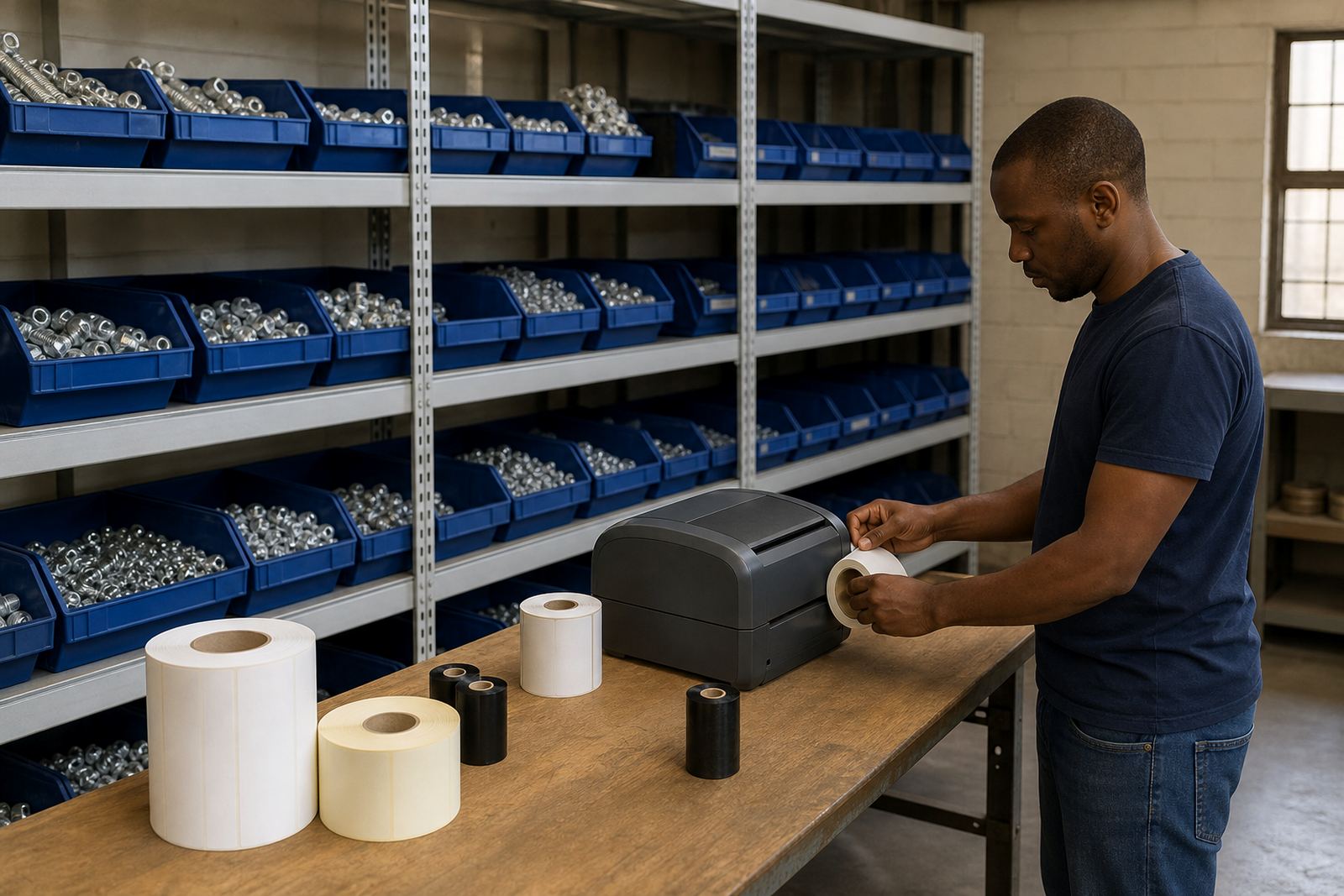
Roll planning starts with printer compatibility. Some scale printers need small core sizes and compact outside diameters, while larger bench printers can take wider rolls and longer lengths. If the roll is too large, the cover may not close properly or the sensors may struggle. If the core is wrong, the roll will wobble and feed unevenly, which leads to crooked labels and waste.
Winding direction matters too. A label roll can be wound face out or face in depending on the printer path, peel plate and sensor position. For busy produce rooms, a properly planned winding direction saves time because operators do not have to rethread rolls or fight with the liner. We also check the label pitch, gap and perforation style so the machine reads each label consistently.
Where output is constant through the day, it often helps to use repeat order planning with a fixed roll length and core size, then keep sample rolls on hand for testing changes to wording, barcode placement or adhesive. That is especially useful for packhouses in Durban, Hammarsdale and Pinetown where one line may handle different product sizes during the same shift.
How a chilled pack line can trip over the small things
Most problems with produce labels are not dramatic, they are small and repeated. A label that works on a dry carton may fail on a wet punnet. A barcode that scans at the packing table may smudge once the pack goes into a cold room. A face stock that looks neat in daylight can become hard to read under fluorescent lights if the print contrast is poor.
Another common issue is using the same adhesive across different surfaces. Smooth plastic tubs, film wrap, paper bags and corrugated boxes all behave differently. If the label needs to survive condensation from vegetables or refrigeration after packing, adhesive matching becomes important. For some fresh goods, a stronger tack helps at first application, while other packs need a gentler adhesive so the label can be removed or repositioned without tearing the pack wrap.
- Wrong adhesive for cold or damp surfaces
- Label size too large for the pack face
- Barcode too close to the edge or fold line
- Roll core not suited to the printer spindle
- Print darkness set too low for a clear scan
Budget ranges that make sense in Rand
For produce scale labelling, budget usually depends on stock type, adhesive strength, roll length and how many roll changes the team can tolerate in a shift. Short-run sample rolls cost less upfront and are useful when you are checking fit, but regular production orders are better planned around stable sizes so waste stays down. Direct thermal rolls are often the lower-cost option for short-life packs because they remove the ribbon expense.
A small operation doing mixed fruit and veg packing may work with a modest label budget each month, while a larger packhouse or retail distribution site will spend more because the line runs longer and consumes more rolls. As a rough guide, many customers plan from a few hundred Rand for test quantities up to several thousand Rand for regular production batches, depending on width, length and quantity. We can also help compare a narrower label with a slightly larger one if that reduces reprints and line stoppages.
When a site in Pretoria or Johannesburg runs on strict shift timing, it is often cheaper to choose the correct roll length once than to keep replacing short rolls during peak packing hours.
Westmead support for produce teams across the country
From our base in Westmead, Pinetown, we support customers who need label stock for produce counters, sorting rooms and pack lines across South Africa. Some sites need quick dispatch to Durban and Pietermaritzburg, while others need stock planned for regular runs to Cape Town, Pretoria or Johannesburg. Our dispatch packing is set up to keep rolls protected from crushing, dust and edge damage in transit.
We can help with custom slitting, rewinding, core sizing, roll length planning, winding direction, sample rolls, adhesive matching, face stock selection, printer fit checks and usage review. For produce scale labelling, that usually means getting the roll to match the printer, the pack surface and the pace of the room, not just the label size on paper.
If your line handles weighed fresh goods and the labels need to stay readable from scale to shelf, we can help you settle the set-up without overcomplicating it.