Packing tables that cannot afford a label delay
Ecommerce fulfilment lives or dies on small details. A parcel that leaves the picking line with a barcode that smudges, a seal label that lifts in transit, or a shelf label that does not match stock location costs time at every step. In busy dispatch rooms across South Africa, especially where rain, coastal humidity or dust change the way materials behave, the label has to do more than look neat. It must print cleanly, read properly and hold on through sorting, courier scans and delivery.
For this use case, the usual setup is a benchtop or industrial thermal printer, direct thermal rolls for short-life shipping labels, and thermal transfer rolls where stronger resistance is needed. Many warehouses use a mix: direct thermal for courier waybills and shelf rotation labels, thermal transfer for product labels, bin labels and longer-running stock identifiers. If your order volumes change through the week, roll length planning matters because stopping to change rolls during a peak dispatch window slows the line.
The label build that suits ecommerce handling
Self-adhesive label stock is made up of three parts: the face stock, adhesive and liner. For ecommerce, the face stock is often a matt paper or coated paper for clear printing, while filmic face stocks are used when moisture, abrasion or rough handling is expected. The adhesive needs to suit the pack surface, whether that is carton board, shrink wrap, plastic mailers or coated pouches. The liner must release cleanly through the printer and rewind evenly for reliable feeding.
- Paper face stock works well for parcel labels and general dispatch use.
- Film face stock is better where moisture, rubbing or oil is part of the job.
- Permanent adhesive suits most shipping, warehouse and carton sealing applications.
- Removable or semi-permanent adhesive is useful for short-term stock moves or returns handling.
- Silicone coated liners help with smooth release and cleaner die-cut performance.
Where labels are exposed to sun on a dispatch bay, a humid storeroom in Durban, or a loading area with dust and forklift traffic, the wrong adhesive can curl or lift. That is why adhesive matching is part of the planning, not an afterthought.
Printer fit checks before the line starts moving
Thermal rolls must fit the printer properly. Core size, outer diameter, winding direction and gap or black mark sensing all affect whether the printer runs cleanly. A roll that is too large for the printer housing or wound the wrong way can cause wasted labels, ribbon breaks or sensor errors. In ecommerce fulfilment, those problems show up exactly when orders are piling up and staff are trying to clear the queue before courier cut-off.
Most warehouse printers use standard core sizes and specific roll widths for parcel labels, stock labels or carton seals. We help with printer fit checks so the roll size and winding direction match the machine on the packing bench or at the picking station. If the site uses more than one printer type, each station should be set up with the same label format where possible, so staff do not have to swap settings from one bay to another.
- Check printer width before ordering rolls for A6 shipping labels or smaller pack labels.
- Confirm core size so the roll sits correctly on the spindle.
- Match direct thermal rolls to short-life dispatch labels.
- Use thermal transfer stock where print life must stretch beyond the day of packing.
- Keep a sample roll for testing before a full production run.
How to lay out labels for fast picking and parcel despatch
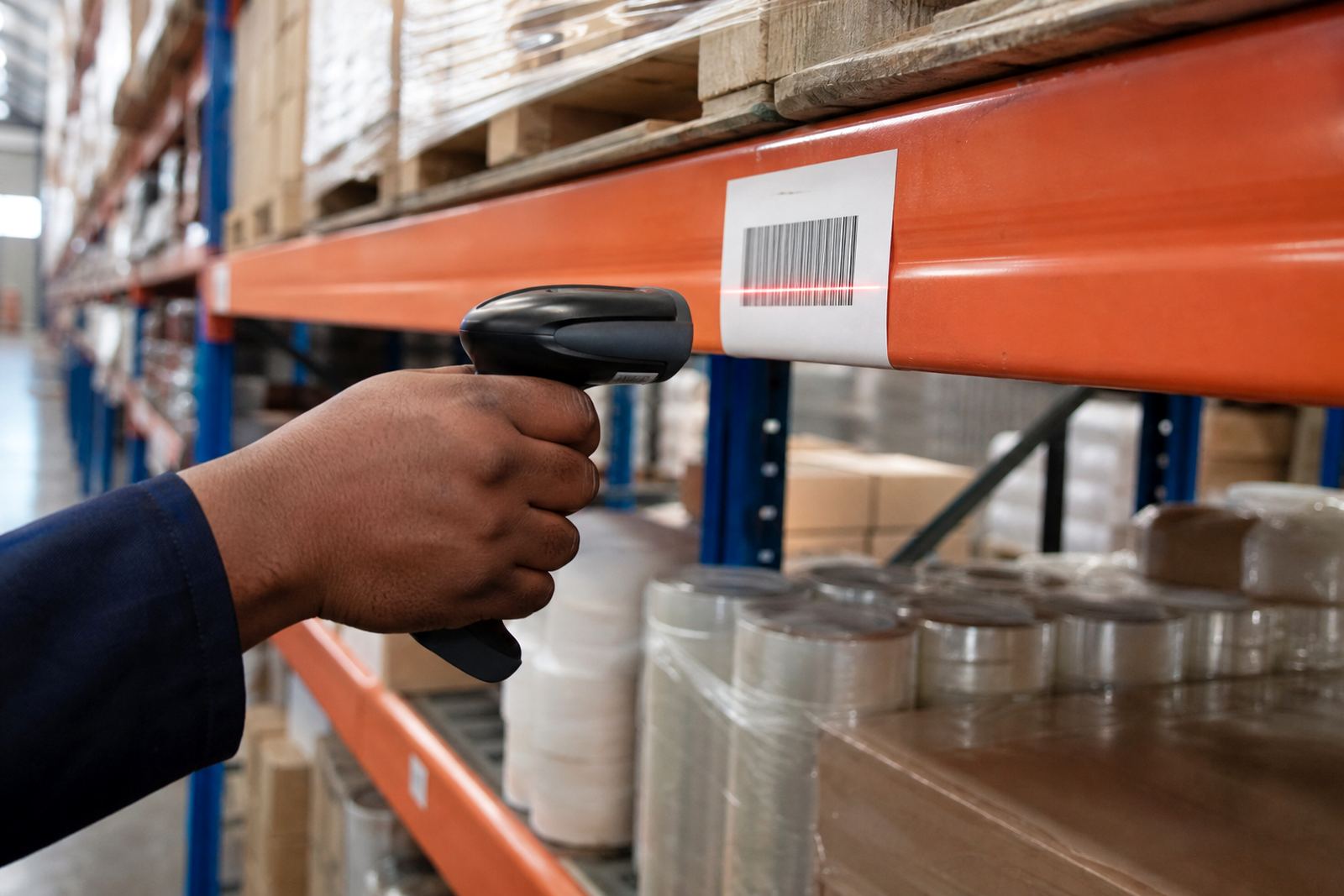
A good ecommerce label plan follows the flow of the order room. Picking labels should be easy to spot, stock labels should remain readable on racking and bins, and parcel labels must scan first time at the packing table. If your team uses batch picking, wave picking or zone picking, the label format should support that method rather than fighting it. Clear numbering, consistent barcode placement and enough quiet space around the code all help scanning speed.
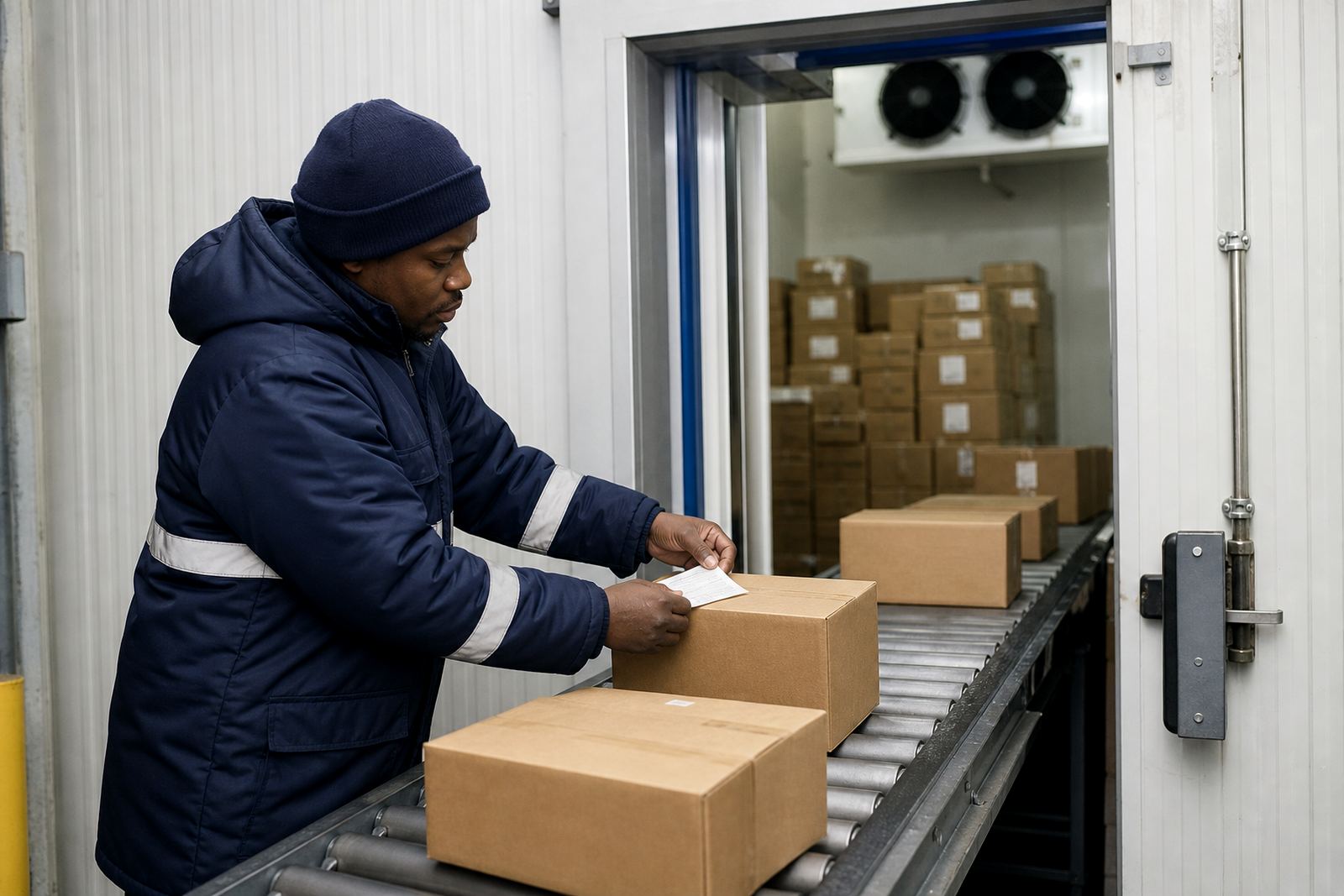
Roll length planning also matters. Short rolls may suit smaller teams or mixed SKU rooms, but high-volume dispatch often benefits from longer runs to reduce stoppages. In colder stores the adhesive may behave differently, while in hot inland rooms the release from the liner can change through the day. A proper usage review helps identify whether the issue is the label, the printer settings, the pack surface or the way the team applies the label.
For ecommerce teams working across Durban, Johannesburg, Cape Town, Pretoria and Pietermaritzburg, dispatch timing can be tight. Labels should support that pace without forcing staff to slow down for reprints or hand correction. It is better to plan for the worst handling point in the process than to hope the courier bag protects a weak label.
Mistakes that cost time at the packing bench
The most common trouble starts with choosing a label only by size and ignoring the surface it must stick to. A label that performs well on plain carton board may fail on glossy mailers or cold, damp packaging. Another common error is running the wrong winding direction, which can make a printer appear faulty when the real issue is the roll orientation. Teams also lose time when they mix label formats across stations and no one knows which roll belongs where.
- Using direct thermal stock for labels that must stay readable for long periods.
- Choosing an adhesive without checking the pack material first.
- Ordering the wrong core size for the printer spindle.
- Ignoring humidity and temperature changes in the packing room.
- Printing barcodes too close to the edge, which can affect scanning.
When labels are part of returns handling or multi-site fulfilment, repeat order planning helps keep the same format in circulation. That reduces errors when the team changes, or when one branch covers another branch at short notice.
Budget ranges that make sense for growing ecommerce teams
Budget depends on size, material, adhesive and whether the label is direct thermal or thermal transfer. Smaller parcel-label runs can stay lean, while heavier duty stock for warehouse use, carton sealing or longer-life identification will cost more. In practical terms, many ecommerce operators start with a basic shipping label range and add stronger labels only where the process needs them. That keeps spend under control without cutting corners on the labels that do the hardest work.
For planning purposes, it helps to think in three bands. Entry-level shipping labels are the lowest cost option for short-life parcel use. Mid-range label stock includes better face stocks and adhesives for mixed packaging and retail handling. Higher-use industrial rolls, custom slitting and special adhesive matching sit above that because they are built to handle more demanding conditions. Exact Rand values depend on width, length, liner type and order size, so the best approach is to match the roll to the actual job rather than over-specifying every line item.
From Westmead, Pinetown, we supply ecommerce fulfilment operations across South Africa with custom slitting, rewinding, sample rolls, core sizing, roll length planning, printer fit checks and dispatch packing support. That gives online sellers and warehouse teams a practical way to keep labels moving without second-guessing each batch.