Paper stock that takes ribbon cleanly
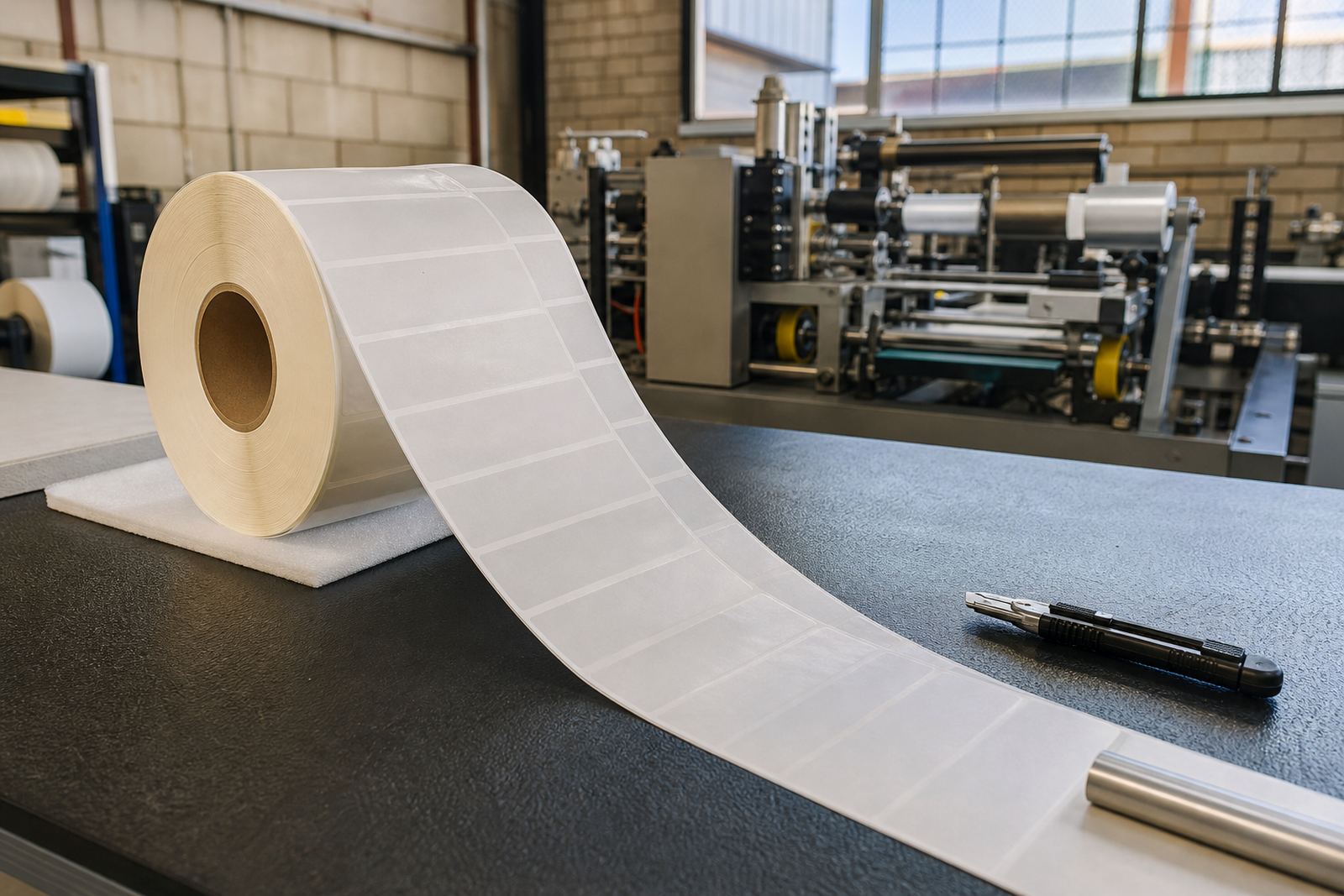
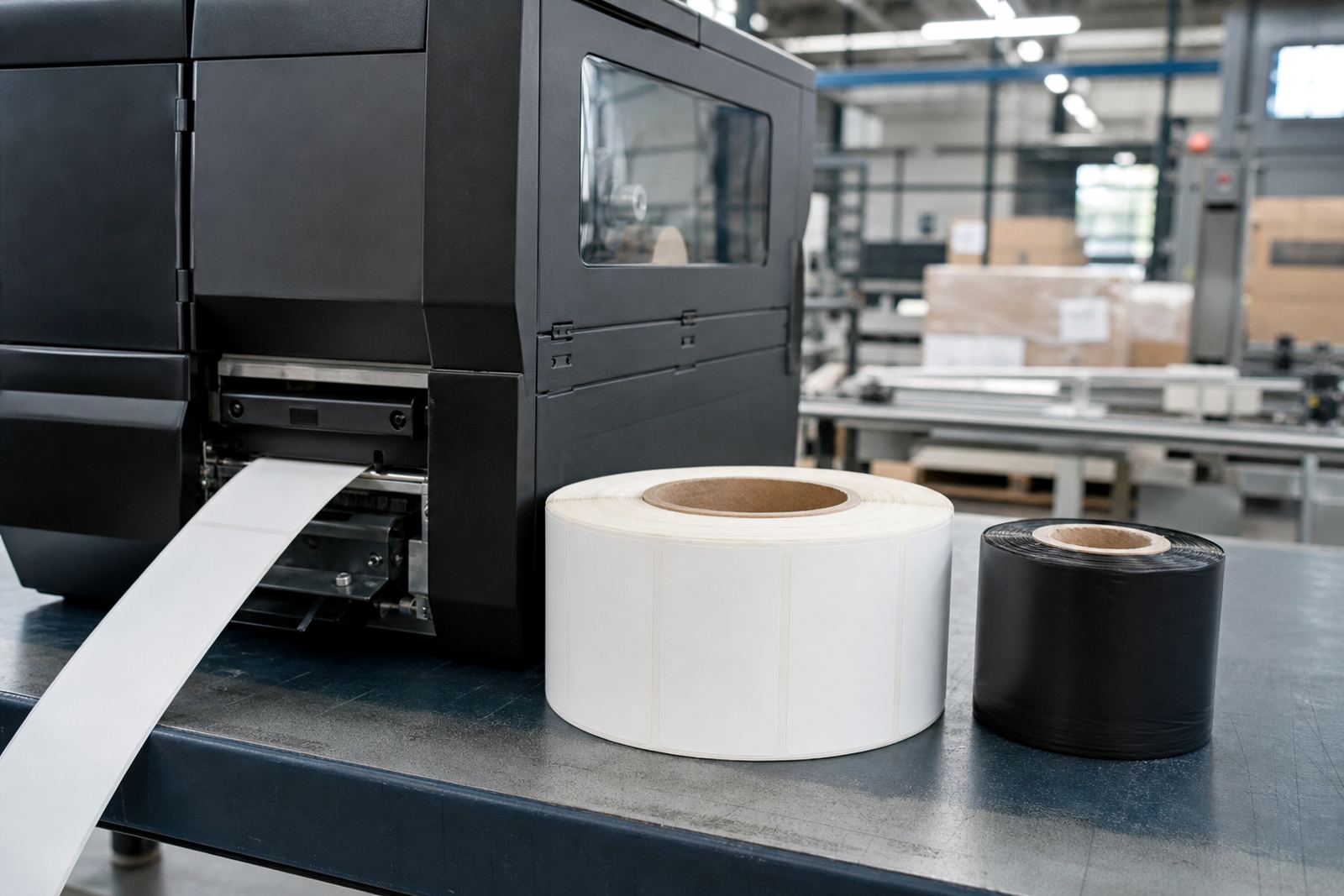
Thermal transfer paper is used with a ribbon, where heat from the printer transfers ink onto the label face. That gives you a sharper print and better staying power than direct thermal for many packing and identification jobs. The face stock is usually a coated or semi-gloss paper, chosen for clear text, barcodes and variable data on cartons, sleeves and shelf labels. For many warehouses in Westmead, Pinetown and Durban, it is a practical choice when labels must travel through handling, stacking and cooler storage without rubbing off too quickly.
We supply paper face stocks in plain white or other print-ready finishes, with adhesive and liner combinations matched to the way the label will be applied. Common uses include product codes, batch numbers, outer carton labels and price labels where a paper face is enough and a film label is not needed. If the job needs better moisture resistance near the coast, the adhesive and face stock choice matters just as much as the ribbon and printer settings.
Roll sizes, widths and core options people actually ask for
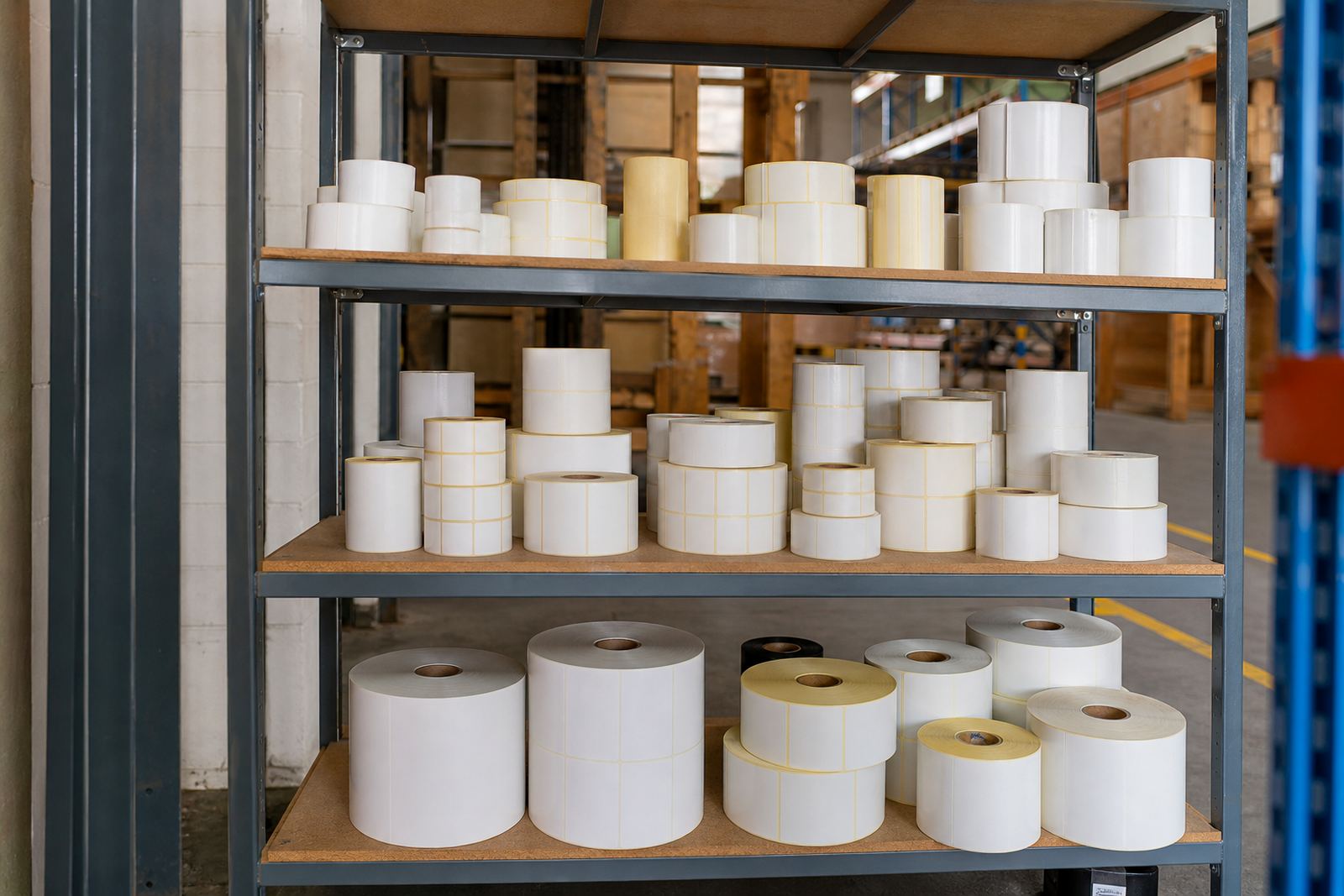
Thermal transfer paper rolls can be cut to suit compact tabletop printers or larger industrial units on packing benches and conveyor lines. The right size depends on the label width, the print head width, the roll outside diameter and the core size your printer takes. In South African operations, we often work with 25 mm cores for smaller printers and 76 mm cores for larger industrial equipment, but fit must be checked against the actual machine and spindle setup.
- Label widths from narrow strips for shelf use to wider carton labels for dispatch
- Roll lengths planned to suit daily output and changeover time
- Core sizes matched to printer hubs and roll holders
- Winding direction set for the printer path and sensor position
- Outside diameter controlled for cabinet space and feed stability
We also plan slit widths where one mother roll is converted into several finished rolls, which helps with packing line flow and order separation.
Where this label paper earns its keep
This stock suits packaging, retail and logistics work where a printed label must stay readable through handling, dispatch and shelf movement. It is often used for outer cartons, stock rooms, racking bays, warehouse location labels, price tickets and internal identification. In manufacturing, it works well for batch control, part marking and work-in-progress tags, especially where the label is not exposed to heavy moisture or outdoor weather.
For Durban, Cape Town and other coastal areas, the balance between paper face stock and adhesive choice becomes important because humidity can affect tack and curl if the match is poor. In Pretoria and Johannesburg, the same material may be used more for speed and clean print than for moisture resistance, while in Pietermaritzburg it often serves mixed packing and storage needs. The point is to match the label to the work, not just the printer.
- Retail shelf and price labels
- Carton and parcel labels
- Warehouse and location codes
- Batch and date marking
- Internal inventory identification
Fitting details that save time on the print line
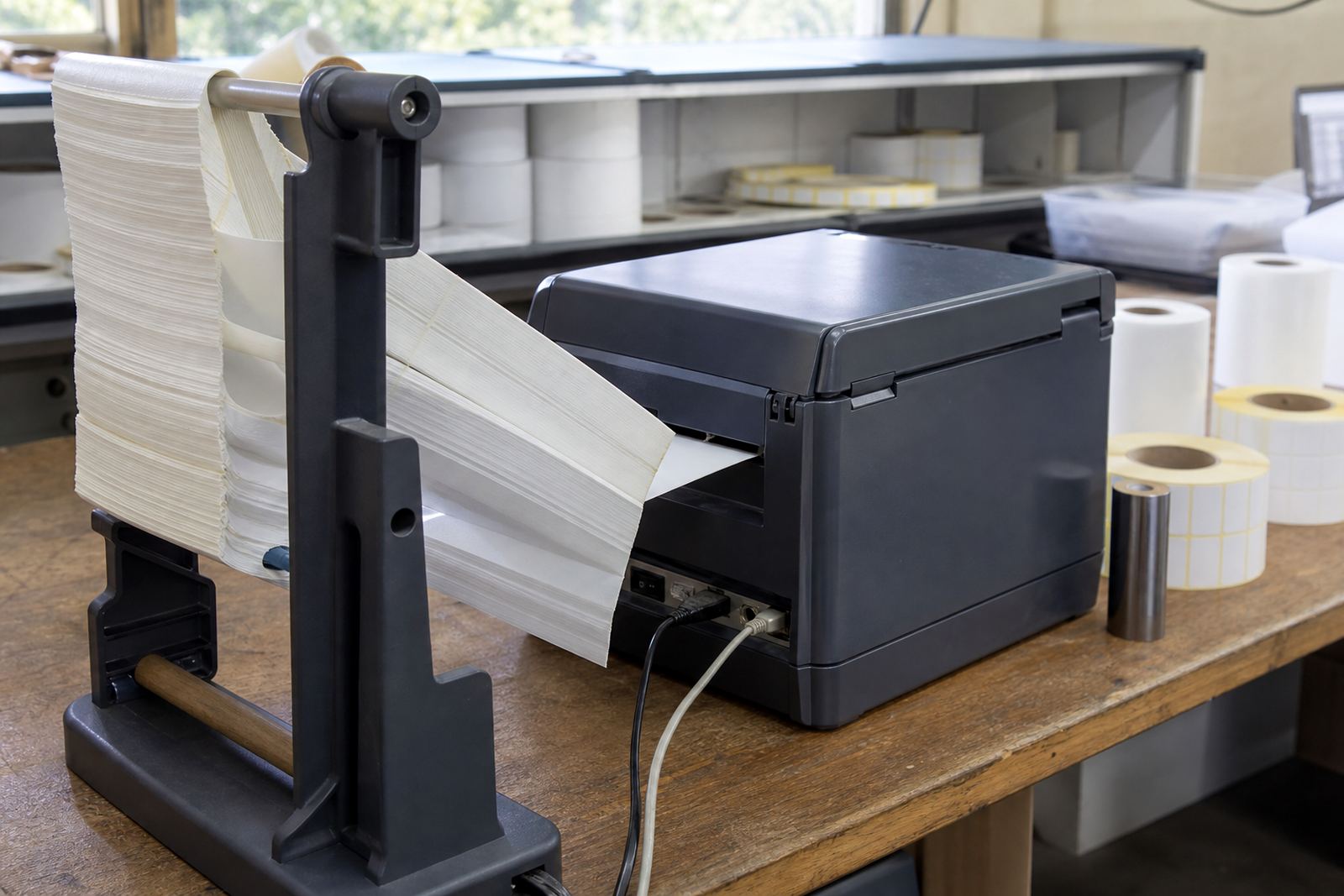
Thermal transfer paper must be set up correctly in the printer, with the ribbon loaded the right way round and the label path aligned to the print head. Print darkness, speed and pressure all affect image quality. If the printer is set too hot, the print can look harsh or the ribbon can wrinkle; if it is too light, the barcode may not read well. Most operators also need to check the label gap or black mark sensing so the machine advances accurately from one label to the next.
When you order rolls for a specific printer, the important thing is fit. That means confirming the core size, roll direction, roll diameter, face width, gap or mark layout and whether the printer takes inside or outside wound media. If you are changing from direct thermal to ribbon printing, the operator may also need a quick usage review so the line is not stopped by a mismatch on day one.
Adhesives and liners for dry, cool or busy handling
The paper face stock is only one part of the build. The adhesive and liner decide how the label releases from the roll and how it stays on the pack after application. Permanent adhesive is common for cartons and product labels, while removable or repositionable grades are used where the label may need to lift cleanly later. On rough cartons, a stronger tack may be needed; on glass or smooth plastic, a cleaner bond with good wet-out can matter more than initial grab.
Liner choice affects feed consistency and ease of peeling. Glassine and kraft liners behave differently during winding, rewinding and dispensing, so we match them to the machine and the operator’s pace. If your site has dust, heat or frequent interruptions, the label build must be planned for that, not just for the artwork on the face. A sample roll can help before a full run is ordered.
What to confirm before the roll is cut
Before production, we check the details that affect print quality and line performance. That includes the printer model, label size, core size, winding direction, adhesive type, ribbon type and the way the rolls will be packed for dispatch. For multi-site use across Westmead, Pinetown, Durban, Johannesburg, Cape Town, Pretoria and Pietermaritzburg, it also helps to note whether one spec must suit several branches or whether each site uses a different machine setup.
- Printer make and model, plus the label path
- Label width, height and gap or black mark style
- Core size, roll diameter and winding direction
- Face stock finish and adhesive requirement
- Ribbon type, if you already use one
- Dispatch packing needs for transport and storage
If the label will be applied by hand, on a bench applicator or straight from a machine, that affects the roll length and pack size too. Clear information at order stage cuts down on rework and keeps repeat runs consistent.
Key facts
| Product type | Paper-based label face stock for thermal transfer ribbon printing |
|---|---|
| Face stock | Coated or semi-gloss paper for text, barcodes and variable data |
| Typical core sizes | 25 mm and 76 mm, depending on printer fit |
| Compatible printers | Tabletop and industrial thermal transfer printers with ribbon support |
| Common adhesives | Permanent, removable and selected high-tack options |
| Typical uses | Cartons, shelf labels, stock control, dispatch and batch coding |