A folded stack that feeds differently to a roll
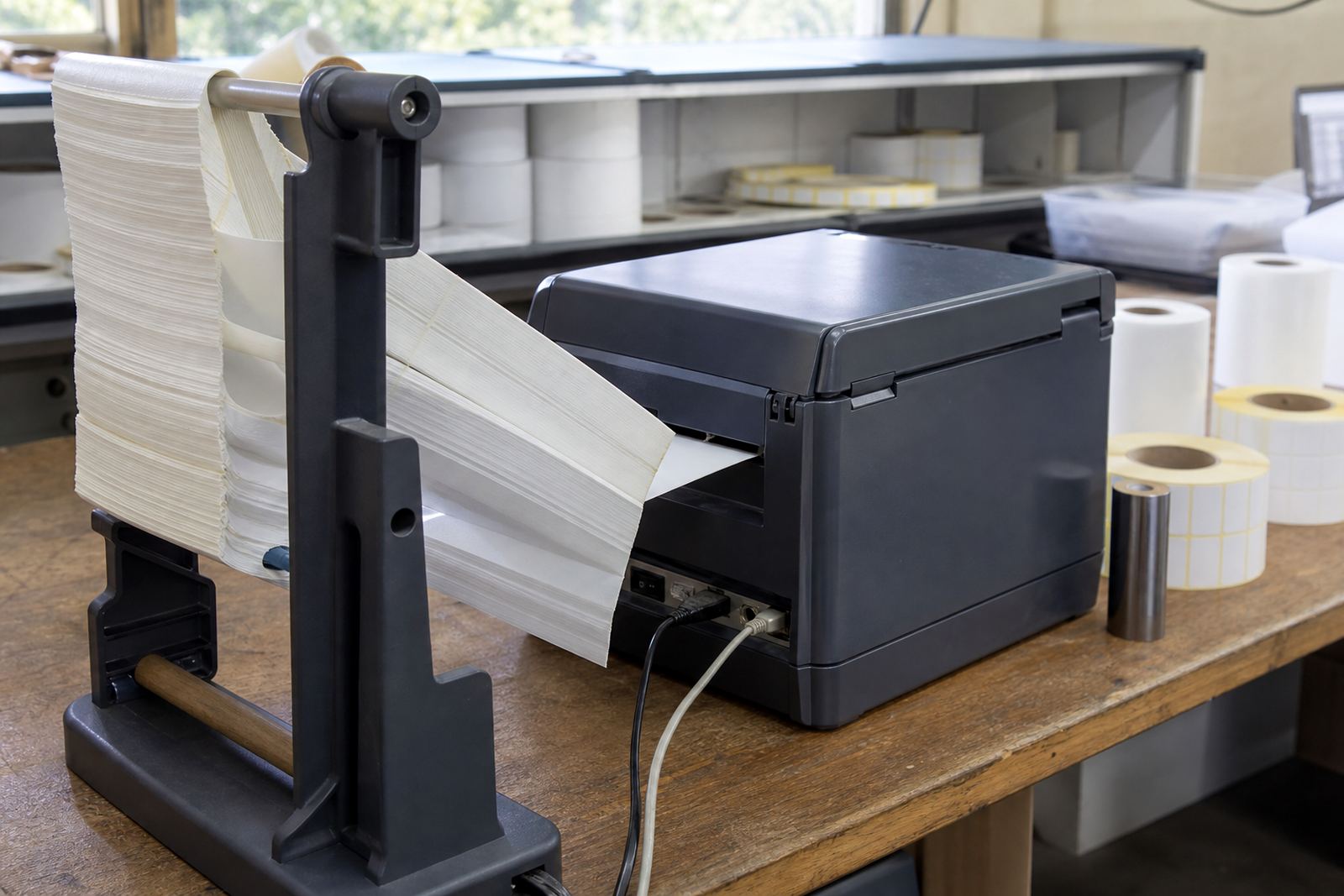
Fanfold labels are supplied as a concertina folded stack, usually in a boxed pack, with each label separated by a fold line rather than wound around a core. In day to day use, that gives you a neat supply that can sit behind or beside the printer and feed in a straighter path than a large roll, which helps on some label stations and wider format printers.
They are used where operators want a tidy stack for long runs, less roll handling, and easier storage in busy packing areas. In Westmead, Pinetown and other industrial sites, they are often chosen for packing lines, warehouse counters, dispatch benches and print stations that run labels through the day. The format also helps when a job needs a larger label count without a bulky roll sitting on the machine.
- Folded supply format for straight feed systems
- Common in carton labels, dispatch labels and product marking
- Useful for higher count jobs where space around the printer is tight
- Supplied in a stack that must be kept square and dry
Face stock, adhesive and liner choices that hold up in the real world
The face stock is the top material that carries the print. For fanfold labels, that can be a direct thermal face stock for short to medium life use, or a thermal transfer face stock that takes ribbon printing for better durability. Paper face stocks are common for shipping and shelf marking, while synthetic face stocks are chosen where moisture, scuffing or handling are a concern.
Adhesive choice matters as much as the print method. Permanent adhesive is used for most packaging and retail work, while removable and freezer grade options are selected for more specific jobs. The liner must release cleanly through the printer path, and the fold depth has to suit the printer feed so the stack does not drag or skew. In humid coastal areas like Durban, a label that is fine on paper in a dry room can become a problem if the adhesive or liner is not matched properly.
- Paper or synthetic face stocks
- Direct thermal for shorter life labels
- Thermal transfer for more durable print
- Permanent, removable or speciality adhesive options
- Liner and fold quality affect feed stability
Sizes and pack formats that fit South African printers
Fanfold labels are made in many widths and lengths, and the right size depends on the printer throat, label application and the amount of print information you need to show. Common uses include address labels, carton labels, logistics labels, shelf labels and retail marking, but the actual size can range from narrow name labels to wider dispatch formats. The fold stack must match the printer path and the space available on the bench or trolley.
For thermal printers, core size is not usually the main issue with fanfold stock, but the feed opening, media path and maximum media width are critical. Some printers accept fanfold directly through a rear feed slot, while others need a guide path or a holder so the stack stays aligned. If you are moving from rolls to fanfold, the printer model and label format should be checked before the first run.
- Widths from narrow marker sizes to wide dispatch labels
- Lengths matched to product, carton or pallet use
- Supplied in boxed packs for storage and transport
- Printer feed path and maximum media width must be checked
Where fanfold format earns its keep
This format suits sites that print in batches, print long sequences, or need a stack that can be fed with less roller pressure than a wound roll. It works well in logistics depots, manufacturing packing rooms, retail back areas and contract packing operations. In Johannesburg and Pretoria especially, where dispatch windows can be tight and work shifts run hard, a clean feeding stack can save time at the printer and reduce stoppages caused by roll bounce or tight winding.
Fanfold labels are also useful where the printer is mounted on a wall bracket, trolley or narrow bench. The folded stack can sit in a box or tray, which keeps the media protected and makes it easier to pull off labels as the job runs. For some teams, that is a better fit than loading and unloading rolls all day.
- Dispatch, warehousing and manufacturing line use
- Good for longer print runs and repeat batches
- Helpful where bench space is limited
- Suitable for sites with steady daily label demand
Loading, handling and keeping the stack straight
Good fitting starts with a clear media path and a printer set for the correct media type. The folded stack must feed without twisting, and the first fold should enter the printer squarely. If the label is too wide for the guides, the stack can snag. If the stack is too high for the area around the printer, the folds can shift and cause misfeeds. On some machines a rear feed guide is enough; on others a holder or stand gives better control.
Care is practical and simple. Keep the boxed labels dry, out of direct sun and away from dusty cutting or packing areas. Do not stack heavy cartons on top of them because the folds can flatten and the leading edge may not feed as cleanly. In coastal storage areas, leave the cartons sealed until use where possible, especially if the labels use a paper face stock and permanent adhesive.
- Feed the stack square to the printer guides
- Store sealed packs flat and dry
- Keep away from heat, dust and direct sun
- Use the correct printer media setting and label gap or black mark setting as needed
Details to lock down before you order
To supply the right fanfold labels, we need the label width and height, the material type, the adhesive requirement, and whether you are printing direct thermal or with ribbon. It also helps to know your printer make and model, the feed direction, whether you need a loose pack or boxed pack, and how many labels you run in a shift. If the labels will face cold rooms, cartons in transit or damp storage, say so at the start so the material can be matched properly.
At our Westmead, Pinetown base we support customers across Durban, Johannesburg, Cape Town, Pretoria and Pietermaritzburg with practical label planning, sample rolls, printer fit checks and repeat order planning. If you are not sure whether fanfold is the better option for your line, send the measurements and printer details through the enquiry form on our contact page and we will work through the fit before dispatch.
- Label width x height in millimetres
- Direct thermal or thermal transfer print method
- Paper or synthetic face stock
- Permanent, removable or speciality adhesive
- Printer make, model and feed path
- Pack count, usage rate and storage conditions
Key facts
| Format | Fanfold folded stack, boxed or bundled |
|---|---|
| Face stock | Paper or synthetic, depending on application |
| Print method | Direct thermal or thermal transfer |
| Adhesive | Permanent, removable or speciality grades |
| Typical use | Dispatch, retail, logistics and product marking |
| Supply area | Westmead, Pinetown and nationwide delivery across South Africa |