

Rolls that keep cartons readable from packing table to truck
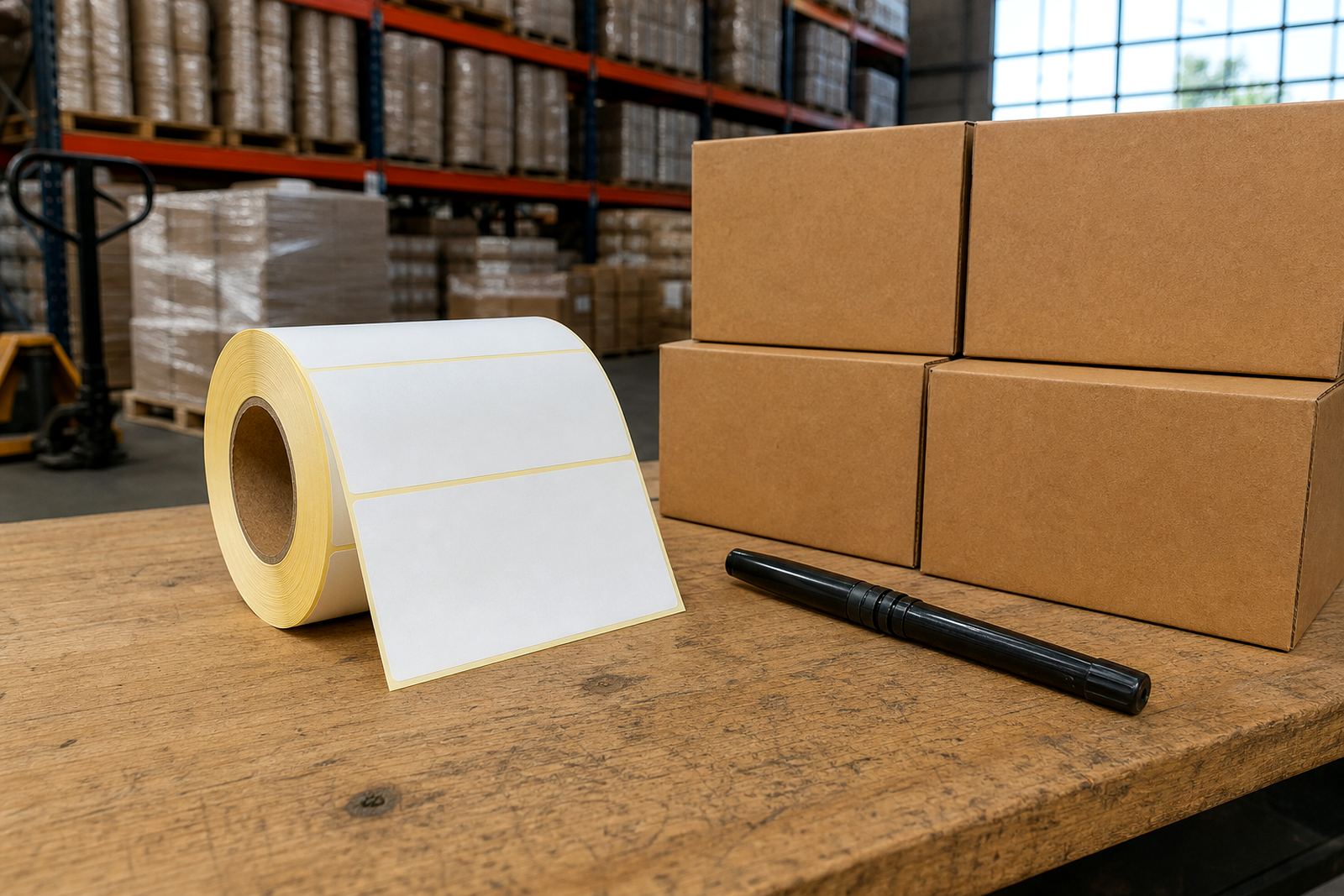
Shipping label rolls are supplied as pressure sensitive labels on a roll, ready for fast application onto cartons, satchels, wrap bundles and tote crates. In busy packing lines they help teams mark destination details, barcode data, pallet notes and route identification without slowing the handover from packing to dispatch. The face stock, adhesive and liner are matched to the job so the label stays legible through handling, stacking and delivery.
For South African dispatch bays, the real test is often dust, heat, humidity and short turnarounds. In coastal areas such as Durban and Cape Town, a label may face damp air, chilled storage or condensation from early morning loading. Inland, heat and abrasion become more of a problem. We specify shipping label rolls with those conditions in mind, so the label grips properly and prints cleanly on the right machine.
Face stock, adhesive and liner choices that suit your load
The face stock is the outer label layer that takes the print. For shipping labels, the most common options are direct thermal face stock for short to medium life labels and top-coated or plain thermal transfer face stock where longer life or better resistance is needed. Thermal transfer labels use a ribbon, while direct thermal labels print with heat only. The right choice depends on how long the label must stay readable and whether it will face sun, friction or cooler rooms.
Adhesive choice matters just as much. A standard permanent adhesive suits most cartons and outer packaging. For textured corrugate, recycled board or slightly dusty surfaces, a stronger tack can help the label bite properly. Removable or freezer grade options can be used where the label must release cleanly or hold in cold storage. The silicone release liner is selected for smooth feeding through the printer and clean peel off at the packing bench.
- Permanent adhesive for standard carton and parcel use
- High tack options for rough or fibrous box surfaces
- Removable options where labels must lift off later
- Freezer grade options for chilled or cold chain packing
Widths, lengths and core sizes we cut around your printer
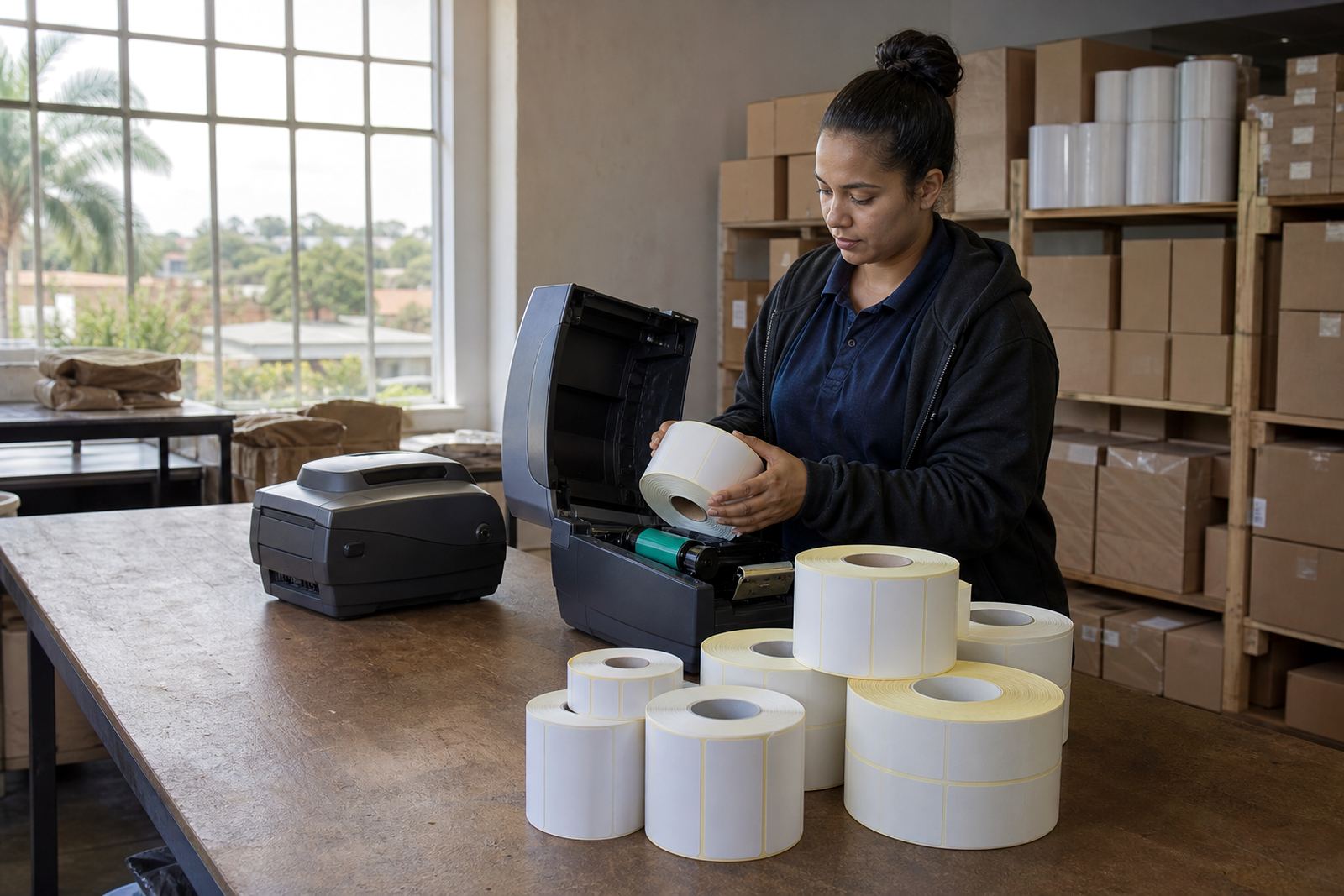
Shipping label rolls are supplied in common web widths and roll diameters to suit benchtop and industrial printers. Small packing stations often use compact rolls on 25 mm cores, while heavier duty printers may take 40 mm or 76 mm cores. The wrong core size can cause poor fit, feed errors or wasted time at the despatch counter, so printer compatibility is always confirmed before supply.
We plan roll length around your label size, print volume and label application method. Narrow labels are often used for route codes and parcel IDs, while wider formats allow carton descriptions, addresses, barcode fields and handling notes.
- Common widths: 50 mm, 75 mm, 100 mm and custom cut sizes
- Typical core sizes: 25 mm, 40 mm and 76 mm
- Roll diameter matched to printer feed space and volume
- Winding direction set for your printer feed path
Where these labels earn their keep in a working yard
These rolls are suited to packing tables, picking benches, cage bins, stock rooms and despatch counters where parcels need to be identified quickly and without confusion. They are commonly used for carton labels, dispatch notes, route numbers, pallet marks and seal identifiers. In retail back rooms they help with transfer stock, returns and store-to-store movement. In logistics they support sorting, loading and quick scanning at handover points.
Manufacturers also use shipping label rolls on outer cartons, wrapped bundles and component trays where product must be moved between departments. For teams in Westmead, Hammarsdale and Pinetown, the practical benefit is speed and traceability. For national distribution out of Johannesburg or Pretoria, the same roll needs to survive longer transit, more handling and more than one scanning point.
- Cartons leaving despatch in retail and wholesale
- Route marks for mixed load deliveries
- Warehouse transfer and bin identification
- Outer packaging for manufacturing and assembly goods
Fitting, printing and day-to-day handling on the floor
Shipping label rolls need the correct printer fit, clean loading and a feed path that suits the machine. Direct thermal rolls are often used where speed matters and the label life is shorter. Thermal transfer rolls are chosen where print durability is more important, especially if the label may sit in a yard, on a pallet or in a sunlit loading area before delivery. The printer settings should match the roll size, gap or black mark sensor requirement and ribbon type where relevant.
For best results, labels should be applied to a clean, dry surface with firm hand pressure across the full face. Dust, box fibres and trapped moisture can reduce bond strength. On cold mornings or in humid coastal conditions, it helps to let stock and cartons settle to room temperature where possible. If the adhesive is too cold, it may not grip properly at the corners and edges.
- Load the roll with the correct winding direction
- Set the printer to the exact label width and pitch
- Keep the peel edge and roller path free of dust
- Allow carton surfaces to dry before application
Confirm these details before a roll is cut for your line
Before we cut or supply shipping label rolls, it helps to confirm the printer model, core size, label width, roll diameter and whether you are printing direct thermal or thermal transfer. We also check whether the labels are for carton faces, poly mailers, bin tags or pallet notes, because the surface and handling conditions affect the adhesive choice. If you already use a label format that works, send the measurements and we can work from that.
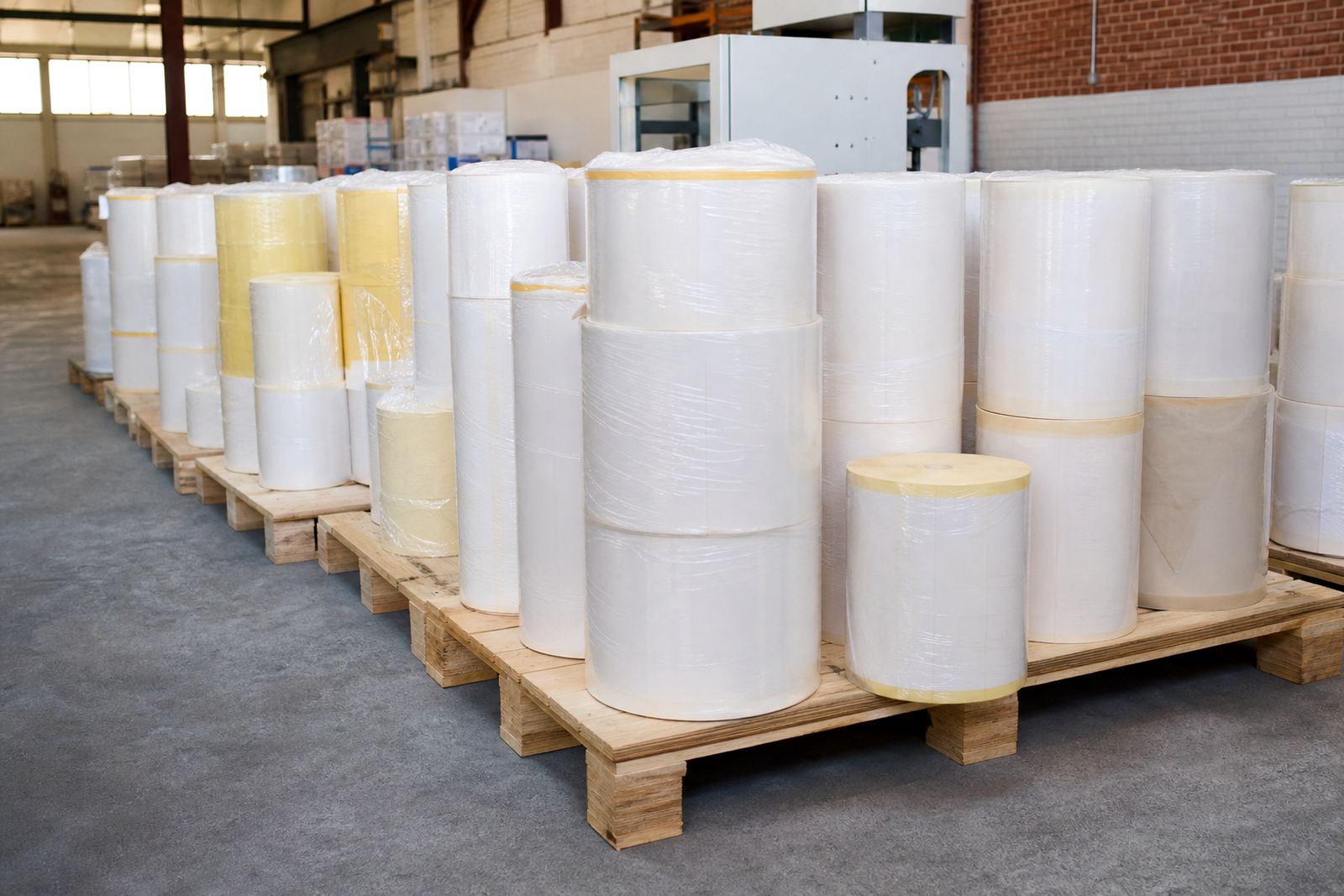
Clients across Durban, Cape Town, Johannesburg, Pretoria and Pietermaritzburg can use our enquiry form on the contact page to request sample rolls, printer fit checks or repeat order planning. For larger sites, we can discuss roll length planning, rewinding, winding direction, custom slitting and dispatch packing so the product arrives ready for the floor. A clear brief saves time and reduces waste, especially where the packing line cannot afford a stoppage.
- Printer make, model and core size
- Label width, length and gap or black mark detail
- Direct thermal or thermal transfer requirement
- Surface type, temperature and handling conditions
Key facts
| Product type | Self-adhesive shipping label rolls |
|---|---|
| Print method | Direct thermal or thermal transfer |
| Core sizes | 25 mm, 40 mm and 76 mm |
| Typical use | Cartons, dispatch notes, route IDs and pallet marks |
| Material options | Paper face stock with suitable adhesive and liner |
| Supply area | Westmead, Pinetown and nationwide delivery across South Africa |