Small-core rolls that sit neatly in tight printer bays
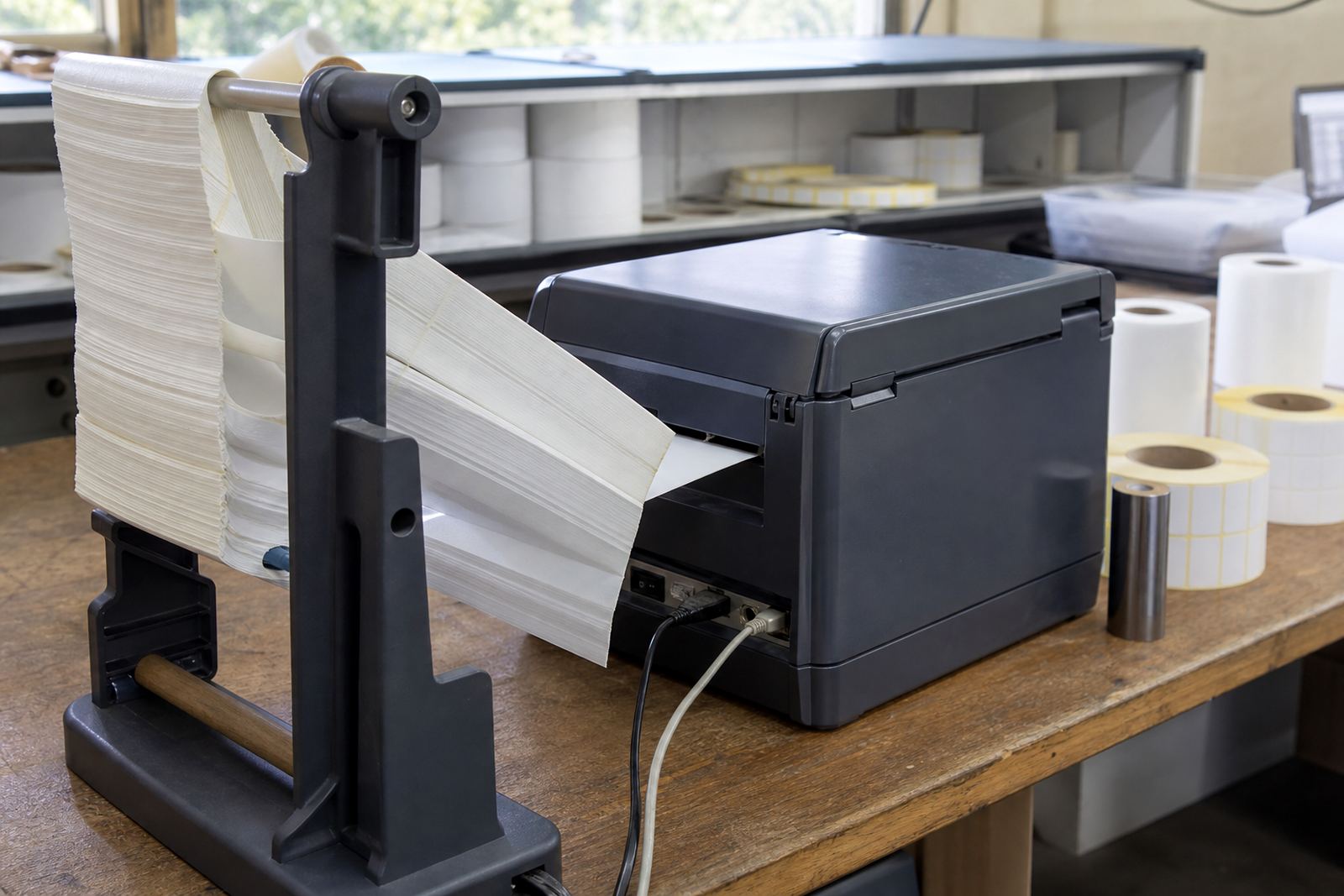
25mm core rolls are label rolls wound onto a smaller inner core than the larger warehouse style formats. That smaller core is often preferred where the printer has a compact feed path, limited spindle room, or a shallow roll cradle. In practical terms, it helps label stock feed cleanly in smaller benchtop units and bench printers used for parcel labels, product labels, batch marking and short-run packing work.
These rolls are supplied as converted stock, which means the finished roll is planned around the printer, the label size and the way the roll has to unwind. If the winding direction is wrong, or the roll is too wide for the label path, you can get skewed feeding, missed gaps, or ribbon creasing on thermal transfer jobs. That is why core size is only one part of the fit. Roll diameter, label width, gap size and unwind direction all matter as well.
For Westmead, Pinetown and surrounding industrial areas, 25mm core rolls are a useful format where space is tight and the team needs quick roll changes during busy shifts. They are commonly used in packaging rooms, dispatch counters, small filling lines and re-labelling points.
Face stock, adhesive and liner choices that change the job
The face stock is the top layer that carries the print. Depending on the application, that can be paper for everyday product and carton labels, or synthetic material for labels that need better resistance to scuffing, moisture or handling. Smooth paper stock gives clean print coverage for general marking, while coated stock can help with sharper text and barcodes. For coastal areas like Durban and Pietermaritzburg warehouses receiving humid stock, the face stock choice can make a noticeable difference.
Adhesive selection is just as important. Permanent adhesive is used for most general packaging and dispatch labels. Removable adhesive is used where the label must come off later without damaging the pack or leaving heavy residue. In freezer, cold room or high surface-energy applications, the adhesive needs to be matched to the surface and the temperature range. A label that performs well on a carton may fail on a dusty drum, powder-coated tub or plastic pouch if the adhesive is not suited to it.
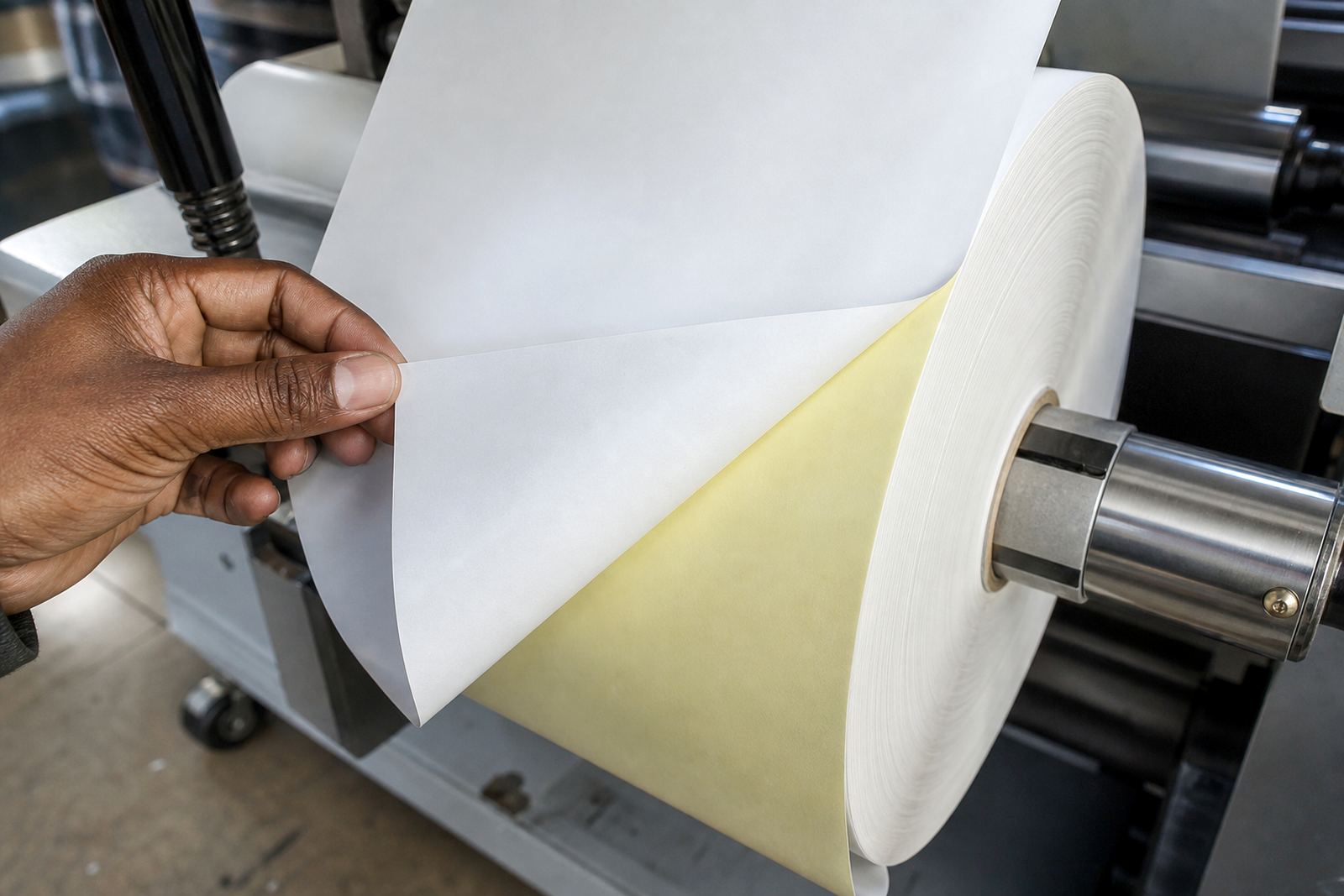
The liner supports the roll and affects how the label strips and peels during dispensing. Paper liners are common for general use, while some converted stocks use stronger liners when the roll needs cleaner handling or a more controlled unwind. Matching the liner to the printer path helps reduce jams and keeps output more consistent, especially where operators are changing rolls through the day.
- Paper face stock for general packaging and stock identification
- Synthetic face stock for moisture, abrasion and handling resistance
- Permanent or removable adhesive matched to the pack surface
- Paper or stronger liner options for steadier feeding and stripping
Direct thermal or thermal transfer, and why the choice matters
25mm core rolls can be made for direct thermal printing or thermal transfer printing. Direct thermal stock is used where the label image is created by heat from the printhead onto a heat-sensitive surface. It is often chosen for short-life labels, courier work, shelf marking and dispatch applications where the label is not expected to last for years. It works best when the print area is protected from heat and direct sunlight.
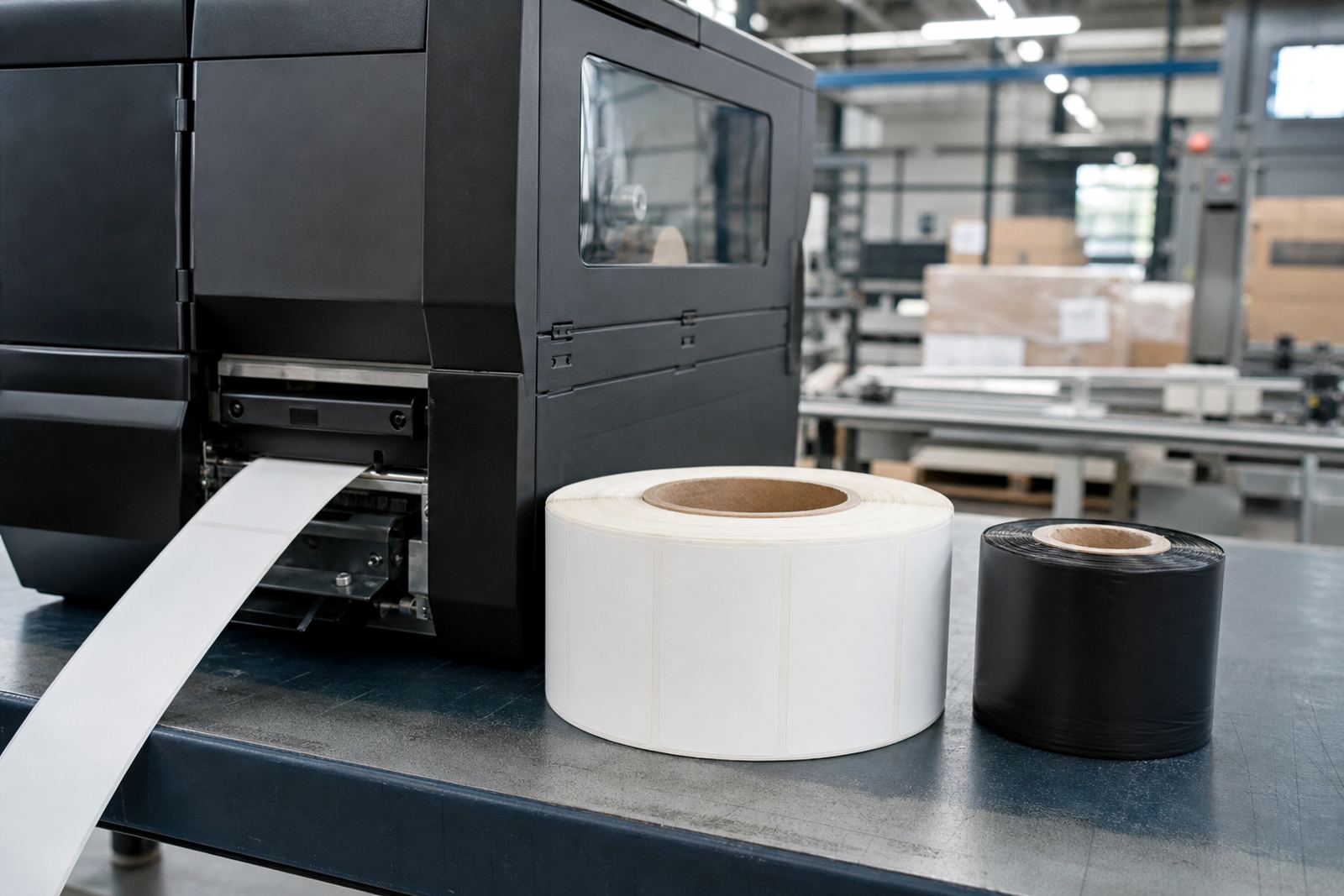
Thermal transfer stock uses a ribbon between the printhead and the label face stock. This is the better option where the print needs more durability, especially for product identification, outer cartons, warehouse location labels and labels that may face scuffing or handling in transit. The ribbon type and the face stock must suit each other, otherwise print quality drops and the barcode may not scan properly.
When checking printer compatibility, the main points are the printer model class, core size, roll outer diameter, ribbon requirement and whether the machine takes a specific winding direction. A compact printer may accept 25mm core rolls but still need a certain maximum roll diameter to fit properly inside the housing.
Fits where space is tight, from packing benches to dispatch counters
These rolls suit businesses that need dependable labels without moving up to a larger industrial roll format. They are commonly used in retail back rooms, distribution points, small manufacturing lines and pack stations where labels are printed in smaller batches. If the label is being applied to retail packs, courier satchels, stock trays or pallet split labels, a small-core roll can be the practical choice.
In Johannesburg and Pretoria warehouses, 25mm core rolls are often used at deskside or bench printers placed beside scales, scanners and packing tables. In Cape Town and Durban, where humidity and salt air can affect stored stock, the roll specification and storage method become part of the job. Keep rolls sealed until use and store them away from direct sunlight, dust and heat sources.
- Compact benchtop and bench printers
- Retail packing counters and stock rooms
- Logistics labels for dispatch and internal movement
- Light manufacturing, batch marking and product identification
Fitting details that avoid stoppages on the line
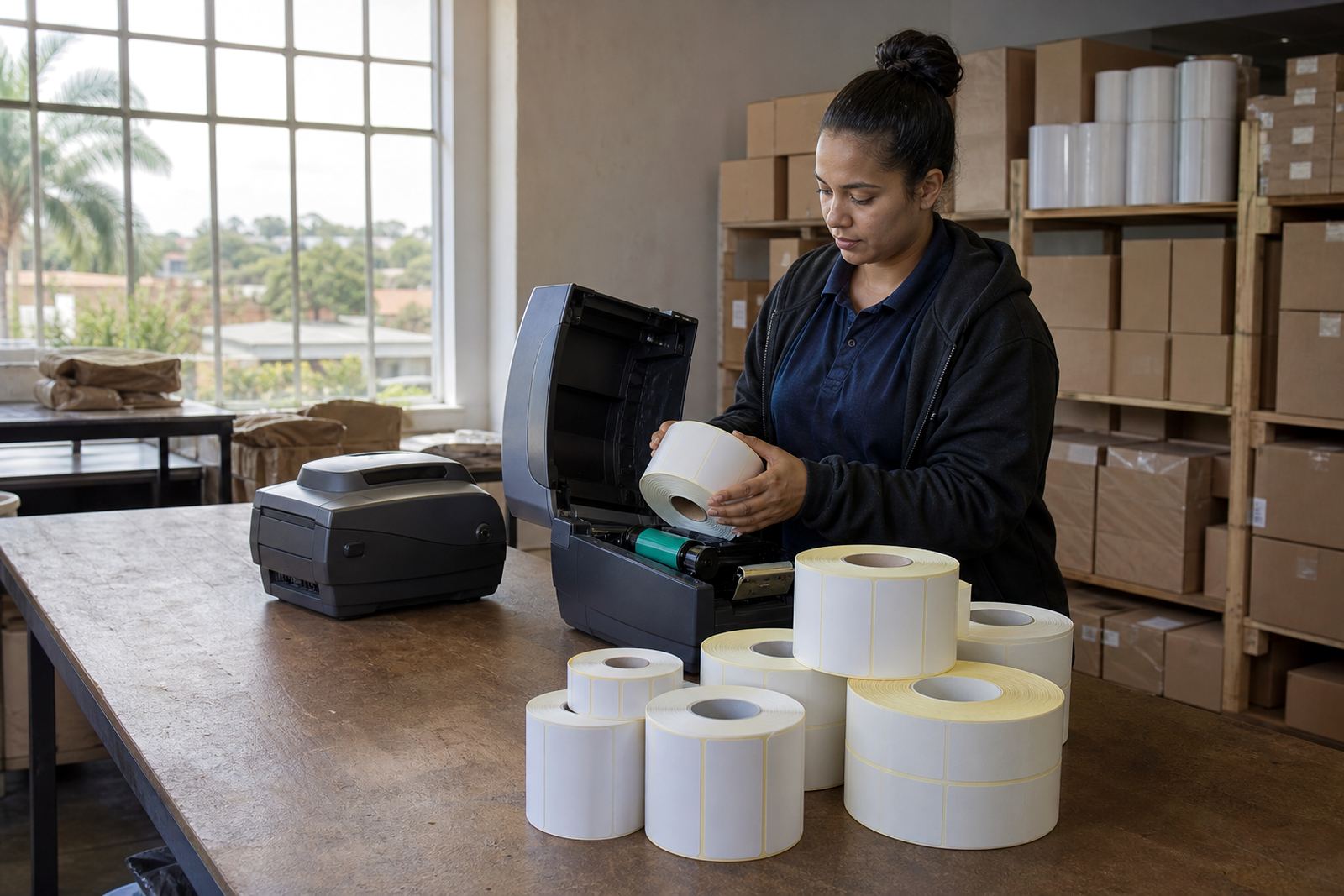
Before a 25mm core roll goes into service, check that the spindle, side guides and roll cradle suit the roll width and outer diameter. If the roll sits too loose, feeding can wander. If it is too tight, the roll may drag and strain the printer. On thermal transfer jobs, the ribbon path also needs to be aligned properly so the print remains even across the label.
Many printers need a short setup check after a roll change. That can include sensor position, gap sensing, darkness setting and a quick test print to make sure the label length and print registration are correct. If the roll has been converted with a specific unwind direction or core orientation, that detail should be noted before dispatch. It saves time when the labels reach the line and the operator has to load them quickly during a busy shift.
Where labels are being used in damp or dusty conditions, keep the printer area clean and avoid leaving opened rolls exposed. Dust on the liner or adhesive edge can cause tracking issues and uneven dispense. A neat load is usually faster than trying to force a misaligned roll into place.
What we need from you before we convert or supply
To match a 25mm core roll correctly, we need the label width and length, the face stock type, the adhesive requirement, the core diameter, the maximum outer diameter and the printer model or printer family. If you already have a sample roll, that helps confirm the unwind direction, gap size and the way the labels are packed on the core. Where print durability matters, we also need to know whether the job is direct thermal or thermal transfer.
If the roll is for a recurring line, tell us how many labels are used per day, whether the stock is kept in a cool room or regular storeroom, and whether the application is on cardboard, plastic, glass or metal. That allows better roll length planning and reduces stoppages caused by the wrong adhesive or a roll that is too large for the printer bay.
- Label size, including width and length
- Core size, roll diameter and printer model
- Face stock type and adhesive requirement
- Direct thermal or thermal transfer use
- Winding direction and any sample roll reference
For supply across South Africa, orders are handled from Westmead, Pinetown and dispatched to Durban, Johannesburg, Cape Town, Pretoria and Pietermaritzburg. Repeat runs can be planned around the same conversion details so the next batch loads the same way, which keeps the print room steady and cuts down on avoidable adjustments.
Key facts
| Core size | 25mm inner core |
|---|---|
| Print method | Direct thermal or thermal transfer |
| Typical roll formats | Slitted to required label width and outer diameter |
| Face stock options | Paper or synthetic label stock |
| Adhesive options | Permanent, removable or application-specific |
| Compatibility | Compact benchtop and bench label printers with suitable spindle and roll capacity |