A steady bond for ordinary packing conditions
Acrylic adhesive stock is used where a label must stay put on clean cartons, plastic tubs, sleeves and shrink wrapped packs, yet still convert and dispense cleanly through label printers and application lines. It is a pressure-sensitive adhesive option, so the bond develops when the label is pressed onto the surface. In practical terms that means good tack, dependable holding power and predictable release from the liner, which is important when you are running mixed jobs or changing pack types during the day.
This grade is often selected for packaging that moves through retail, warehousing and light manufacturing because it gives a balanced performance across many normal surfaces. It is not the most aggressive adhesive for every extreme condition, but it is a sound choice when you need a label that behaves properly on standard pack stock, shipping cartons and product containers. For many South African operations, that balance matters more than chasing a specialised adhesive for every line item.
Face stock, adhesive and liner in plain terms
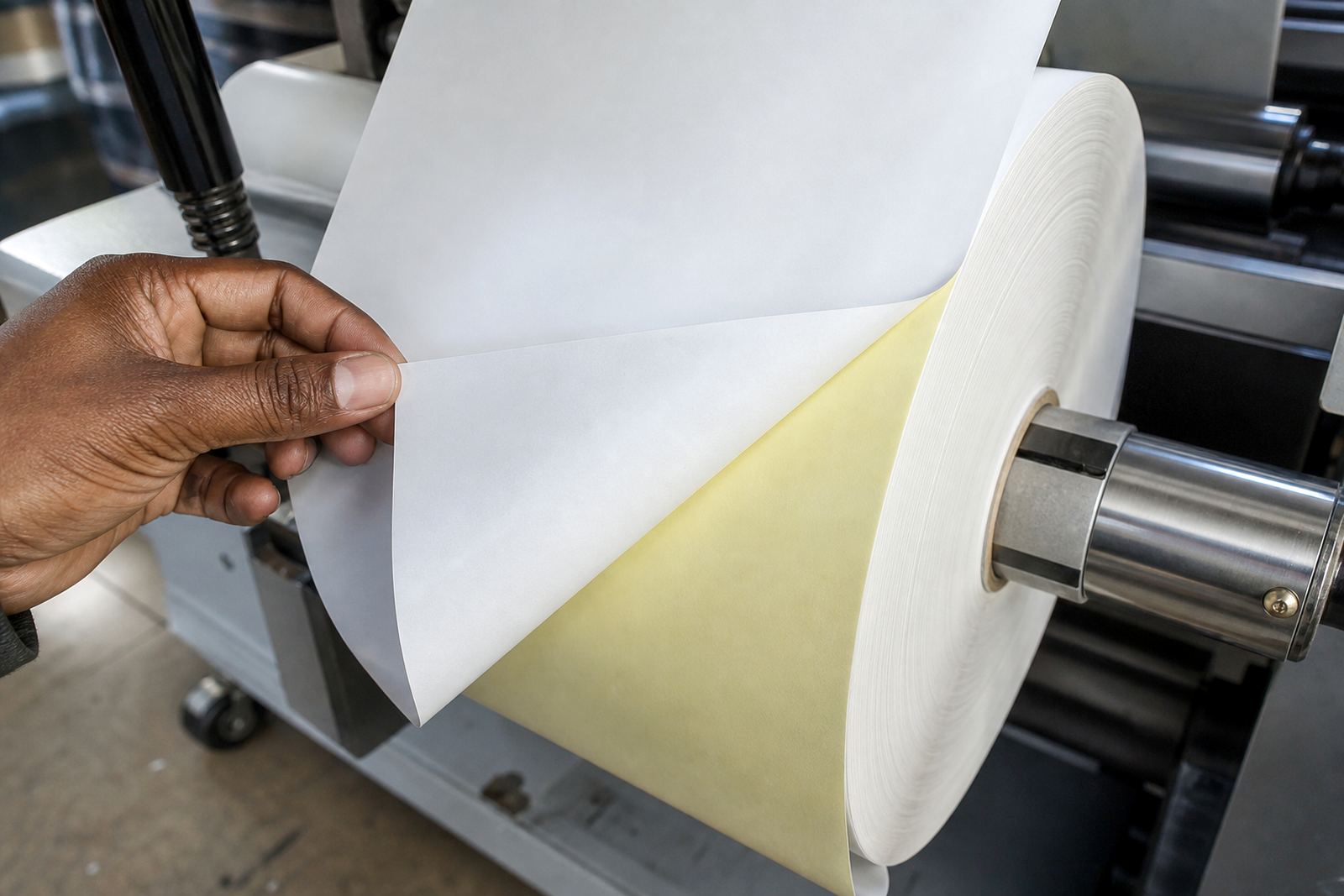
When we prepare acrylic adhesive stock, three parts matter. The face stock is the printed or written top layer. The adhesive is the sticky layer underneath. The liner is the release sheet that carries the label through printing, cutting and dispensing. Each part affects how the label feeds, how it prints and how it releases from the backing. A small change in face material or liner weight can alter curl, dispense speed and edge lift, so it is worth confirming the full build before ordering.
- Face stock options can include paper and film based label materials, depending on the finish needed.
- Acrylic adhesive can be selected in general purpose or more specialised versions for different surface energy and temperature conditions.
- Liner choices typically include paper or synthetic release liners, with the right one helping with clean rewinding and stable feed.
- Sheet size, roll width and unwind direction all affect how the stock runs on your printer or applicator.
For wet warehouses, coastal humidity in Durban or product rooms where the packs are handled often, the full construction should be checked as a unit, not just by adhesive name alone.
Where acrylic stock earns its keep
This adhesive type is commonly used on corrugated cartons, polyethylene sleeves, product jars, drums, courier packs and retail units where the surface is reasonably clean and dry. It is a sensible option for barcodes, batch labels, shelf stickers, warning labels and outer packaging identification. In many plants it is chosen because it gives a neat finish and remains usable across a wide range of everyday applications without constant changeovers.
- Retail packs that need a clean face and readable barcode.
- Logistics cartons that move through sorting and dispatch.
- Manufacturing batches where product identification must stay visible.
- General packaging in stores, depots and production rooms.
On chilled products, dusty cartons or uneven recycled board, the final result depends on surface prep and the exact adhesive grade. If the pack has oil, condensation or heavy dust, that should be mentioned up front so the adhesive match can be checked properly, not guessed at.
Printer fit, roll build and conversion details
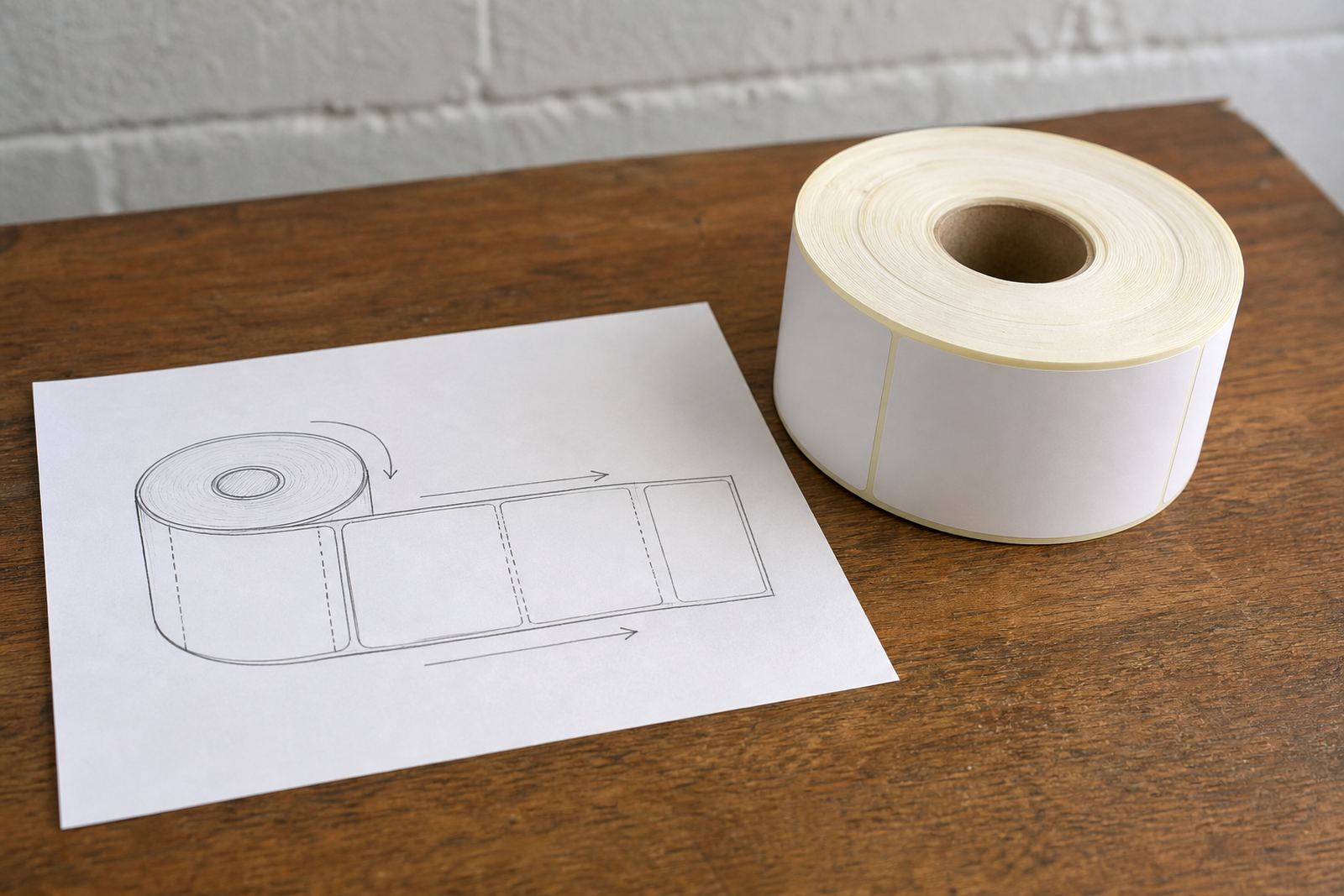
Acrylic adhesive stock can be supplied in converted rolls suited to thermal transfer printing, direct thermal printing or other label conversion setups, depending on the face stock and top coating selected. Core size, outer diameter, roll length and winding direction all need to match the printer or applicator. Many benchtop and industrial units are sensitive to core diameter and roll width, so a stock that looks right on paper may still feed badly if the winding or core is off.
For Westmead, Pinetown production and dispatch planning, we look at the practical handling details first: how many labels per roll, whether the labels must peel off cleanly at speed, whether the printer uses a 25 mm, 40 mm or 76 mm core, and whether the application is hand-applied or machine-fed.
- Core sizes commonly need to match the printer spindle or adaptor setup.
- Roll length should suit the print run and changeover rhythm.
- Winding direction affects how labels peel and present at the dispenser edge.
- Printer fit checks help avoid curling, tracking issues and feed stops.
Care handling and storage that keeps the adhesive honest
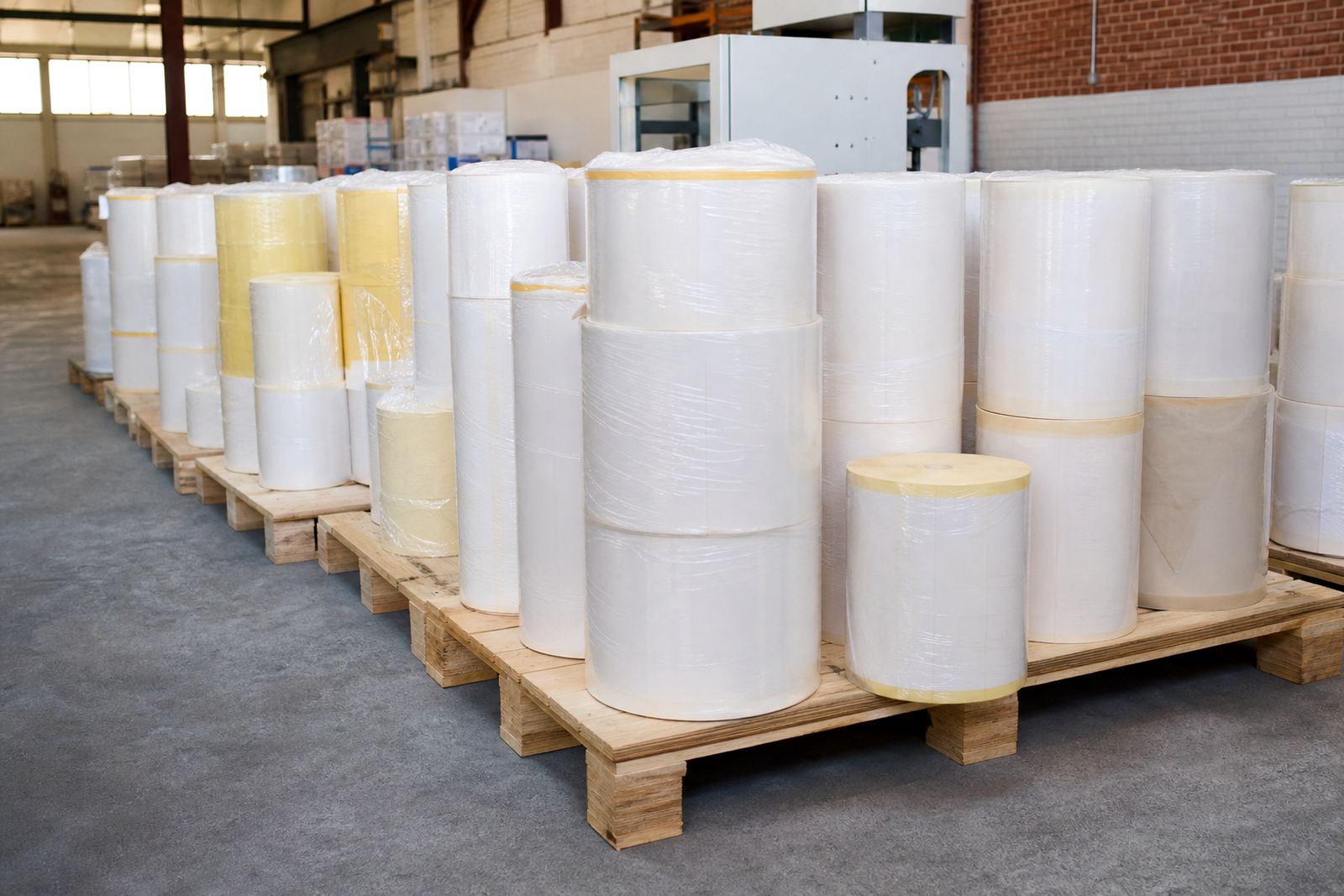
Acrylic adhesive stock should be stored flat and dry, away from direct sun, dust and excess heat. In coastal areas, moisture can affect both the face stock and liner if rolls are left open for too long. Keep cartons sealed until use and avoid stacking heavy loads on top of finished rolls, because pressure can distort the wound roll and affect release. If the stock is used in a warm packing room, allow it to acclimatise before printing so the roll behaviour stays consistent.
During handling, clean the application surface before label placement where possible. On cartons, dust from board cutting and handling can reduce initial grab. On plastic containers, oil or release residue can interfere with bonding. Acrylic adhesive works best when the label is applied with firm, even pressure, not slapped on at an angle. That small step often makes the difference between a label that holds and one that starts lifting at the corners after a few hours.
The details to confirm before we convert your order
To supply the right acrylic adhesive stock, we need the label face material, adhesive grade, liner type and finished roll spec confirmed before conversion. The more exact the details, the fewer surprises on press and at dispatch. If you are printing in-house, tell us the printer model or at least the core size, maximum roll diameter and whether the unit uses direct thermal or thermal transfer. If you are hand applying, the label size and pack surface matter even more than the printer data.
- Label size, shape and corner style.
- Face stock finish, paper or film, white or specialist colour.
- Adhesive requirement, including surface type and temperature exposure.
- Core size, roll length, winding direction and printer compatibility.
- Quantity, dispatch area and whether sample rolls are needed first.
We also check whether the job needs custom slitting, rewinding or a specific pack count for easier warehouse use. That helps the labels arrive ready for the floor, not needing extra handling before they can be used.
Key facts
| Product type | Pressure-sensitive acrylic adhesive label stock |
|---|---|
| Common face stocks | Paper and film based label materials |
| Liner options | Paper or synthetic release liner |
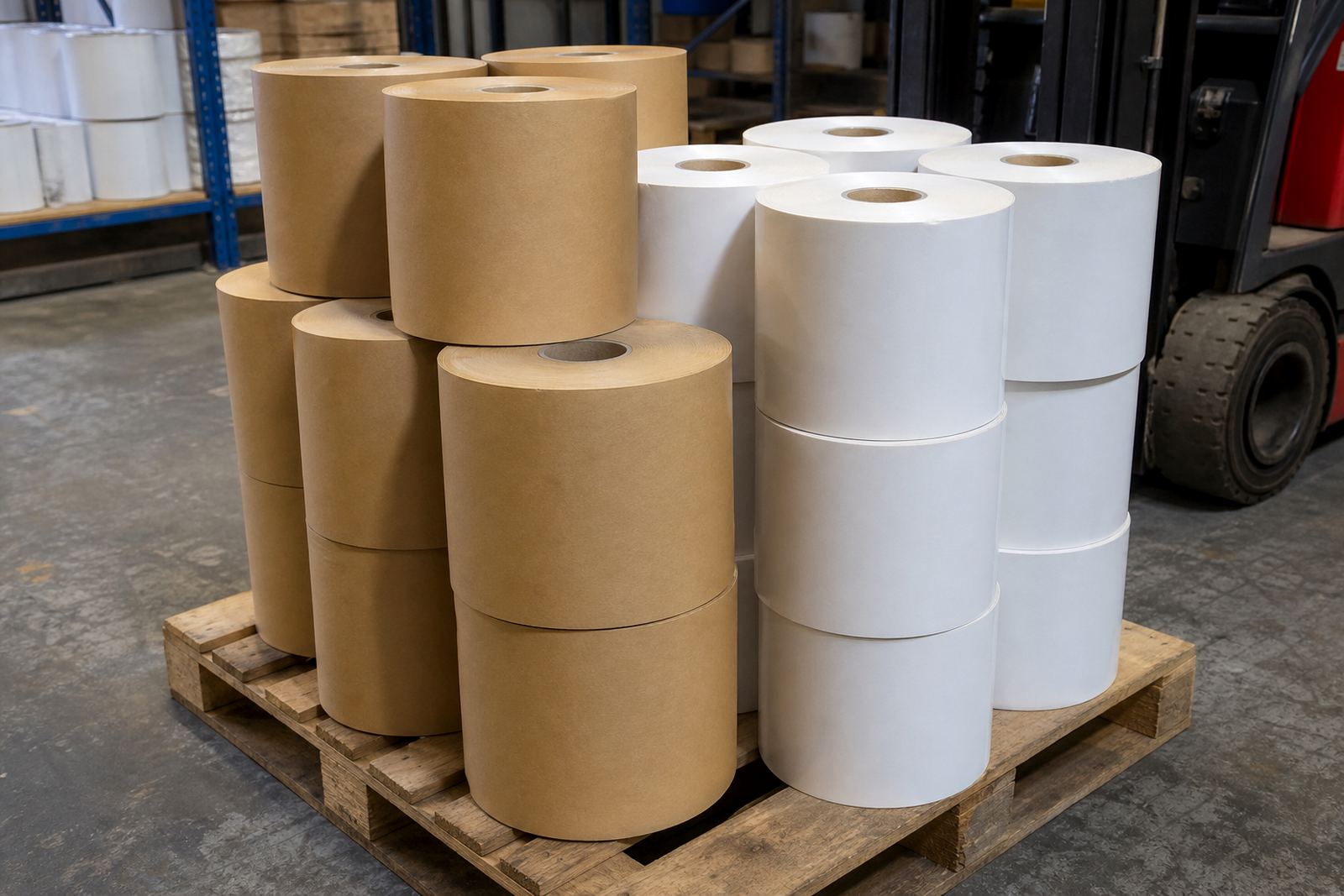
| Typical roll sizes | Custom slit widths, roll lengths and outer diameters |
| Core sizes | Commonly matched to printer spindle or adaptor requirements |
| Compatible use | Retail, logistics, packaging and light manufacturing labels |