Shelf strips that hold up to daily shop-floor handling
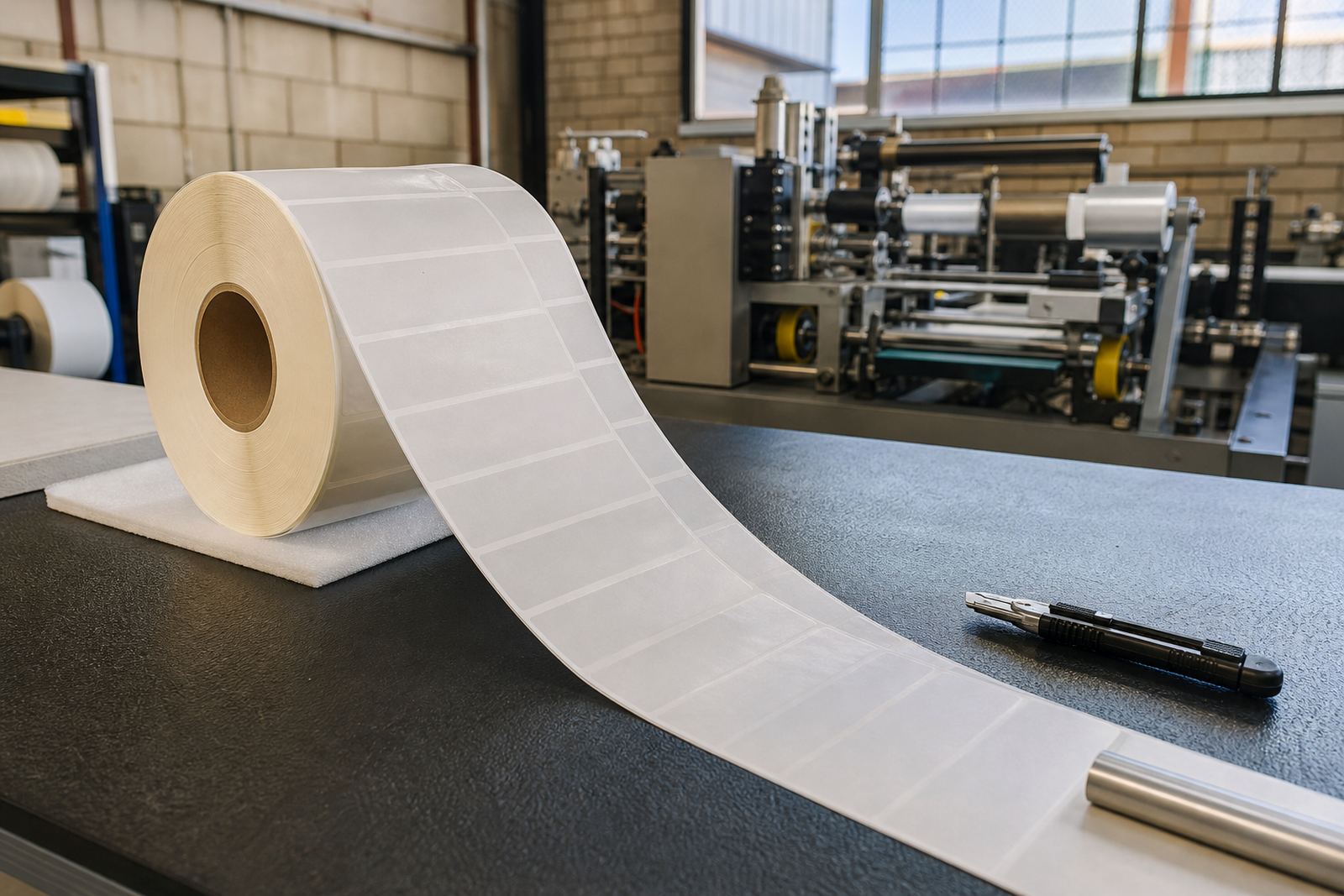
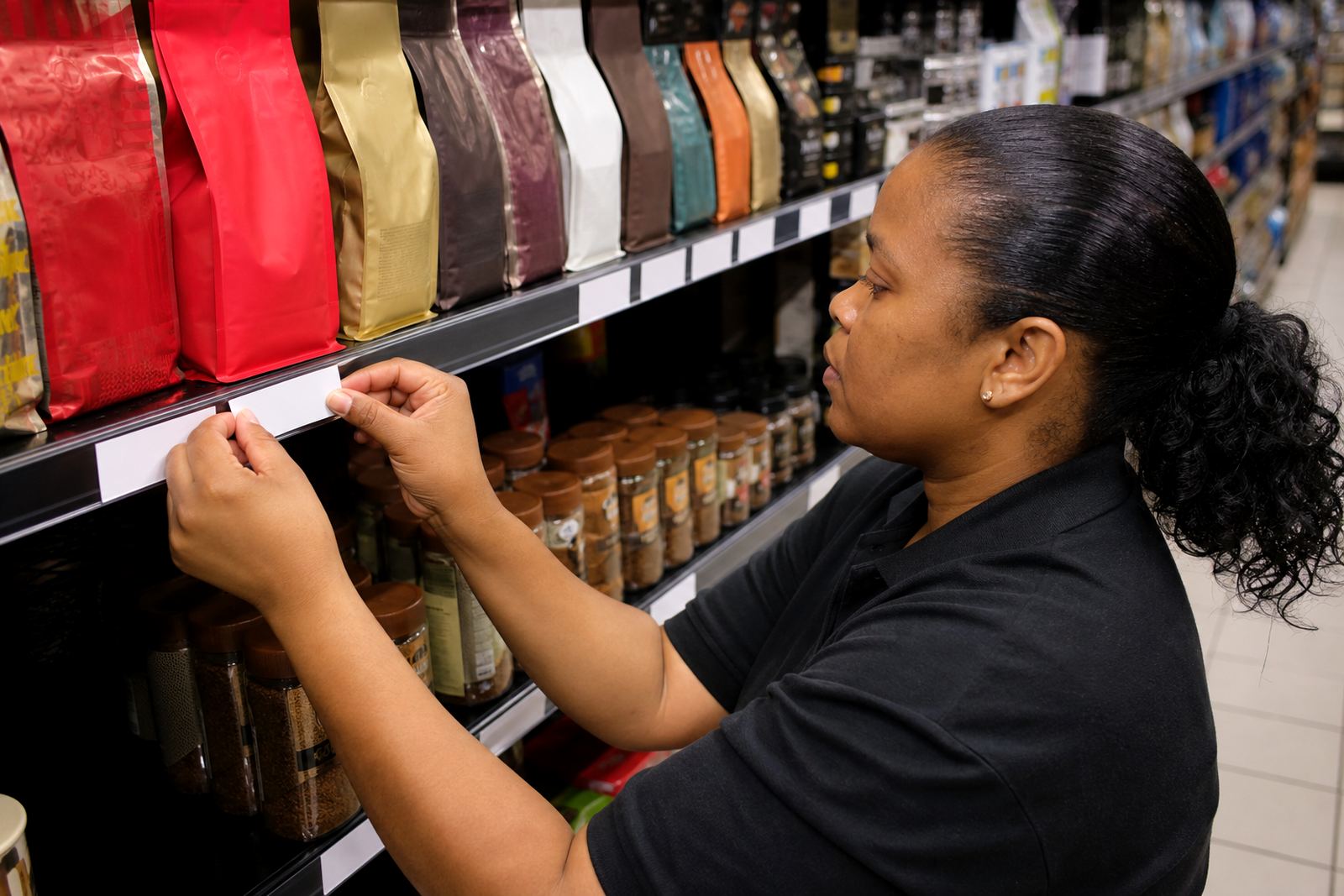
Shelf edge rolls are narrow labels supplied on a roll so staff can print, peel and apply pricing or product information straight onto shelf strips, gondola lips and display rails. They suit busy retail floors where prices change often and labels get touched during stock takes, resets and end-of-month promotions.
We supply self-adhesive face stocks in paper and film finishes, depending on how long the label must stay neat and how much rubbing, moisture or cleaning it will face. For indoor dry goods a coated paper face stock is often enough. Where shelf strips are wiped down often, or where refrigeration and humidity are part of the job, a synthetic face stock can keep the print cleaner for longer. Adhesives can be selected for permanent hold, removable use or a stronger tack where the surface is slightly textured.
These rolls are used in supermarkets, pharmacies, hardware stores, liquor outlets and warehouse shop fronts, especially where shelf layout changes without much warning. In Durban and other coastal areas, the right adhesive and liner pairing matters when humidity runs high and labels must stay flat instead of curling at the corners.
Widths, lengths and core sizes that fit the printer on your floor
Shelf edge rolls are commonly made in narrow widths for pricing strips and long linear labels, with lengths planned around how many labels you need per roll and how often you want to change stock. Typical widths may suit 30 mm, 40 mm, 50 mm or similar shelf ticket formats, depending on the shelf profile and the amount of print area needed. The actual size should always match the label holder or shelf strip opening on site.
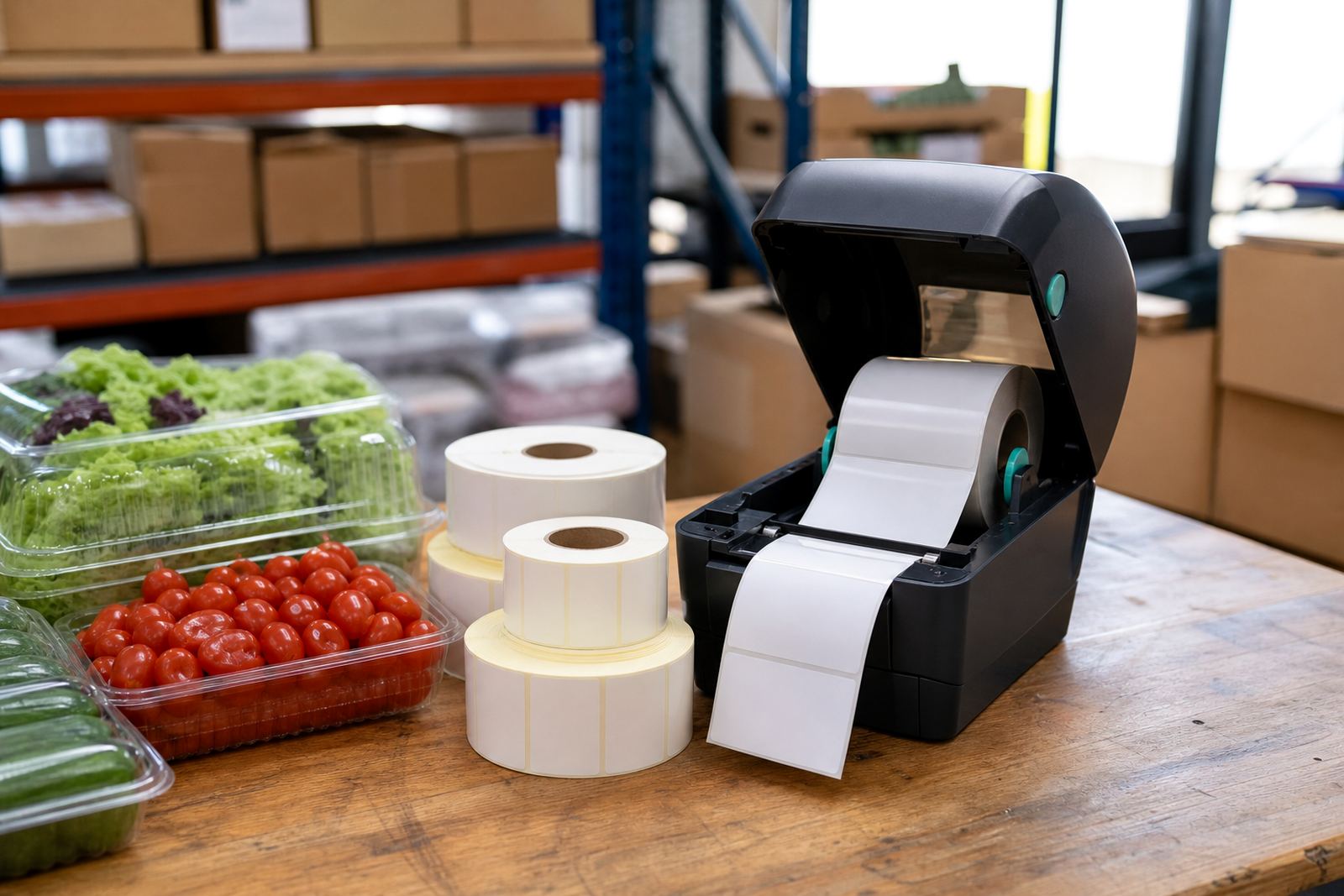
Core size matters as much as label width. Many benchtop and compact printers use a 25 mm or 40 mm core, while larger units may take a bigger core for steadier feeding. If the roll is too large for the machine chamber, it will bind. If the core is too small, the roll may not sit straight and the print can drift. We check the printer fit before dispatch so the roll works as intended, not only in theory.
- Common formats include narrow shelf edge widths for price strips and product detail lines
- Core sizes are matched to the printer feed, spindle and roll cavity
- Outside diameter is planned around roll length and available printer space
- Label gap, black mark or continuous stock can be set to suit the print method
Direct thermal or thermal transfer for shelf pricing
Shelf edge rolls are supplied for two common print methods. Direct thermal stock uses heat-sensitive face material and prints without a ribbon. It suits short to medium life shelf labels where speed matters and the labels are replaced regularly. Thermal transfer stock prints through a ribbon, which gives better resistance to rubbing, handling and some cleaning chemicals.
For fast-moving grocery and retail updates, direct thermal can be practical for prices, batch codes and short-term product lines. For shelf labels that must remain readable through longer display periods, or where the print will face more friction, thermal transfer often gives the cleaner result. The better choice depends on your printer model, how long the label must last, and whether the label will sit in ambient, chilled or high-touch conditions.
We also check whether the printer needs gap sensing, mark sensing or continuous media, because the roll construction must work with the feed settings. A shelf edge roll that is right in size but wrong in sensor format will waste time at the counter or on the packing bench.
Where shelf edge rolls earn their keep on the retail floor
These labels are used wherever price visibility and stock rotation matter. On shelving, endcaps and display runs, they help teams update specials, unit pricing, product names, barcode data and batch details without replacing whole shelf cards. In logistics-linked retail, they also help with warehouse-to-shelf movement where the same product needs a clean handover from picking to display.
We supply to stores and distribution points that need neat labels for dry goods, chilled sections, hardware, personal care, stationery and mixed general retail. In hotter inland areas like Pretoria and Johannesburg, the adhesive choice may differ from a coastal fit because the shelf environment, dust level and cleaning routine affect how long the label holds. In Pietermaritzburg and Westmead, where many businesses run mixed retail and light manufacturing operations, shelf edge labels often need to keep a consistent look across several departments.
- Price labels for shelf strips and product rails
- Barcode labels for stock control and scanning
- Product information updates for retail planograms
- Promotional labels for seasonal or short-run changes
Fitting, peeling and keeping the shelf line neat
Shelf edge rolls are usually loaded into a compatible label printer, then fed through the shelf ticket path with the correct guides set snugly. If the roll is wound the wrong way, the labels may face inward instead of outward and the printer can misread the feed. We help with winding direction, roll length planning and printer fit checks so the roll reaches site ready for use.
When applying the label, the shelf strip should be dry, dust free and free of old glue. On painted metal, plastic shelf holders and laminated rails, a quick wipe with a suitable cleaner helps the adhesive grip evenly. Avoid pressing the label onto a surface that is still damp from cleaning, especially in chilled sections or near loading bay dust. A neat apply means less peeling at the corners and fewer reprints later.
For stores that do daily price changes, sample rolls are useful before a full run is approved. They let the team test alignment, print darkness, peel force and how the label sits on the shelf face. That small check can prevent a lot of waste on the floor.
What to confirm before we cut your shelf edge rolls
When ordering shelf edge rolls, the details that matter are the label width, label length, core size, outer roll diameter, adhesive type and whether you need direct thermal or thermal transfer stock. It also helps to confirm the printer model, the sensor type, the winding direction and the surface where the label will be applied. If you have more than one branch or more than one printer model, note that upfront so the same format can be repeated accurately.
We can also plan for repeat order consistency, especially where retail teams want the same shelf label across different branches or departments. For mixed use sites, such as stores that also pack online orders or move stock through a back-of-house area, the label build may need a stronger adhesive or a different face stock finish to handle more handling and movement.
Share the shelf strip dimensions, the quantity needed and whether the labels must sit under indoor lights, refrigeration or strong sun near windows. The more exact the site details, the better the roll match, and the less chance of trimming, reprinting or labels lifting after the first clean-down.
Key facts
| Product type | Shelf edge roll labels for retail pricing and product updates |
|---|---|
| Face stock | Paper or synthetic, selected for indoor, chilled or higher-wear use |
| Adhesive options | Permanent, removable or stronger tack depending on the shelf surface |
| Roll formats | Custom widths, lengths, gap or mark sensing, and continuous options |
| Core sizes | Commonly 25 mm or 40 mm, with larger cores available where needed |
| Printer compatibility | Matched to direct thermal or thermal transfer printers after fit check |