The part that stays printed, and the part that changes
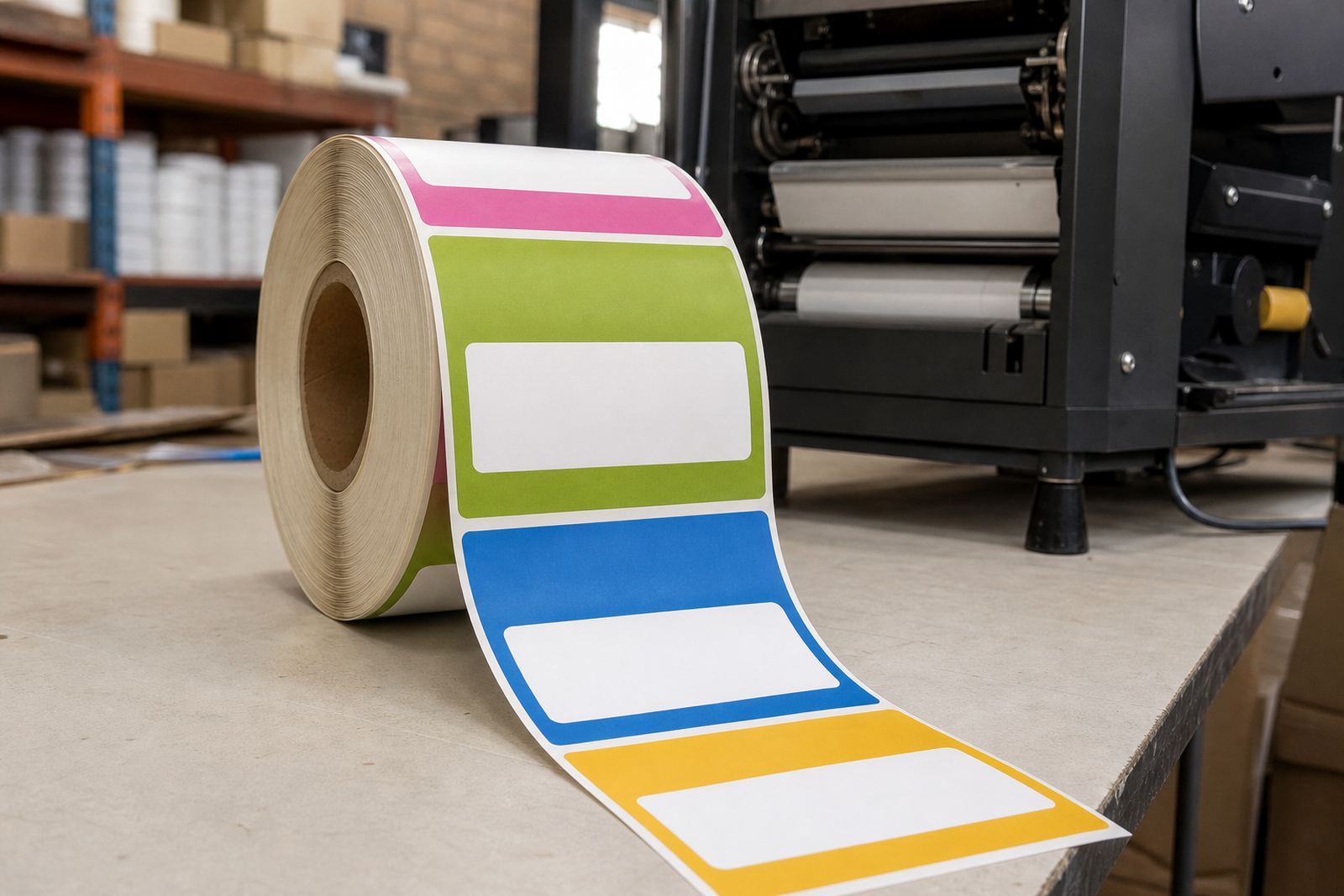
Preprinted rolls are made for jobs where part of the label must stay the same on every application, while another part is filled in by a thermal printer. That fixed section can carry a logo, product title, colour block, warning panel, route mark, batch box or handling note. The variable section is left clear for date codes, weights, barcodes, SKU numbers or delivery information. On a busy packing line this saves time and keeps the label layout tidy, because staff are not trying to line up separate stickers by hand.
These rolls are common in retail, food packing, manufacturing, courier bags and warehouse dispatch. They work well when the same message must repeat on every item, but the final code changes during the day. For example, a carton label might have a printed heading and border, with a thermal area for item count and pallet reference. The result is neat, readable and easier to check at a glance, especially when loads are moving fast and people are working around shift changes.
Label faces, adhesives and liners that suit South African use
The face stock can be paper for general packaging, vellum for better handling, or synthetic films where moisture, rubbing or condensation are a factor. In a humid coastal store, a synthetic face stock often holds its shape better than standard paper. For dry indoor use, paper face stock is usually enough and gives good print contrast. The face must match the way the label is being handled, because a glossy carton, a rough sack or a chilled tray all put different stress on the adhesive and the print surface.
Adhesive choice matters just as much. Permanent adhesive suits most shipping and product labels, while removable adhesive is used where the label must come off cleanly from tubs, returns packaging or reusable crates. Freezer grade options are used where cold rooms, chilled stock or condensation are expected. Liner choice affects dispensing and converting, with glassine and kraft liners both used in different roll constructions. We also look at unwind direction and roll build, because a label can be the correct size and still feed badly if the winding is wrong.
- Paper face stock for general retail, pack and dispatch use
- Synthetic face stock for moisture, scuffing and chill areas
- Permanent, removable or freezer grade adhesive options
- Glassine or kraft liners depending on the dispensing method
- Left or right wound rolls for the printer or applicator
Roll widths, repeat lengths and the printers they must fit
Preprinted rolls are usually set up to suit the printer and the pack line first, then the label artwork is planned around that machine. Common widths include narrow labels for product jars or courier pouches, medium widths for shelf and carton use, and wider formats for pallet or compliance labels. The repeat length matters because the printed and blank sections must sit in the right place for the thermal head, otherwise the variable data lands too close to the edge or over the fixed print. That is where core size and roll diameter need proper checking.
Core sizes are normally matched to benchtop or industrial printers, and the wrong core can cause feeding trouble or wobble during print runs. Thermal transfer printers need a ribbon, while direct thermal printers do not use a ribbon and are better for shorter life labels that do not face much heat or sunlight. If you are using a mixed print setup across sites in Durban, Johannesburg or Cape Town, we check the printer fit on each version so the same label spec can travel between branches without constant adjustment.
- Typical roll widths from narrow format to wide carton labels
- Core sizes matched to the printer and holder type
- Direct thermal or thermal transfer construction as required
- Repeat length set for the fixed print and blank zone
- Wound direction set for clean feeding and dispensing
Where these rolls earn their keep
These labels are useful wherever speed and consistency matter. Retailers use them for shelf packs, price notices, backroom stock and promotional over-labels. Warehouses and couriers use them for route labels, carton identifiers and handling notes. Manufacturers use them for product identification, batch tracking and outer pack marking. In plant areas where product names stay the same but batch data changes from shift to shift, preprinted rolls cut down on rework and prevent handwritten errors.
They are also practical where the label must carry a warning block, a barcode area and a clear blank space for thermal print. That is common on food packs, chemical containers and multi-pack cartons. In some cases the fixed layout is there to support language requirements or internal control fields, and then the thermal section carries the live data. If the label will pass through cold rooms, dusty bays or outdoor loading points, we plan for adhesive hold and print durability before anything goes to press.
- Retail shelf stock and pack labelling
- Courier and logistics identifiers
- Manufacturing batch and outer pack labels
- Cold room, dispatch bay and warehouse use
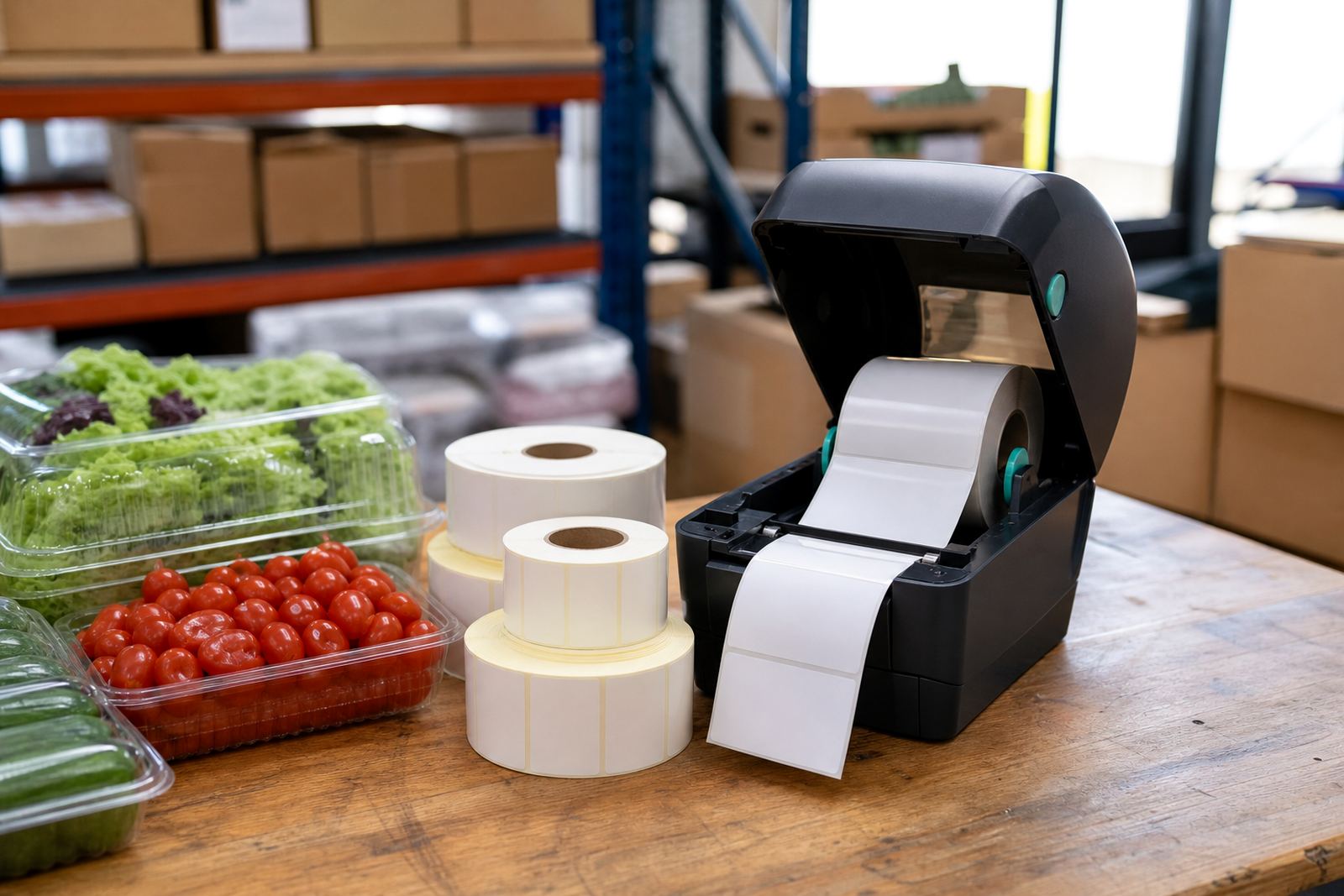
- Cartons, pouches, tubs and wrapped trays
Fitting, dispensing and line handling on site
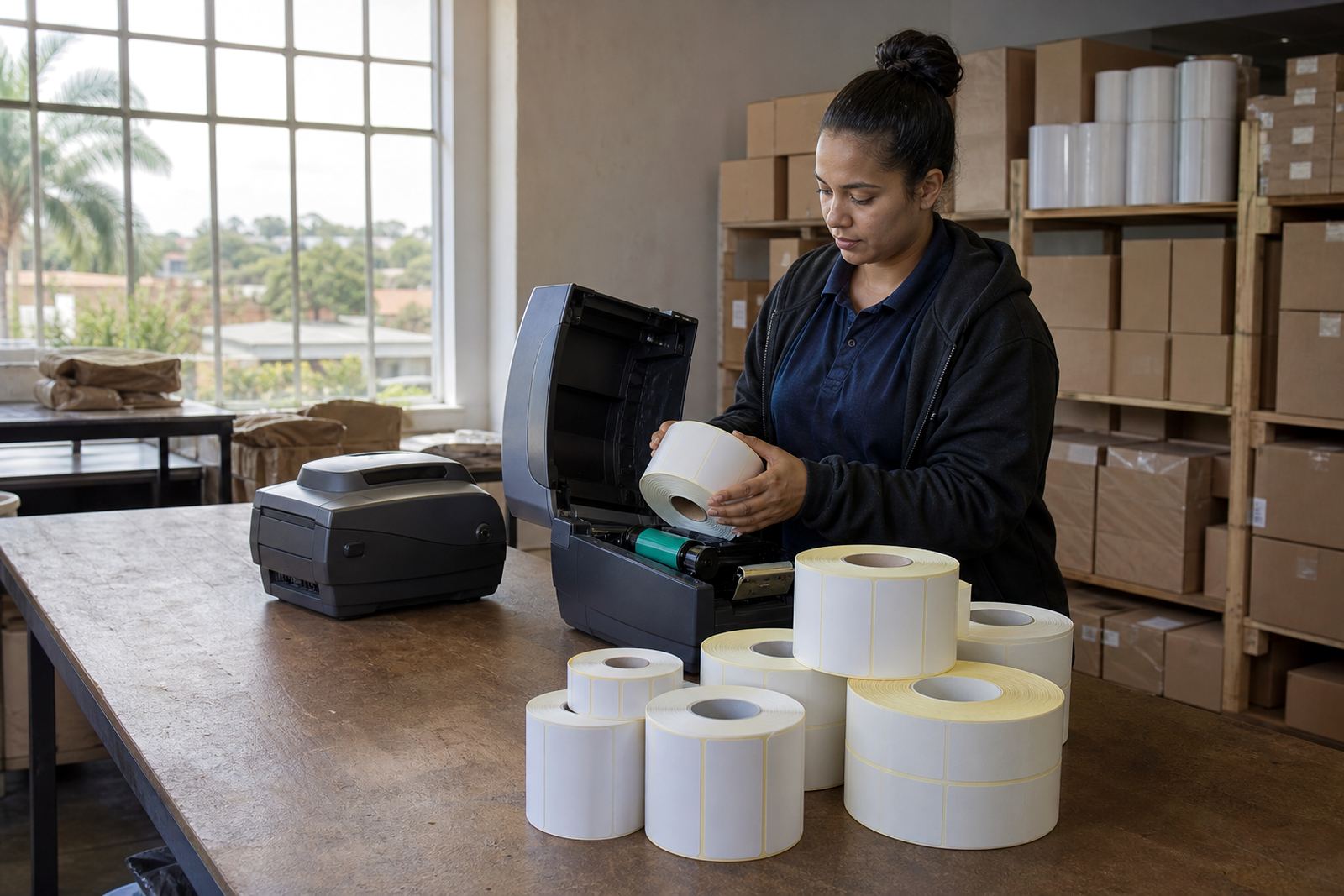
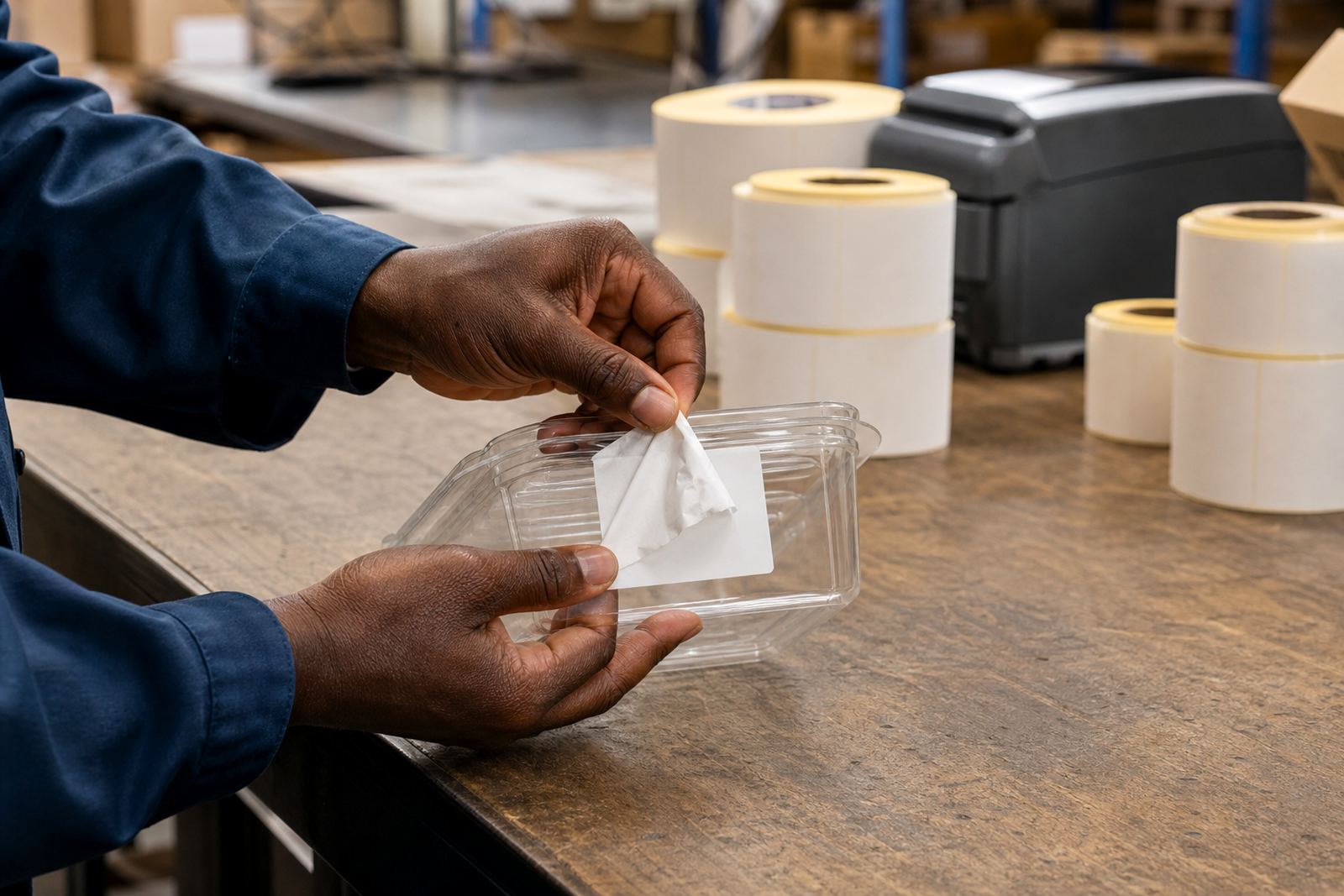
When a preprinted roll is fitted to a printer or applicator, the roll path must be clean and the guides set correctly so the label edge stays straight. If the roll is too wide, too tight or wound the wrong way, the printer can misread the gap or mark position. For hand application, the perforation or face slit needs to suit how the operator peels and places the label, especially on small packs where fingers are working quickly. On semi-automatic lines, the label leading edge and unwind tension must be right or the roll will stall and waste time.
We also look at how the label is packed for dispatch. Rolls that are going to Gauteng, the Western Cape or inland freight routes need protection from edge damage and crushing. If the label stock is sensitive to dust or humidity, the packing needs to keep the roll clean until it reaches the site. On busy receiving days in Westmead, a damaged outer wrap or a crushed core can slow a whole run, so the dispatch pack is part of the job not an afterthought.
Care in storage so the print stays sharp
Store rolls flat in a dry place away from direct sun, oil mist and heavy dust. Thermal labels especially should not sit near heaters, hot windows or vehicle canopies for long periods. Direct thermal faces can darken if exposed to heat, pressure or strong light, while thermal transfer labels need the correct ribbon and print settings to keep the image clear. If a label stock is held too long in bad storage, the adhesive can pick up dirt and the liner can curl, which causes feeding issues later.
For sites in coastal areas like Durban, humidity is often the first thing that causes trouble. On inland sites, dry heat and dust may be the bigger issue. Either way, good storage and sensible stock rotation help. We usually advise keeping older rolls in front and using the same batch across one print run where possible, so colour and layflat stay consistent from start to finish.
What to confirm before we quote or cut
To set up a preprinted roll properly, we need the label size, the fixed artwork area, the variable print area and the number of labels per roll. We also need to know the printer model or applicator type, the core size, unwind direction and whether the machine uses direct thermal or thermal transfer print. If the label will be applied to a cold pack, oily carton, rough sack or smooth plastic tub, that surface detail helps us match the adhesive and face stock correctly.
It also helps to know whether the roll is for hand application, a benchtop printer or a production line. If the labels must travel through Johannesburg distribution, Cape Town retail backrooms or Pietermaritzburg packing areas, we can plan the roll length and dispatch packing around the handling conditions. The more precise the order detail, the fewer surprises once the rolls reach the line, and that saves time for everyone involved.
- Label width and length, plus the repeat size
- Fixed print area and blank thermal zone
- Printer model, core size and winding direction
- Face stock, adhesive and liner preference
- Quantity per roll and total roll count
- Surface type, storage conditions and application method
Key facts
| Product type | Preprinted roll labels with fixed layout and thermal print zone |
|---|---|
| Face stock options | Paper, vellum and synthetic options for different environments |
| Adhesive options | Permanent, removable and freezer grade depending on use |
| Roll format | Custom widths, repeat lengths and labels per roll |
| Printer compatibility | Direct thermal and thermal transfer, with core sizing to suit |
| Supply area | Westmead, Pinetown with delivery across South Africa |