A film face stock that stays neat when conditions turn damp
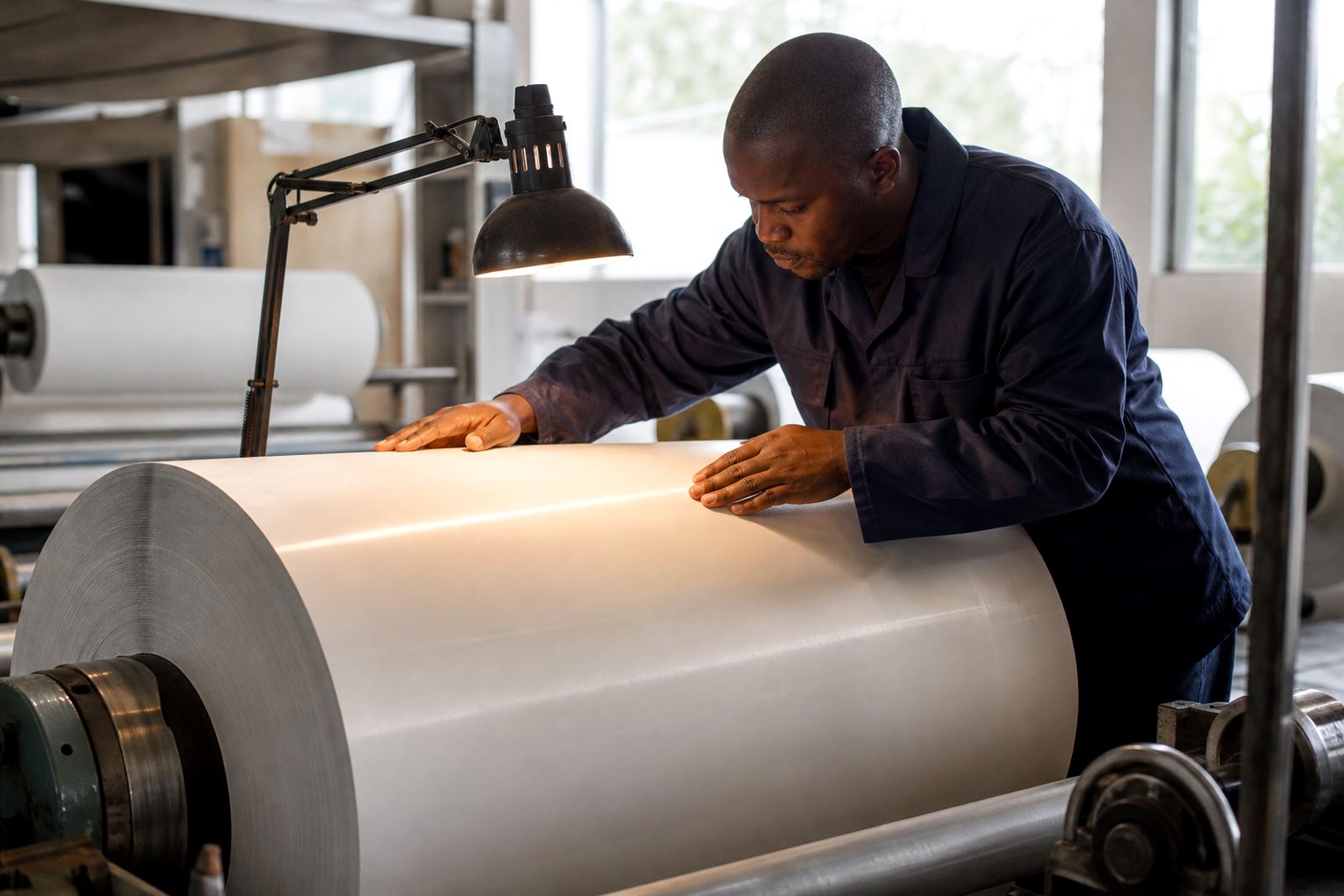
White polypropylene is a plastic film label face stock made for labels that need to hold their shape and stay legible after contact with moisture, oils, cold rooms or frequent handling. In practical terms, it is chosen when a paper label may crease, fibre up or lose its clean appearance too quickly. The white surface gives good print contrast and a tidy look on cartons, bottles, tubs and outer packs.
For Westmead, Pinetown and surrounding industrial areas, this stock is often used on goods that move between loading bays, delivery vehicles and warehouse floors where humidity, condensation and rough handling are part of daily work. It is also a strong fit for coastal conditions in Durban and Richards Bay where labels can be exposed to damp air, and for inland distribution where cartons may be repacked several times.
- White filmic face stock with a smooth printable surface
- Better moisture resistance than standard paper labels
- Suitable for clean branding, product ID and barcode labels
- Available in converting formats for roll or sheet production
Adhesive build that can be matched to the job
The face stock is only part of the job. White polypropylene is normally paired with an adhesive chosen for the surface and the handling conditions. A permanent adhesive is commonly used on cartons, bottles and sealed packs where the label must stay put through distribution. A removable adhesive can suit returnable containers or short term promotional use, provided the application surface is clean and the label is not exposed to severe moisture or friction.
We also look at whether the surface is smooth, slightly curved, dusty, chilled or textured. A label that goes onto a slightly curved pail in Pietermaritzburg may need a different adhesive response from one applied to a flat courier satchel in Johannesburg. For cold chain work, the key question is whether the product is applied at room temperature or onto a chilled surface, because that changes the bond and the way the adhesive wets out. A good fit here avoids lifting edges and wasted rolls.
- Permanent and removable adhesive options available generically
- Adhesive selection depends on substrate, temperature and handling
- Useful for cartons, bottles, tubs, pails and outer packs
- Can be converted with slit widths to suit your application
Roll sizes, core sizes and printer fit for real production work
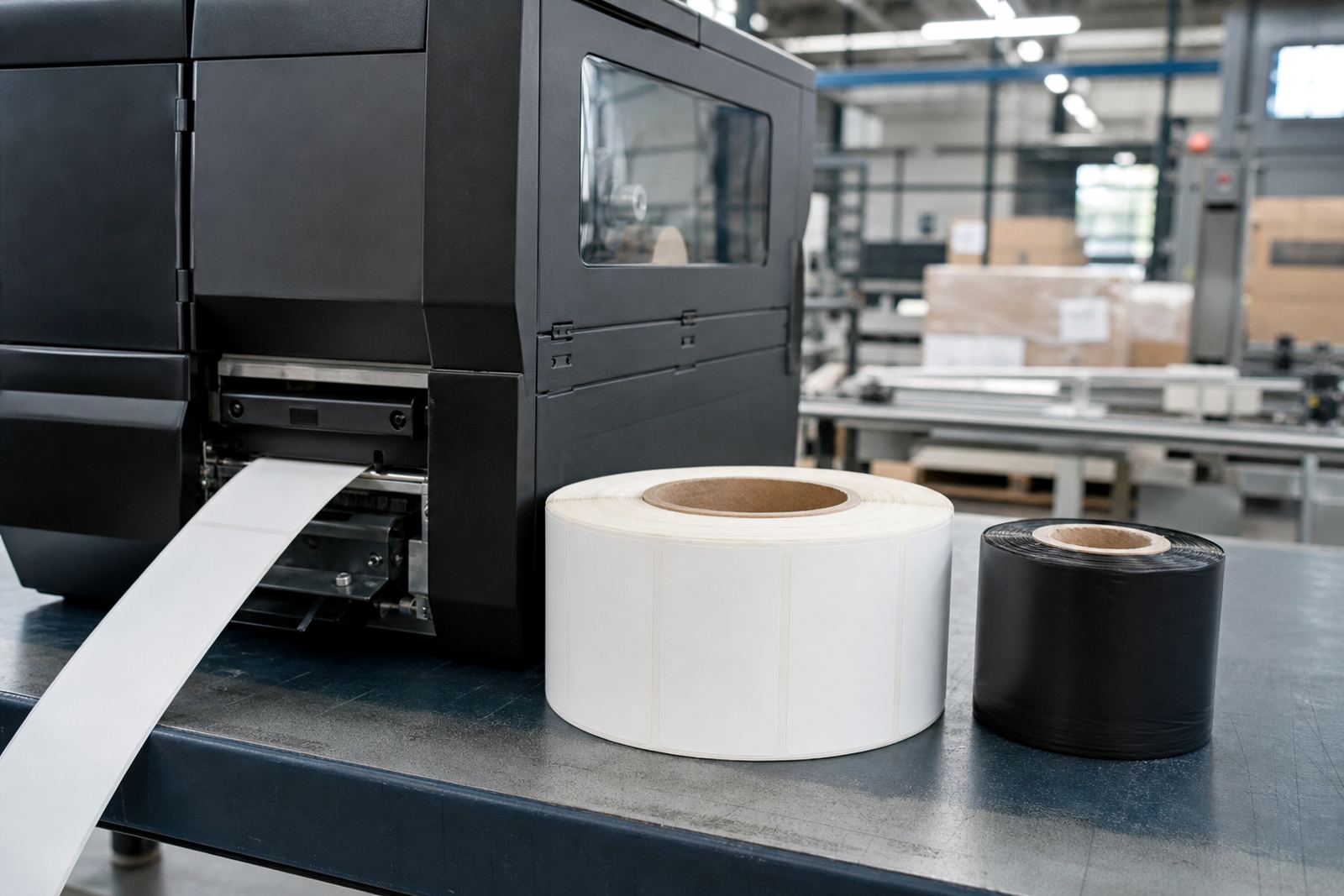
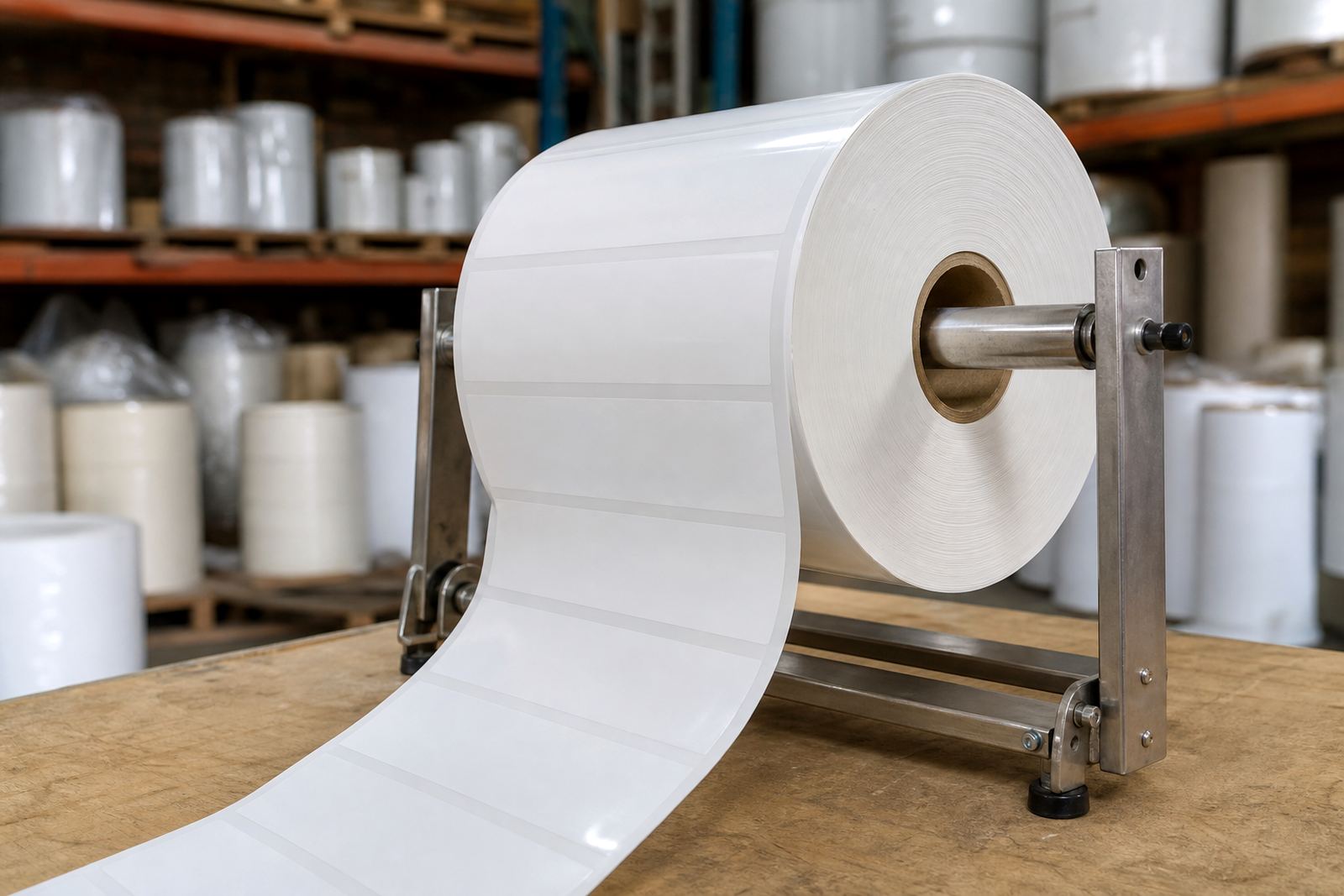
White polypropylene is supplied in roll form for thermal transfer printing and other converted label applications. Roll width, outer diameter and core size need to match the printer or applicator being used. Common core sizes are 25 mm, 40 mm and 76 mm, although the correct choice depends on the machine, rewind tension and how the roll is loaded. Roll length must also be checked carefully because film stock is heavier than many paper grades and the finished roll may need planning for the printer bay and storage shelf.
For benchtop and mid range thermal transfer printers, we check whether the printer accepts an inside wound or outside wound roll, what label gap or black mark sensing is used, and whether the ribbon width will cover the print area cleanly. Some operations run higher volumes and need larger outer diameters to reduce changeovers, while smaller packing rooms may prefer shorter rolls that are easier to handle. In busy sites around Hammarsdale or Durban South, a well planned roll spec can save time during shift changes and reduce stoppages.
- Core sizes commonly set at 25 mm, 40 mm or 76 mm
- Roll width and outer diameter matched to printer clearance
- Inside wound or outside wound format must be confirmed
- Label gap, black mark or notch sensing may be required
Direct thermal or thermal transfer, and why the print method matters
White polypropylene is most often used with thermal transfer printing, where a ribbon transfers the image onto the film face stock. That gives better print durability for barcodes, batch codes and handling instructions, especially when labels may face abrasion, sunlight near doors, or moisture during transit. Direct thermal is a different print method and is generally used on compatible coated stocks made for heat sensitive printing, not on standard polypropylene film unless the stock has been specified for that purpose.
When the print method is confirmed early, the right ribbon type can be selected too. Some ribbons are chosen for general purpose labelling, while others are better for smudge resistance on film. If your labels are going into a fast moving pack line in Pretoria or a distribution hub in Cape Town, the print method affects line speed, scan quality and how often rolls need replacing. We also check whether the print face must hold a fine barcode, a bold product name or a small date field.
- Thermal transfer is the common fit for polypropylene film
- Ribbon choice affects smudge resistance and print clarity
- Direct thermal requires the correct heat sensitive stock specification
- Barcode readability should be checked against the actual scanner setup
Where white polypropylene earns its keep
This stock is widely used in retail, logistics and manufacturing where the label must keep a clean look while the product moves through the chain. It suits moisture exposed packs, containers that are wiped down, and items that may sit in chilled or humid storage. For food packaging, personal care, chemicals, household goods and industrial products, the white finish gives a neat base for brand text, instructions and codes without the patchy look that can happen with lower grade facestocks.
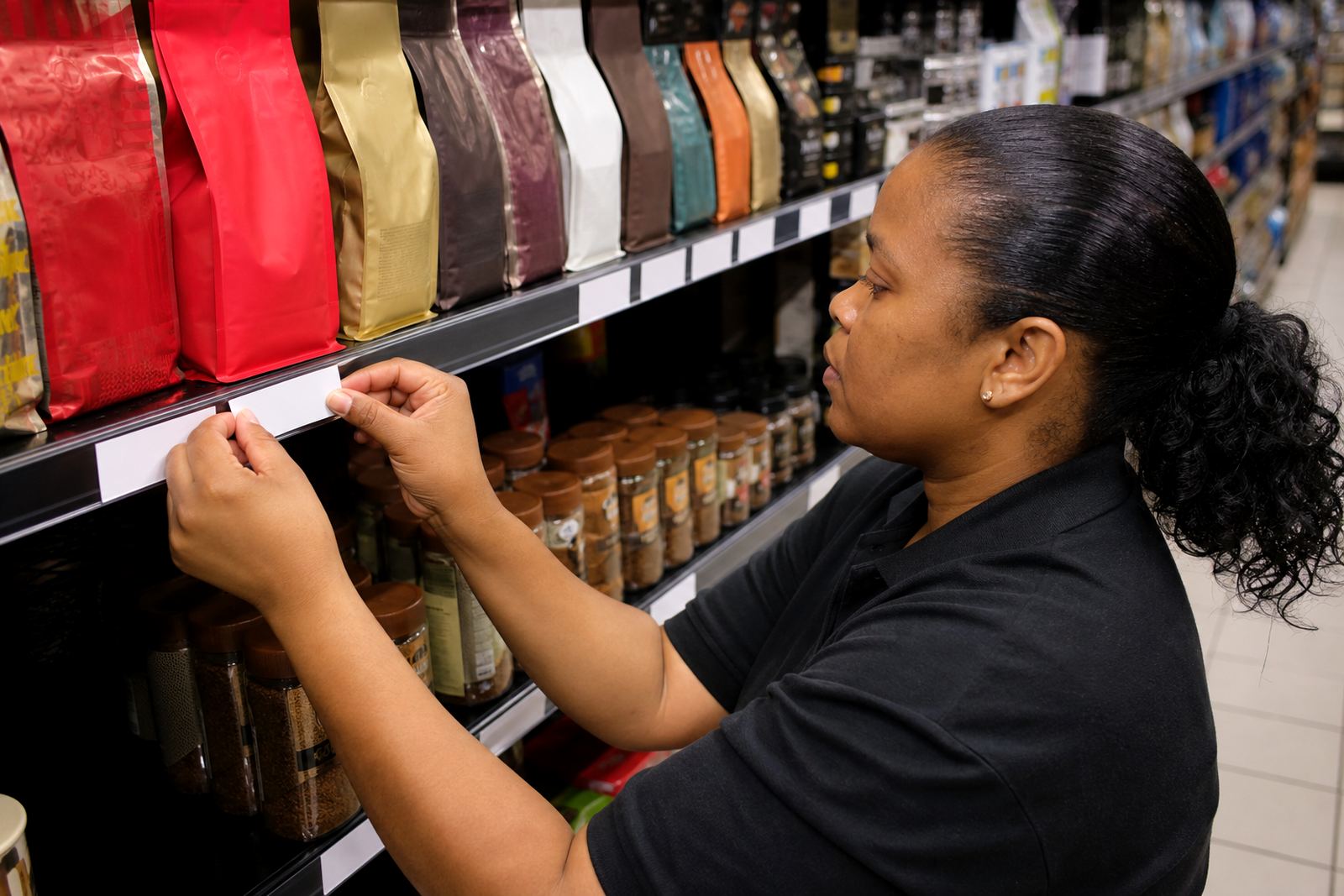
It also works well when the product presentation matters at shelf level. A white film label can help standardise pack appearance across multiple branches and distribution centres, from Pinetown to Johannesburg. In some jobs, the white face stock is used for over labelling existing packs, and in others it is the main label on the bottle or carton. If the label is expected to survive frequent handling, a filmic stock often gives better staying power than paper.
- Retail packaging and shelf ready packs
- Logistics labels for cartons, totes and outer wraps
- Manufacturing labels for batch identification and product codes
- Cold room, humid store and damp bay conditions
Fitting, handling and care on the plant floor
Label application needs a clean, dry surface and the right pressure on the pack face. On smooth cartons or rigid containers, the label lays down quickly. On curved surfaces, the application point and pressure need more care so the edges do not lift. If the product surface has dust, oil or condensation, adhesion can suffer even when the label stock is correct. That is why we ask about the packaging material and the application environment before finalising a roll.
Storage also matters. Keep rolls in a dry area away from direct heat and heavy compression. In South African conditions, especially in coastal humidity or near open loading bays, film labels should be kept boxed until use and handled with clean hands. Avoid rough edges on pallets that can scuff the roll face.
- Apply to clean, dry surfaces for the best bond
- Store boxed rolls away from heat, dust and compression
- Allow for curved packs, chilled packs or wipe down surfaces
- Plan stock use around shift timing and printer loading
What to confirm when ordering white polypropylene
To supply the right format, we need the face stock, adhesive and roll specification matched together. That means confirming the label size in millimetres, the core size, roll length, winding direction, print method and the printer model or applicator setup. If the labels must be slit into multiple widths, that should be listed as well. Sample rolls help with printer fit checks before a full run, especially when a site uses more than one printer type across production, packing and dispatch.
It also helps to confirm where the labels will be used, whether the pack is flat or curved, and whether the label must resist moisture, rubbing or refrigeration. Keeping the same spec on file makes ordering easier and reduces mistakes. Our team in Westmead handles custom slitting, rewinding, core sizing, roll length planning, winding direction, adhesive matching, face stock selection and dispatch packing for supply across Durban, Johannesburg, Cape Town, Pretoria and Pietermaritzburg.
- Label size, roll length and core size
- Printer model, print method and winding direction
- Surface type, temperature and handling conditions
- Need for sample rolls, repeat planning or slit widths
Key facts
| Product type | White polypropylene film label face stock |
|---|---|
| Finish | Clean white, smooth printable surface |
| Material form | Filmic self-adhesive label stock |
| Print compatibility | Thermal transfer compatible, direct thermal by specification only |
| Common core sizes | 25 mm, 40 mm, 76 mm |
| Typical uses | Packaging, retail, logistics, coding and product identification |