When the pack must show through
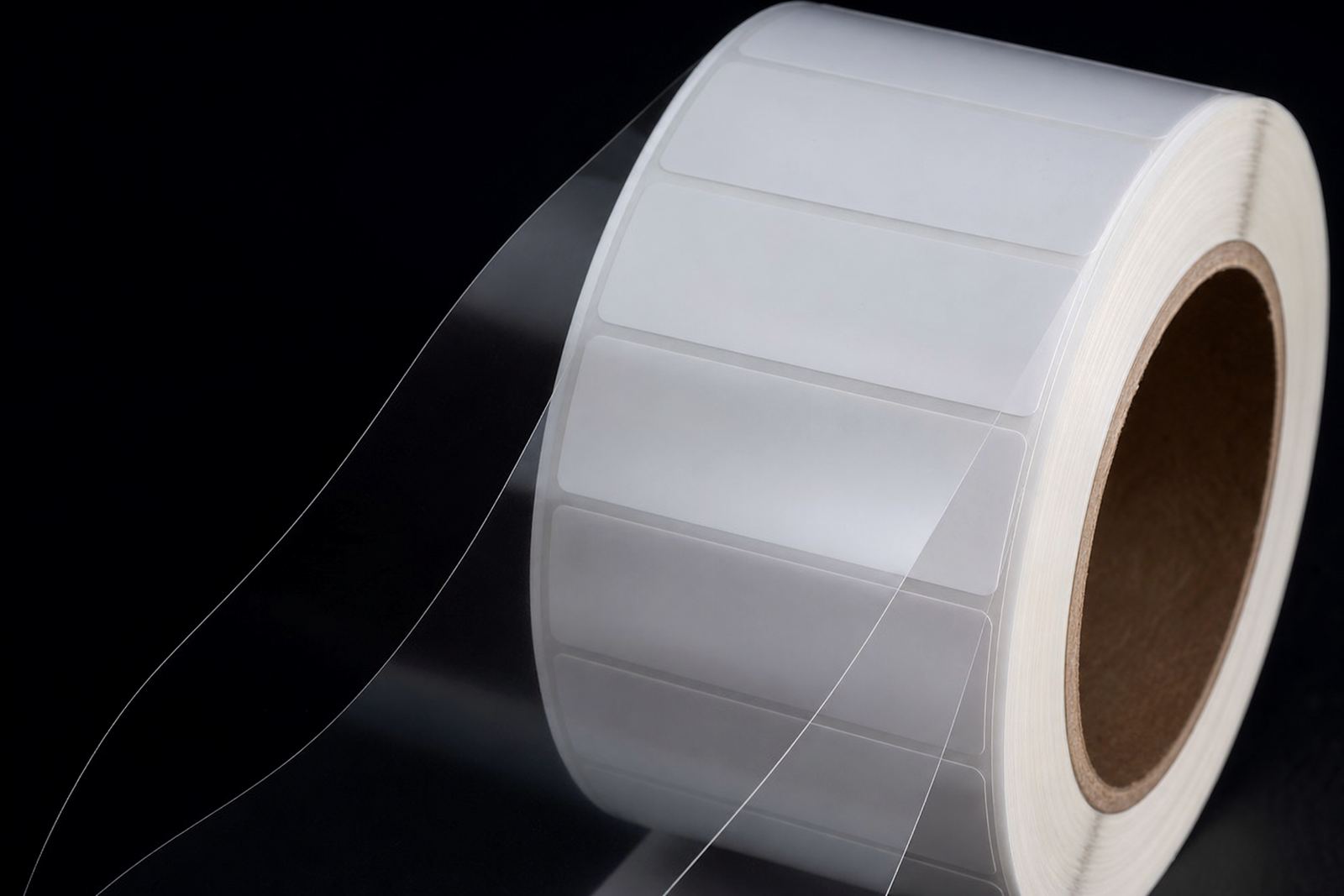
Clear polypropylene face stock is a transparent film used for a no-label-look finish on smooth packaging surfaces. It is chosen when the product itself should stay visible, yet the label still needs to carry branding, ingredients, barcodes, batch details or handling notes without lifting at the edges.
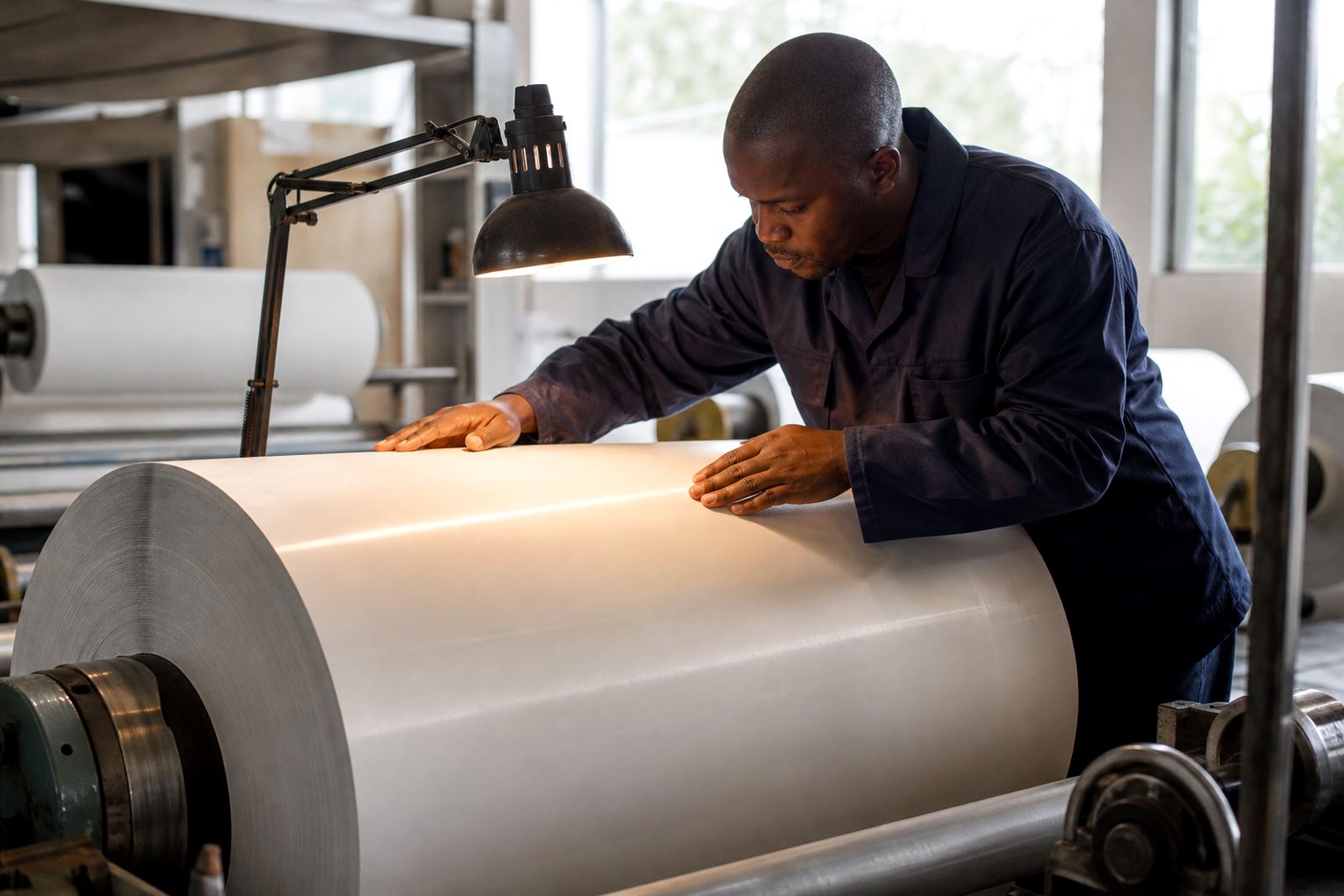
In our trade, this material is supplied as self-adhesive label stock for roll application. The face stock is the clear film, the adhesive does the holding, and the liner supports clean release through the printer or applicator.
- Transparent film for a near-invisible label edge
- Used on smooth plastics, glass and coated cartons
- Supplied for barcode, branding and traceability work
- Suitable for manual, semi-automatic or automatic application
Build and print behaviour on this stock
This product is normally supplied as polypropylene face stock on a pressure-sensitive adhesive with a release liner. Polypropylene is a film material, so it handles handling marks and moisture better than many paper label face stocks, especially in chilled rooms, damp coastal air and fast-moving dispatch areas. The print result depends on the print method, ribbon choice and the top surface of the film.
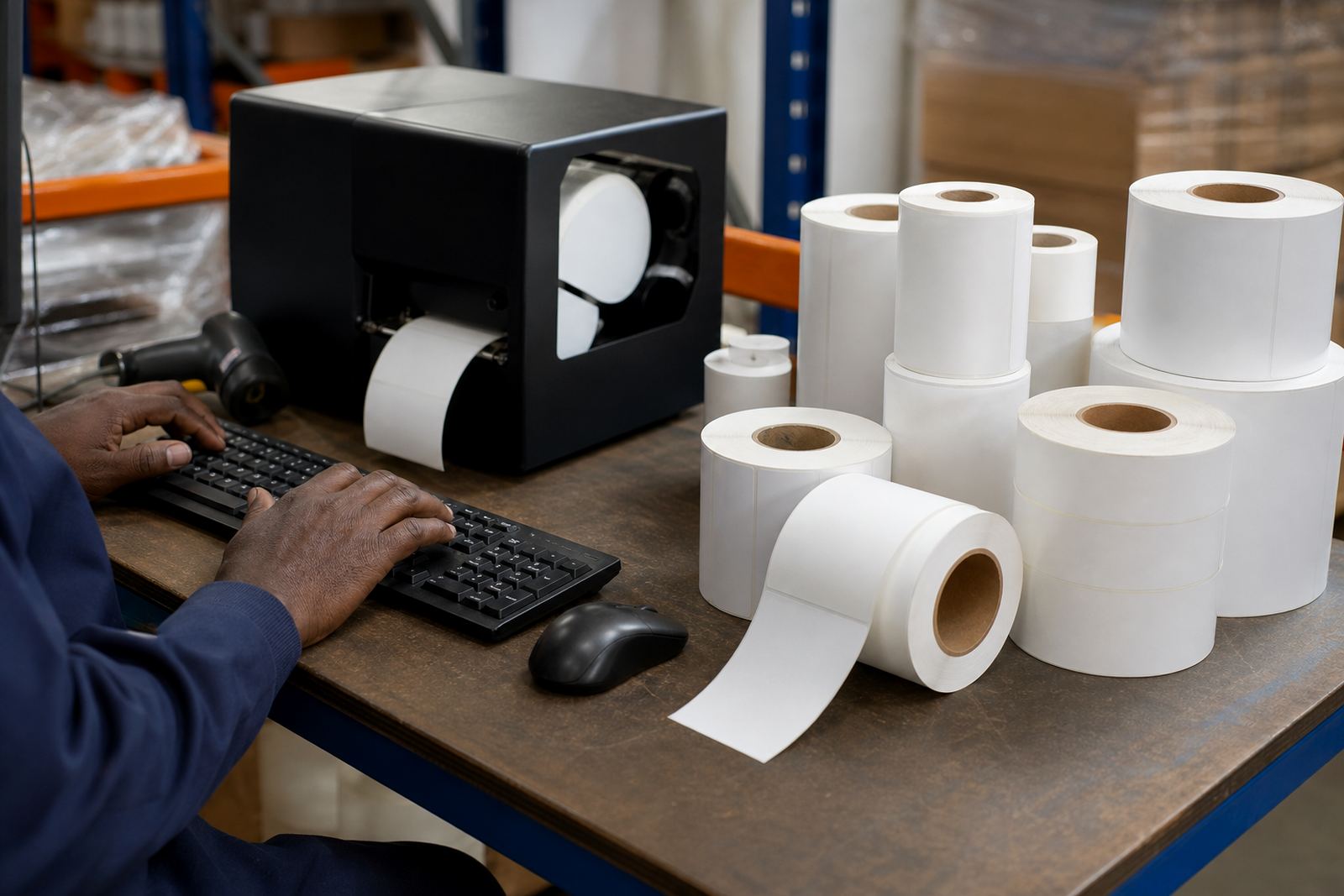
For thermal transfer printing, the label is printed with a ribbon, which is the better choice when you need longer life, sharper barcodes or better rub resistance. Direct thermal uses heat-sensitive stock and no ribbon, but clear polypropylene is usually specified for thermal transfer use because the image must hold on the film surface. That makes printer fit checks important before ordering, particulary if you use compact benchtop printers, industrial units or custom applicators with a set core size.
- Face stock: clear polypropylene film
- Adhesives can be matched for permanent or removable use
- Liner options include glassine and other release liners, depending on the run
- Core sizes and winding direction must suit the printer path
Where clear polypropylene earns its keep
This stock suits packaging where the label should not interrupt the look of the container. It is widely used on cosmetic jars, beverage bottles, food tubs, personal care packs, household containers and clear promotional packaging. It also works for retail ticketing and logistics marking where a clean finish is needed on a smooth surface.
On some packs, a clear label is better than a white label because the product colour still shows through. On other packs, a transparent label is used as an outer wrap or branding layer over printed artwork. The key is the surface condition. Smooth, clean and dry packs give the best result, while textured or dusty surfaces can cause edge lift or poor wet-out of the adhesive.
- Retail packs that must look tidy on shelf
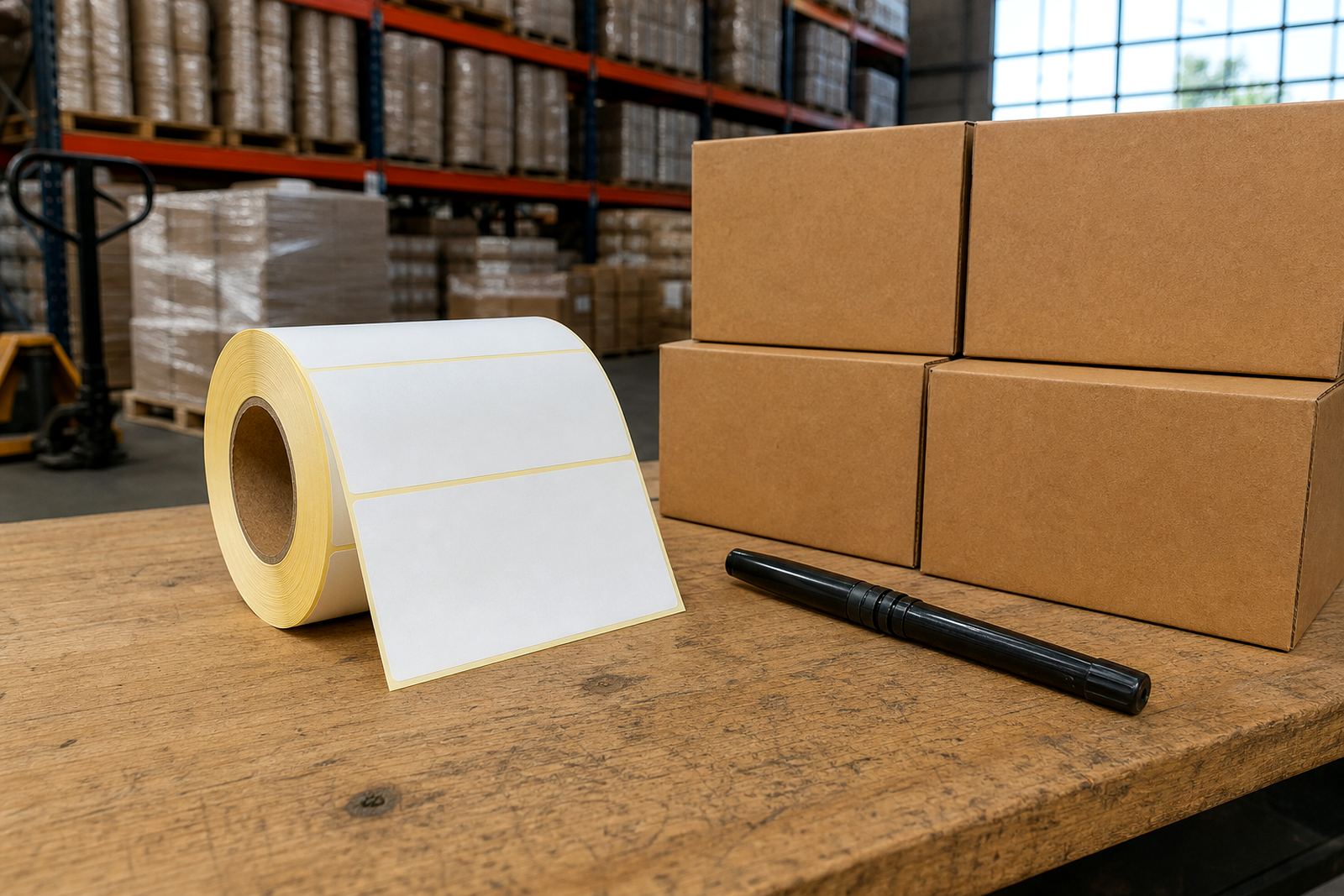
- Logistics items needing barcodes and handling notes
- Manufacturing packs that need batch or trace data
- Coastal operations where labels may face humidity and handling wear
Fitting details that matter before the run starts
Clear polypropylene rolls need the right setup so the print stays centred and the labels feed properly. We check the roll width, outer diameter, core size, gap or black mark style, rewind direction and whether the printer expects an internal or external wound roll. If the roll is being used on a labelling machine, the applicator path and unwind tension also need to be confirmed.
For print shops, warehouses and packing lines around Durban, Johannesburg, Cape Town, Pretoria and Pietermaritzburg, a small mismatch can cause wasted labels or a stop in the line. It is worth confirming the printer model, platen width and ribbon type before the order is cut. If you use sample rolls first, we can help assess whether the adhesive grabs well on your pack surface and whether the film stays flat during print and dispatch.
- Confirm label width, length and gap spacing
- Confirm core size, usually 25 mm, 38 mm or 76 mm depending on the printer
- Confirm whether the roll is internal wound or external wound
- Confirm if the surface is glass, PET, PP, PE or coated carton
Adhesive choices for real packaging conditions
The face stock is only half the story. The adhesive has to suit the way the pack is handled, stored and moved. A permanent adhesive is common for product labels that must stay in place through transport and normal consumer use. Removable and repositionable types can be useful for temporary marking, promotional runs or reusable containers. We also look at whether the label must hold on curved bottles, chilled goods or slightly oily surfaces.
For humid coastal conditions and busy back-of-house spaces, the adhesive needs to wet out properly and grip without lifting. Some packs need a more aggressive tack, while others need a cleaner peel for pack changes. If your surface has a mould line, curve or light texture, that should be mentioned at order stage so the stock can be matched correctly.
- Permanent adhesive for long stay application
- Removable adhesive for short term or changeable use
- Special attention for chilled, damp or curved packs
- Sample rolls help check adhesion before full production
Storage, handling and keeping the finish clear
Clear film labels stay in better condition when they are stored flat, away from dust and direct heat, with cartons closed until use. When the rolls are opened, avoid dragging the outer wraps across rough benches or dusty floors. Finger marks can show on transparent stock, so clean handling matters more than it does with paper labels.
In packing rooms that deal with stop-start power supply, it helps to keep labels in their cartons until the printer is ready and the line is running. That reduces unnecessary handling and keeps the edges clean. If the label face is going through a thermal transfer printer, the ribbon settings should be checked too, because too much heat can dull the finish or smear the print, even when the stock itself is sound.
For dispatch and storage, keep finished rolls boxed and upright where possible, and note any special winding direction or printer orientation on the outer carton. That saves time during repeat order planning and makes the next run quicker to load.