Plain rolls that take the print when the job changes
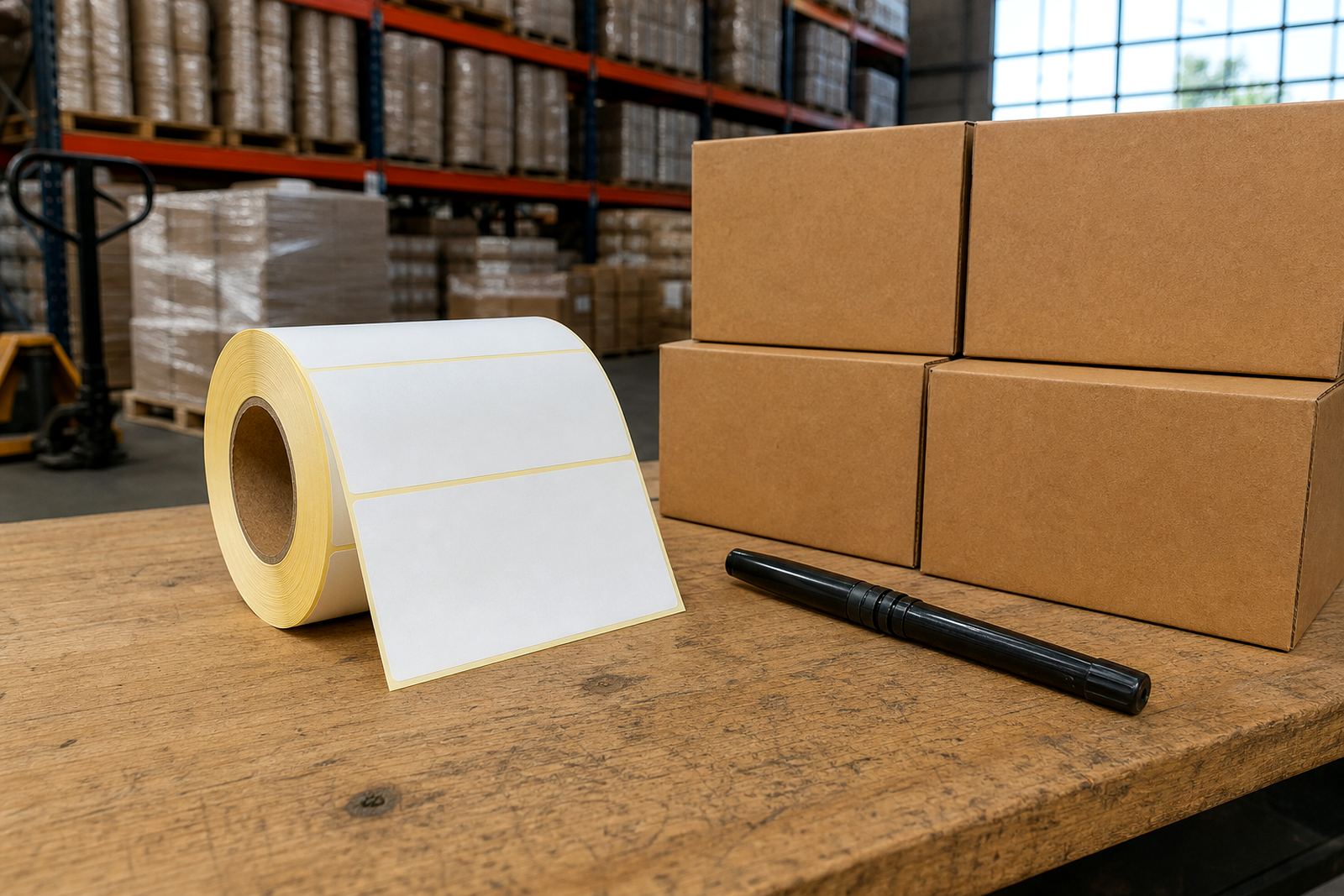
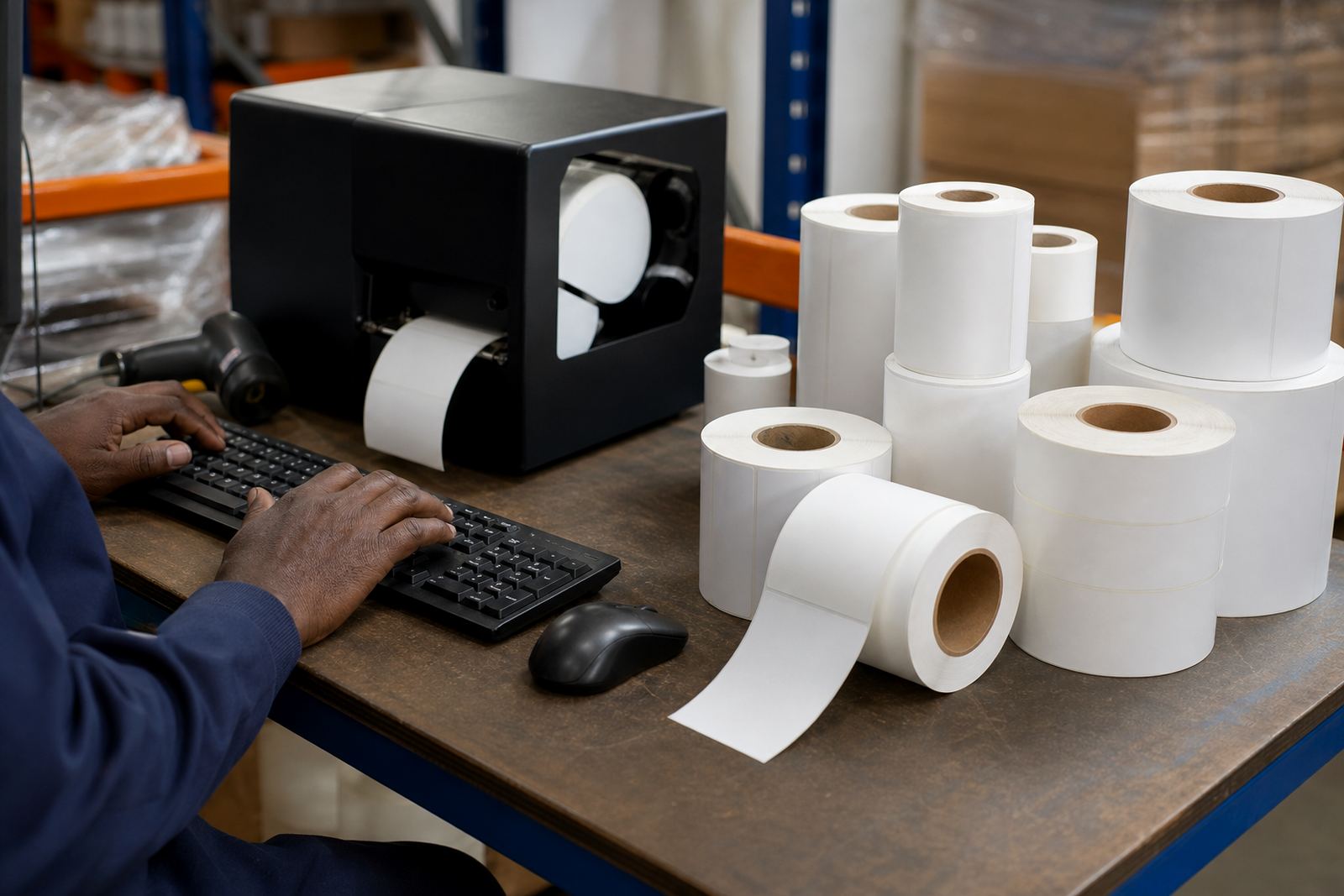
Blank thermal rolls are used where the print content changes from one label to the next. That makes them practical for courier labels, shelf labels, dispatch notes, carton marks, weighbridge tickets, date coding and short-run stock control in busy yards and pack rooms. In Westmead and the rest of Pinetown, many users run these rolls on label printers, ticket printers and handheld units that need clean feeding and sharp print edges, even when the day gets hectic.
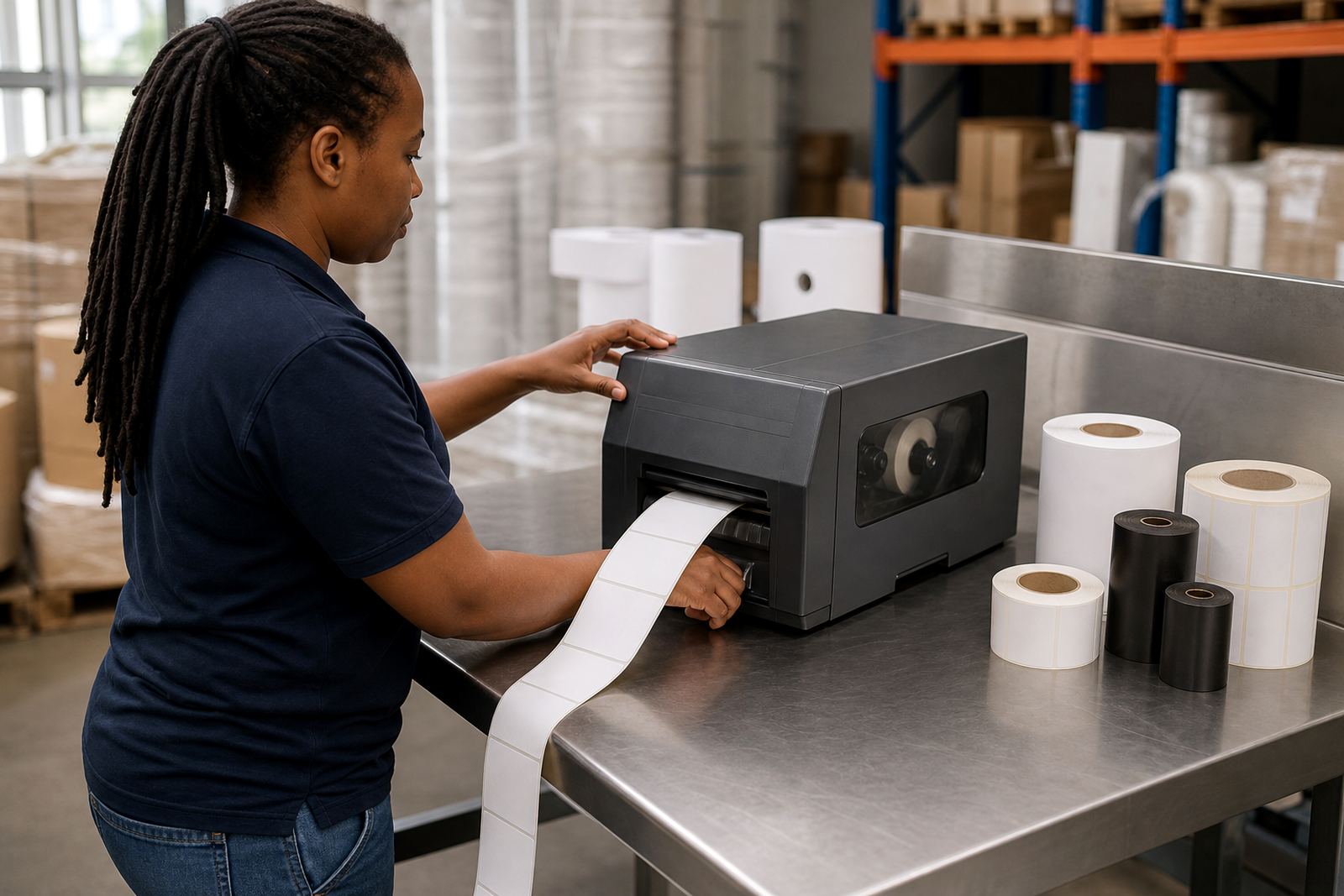
There are two main types. Direct thermal rolls are coated to react with heat from the printhead and are suited to shorter-life labels, receipts and shipping labels. Thermal transfer rolls are printed with a ribbon and are the better choice where the print must last longer, hold up to handling, or resist light abrasion better. The right roll depends on how the label will be used after printout and how long it must stay readable.
Roll builds, cores and widths that fit the machine properly
Getting the roll size right matters as much as the print method. A roll that is too wide will foul the guides, while the wrong core size can cause poor seating on the spindle or uneven feed. For many benchtop printers, 25 mm and 40 mm cores are common, while higher-volume units may take 76 mm cores. Roll diameter and label length also need to suit the printer chamber and the daily print run. If the rewind is too tight or too loose, you will see tracking problems, and sometimes a roll can chatter in the holder.
We supply plain thermal rolls for a range of typical applications, with options that can be slit to suit the width needed. Widths can be cut for narrow product labels, medium shipping labels or wider information labels, depending on the printer fit and the way the label is applied. The right winding direction, inside or outside face out, also has to match the printer path and label peel position.
- Core sizes commonly checked: 25 mm, 40 mm and 76 mm
- Widths chosen to match print heads, guides and label bays
- Roll diameter set against the available printer space
- Winding direction matched to print path and peel setup
Where blank thermal rolls earn their keep
These rolls suit operations that need fast, legible print with a clean finish. In retail they are used for price marking, barcode labels and shelf identification. In logistics they work for parcel tracking, warehouse locations, dispatch labels and route identification. Manufacturing teams use them for batch numbers, item tags and carton identification. In the Cape or along the coast, humidity can affect how labels are handled and stored, so the base stock and adhesive need to suit the environment. In hot inland depots, the same applies where cartons sit in strong heat before despatch.
Direct thermal rolls are often preferred for shipping and counter use because they print fast and keep the workflow moving. Thermal transfer versions are more suitable where the label has to stay readable for longer or where the printed surface will face regular rubbing during handling. If the label will be stuck to chilled packaging, corrugated cartons or stock moving through municipal depots, the adhesive choice matters as much as the face stock.
- Retail and price marking
- Courier and warehouse dispatch labels
- Manufacturing batches and carton codes
- Stock location and internal trace labels
Sticky side, release liner and face stock choices that change the result
Even when the roll looks plain, the make-up of the label is doing most of the work. The face stock can be a thermal-coated paper or a transfer-grade face material, depending on the print process. The adhesive can be permanent, removable or formulated for harder-to-stick surfaces. A permanent adhesive is often used for general parcel and product labelling. A removable adhesive is useful where the label must be lifted later without leaving much residue. On dusty cartons or slightly rough packaging, adhesive matching becomes important because a poor bond leads to lifting corners and wasted labels.
The liner has to release cleanly through the printer so the feed stays consistent. A poor liner can curl, slip or tear, which is a headache on busy packing lines. We also look at face stock selection where the label must take a ribbon print, or where direct thermal coating needs to resist smudging from hand contact. Sample rolls help check the combination before a larger run is planned, especially when the product is moving between different stores, pack areas or depots.
Fitting the roll into the printer without slowing the line
Installation is usually straightforward, but the roll has to be set correctly for the printer to track well. The spindle must suit the core, the guides must hold the roll square, and the label path needs to match the feed direction. On some machines the print head pressure and sensor setting need a small adjustment when switching from one roll width to another. If the labels are die cut, the gap or mark sensing must also be checked so the printer registers each label in the right position.
Dust, moisture and heat can shorten shelf life or affect the edge finish, especially when rolls are stored near open doors or in areas with regular forklift movement. We advise keeping cartons flat, away from direct sun and off damp floors. That saves trouble later and keeps the feed smooth.
- Confirm printer model and media path
- Check core size and roll outside diameter
- Set the sensor for gap, black mark or continuous stock
- Store unopened rolls in a dry, cool place
Details to confirm before a roll is cut or packed
To supply the right blank thermal rolls, we need the basics from your machine and your working environment. That includes the printer type, the required width, the core size, the label length, the roll diameter and whether you need direct thermal or thermal transfer stock. If you are working in retail, logistics, food packaging or a factory yard, tell us what the label will face after printing, whether it will see cold rooms or outdoor handling, and if the print must last for a day or much longer.
For customers in Durban, Johannesburg, Cape Town, Pretoria and Pietermaritzburg, this information helps us plan the right roll size and winding direction before dispatch. We also use it for repeat order planning so the next batch matches the same printer and packing setup. If your line changes, or a different site starts using the rolls, we can check compatibility again and adjust the slitting or core sizing where needed.
- Printer make and model, or a clear photo of the media bay
- Direct thermal or thermal transfer requirement
- Width, label length and core size needed
- Inside or outside wound, plus quantity and delivery point
Why Westmead supply matters when orders move fast
From our Westmead, Pinetown base, blank thermal rolls are packed for supply across South Africa with dispatch in mind. That matters when a site in Hammarsdale, Durban or farther afield is waiting on roll stock for the next shift. We handle roll length planning, rewind requirements and dispatch packing so cartons arrive neat and ready to go onto the shelf or into the printer bay. For customers with multiple branches, a consistent roll spec helps reduce mix-ups and keeps operators using the same settings.
Our team, including Sibusiso Lourens, Naledi Mdlalose, Johan Reddy, Ayanda Ntsele, Megan Moonsamy and Themba Kotze, works on printer fit checks, sample rolls and repeat order planning for businesses that need the same result every time. If your usage changes with season, stock type or new equipment, we can review the roll setup and adjust the next supply accordingly.
Key facts
| Product type | Blank thermal rolls for variable data printing |
|---|---|
| Print method | Direct thermal or thermal transfer |
| Core sizes | Commonly 25 mm, 40 mm or 76 mm, depending on printer |
| Widths | Slit to suit narrow, medium or wider label applications |
| Winding | Inside or outside wound to match printer feed |
| Applications | Shipping, retail, warehousing, batching and carton marking |