When a pallet needs to speak from metres away
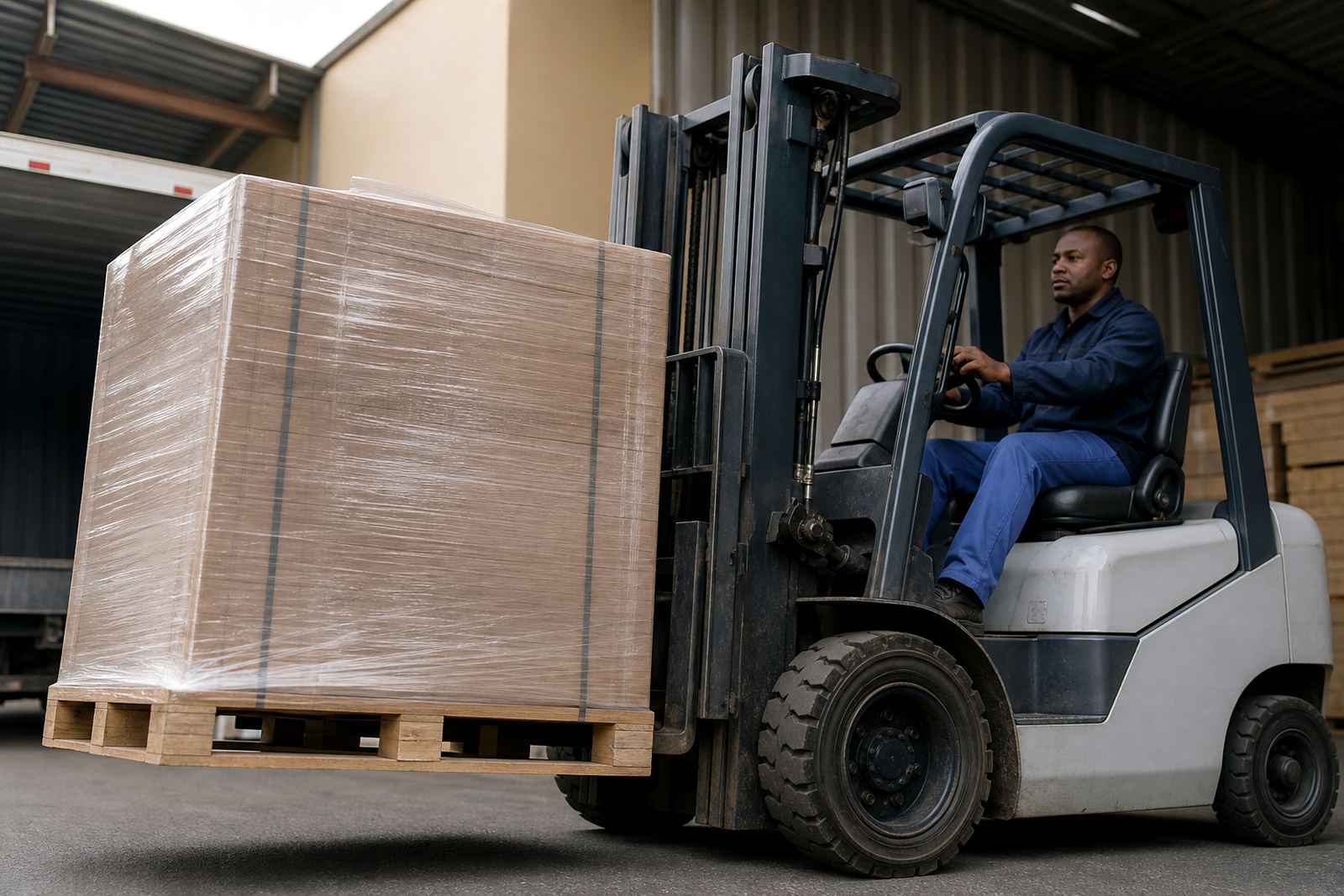
Pallet labels are the bigger format rolls used when a carton label is too small for the job. They carry pallet numbers, route marks, batch codes, location codes and handling notes that must stay readable on forklift runs, racking bays and loading docks. In busy yards around Durban, Johannesburg and Cape Town, a pallet label has to stay flat, print clearly and hold up to handling, dust and the odd wet stretch of weather.
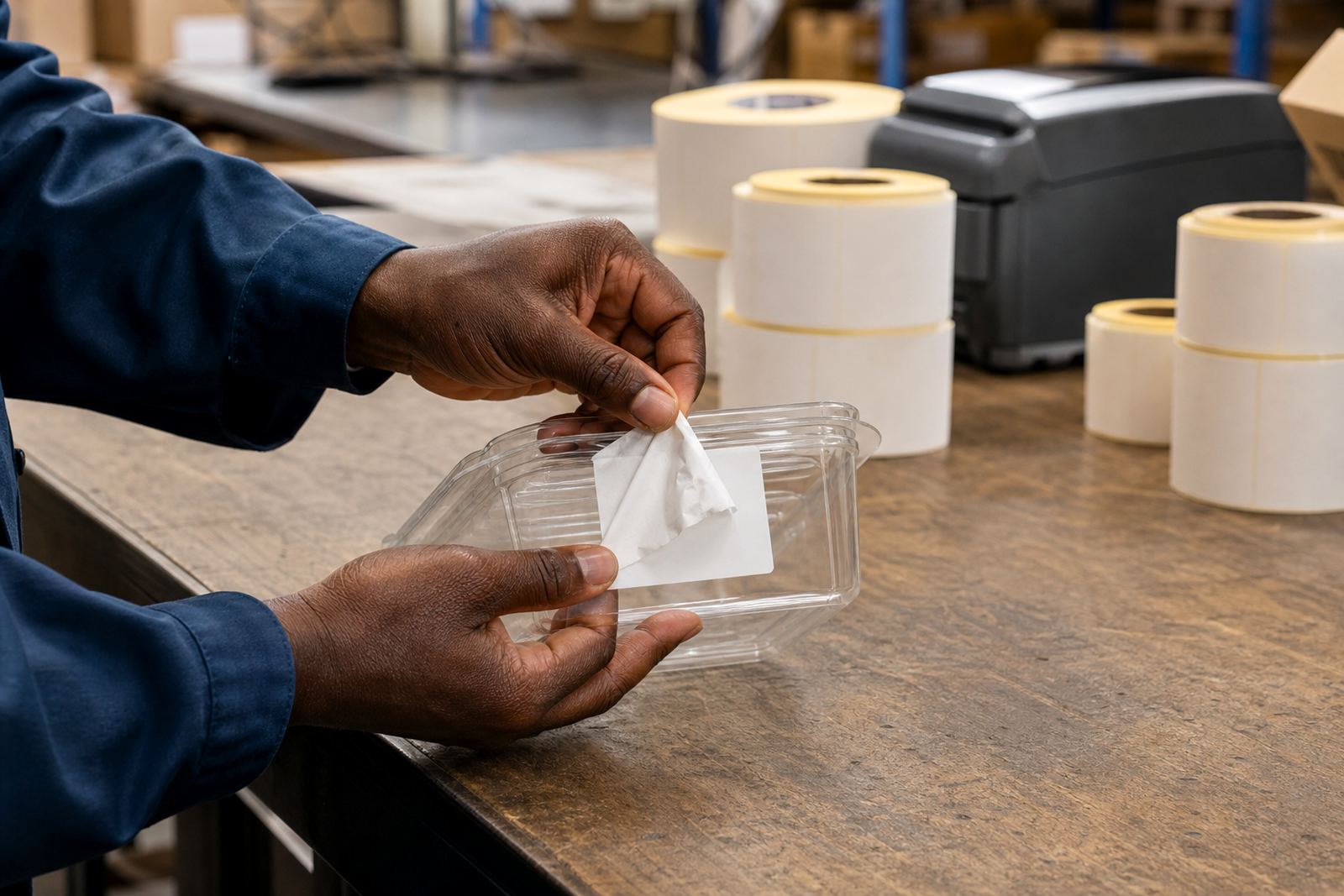
These rolls are supplied as self-adhesive label stock on a liner, ready for thermal transfer or direct thermal printing depending on the application. The face stock can be paper for general warehouse use, or a synthetic face for tougher handling and more moisture exposure. Adhesive choice matters too, because a chilled store, a warm dispatch floor and a coastal site in Pinetown do not behave the same.
Sizes, face stocks and roll builds that fit the task
Pallet label rolls are normally made in wider formats than standard stock labels. Common working sizes include 100 mm x 150 mm, 100 mm x 200 mm, 105 mm x 148 mm and similar large format layouts, but the exact size depends on what the label needs to show and how much print space the barcode requires. If your pallet movement sheets need more lines, a longer label often works better than cramming information into a narrow strip.
- Face stock: direct thermal paper, thermal transfer paper, or synthetic face stock for tougher warehouse conditions
- Adhesive: permanent, removable, freezer grade, or a stronger tack for rougher cartons and wrap
- Liner: glassine or kraft liner, selected for clean peel and steady feed through the printer
- Core sizes: commonly 25 mm, 40 mm, or 76 mm cores, matched to the printer spindle and roll holder
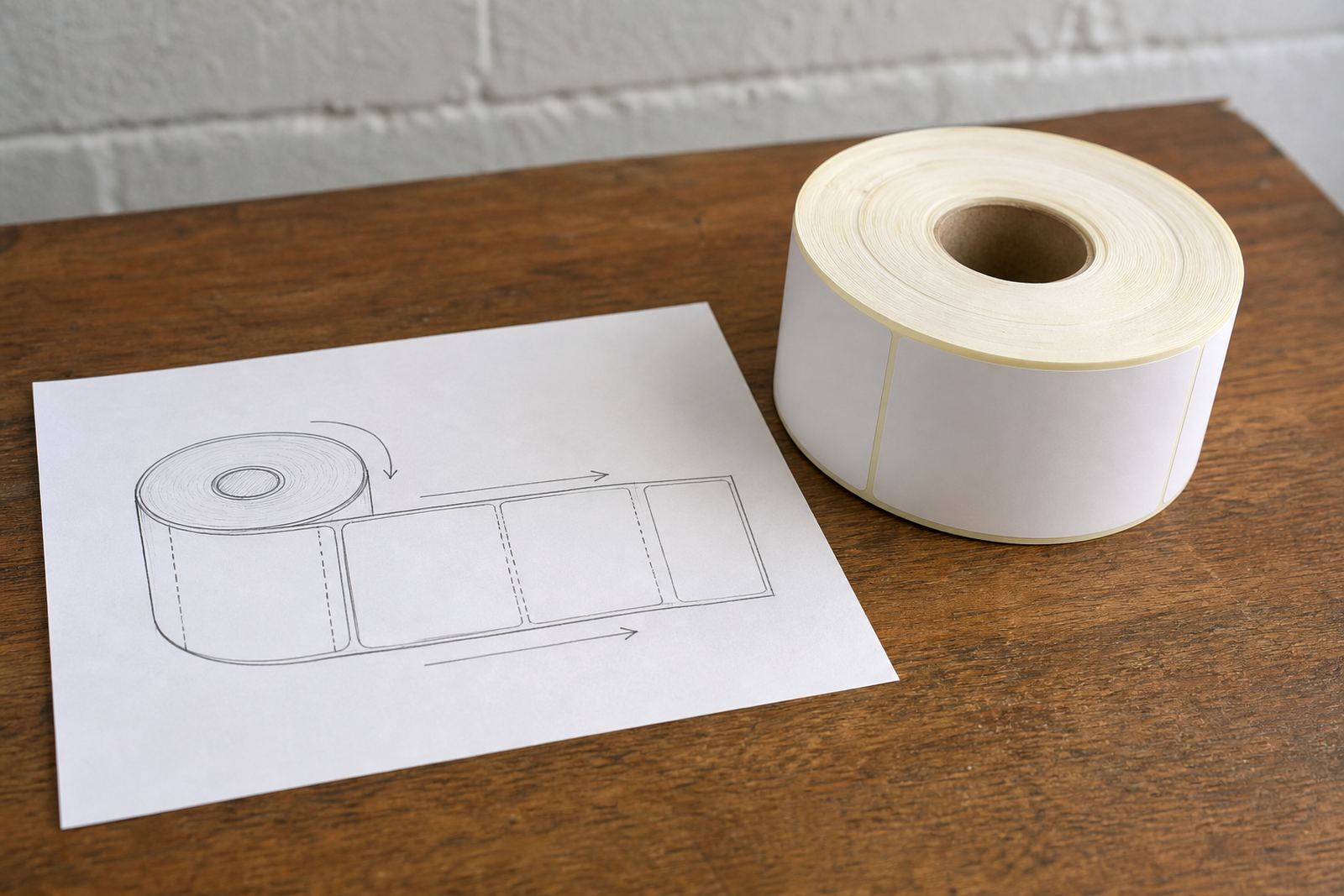
- Winding direction: labels can be wound to suit the print head and peel path, which matters on narrower printer bays
We also plan roll length and outer diameter so the roll does not overfill the printer cavity. That matters on smaller units used at pack benches where the operator needs the roll to feed without snagging.
Where pallet labels earn their keep
Pallet label rolls suit distribution centres, manufacturing stores, retail back rooms, cold stores and cross-dock operations. They are useful for route sorting, receiving bays, QA holds, staging lanes and export prep where each pallet must be identified fast. In Pietermaritzburg and Hammarsdale, where sites often move mixed loads between production and dispatch, a clear pallet label helps reduce mix-ups and keeps loading teams from guessing.
They are also a practical fit when a company uses barcode scanning at handover points. A good pallet label gives enough space for a large barcode, human-readable text and any routing notes needed by the receiving team. On wind-blown loading areas or in hot sheds, a label with the correct adhesive and face stock will stay put better than a general-purpose sticker, which saves rework and reprinting.
- Warehouse identification and bin-to-pallet tracking
- Route sorting for local and long-haul dispatch
- Retail replenishment and bulk stock movement
- Manufacturing batch control and work-in-progress marking
- Cold room and chilled goods handling where adhesion must hold
Printer fit and fitting checks before the roll goes in
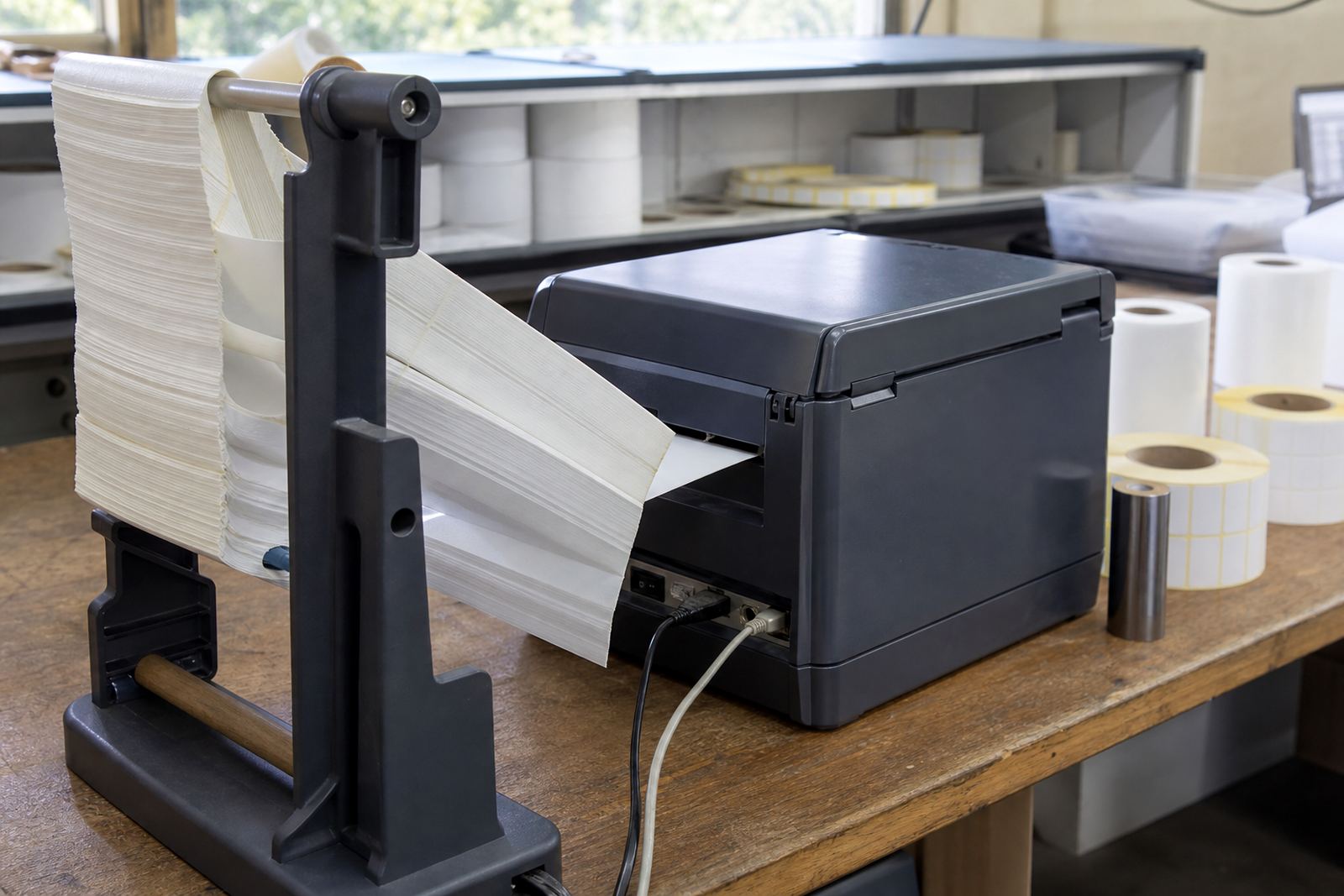
Pallet label rolls must match the printer properly, otherwise you get poor print quality, wasted labels and avoidable stoppages. The first check is printer type, because direct thermal and thermal transfer printers use different ribbon setups and heat settings. The second is the core size and roll width, which must fit the spindle and guides. The third is the print gap or black mark sensing setup, because large labels need the printer to read the label breaks accurately.
For fitting, check the roll outer diameter, unwind direction and whether the printer loads from the left or right side. If the roll is too tight for the bay, the operator ends up forcing it in and that can throw the feed off. If your site uses several machines, we can match the stock to each printer model line by line, which helps when one depot in Johannesburg uses a different unit from the one in Cape Town. It saves a lot of back and forth, and less paper gets wasted.
- Printer make and model, or at least the chamber width and core requirement
- Label width, label length and any corner radius required
- Direct thermal or thermal transfer use
- Roll outer diameter limit and core diameter
- Winding direction and print orientation
Care, storage and handling in South African conditions
Label stock should be kept dry, out of direct sun and away from dusty floors or damp loading areas. In coastal conditions, especially where humidity rises, carton storage can soften the adhesive edge if packs are left open. In inland areas, heat and power interruptions can leave a printer standing for longer than planned, so it helps to store rolls flat in their cartons and keep the printing area free of grit.
When handling pallet labels, avoid touching the adhesive face and do not leave open rolls near spray, oil or cleaning chemicals. If labels are used on cold pallets, allow the pallet surface to settle where possible before application so the adhesive can take properly. For rough timber, shrink wrap or slightly dusty cartons, the right adhesive selection is worth more than trying to press a weak label harder. A label is only useful if it stays on until the goods are checked in at the far side.
Details to confirm before you place the order
For pallet label rolls, the order needs a few exact details so the stock arrives ready for use. Size alone is not enough. We need to know what the label will be fixed to, what printer is in use, and how the label will be read in the warehouse. If the line staff are scanning barcodes at speed, even a small mismatch in size or adhesive can slow the whole bay down.
Please confirm the following when ordering:
- Label width and length in millimetres
- Face stock choice: paper or synthetic
- Direct thermal or thermal transfer printing
- Core size required by the printer
- Quantity per roll and any roll length target
- Permanent, removable, freezer grade or stronger tack adhesive
- Winding direction and print orientation
- Whether the pallet will be handled in cold rooms, coastal humidity or rough outdoor yards
We can also help with sample rolls, usage review and repeat order planning where one site in Pretoria needs a different build from another in Durban. That sort of check-up keeps the print consistent and helps prevent a box of the wrong rolls turning up at the wrong gate.
Working stock for dispatch teams that cannot wait
Pallet label rolls are part of the working stock that keeps warehouse flow moving. They are not decorative, and they should not be treated like generic office labels. The right combination of face stock, adhesive and liner gives a cleaner print, faster application and fewer failed scans. For sites dealing with daily dispatch, mixed loads and multiple routes, that difference shows up in the yard.
From Westmead, Pinetown we supply pallet label rolls for packaging, retail and logistics teams across South Africa, including Durban, Johannesburg, Cape Town, Pretoria and Pietermaritzburg. Whether your requirement is a large white label for route sorting or a tougher stock for handling through cold stores and busy depots, we match the roll to the task and the printer so it works properly from the first batch.
Key facts
| Product type | Large format self-adhesive pallet label rolls |
|---|---|
| Print methods | Direct thermal or thermal transfer |
| Common sizes | 100 x 150 mm, 100 x 200 mm, 105 x 148 mm and similar formats |
| Core sizes | 25 mm, 40 mm or 76 mm depending on printer fit |
| Face stock options | Paper or synthetic |
| Adhesive options | Permanent, removable, freezer grade or higher tack |