When a bigger core earns its place on the line
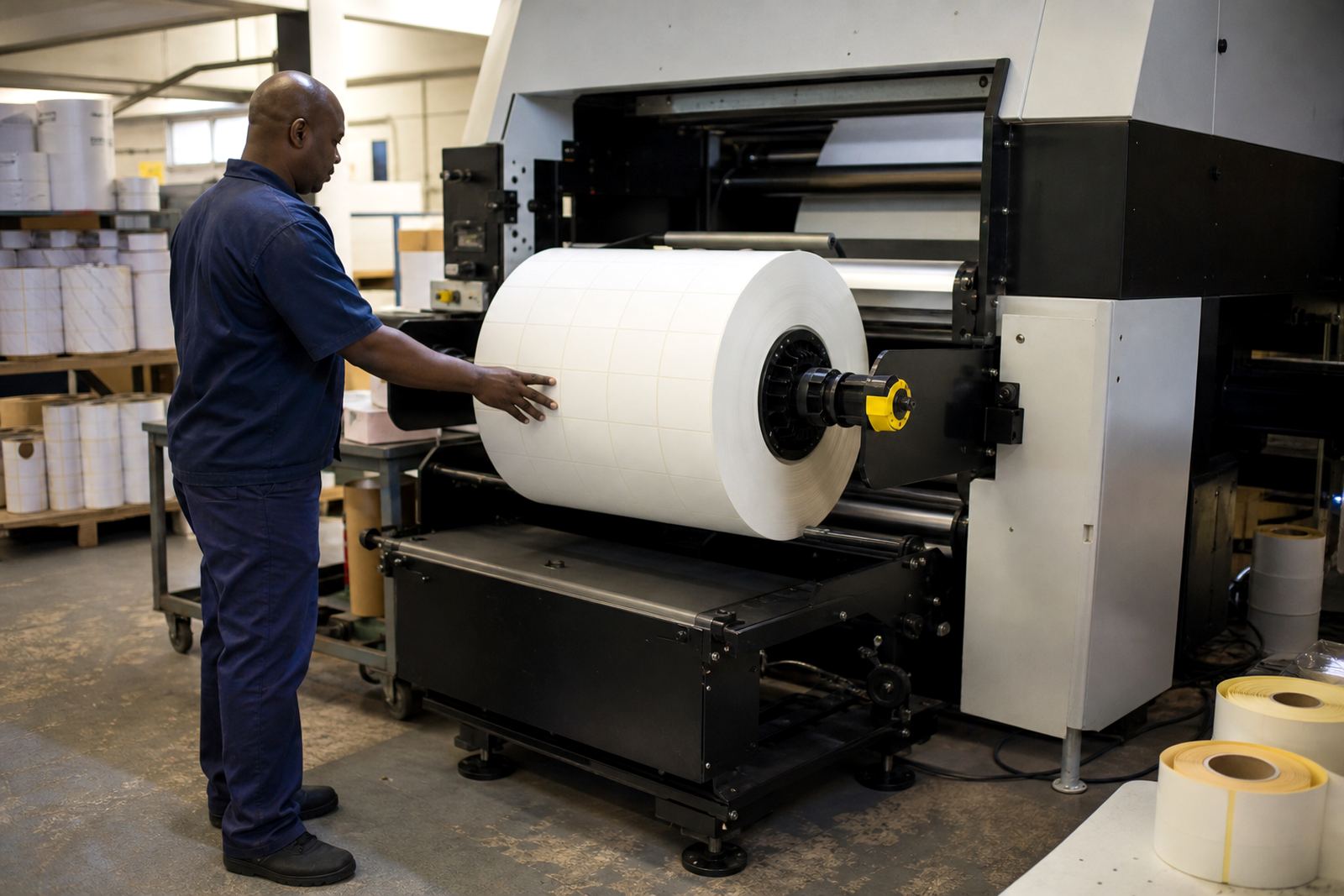
A 76mm core roll is the larger centre tube used on many industrial label printers and applicators, especially where the machine carries a heavier outer diameter and needs steadier rotation. The bigger core helps the roll sit properly on the spindle, which matters when you are printing barcodes, shipping labels, carton labels or product labels in long shifts and can not afford feed interruptions.
These rolls are commonly used in warehouses, dispatch areas, packing rooms and light manufacturing lines from Durban to Johannesburg where labels need to keep moving through the day. The stock can be supplied as direct thermal or thermal transfer material, depending on the printer type and the life expected from the printed label.
For many operators the 76mm core is not about size for its own sake, it is about getting the roll format that the machine can take without wobble, side drift or poor tracking. If the core size is wrong, the roll may sit loose or not fit at all, which causes waste and stops the line for no good reason.
Face stock, adhesive and liner choices that affect the label after it leaves the printer
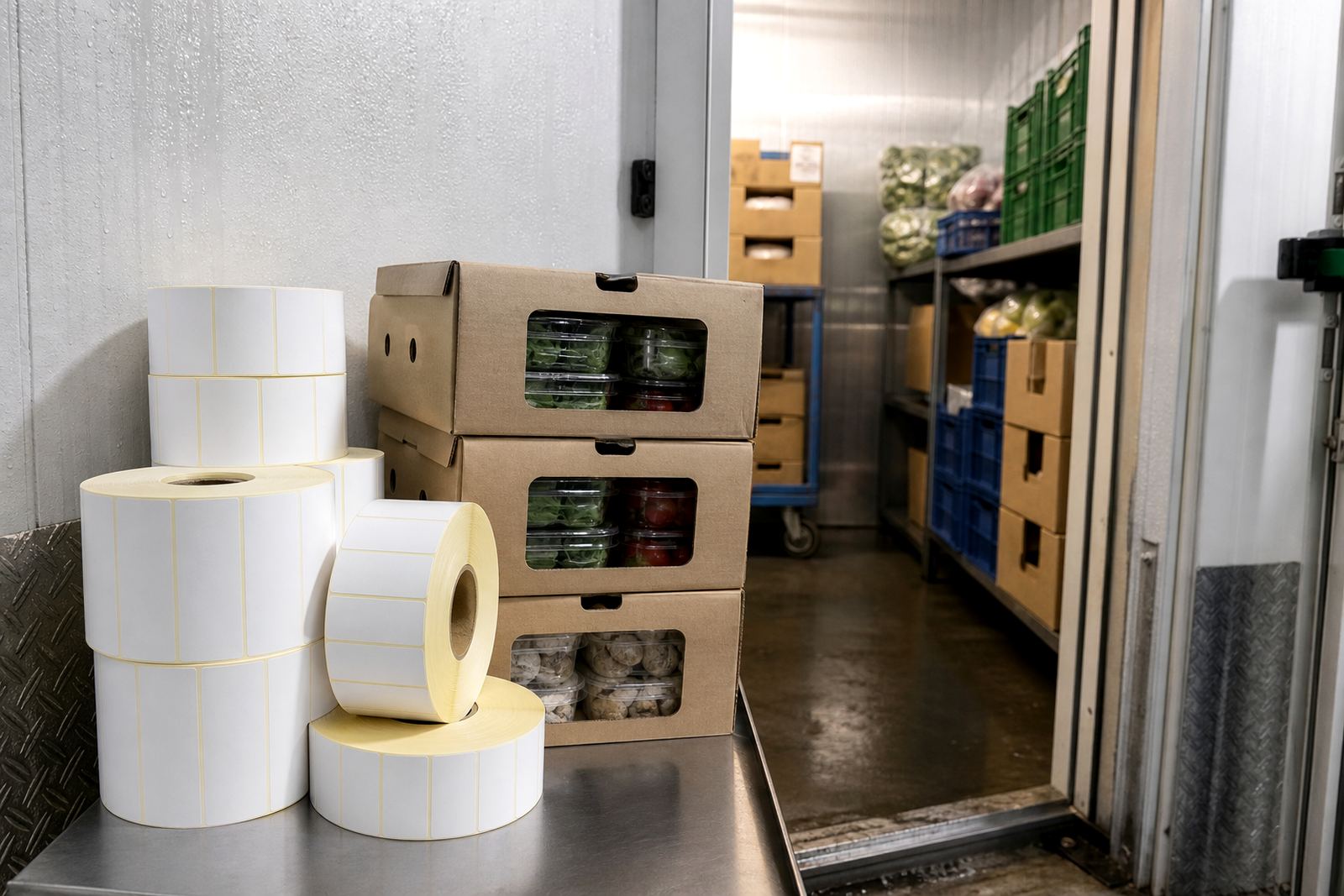
When ordering 76mm core rolls, the face stock matters just as much as the core. We work with generic label face materials used for packaging and identification, including paper stocks for general retail work and more durable synthetic face stocks for moisture, abrasion or handling. In coastal areas such as Durban and Cape Town, humidity can affect how a label performs, so the stock and adhesive need to suit the store room, vehicle, cold room or shelf life of the product.
Adhesives are selected by application. Permanent adhesive is used where the label must stay fixed, while removable or low tack options are chosen where residue or re-labelling is a concern. Liner choice also plays a role in release and dispensing. A clean liner release helps avoid jams on faster printers and gives a more consistent peel, especially on repeat runs where the operator is feeding a full box of rolls through a shift.
- Paper face stock for standard carton, price and dispatch labels
- Synthetic face stock for moisture, rubbing and longer handling
- Permanent, removable or freezer-suitable adhesive options
- Glassine or equivalent liner choices for stable unwinding
Direct thermal or thermal transfer, and why the print method changes the roll choice
76mm core rolls can be supplied for either direct thermal printing or thermal transfer printing. Direct thermal stock is used where the print head creates the image directly on the coated face, which suits shorter life labels, shipping labels and fast-moving dispatch work. Thermal transfer stock uses a ribbon, which is better when the print needs more resistance to heat, light, friction or general handling.
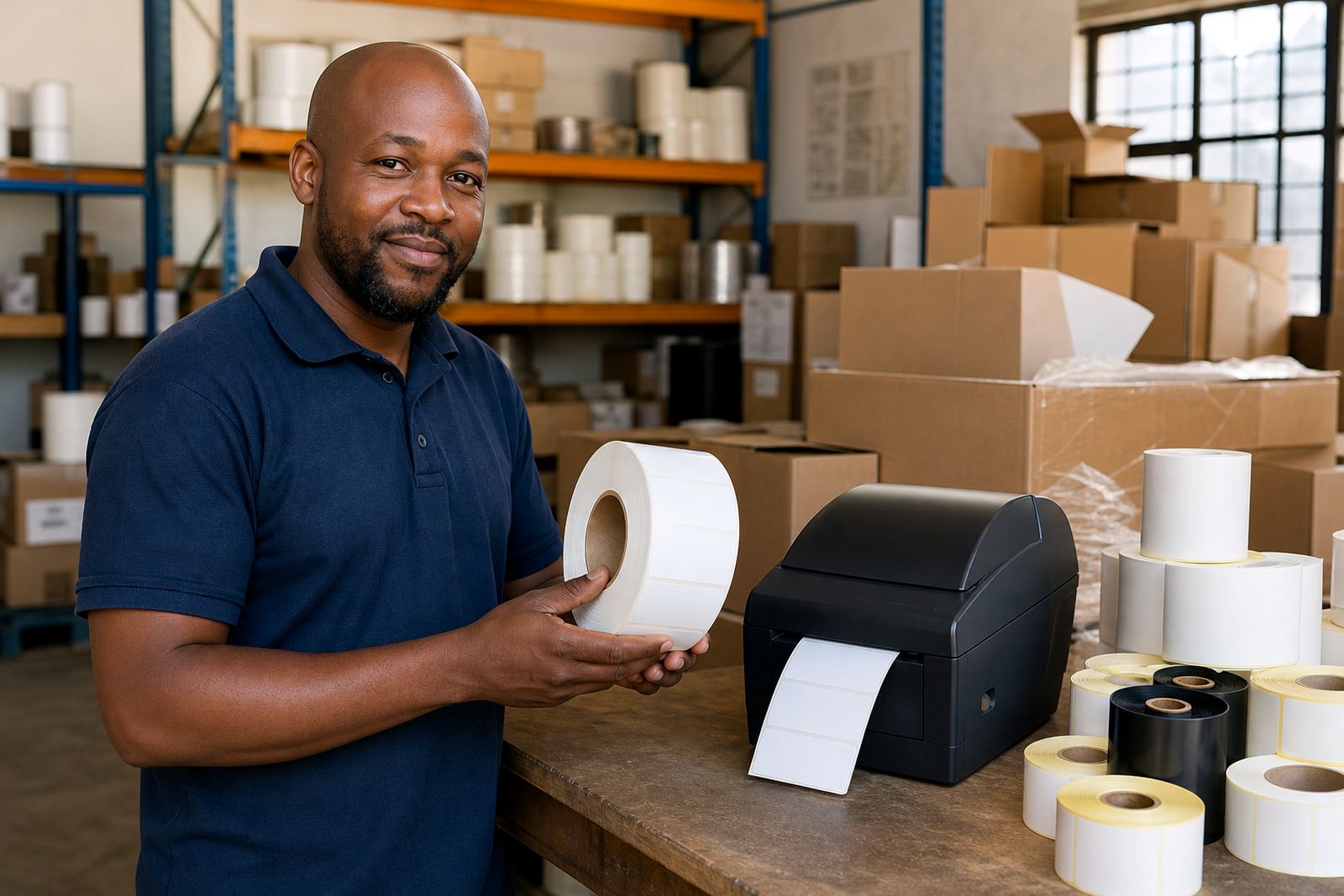
The printer compatibility must be checked before supply. Some units are built for 76mm cores and wider roll diameters, while others need narrower widths, specific unwind direction, or a certain roll outside diameter. If the printer, spindle or holder is set for a different core, the roll may fit badly even if the label width is correct. That is why core size, roll length and winding direction are all treated as part of the same set-up, not as separate details.
For busy operations in Pinetown, Hammarsdale or Pietermaritzburg, the point is to keep the printer loading fast and predictable. A properly matched roll feeds better, prints cleaner and cuts down on stop-start handling during peak dispatch.
Sizes and build options that matter before the roll is made up
76mm core rolls are made in a range of widths and roll lengths, depending on the label size and the printer capacity. Common widths are selected to suit address labels, barcode labels, shipping labels, shelf labels and drum labels, while the length is planned around how many labels are needed before a roll change. Larger outer diameters can be used where the printer bay allows it, but the roll needs to stay within the machine limits so it does not rub or bind.
We also plan winding direction, label gap, perforation if needed, and how the roll will sit in the printer. This is practical work. If labels are feeding out the wrong way, or if the gap sensor cannot read the gap properly, the machine will stop and call for attention. That is avoidable when the roll spec is set correctly from the start.
- Core size: 76mm internal diameter
- Widths: made to suit the label face and printer path
- Roll length: matched to the job and printer capacity
- Winding direction: face in or face out as required
- Roll diameter: planned to suit the machine bay and spindle
Where 76mm core rolls suit the work best
These rolls are well suited to industrial printers, warehouse label stations, packing benches and despatch areas where roll changes should be less frequent. They are often used in retail distribution, logistics, food packaging, general manufacturing and contract packing. If your team in Pretoria is printing cartons all morning or your Durban store room is moving labels through a few different shifts, the larger core can be a practical choice for a steadier run.
They also suit environments where operators need easier loading and consistent roll support. On heavier printers the larger core helps the roll stay centred, which can improve tracking when the machine is running for longer periods. In some set-ups the bigger core also works better with rewind or unwind accessories, especially where labels are being applied off the printer and not just kept on a shelf.
For businesses dealing with municipal packaging rules, traceability or batch identification, the main benefit is not fancy, it is control. A good label roll format supports clear print, neat application and fewer interruptions when orders need to move out on time.
Loading, storage and day to day care on site
Loading a 76mm core roll should be done with the printer aligned, the spindle secure, and the label path checked before the first print. If the roll is too tight on the core or the guides are set too narrow, the printer can drag the web and create skew. If it is too loose, the roll can shift. Both problems are common and both are avoidable with proper set-up.
Store rolls in a dry area away from direct sunlight, dust and excessive heat. Direct thermal stocks are especially sensitive to heat and rubbing, while thermal transfer stock should be kept clean so the ribbon and print head are not exposed to grit. In humid coastal conditions, keep cartons off the floor and close them after use so the adhesive and face stock stay in good condition. If stock is left open in a hot room, the edge can curl and the roll may not feed as neatly.
- Keep cartons sealed until needed
- Store flat, off the floor and away from windows
- Check the printer path for dust before loading
- Use the correct guide setting for the roll width
Details to confirm before we cut and pack the order
To supply the right 76mm core roll, we need a few working details from your side. The first is the printer model or the exact fit requirements, because not every industrial printer takes the same roll outside diameter or unwind direction. The second is the label size, including width and height, plus whether you need a gap, black mark or perforation. The third is the face stock, adhesive and finish you want for the job, since a carton label is not treated the same as a freezer label or a retail shelf label.
It also helps to know where the labels will be used, whether that is a warehouse in Johannesburg, a depot in Cape Town, or a packing room in Westmead. Conditions affect the choice. Heat, humidity, cold rooms and abrasion all change how the label should be made up. If you have an old sample roll, that is often the quickest reference for matching core size, winding direction and roll length without guesswork.
Our team handles custom slitting, rewinding, core sizing, roll length planning, printer fit checks and sample rolls from the Westmead Supply base. For repeat jobs, we can keep the setup notes on file so the next order follows the same practical spec and the labels arrive ready for the printer.
Key facts
| Core size | 76mm internal diameter |
|---|---|
| Roll types | Direct thermal and thermal transfer |
| Face stocks | Paper and synthetic options |
| Adhesives | Permanent, removable and application-specific |
| Printer fit | Industrial label printers with 76mm core support |
| Supply area | Westmead, Pinetown and nationwide delivery across South Africa |