Cold-store labels that keep their grip
Freezer adhesive stock is a self-adhesive label material built for low-temperature application and storage. The face stock can be paper or film depending on the finish and wear needed, while the adhesive is selected to bond in chilled conditions where standard permanent adhesives often struggle. For packers in Westmead, Pinetown and beyond, that means cleaner handling on cartons, tubs, trays and bags that move from packing lines into cold stores or refrigerated transport.
In practice, this stock is used where labels must stay put on damp, cold or slightly frosted surfaces. It is commonly chosen for food packing, cold chain dispatch, pharma storage, and warehouse identification where a label needs to stay legible through temperature swings. A good freezer grade also helps reduce edge lift and peeling when packs are handled repeatedly.
- Suitable for cold application and low-temperature storage
- Available with paper or film face stock depending on durability needs
- Used on cartons, crates, punnets, tubs and bags
- Works for chilled dispatch, frozen stock and cold room identification
Face stock, adhesive and liner choices that matter
The face stock is the top layer that carries print, barcodes and product details. For freezer use, the choice usually comes down to uncoated paper for short life labelling, or film face stock when moisture resistance and scuff handling matter more. The adhesive is the part that does the hard work in the cold, so matching it to the pack surface is key. A smooth carton, waxed surface or flexible film bag can all behave differently in a freezer room.
The liner supports the adhesive before application and also affects how the material runs through a printer or applicator. Glassine and kraft liners are both used in label converting, with the right choice depending on release, rigidity and winding requirements. If labels are applied by hand in a chilled packhouse or on a print-and-apply line, liner choice and adhesive tack need to be checked together.
- Paper or film face stock options
- Cold-grade permanent adhesive for chilled and frozen conditions
- Glassine or kraft liner options depending on handling and conversion
- Can be supplied slit to required roll widths for the job
Roll sizes for printers, dispensers and pack lines
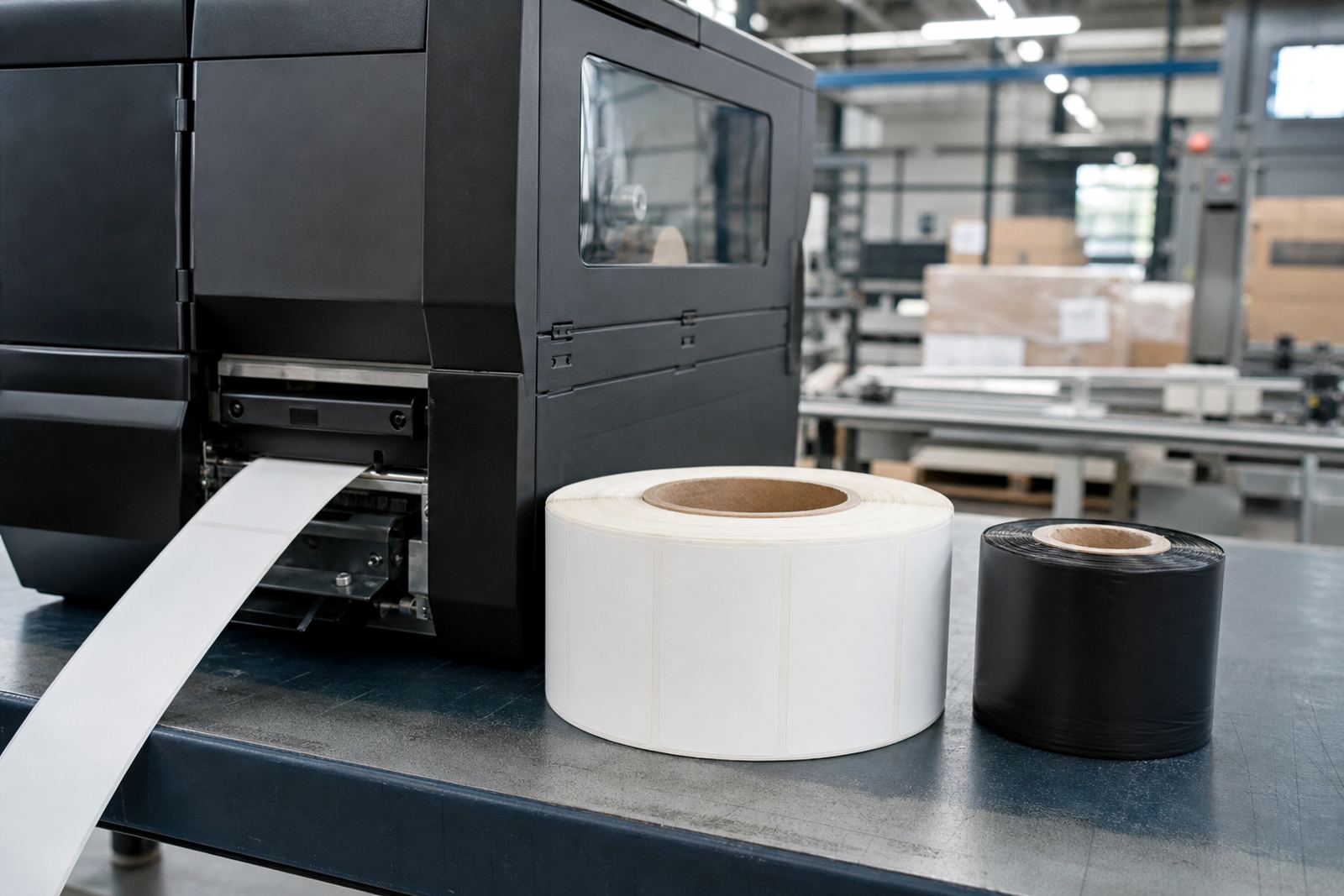
Freezer adhesive stock can be supplied in sheeted or rolled form, depending on how the labels will be printed and applied. Roll width, outer diameter, core size and winding direction all need to suit the printer or dispenser being used. For benchtop thermal transfer units, a smaller core is often needed, while industrial printers and print-and-apply systems may use larger roll builds for longer runs. In busy dispatch areas, the wrong core size can cause feeding issues and waste time.
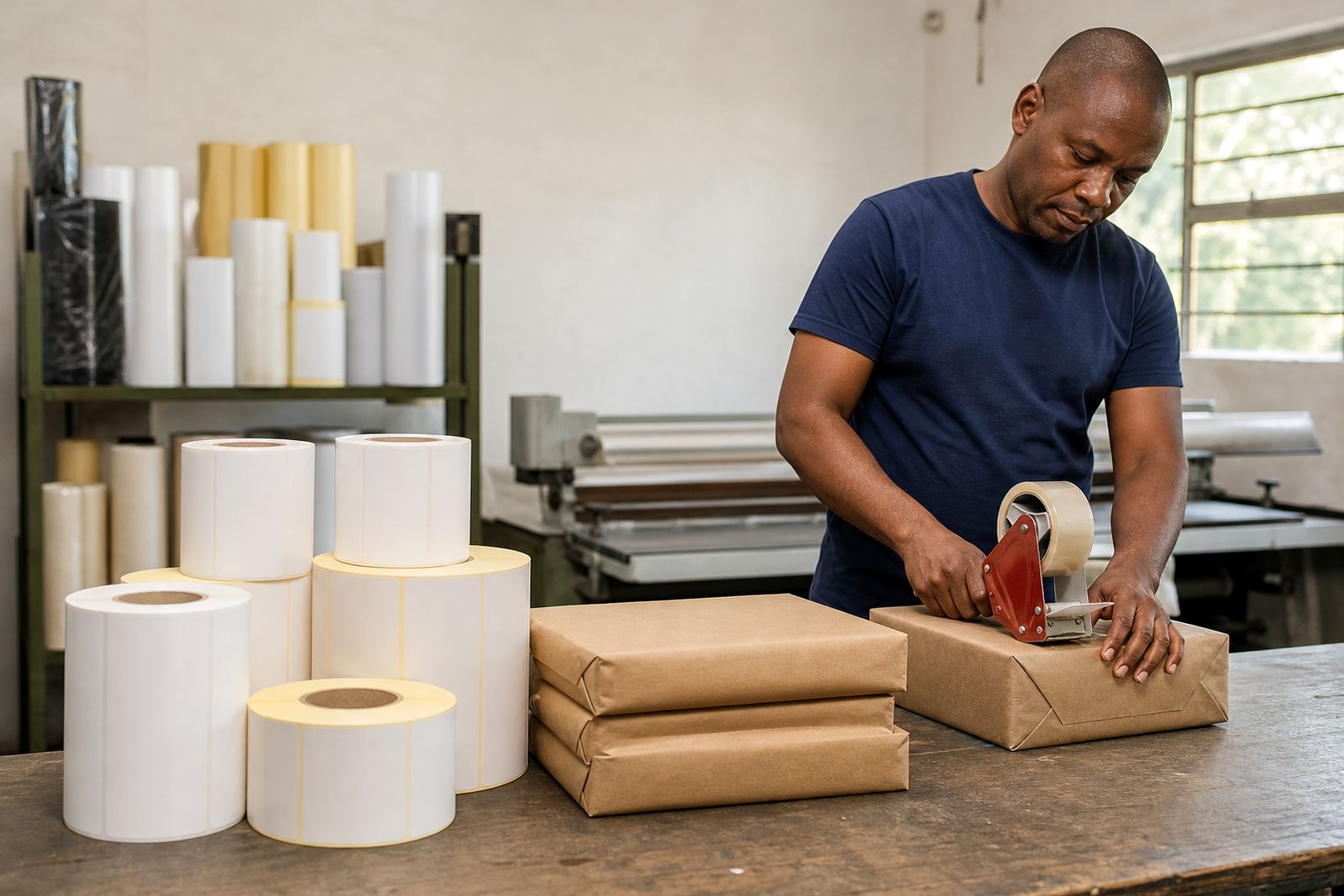
We plan roll lengths and core sizes to fit the equipment and the label count needed for each order. If the packhouse is using manual peel-and-stick application, a hand-friendly roll build can help reduce stoppages. Where there is automatic application, the roll direction and winding tension must match the machine set-up properly.
- Core sizes commonly set at 25 mm, 40 mm or 76 mm where equipment allows
- Roll width cut to suit the label format
- Labels can be wound inside or outside, left or right handed as required
- Supply for direct thermal or thermal transfer workflows, depending on the print method
Where freezer adhesive stock earns its keep
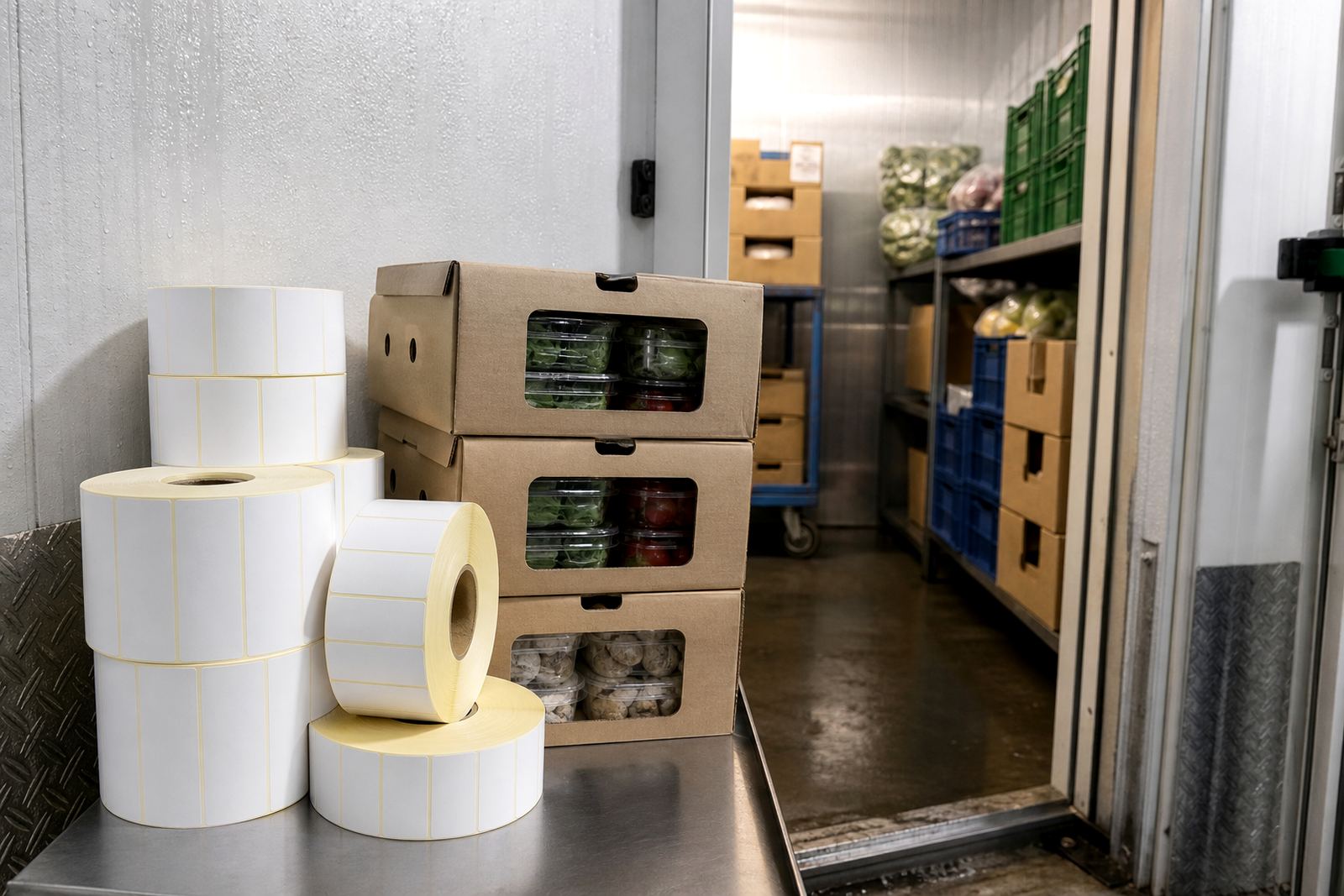
This stock is used in cold chain work where labels must stay readable and attached after refrigeration or freezing. It suits meat processing, fish packing, bakery goods, dairy products, ready meals, pharmaceuticals and warehouse cold storage. It is also useful for secondary cartons, shelf-edge cold room identification and dispatch labels that travel from Durban or Pietermaritzburg into inland or coastal distribution points.
On the coast, humidity can make label handling tricky, especially when packs move from chilled rooms into warmer loading bays. In inland sites, very dry air and temperature changes can still affect adhesion if the wrong material is chosen. That is why freezer adhesive stock is normally matched to the surface, storage temperature and time in cold conditions before dispatch.
- Cold rooms and freezer stores
- Refrigerated transport and chilled dispatch
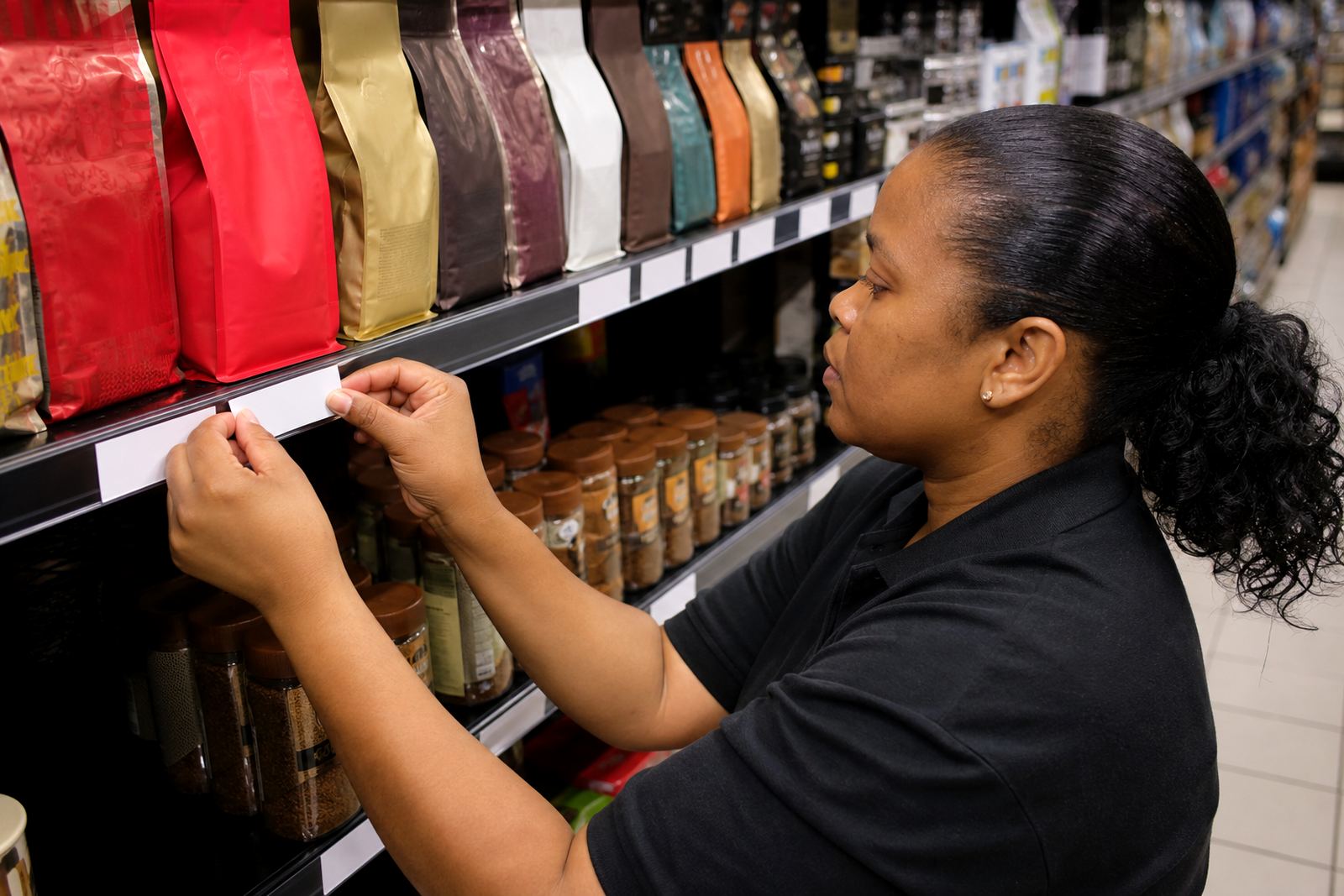
- Food packaging and retail cold shelves
- Logistics, traceability and stock identification
Fitting, print set-up and handling on the floor
For labels that will be printed on site, the printer fit must be checked before the order is run. Thermal transfer printing is often chosen when extra durability is needed, especially where the label must resist scuffing or moisture. Direct thermal can be used for shorter life applications where speed matters, though the storage conditions and expected label life should be confirmed first. Ribbon choice, print darkness and label speed all play a part in getting a clear barcode.
When labels are applied in a cold room, the surface should be as clean and dry as possible. Frost, condensation or powder residue can reduce adhesion. If packs are packed warm and then cooled, the label should be fitted at the correct stage so the adhesive can make a proper bond. A small test run is worth doing before full production starts, especially on new packaging materials.
- Check whether the printer uses direct thermal or thermal transfer
- Confirm label gap, black mark or continuous format
- Test on the actual pack material and at the working temperature
- Confirm if manual peel application or machine application will be used
What to confirm before a freezer label order is cut
To supply the right freezer adhesive stock, we need a few working details from the job. The surface type, storage temperature, label size, print method and the expected time in the cold all affect the adhesive and face stock choice. If the label must survive rough handling, condensation or repeated movement through the cold chain, that needs to be stated upfront. It helps prevent wrong material selection and wasted rolls.
Clients in Johannesburg, Cape Town, Pretoria and elsewhere often send us a sample pack or the current label details so we can match the format properly. If there is an existing printer, please confirm the model and the core size it accepts. If the order is for a new pack format, we can help plan slit widths, roll length and winding direction to suit the line.
- Label size in millimetres
- Surface type and whether it is dry, chilled or lightly frosted
- Storage temperature range and time in cold conditions
- Printer type, core size and winding direction
- Whether the label is for direct thermal or thermal transfer printing
- Quantity needed and whether repeat planning is required
Key facts
| Product type | Freezer-grade self-adhesive label stock |
|---|---|
| Face stock | Paper or film, depending on durability needs |
| Adhesive | Cold-temperature adhesive for chilled and frozen application |
| Liner | Glassine or kraft options, depending on converting and feed needs |
| Core sizes | 25 mm, 40 mm or 76 mm where compatible |
| Print use | Direct thermal or thermal transfer, subject to printer fit |
| Formats | Sheets or rolls, slit to required widths |
| Typical use | Cold rooms, freezer stores, chilled dispatch and cold chain packs |