When a label must bite first time
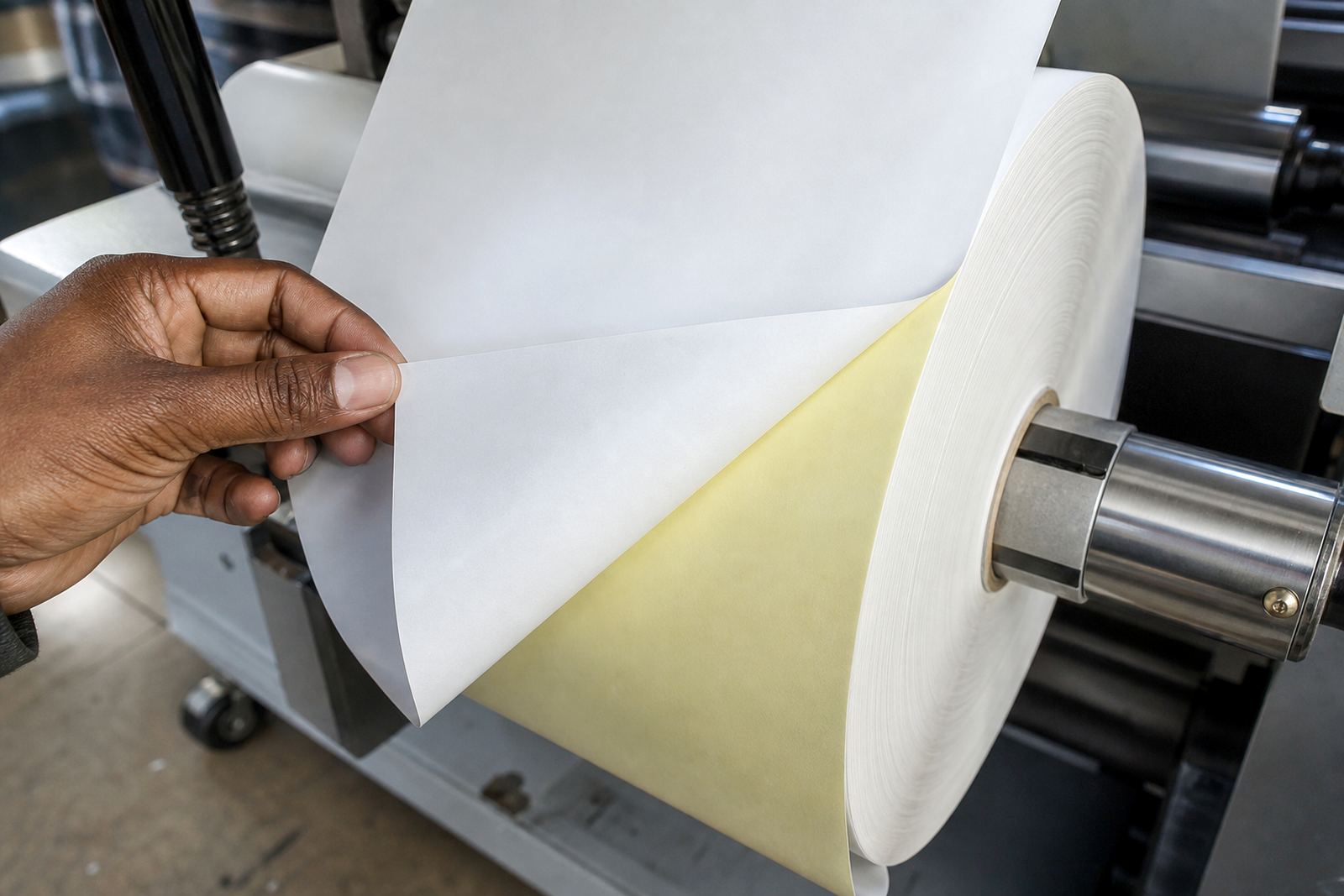
Hotmelt adhesive stock is a pressure-sensitive label material made for fast initial grab. Once the liner is stripped and the label is pressed down, the adhesive starts holding quickly on cartons, plastic tubs, film wraps and many coated pack surfaces.
This adhesive is commonly used on general purpose packaging runs, dispatch labels, product identification and retail stick-on labels. It is not a specialist freezer or removable adhesive, so the match to the pack surface matters. If the substrate is dusty, oily, rough or very cold, the hold can change and the label may need a face stock and adhesive pairing that suits that environment.
Stock builds we cut and supply
We supply hotmelt adhesive label stock in a range of face materials and liner builds, cut to the width, roll length and core size your printer or applicator needs. Typical face stocks include paper, semi gloss paper and selected synthetic films, depending on whether the label must be writable, wipeable or more moisture resistant. Liner options usually include glassine or kraft based release liners, with the release level chosen for clean stripping and stable winding.
- Widths from narrow coding labels to broader pack labels
- Roll lengths planned around your daily print volume
- Core sizes matched to benchtop and industrial printers
- Winding direction set for the way your machine feeds
- Perforation or spacing options where the job needs easier hand use
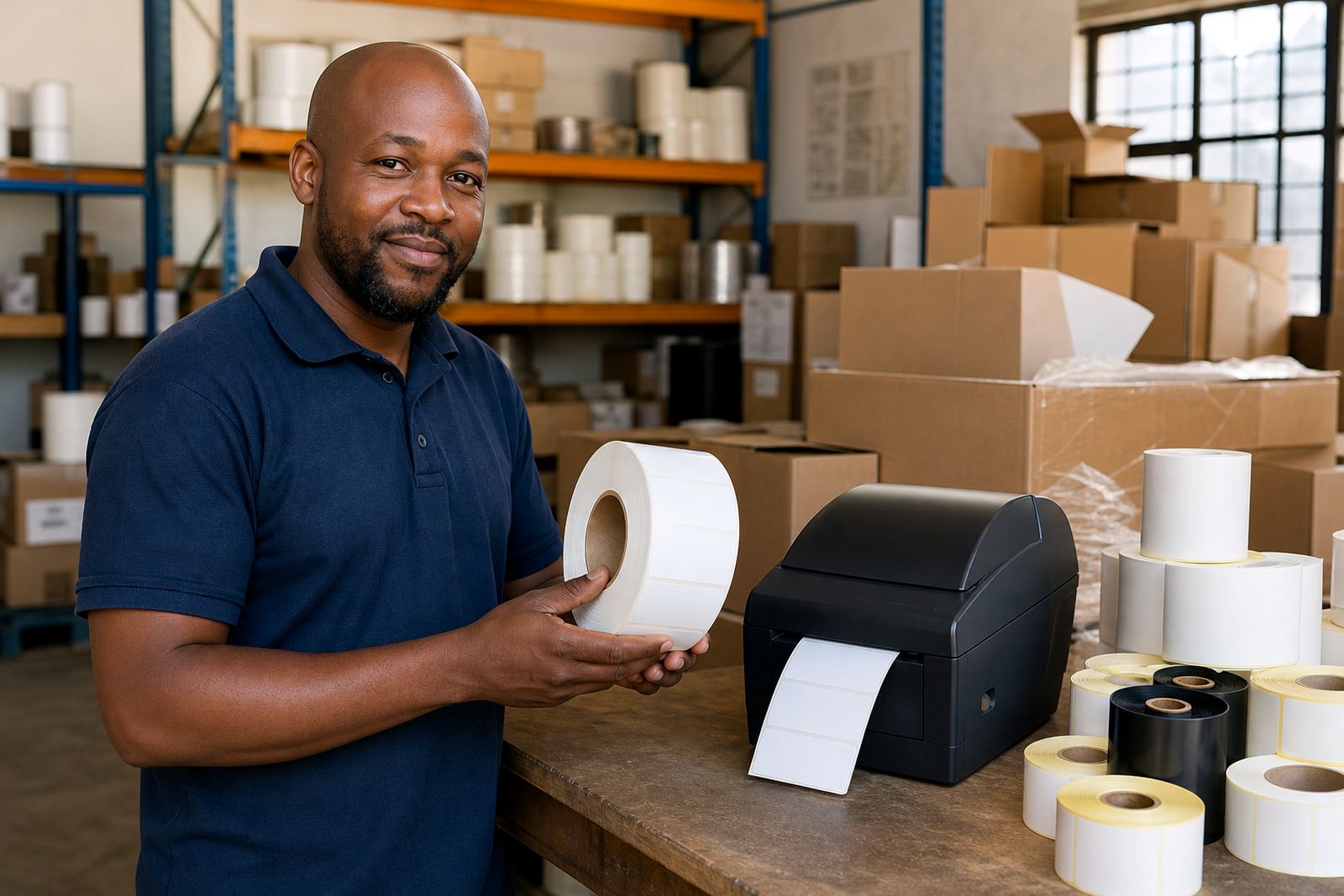
We also help with core sizing and rewinding where a roll must fit a specific holder, spindle or dispenser. That includes checking whether your printer takes a 25 mm, 40 mm, 76 mm or similar core, and whether the outer diameter will clear the feed path with room to spare.
Where the tack helps and where to be careful
Hotmelt adhesive suits packaging lines that need quick handling after application. It is often selected for retail shelf labels, shipping labels, sealed cartons, warehouse location labels and many manufacturing or assembly packs. In warm inland conditions around Johannesburg and Pretoria it can perform well on dry clean surfaces, while coastal areas such as Durban and Pinetown may need closer attention to condensation and storage because humidity can affect how a label is handled before use.
For rough sacks, heavily textured surfaces or surfaces with release agents, a different adhesive may be better. The same goes for very cold rooms, washdown areas or long term outdoor exposure. If you are labelling powder coated steel, HDPE containers, corrugated cartons or wrapped bundles, we will check the pack surface, handling pattern and any municipal or transport rules that affect traceability and barcode legibility.
- Fast grip on many common pack surfaces
- Good for dispatch, retail and manufacturing labels
- Works well where labels are applied and handled soon after
- Can be supplied in clear, white or other face stock formats as agreed
Printer fit and application checks that save rework
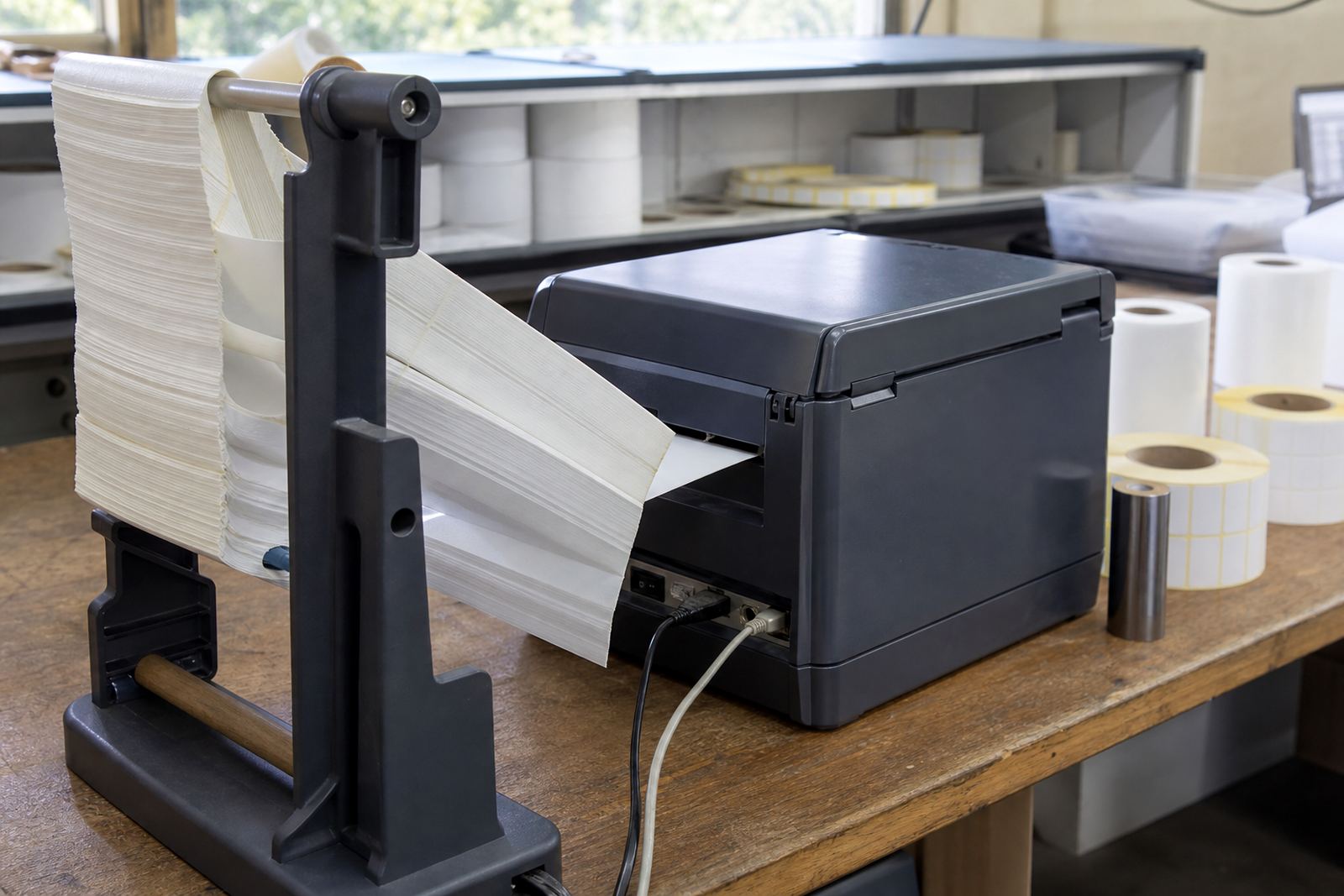
Before a run is cut, we check the printer type, feed path and print method. Direct thermal printers use heat sensitive rolls and suit short to medium life labels, while thermal transfer printers use a ribbon with a compatible face stock for better resistance to scuffing, heat and light. Hotmelt adhesive stock itself is the stick-on layer, so the print system and the adhesive need to be matched together with the liner and face material.
If labels are being applied by hand, the roll width, unwind tension and label gap matter because a roll that drags or curls slows production. On automatic lines, the unwind direction, core size and outer diameter must suit the machine guides and sensor setup. If needed, we plan sample rolls first so the team can confirm feed, adhesion and print contrast before a larger order is packed.
- Benchtop printer fit checks for small batches
- Industrial printer checks for higher volume runs
- Sensor friendly gap, black mark or die cut formats where required
- Ribbon matching for thermal transfer jobs
Keeping the roll clean, dry and ready for the line
Label stock lasts best when stored flat and away from direct sun, high heat and damp floors. In Durban and other coastal areas, keep cartons off concrete and away from open doors because moisture can curl paper liners and soften edges.
When a roll is opened, handle it by the edges and avoid touching the adhesive edge. If the label face stock is paper, protect it from abrasion during transport because scuffing can show up on print quality. For synthetic face stocks, check that your print settings, ribbon type and applicator pressure are still right after a change in roll width or liner type. A small shift there can cause misfeeds or weak print on the first few metres.
What to confirm before we cut your rolls
Ordering hotmelt adhesive stock goes faster when the practical details are clear. We need the label size in millimetres, the face stock type, the adhesive requirement, the core size, roll length, winding direction and whether the rolls are for direct thermal or thermal transfer printing. If you use a hand dispenser or a machine, say so up front because that affects tension and outer diameter.
Also tell us where the labels will be used. A carton that moves through a cool room in Pietermaritzburg is not the same as a dispatch label going out from Westmead to a warehouse in Cape Town or Pretoria. The pack surface, print life and handling conditions decide whether paper or film is the better choice and whether the hotmelt adhesive is the right call or whether we should suggest an adhesive match from the same stock family.
- Label size and shape
- Face stock material
- Adhesive type and surface to be labelled
- Core size and roll length
- Printer make-up, direct thermal or thermal transfer
- Winding direction and dispatch packing needs
Westmead supply for pack rooms that cannot wait
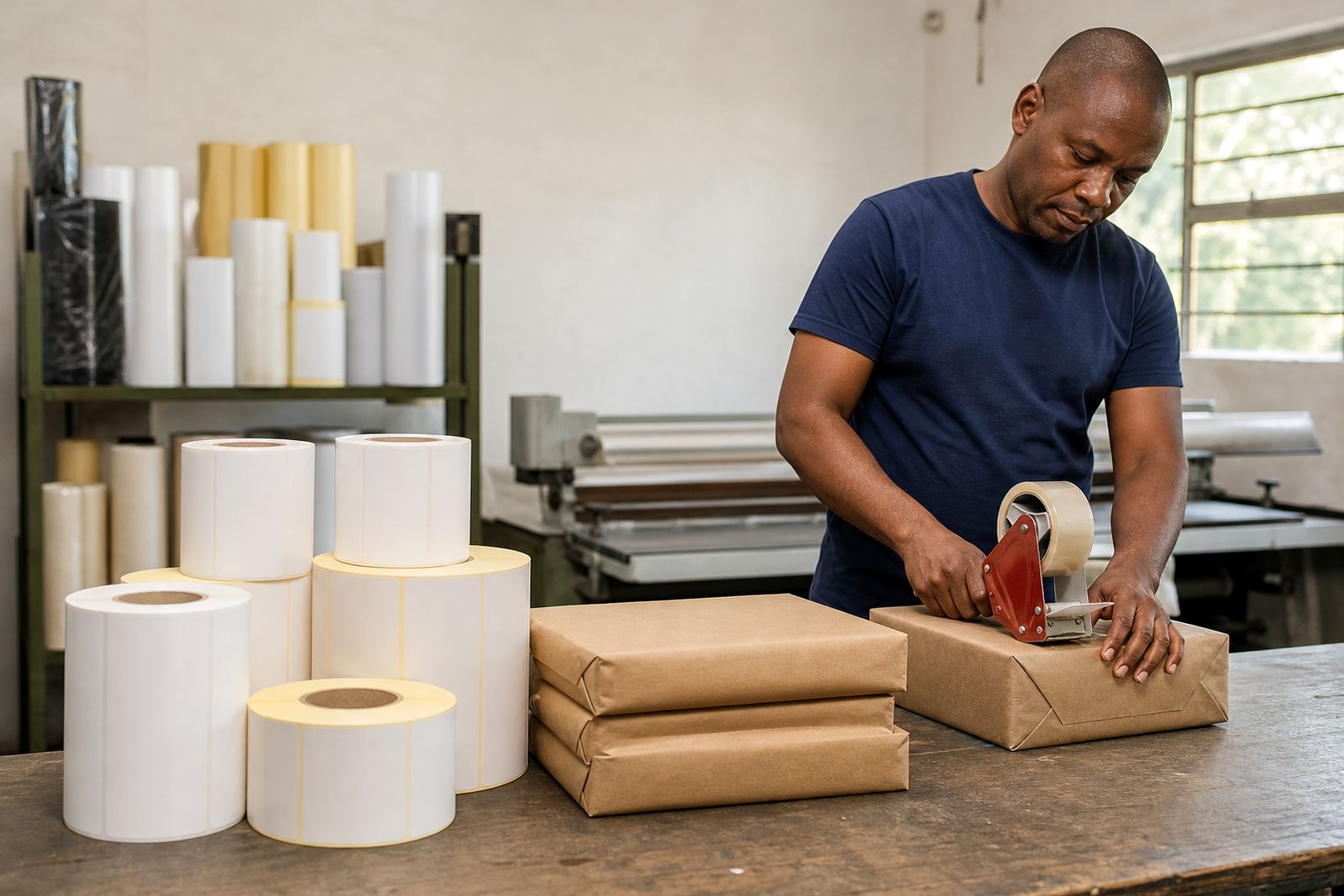
From our Westmead, Pinetown base we support label stock supply for Durban, Johannesburg, Cape Town, Pretoria and Pietermaritzburg, with dispatch packing set up for routine reorders and planned production runs. Our team handles sample rolls, adhesive matching, face stock selection, printer fit checks and repeat order planning so the next batch lands with the same cut, same feed and same print result.
If you need a hotmelt adhesive stock that grabs quickly and fits your current printer setup, we can line up the right roll build and send the details through the enquiry form on our contact page. That keeps the cut correct the first time and helps avoid waste at the packing bench.
Key facts
| Product type | Pressure-sensitive hotmelt adhesive label stock |
|---|---|
| Face stock options | Paper, semi gloss paper, selected synthetic films |
| Liner options | Glassine or kraft release liner |
| Core sizes | Commonly 25 mm, 40 mm and 76 mm, subject to printer fit |
| Roll formats | Cut to width, length, winding direction and outer diameter |
| Best use | Packaging, retail, dispatch and general labelling on clean dry surfaces |