Rolls that keep barcodes readable past packing, handling and dispatch
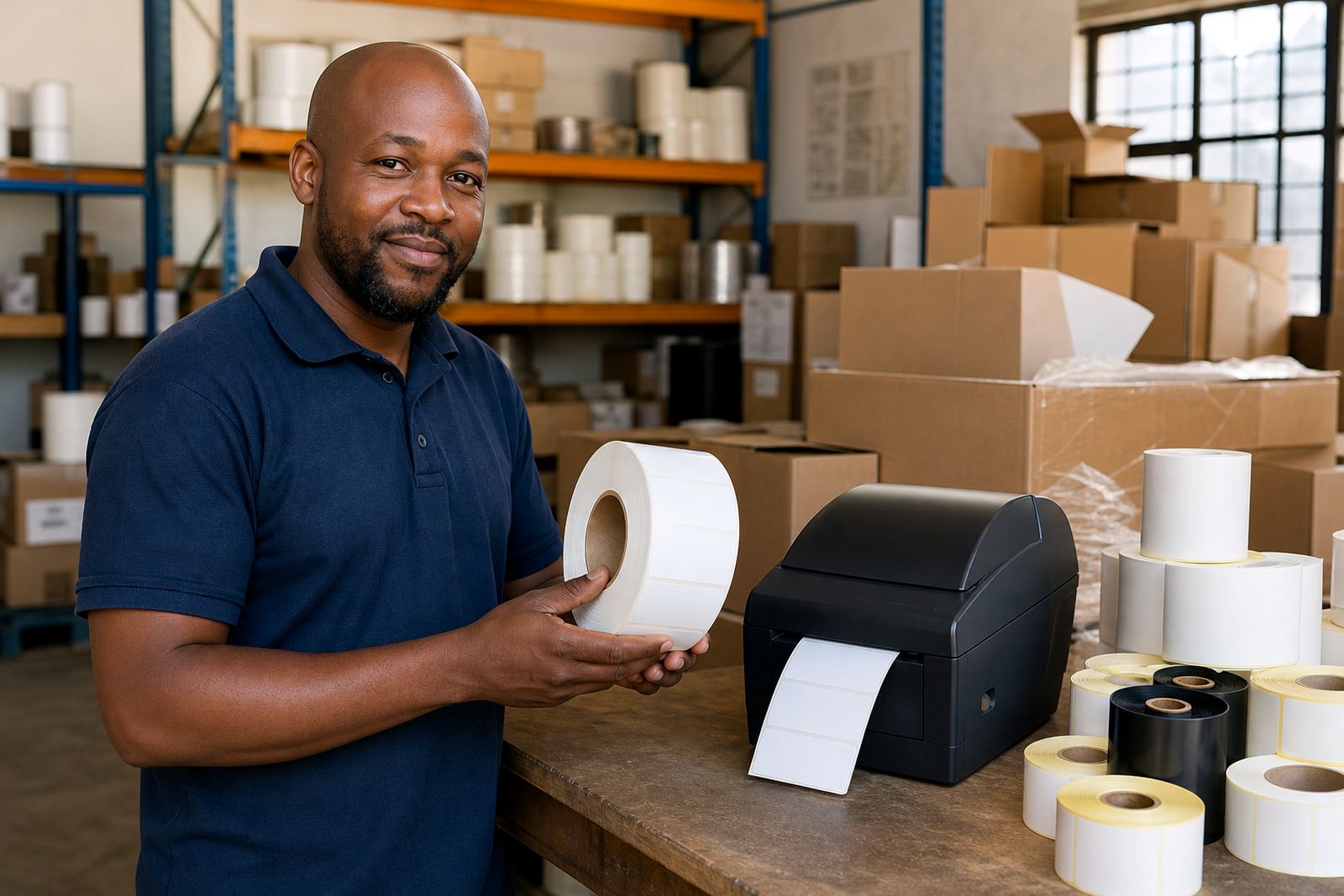
Barcode rolls are pre-cut label rolls prepared for printing variable data, batch numbers and product codes in steady production runs. The face stock can be paper for standard indoor use, or a synthetic material where the label must handle moisture, light rubbing, cold rooms or repeated handling. The adhesive is chosen to suit the pack, crate, carton or shelf surface, and the liner must feed cleanly so the printer can register each label without wandering or tearing.
For South African retail, logistics and manufacturing work, the main aim is a barcode that prints sharply and scans first time. That means the label should sit flat, release cleanly from the liner and stay in place on the pack through sorting, stacking and delivery. In coastal areas like Durban and Pietermaritzburg humidity, the wrong adhesive or a poor winding direction can cause edge lift or feeding trouble, especially on long runs.
- Paper face stocks for general barcode use and short to medium life labels
- Synthetic face stocks for moisture, rubbing and longer shelf life
- Permanent, removable or freezer-grade adhesive choices
- White liners that support clean release and steady printer feed
Direct thermal or thermal transfer, depending on how long the label must last
Direct thermal barcode rolls use heat-sensitive face stock, so the print is made without ribbon. They suit short-life jobs such as courier labels, shelf labels, dispatch labels and other indoor applications where the label is used and replaced within a practical period. They are efficient for high-volume movement, but they can fade faster in heat, sunlight and harsh handling.
Thermal transfer barcode rolls are printed with a ribbon and a compatible label face stock. This setup suits longer-lasting labels, higher scuff resistance and better resistance to heat and daylight. It is often chosen for stock identification, asset marking, product ID labels and environments where labels are handled often or stored for longer periods. If the barcode must remain readable through warehousing, transit and retail handling, thermal transfer is often the safer choice.
- Direct thermal for fast, economical short-term printing
- Thermal transfer for stronger print life and better abrasion resistance
- Ribbon matched to the face stock for sharp bars and text
- Roll width and core size matched to the printer mechanics
Sizes, cores and winding details that stop feeding problems
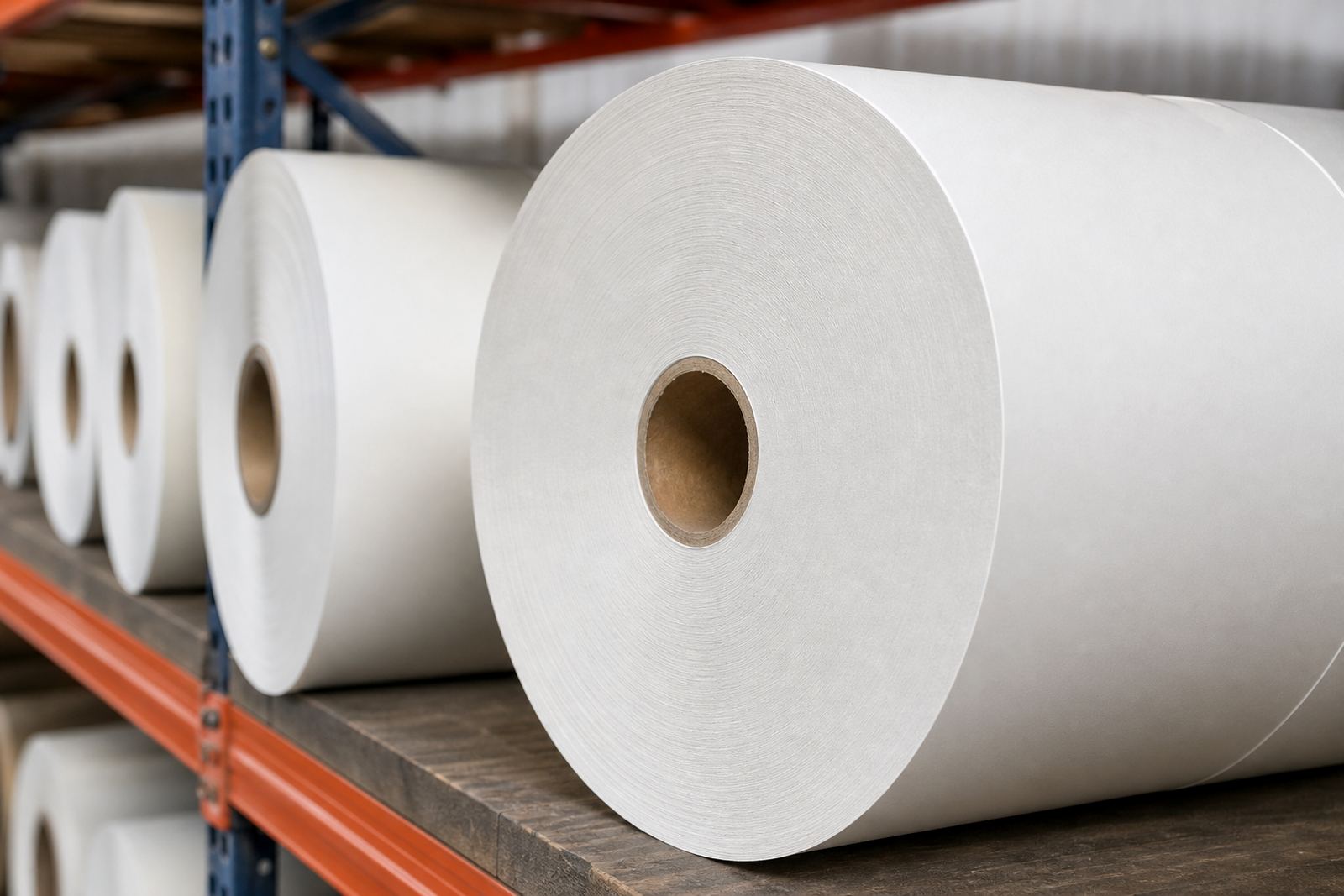
Barcode rolls are supplied in widths and lengths that suit the printer and the label panel you need. Common widths include narrow formats for small product codes and wider rolls for carton labels, compliance fields or multi-line variable data. Roll length must suit the print volume, because a longer roll can reduce changeovers but still needs to fit the machine and the operator setup. Core size matters just as much. Many benchtop units use 25 mm or 40 mm cores, while some industrial printers take larger cores for heavier production work.
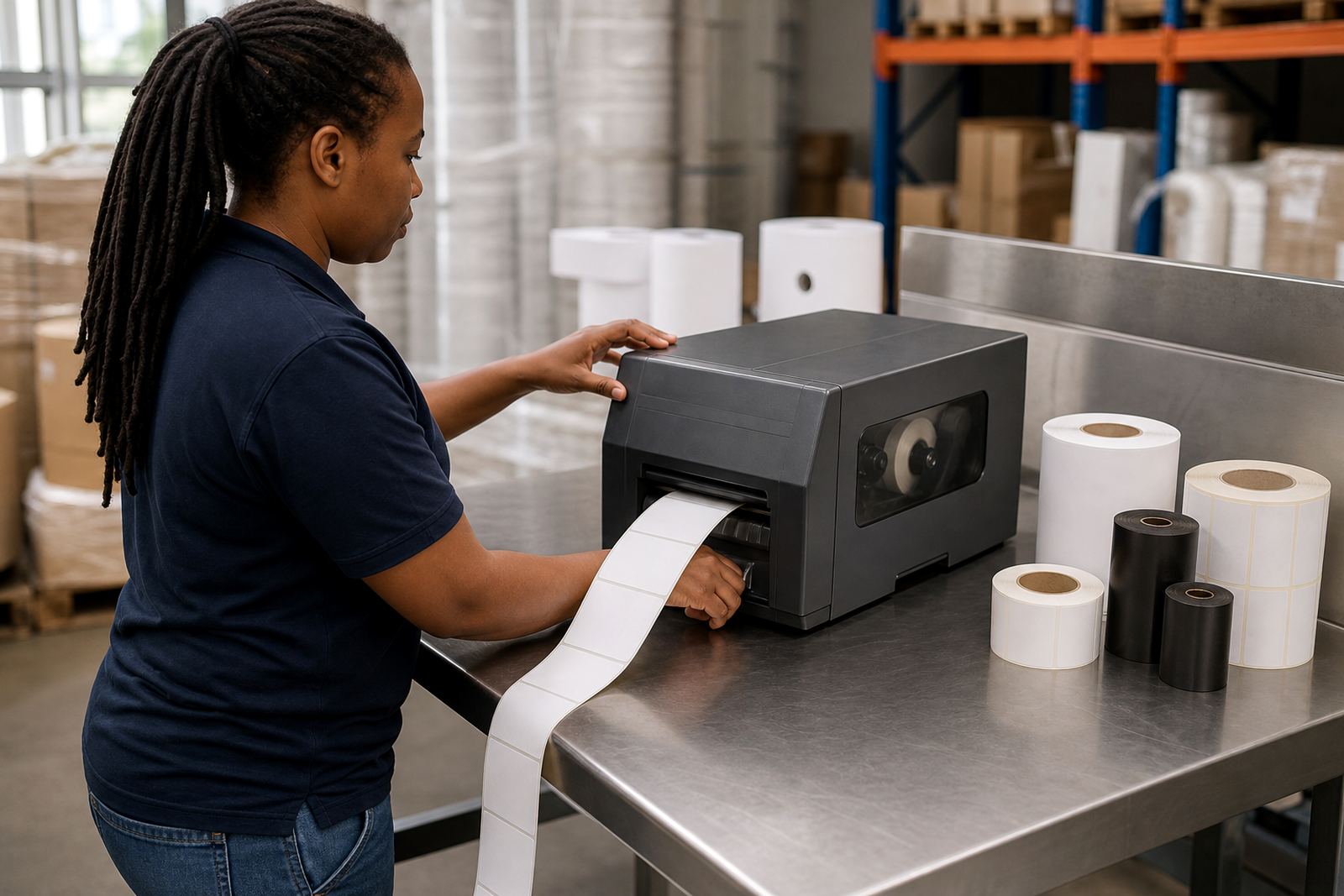
Winding direction is another detail that is easy to overlook. The print head must read the roll the right way round, and the label edge must lift in the correct direction for the peel path. If the roll is wound incorrectly, the printer can miss the gap, shift the barcode or jam at speed. We also check label gap, black mark or notch sensing where needed, because the printer must see the label separation clearly for accurate registration.
- Widths cut for small labels, shelf labels and carton panels
- Lengths planned for batch work, short runs or heavy dispatch volumes
- Core sizes to suit benchtop and industrial printer formats
- Winding direction set for the printer and peel path in use
Where barcode rolls earn their keep in South African operations
Barcode rolls are used in retail back rooms, warehouse picking bays, production tables, cold storage, packaging lines and dispatch areas. In Durban and Cape Town, humidity and coastal air can affect adhesive hold and print finish. In Johannesburg and Pretoria, dry conditions and dust can influence static, liner curl and printer wear.
Different use cases call for different combinations. A retail label may need a paper face stock with a tacky adhesive for cartons and shelf tickets. A logistics label may need a stronger adhesive and a clearer release from the liner for fast scanner use. A manufacturing label may need a synthetic face with thermal transfer print so the code stays readable after handling, wiping or stack pressure. The right setup keeps the barcode readable and the label where it should be.
- Retail: pricing, stock ID and shelf or bin labels
- Logistics: carton tracking, dispatch and receiving labels
- Manufacturing: work-in-progress, batch and product ID labels
- Cold rooms and moisture-prone areas where adhesion matters more
Fitting the roll to the printer before the line starts moving
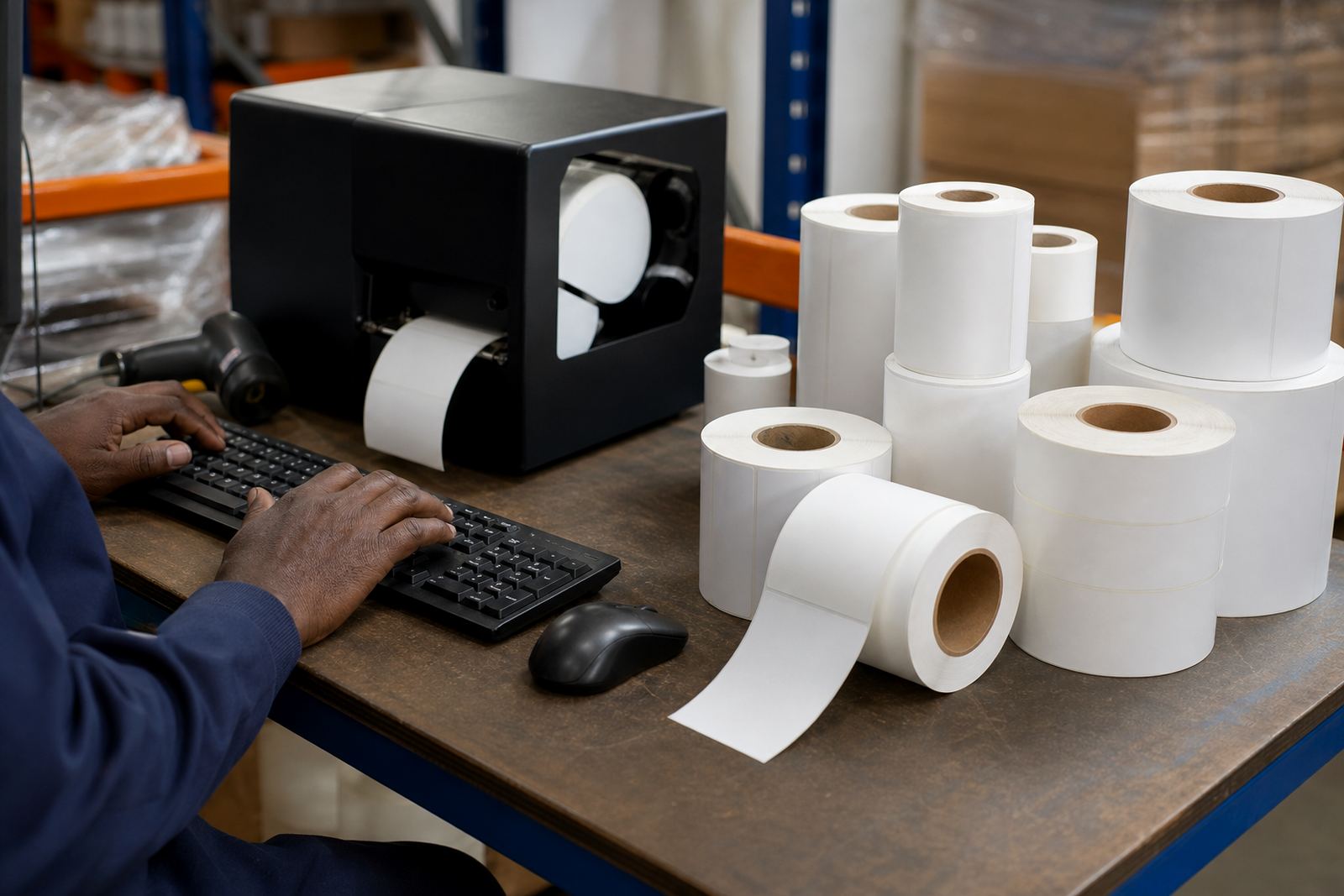
Barcode rolls need to match the printer's width limits, core size and sensing system before they are loaded. A benchtop printer may take a compact roll with a smaller core, while an industrial unit can handle wider stock, larger outer diameters and longer production runs. If the roll is too wide, too tight on the core or wound the wrong way, the print can drift and the barcode can fail at scan stage. That is costly on a busy floor where labels are expected to move from print to pack without rework.
For thermal transfer jobs, the ribbon width must also suit the label width and the print head. The ribbon should cover the print area fully without wasting material on the edges. Where the application has a strong adhesive or a synthetic face stock, the right heat and ribbon grade help prevent patchy bars, light print or smearing. A clean setup pays for itself in less waste, fewer reprints and steadier output during power dips and restarts.
- Confirm printer model, width limits and core size before ordering
- Check whether the machine uses direct thermal or ribbon printing
- Match ribbon width to the label width for transfer printing
- Allow for the right sensing method, gap or black mark
Ordering details we need so the barcode prints once and scans cleanly
When you order barcode rolls, the important details are practical ones. We need the label size in millimetres, the roll quantity, the core size, the printer type, the intended surface and whether the label must stay on for a short time or through longer storage. If the label will go onto cartons, plastic tubs, wrapped packs, cold surfaces or rough board, that helps us match the adhesive properly. If the barcode is for retail scanning or warehouse picking, the print contrast and label face stock must support quick reading under normal light.
If you are not sure about the setup, we can work from a sample roll, an old label, or the printer details you already have on site. That helps with face stock selection, adhesive matching, roll length planning and winding direction. For clients in Durban, Johannesburg, Cape Town, Pretoria and Pietermaritzburg, we also keep dispatch packing practical so the rolls arrive ready for use and not crushed in transit.
- Label width and length in millimetres
- Direct thermal or thermal transfer requirement
- Core size, roll diameter and printer model
- Adhesive type and the surface it must stick to
- Quantity per roll and any repeat order pattern
Key facts
| Product type | Barcode label rolls for variable data printing |
|---|---|
| Face stock | Paper or synthetic label stock, depending on use |
| Adhesives | Permanent, removable and freezer-grade options |
| Core sizes | 25 mm, 40 mm and other printer-matched sizes |
| Print method | Direct thermal or thermal transfer |
| Typical use | Retail, logistics, packaging, warehousing and production |
| Service area | Westmead, Pinetown and supply across South Africa |