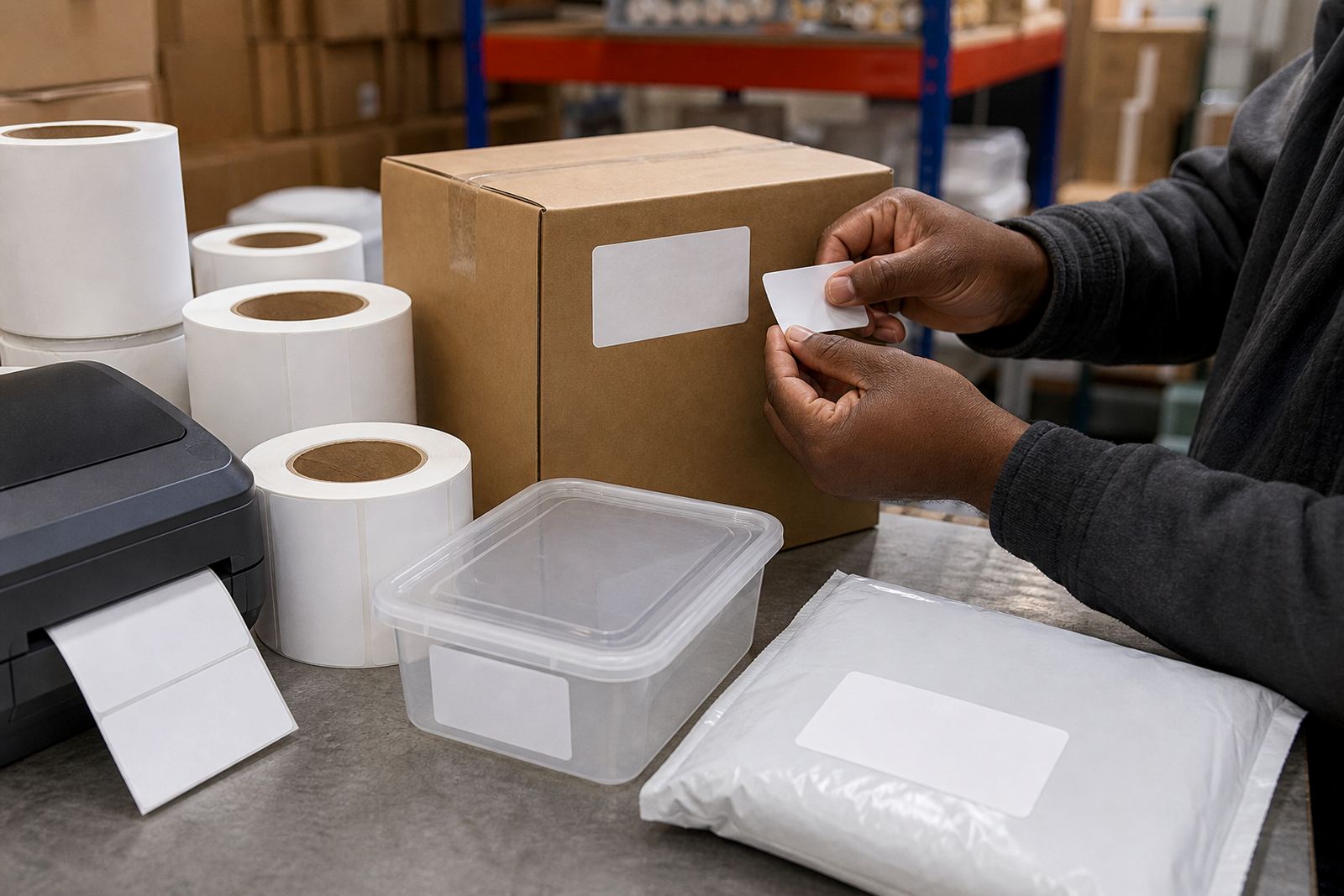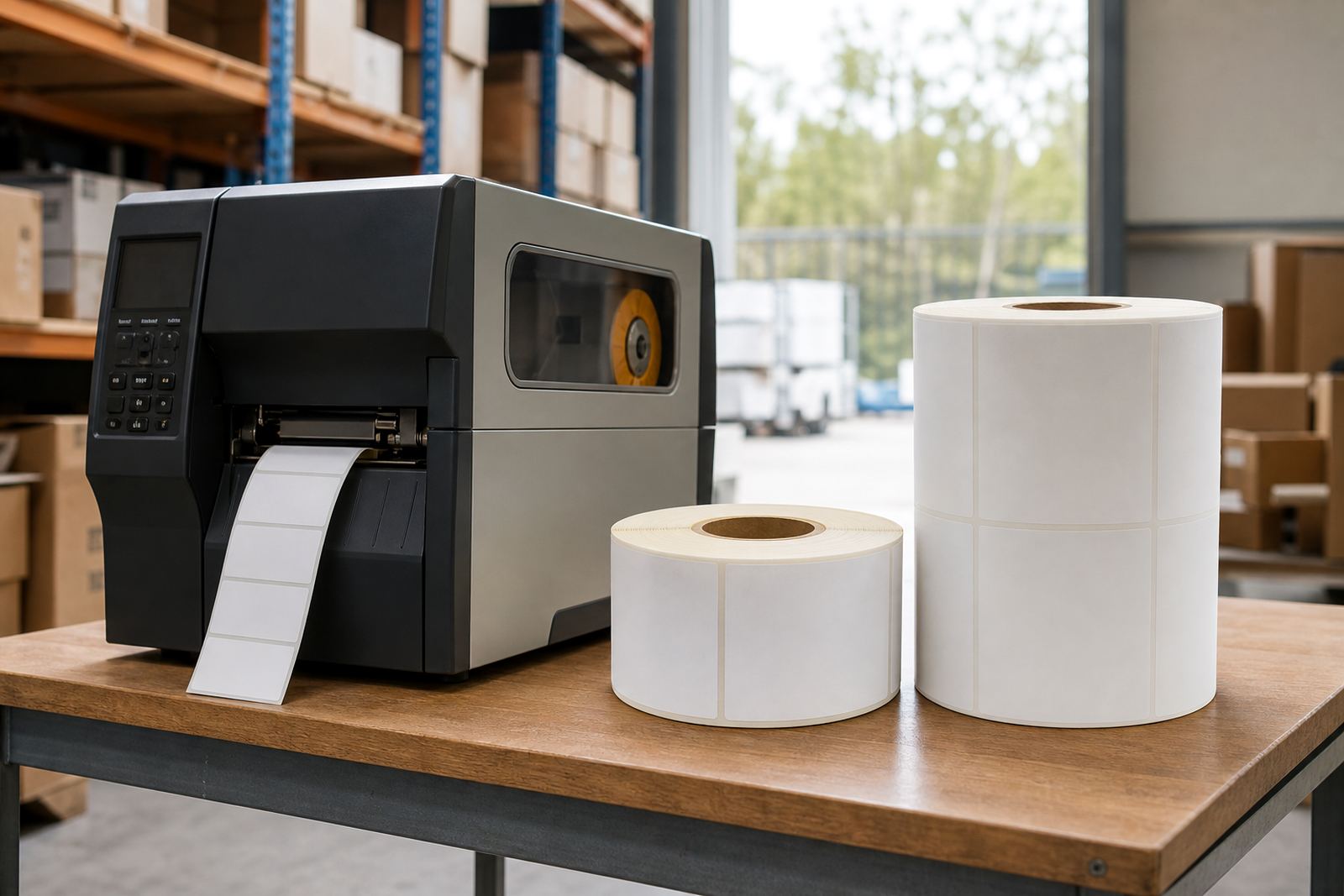
Start with the machine, not the roll
The first check is always printer compatibility. A benchtop label printer, a bench-top unit and a larger industrial printer all take different roll diameters, core sizes and winding formats. If the roll is too large, it can foul the side walls or place strain on the spindle. If it is too small, you end up changing rolls too often and losing time during a shift.
For direct thermal rolls, the liner and face stock only need to feed cleanly through the print path. For thermal transfer rolls, the roll must also suit the ribbon path and the print width you use most often. That matters when you are printing shipping labels in Johannesburg, product labels in Durban or dispatch labels in Cape Town where a shift can move fast and there is no time for fiddly adjustments.
- Check core size: common fitments are 25 mm, 40 mm and 76 mm.
- Check outer roll diameter against the printer chamber.
- Check winding direction so the first label feeds correctly.
- Check whether the printer uses direct thermal or thermal transfer.
How roll length changes line speed
Longer rolls usually mean fewer stoppages, but they are not always the best choice. A long roll can be heavier, bulkier and more difficult to handle in a busy packing area. On a fast-moving line in Pinetown or Pretoria, that extra weight can slow down changeovers if staff must lift and align the roll more often.
Shorter rolls are easier to store and load, and they can suit smaller print runs or seasonal packing. The trade-off is more roll changes. That is where a practical roll length plan helps. Think about your average orders per day, the number of labels per carton, and whether the printer sits close to the packing bench or on a moving trolley.
- High volume dispatch: longer rolls help reduce stoppages.
- Mixed product runs: medium lengths can be easier to manage.
- Short batches or test runs: shorter rolls reduce waste if artwork or barcodes change.
- Limited storage space: smaller outer diameters are easier to stack and move.
Weight, diameter and the cupboard test
Roll length is tied to roll diameter, and diameter is what usually causes fit problems. The same label face stock and adhesive can be wound into different lengths depending on label size. A narrow label can fit a longer roll than a wide label, because each wrap takes up less space. That is why you cannot judge a roll by eye alone.
In practice, the best test is whether the roll fits the printer, fits the storage shelf, and can be loaded without the operator fighting the spindle. In humid coastal areas near Durban, storage also matters because moisture can affect paper face stocks and the way a roll holds its shape. Keep stock in a dry area and avoid leaving open boxes near loading bays or open doors.
A good roll should feel manageable in the hand and still give enough runtime to justify the changeover. If your team has to reach into tight cabinets or lift rolls above shoulder height, the length may be too ambitious for the work space.
Picking a length for direct thermal and thermal transfer
Direct thermal rolls are useful for shipping labels, temporary product labels and short life applications. The material is heat-sensitive, so it is best where labels will not face long sun exposure or abrasive handling. Because there is no ribbon, setup is faster and the media choice often comes down to roll length, label size and adhesive performance.
Thermal transfer rolls suit labels that need a longer life, sharper edge definition or more resistance to handling. The face stock can be paper, synthetic or a coated material, while the ribbon carries the image. Here the roll length needs to work with both the printer and the ribbon usage, especially when labels are used for asset tags, warehouse shelves or packaged goods that may sit in storage for weeks.
- Direct thermal: good for fast-moving dispatch and shorter shelf life.
- Thermal transfer: better for durability, product identification and barcodes that must stay readable.
- Paper face stock: lower cost and suitable for many retail and logistics jobs.
- Synthetic face stock: better where moisture, oil or handling are a concern.
A practical roll length check before ordering
Before you place an order, work through the actual usage pattern at your site. A label that looks right on paper may still be awkward in the printer if the roll is too large or too heavy. This is where sample rolls, fit checks and roll length planning save time later.
Use the checklist below and compare it with your current stock. If your operation spans Westmead, Hammarsdale and other distribution points, it helps to keep the same core size and winding direction across the business, so staff do not have to relearn the loading process at every site.
- Measure the printer cavity, spindle space and side clearance.
- Confirm the core size required by the printer model.
- Estimate labels used per shift, then add a buffer for peak periods.
- Confirm whether the label must run face-in or face-out.
- Check whether the label adhesive suits cartons, plastic pails, cold rooms or rough packaging.
- Store spare rolls flat, dry and away from heat.
When to ask for a different wind, slit or core
Sometimes the roll length is not the real problem. The issue may be the winding direction, the slit width or the core size. A long roll can work well if it is rewound to suit your printer and packed properly for dispatch. Likewise, a shorter roll can still cause trouble if the edges are uneven or the core does not sit square on the spindle.
For packaging lines, retail back rooms and logistics teams across South Africa, the best outcome is usually the one that keeps the printer running with the least handling. That may mean custom slitting, rewinding, core sizing or a different roll plan altogether. If your team is changing rolls too often, or if stock is arriving with poor fit, it is worth reviewing the full setup rather than only the label length.