Start With the Surface, Not the Roll
The best adhesive depends on what the label must stick to. A coated carton, a glass jar, a powder-coated tub, a frozen tray and a recycled plastic pouch all behave differently, especially when dust, moisture or condensation is involved. If the surface is curved, textured or slightly oily, you need a different tack level than you would for a clean flat carton in a dry storeroom.
As a rule, start by asking three things: what is the surface, what temperature will it see, and must the label stay there permanently or only until opening, packing or sorting is finished. That answer usually points you toward permanent, removable or cold-use adhesive. If you are not sure, sample rolls help you test on the actual pack before ordering a full run.
Permanent Adhesive When the Label Must Stay Put
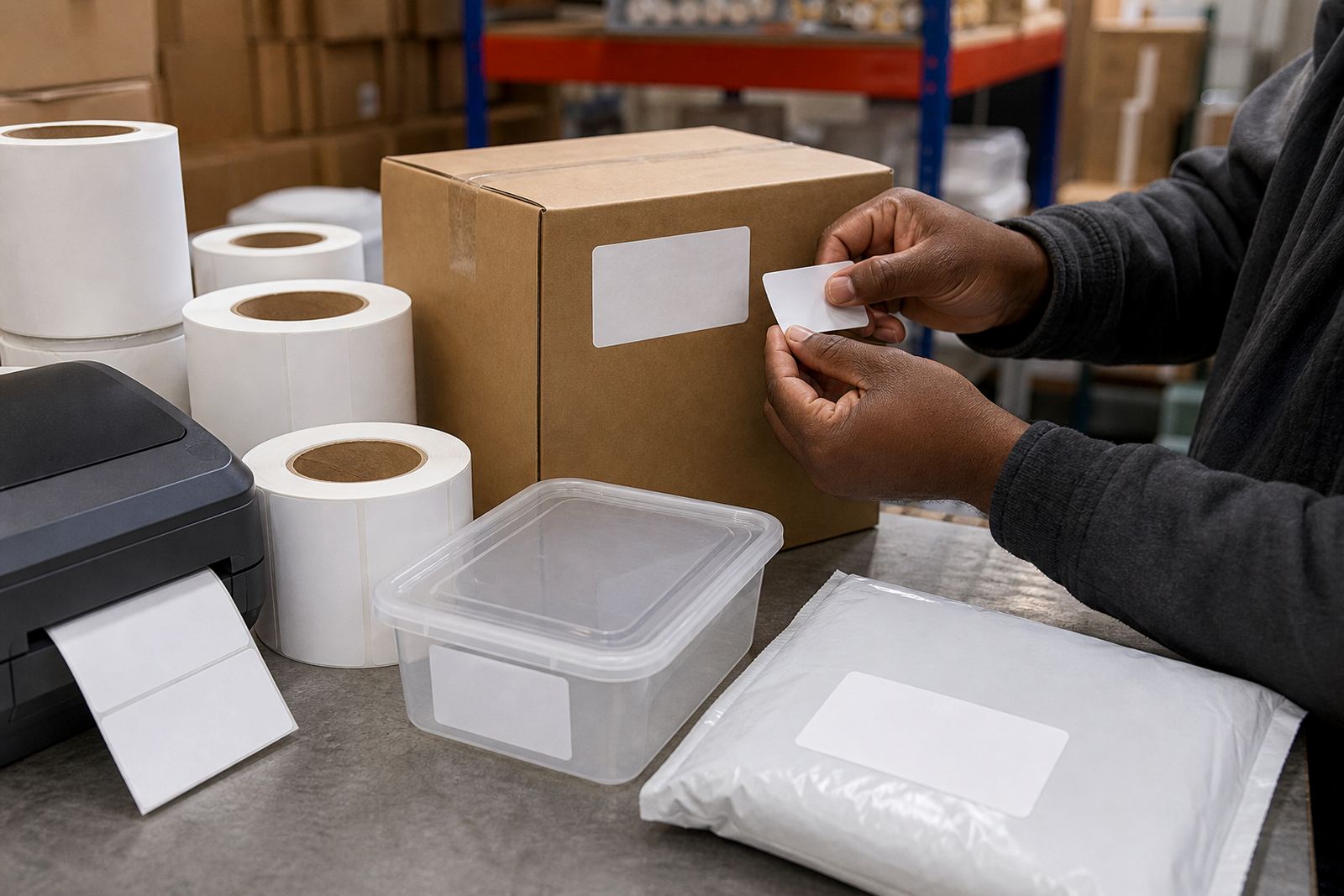
Permanent adhesive is the default choice for most packaging, retail and warehouse uses where the label must stay in place for the life of the product. It is common on shipping labels, product identification, carton marking and barcode labels that move through handling, stacking and distribution. Once it grips well, removal normally leaves the label damaged or the surface marked.
This type suits businesses that want a strong hold on cardboard, many plastics and general-purpose packs, but there are limits. If you need labels removed without residue, or if the pack is oily, chilled or exposed to moisture, permanent adhesive may be too aggressive or too unreliable. We usually check the face stock, the liner release, and the print method too, because a label that sticks well still has to run cleanly through the printer and dispense neatly.
- Best for shipping cartons, asset labels and long-life product labels
- Good for retail items that are not meant to be relabelled
- Works well where handling, friction and stacking are expected
- Not ideal where clean removal later is important
Removable Adhesive for Temporary or Changeable Labelling
Removable adhesive is used when you want the label to hold during use, then lift off with far less effort. It is useful for price marking, short-term promotions, internal stock movement, returnable containers and items that may be relabelled later. The goal is to balance grip with clean removal, so the label stays on the pack but does not cause a struggle when it has to come off.
This option is useful for smooth surfaces and dry indoor conditions. On rough cartons, cold rooms or dusty environments, removable adhesive can lose its neat release behaviour. It may curl at the edges or lift early if the surface is not right. A small sample test on the actual pack often saves a lot of waste later. It also helps to check whether the label will be handled by hand, passed through scanners or stored in stacks where edge lift can become a problem.
- Useful for temporary pricing, shelf tags and stock rotation labels
- Handy for reusable crates, tubs and returnable packs
- Helps when labels must be changed often
- Needs careful testing on textured or chilled surfaces
Cold-Use Adhesive for Fridges, Freezers and Wet Loads
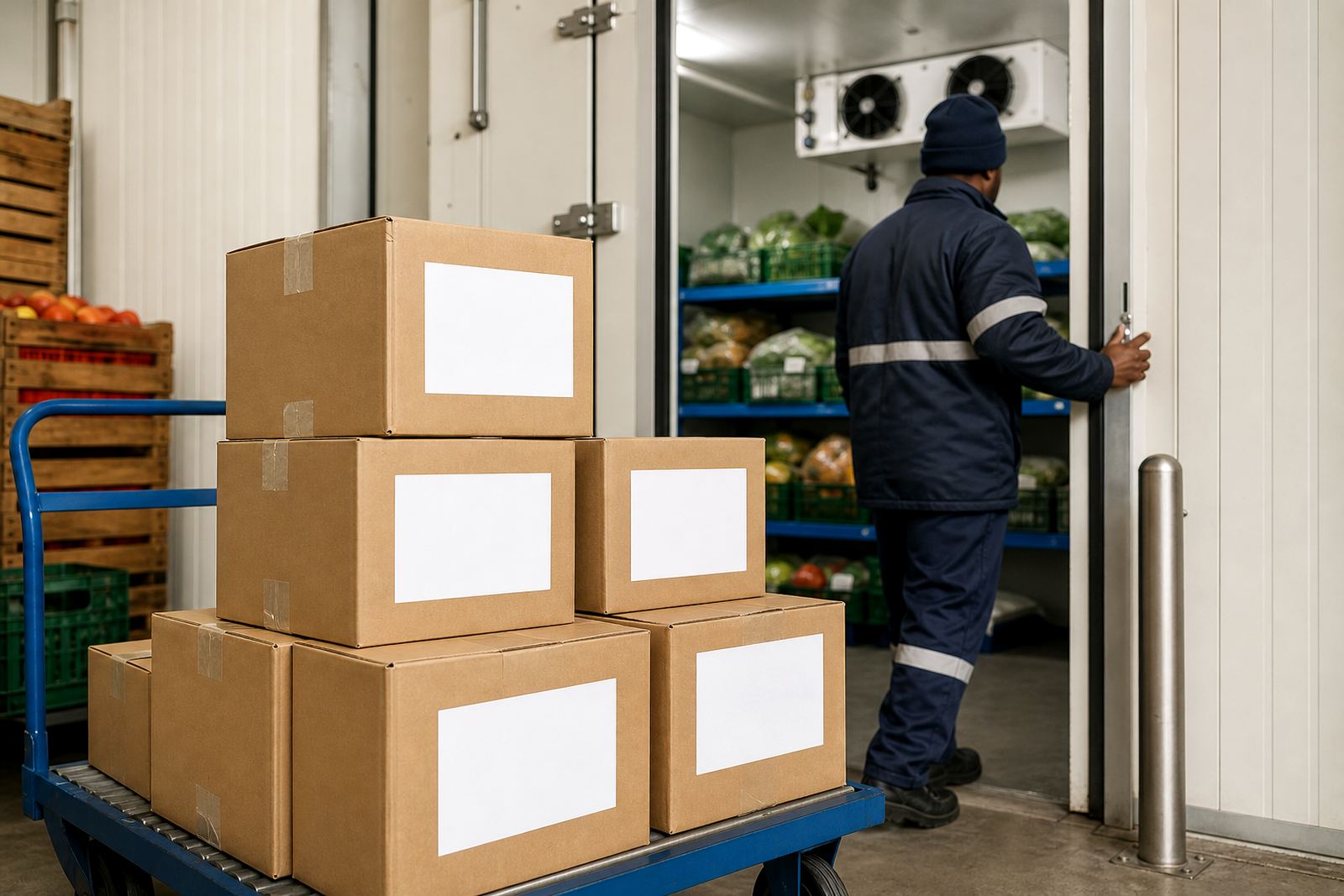
Cold-use adhesive is made for conditions where ordinary label glue struggles, especially in chilled rooms, freezers, cold chain logistics and coastal areas with high humidity. In Durban or Pietermaritzburg, a label may face condensation before it even reaches the customer. If the adhesive cannot wet out quickly onto the surface, edges lift and print quality becomes the least of your worries.
This type is often chosen for food packs, chilled goods, frozen stock and cartons that move from a cold store into warmer air. The key is not only the adhesive itself but the full combination of face stock, liner and application process. A label may apply well by hand but fail in a machine if the release is too tight or the roll winding is wrong. That is why we look at print speed, storage conditions and how the pack is handled after application.
- Suitable for chilled, frozen and high-humidity environments
- Useful where condensation is present during application
- Often needed for cold chain logistics and fresh produce packs
- Should be tested on the exact surface and temperature range
Face Stock, Liner and Printer Fit Must Match the Adhesive
Adhesive choice does not stand alone. The face stock can change how a label behaves, from uncoated paper to topcoated paper, synthetic film or specialty stock for harsh handling. A paper face stock may tear more easily while a synthetic face stock can better resist moisture, scuffing and oil. The liner affects dispensing, rewind quality and how the label peels away in the printer.
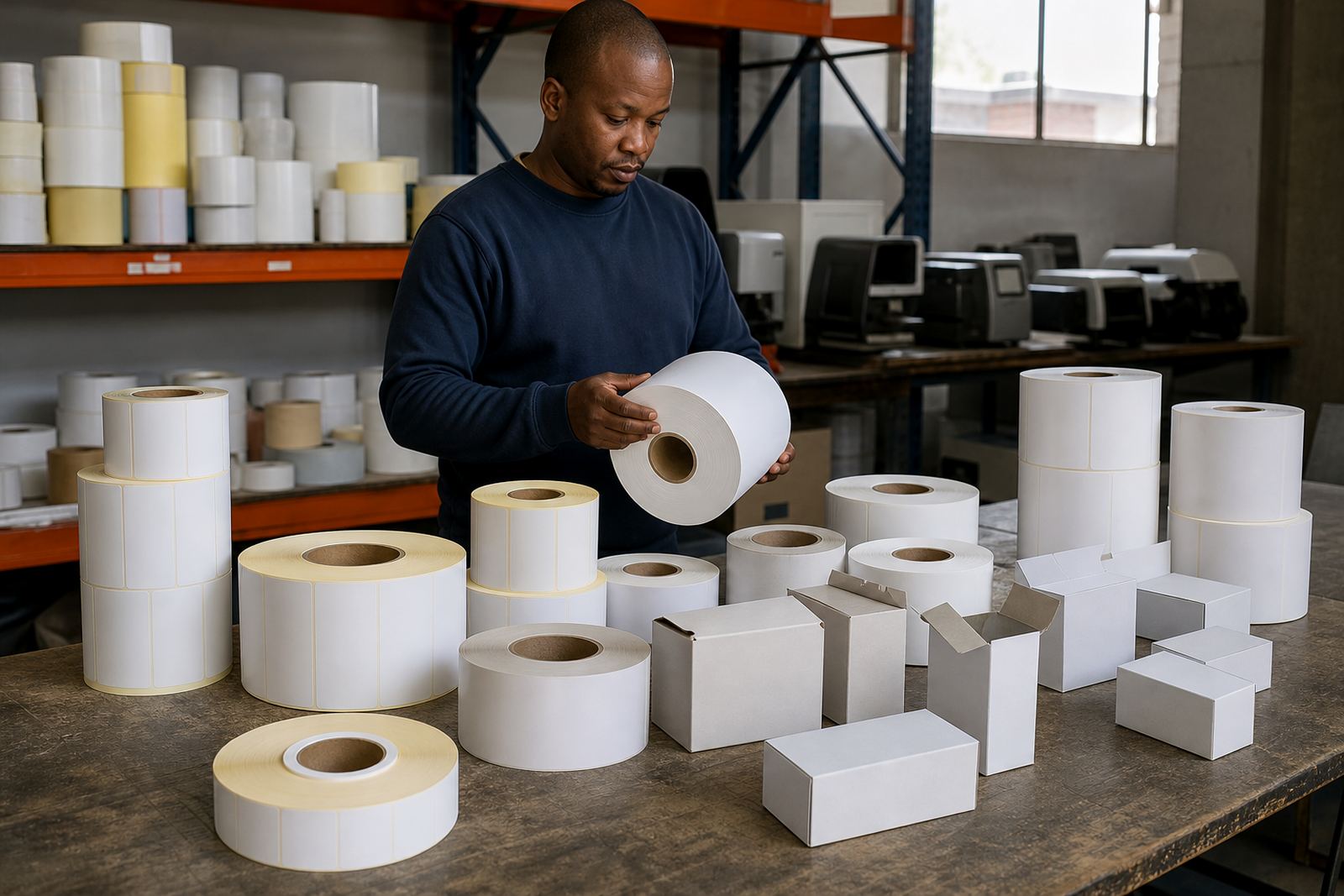
Core size also matters. Common core sizes are 25 mm, 40 mm and 76 mm, and the wrong fit can stop a roll from running in your printer or applicator. Thermal transfer rolls need a ribbon to print, while direct thermal rolls do not, but direct thermal labels are more sensitive to heat and sunlight. If your warehouse is in Westmead and your deliveries go to Johannesburg, Cape Town or Pretoria, the label has to print neatly, travel well and still scan at the end of the route.
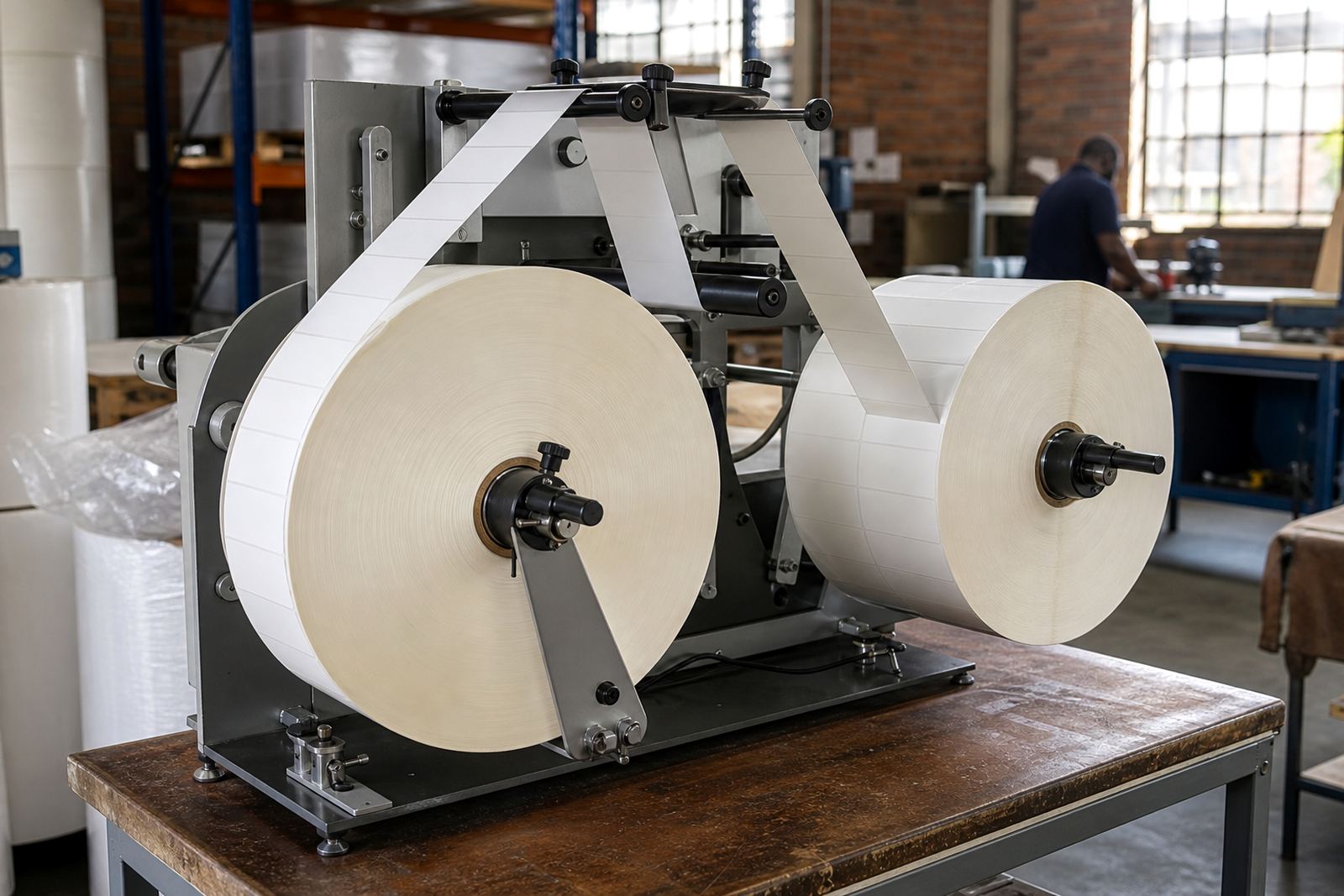
We check winding direction, roll length and printer compatibility before slitting or rewinding, because a good adhesive on the wrong roll format still creates stoppages. That extra check is especially useful where one printer is shared across packing, dispatch and retail counter use.
A Practical Way to Compare Adhesives Before You Order
If you are comparing options for a new product line or a seasonal pack, use a simple step-by-step check. It keeps the decision practical and stops guesswork from creeping into the order. For many South African operations, that means checking packaging by the pallet, not just by the label sample in hand.
- Identify the surface: carton, plastic, glass, film, coated board or frozen tray
- Check the condition: dry, dusty, oily, cold, chilled or damp
- Decide the removal need: permanent, removable or temporary
- Match the print method: direct thermal or thermal transfer
- Confirm the printer fit: core size, roll diameter and winding direction
- Test a sample roll on the real pack before full production
For businesses in logistics, retail and manufacturing, this small process can reduce reprints, rejected stock and wasted packs. It also helps if you need repeat order planning, because once the right adhesive is proven, the next run can be set up more confidently.
What Our Westmead Team Checks Before Recommending an Adhesive
At Label Paper in Westmead, Pinetown, the discussion usually starts with the pack and ends with the printer. Sibusiso Lourens and the team, including Naledi Mdlalose, Johan Reddy, Ayanda Ntsele, Megan Moonsamy and Themba Kotze, look at the face stock, adhesive strength, liner release and dispatch needs together. That way the labels are not only suitable in theory, they work on the floor.
We can help with sample rolls, adhesive matching, face stock selection, printer fit checks, custom slitting, rewinding, core sizing, roll length planning, winding direction and usage review. Clients in Durban, Johannesburg, Cape Town, Pretoria and Pietermaritzburg can send an enquiry through the contact page form and give the details of the application, storage conditions and printer model. A clear brief makes it easier to supply a roll that behaves properly from the first print to the last label.