What cold rooms do to a label from the first hour
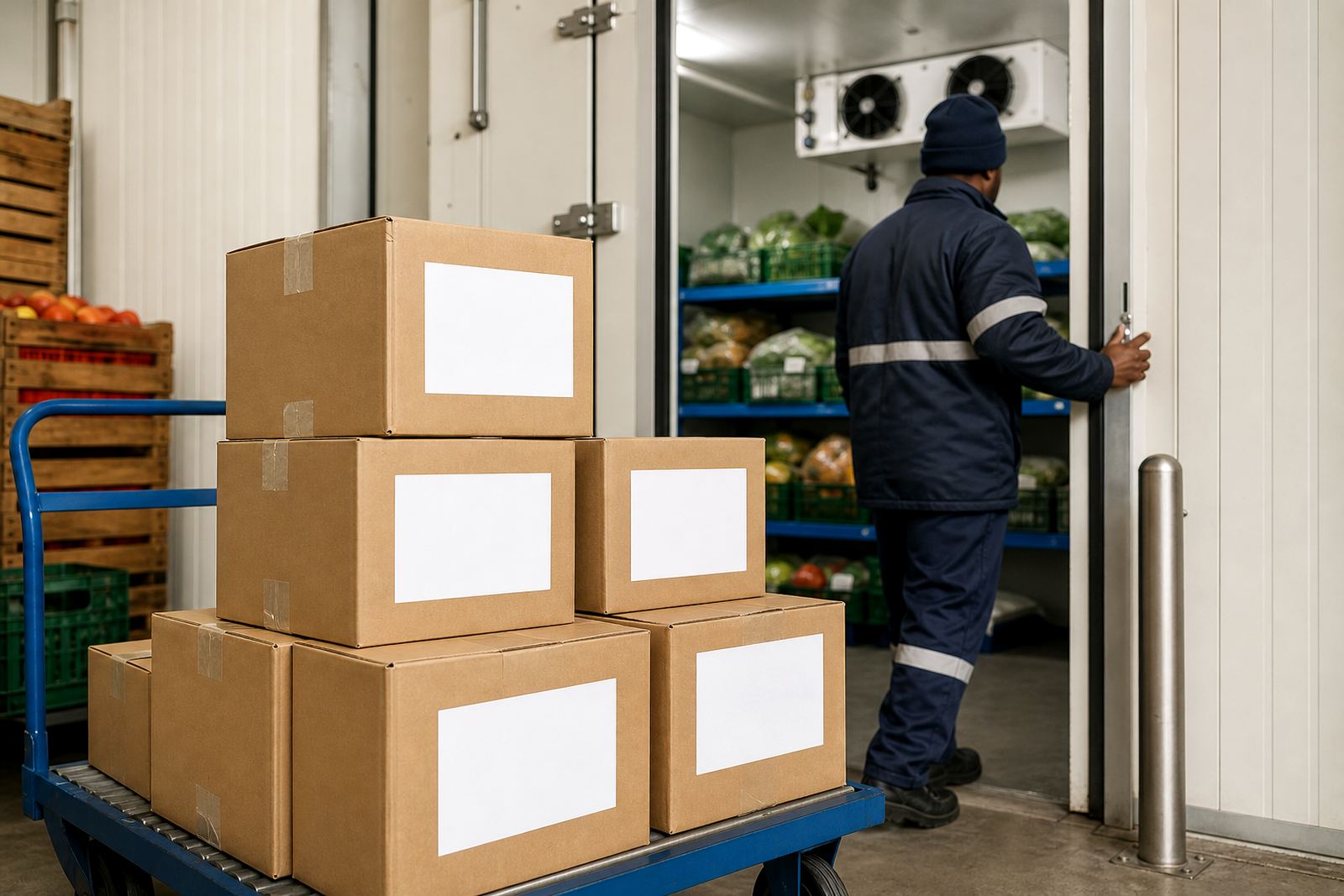
In chilled stores and freezer areas, the main problems are condensation, damp cartons and labels that have to stick to surfaces that are not fully dry. When goods move from a warm packing area into a cold room, moisture can form fast and if the adhesive is not suited to that change, the label can lift at the corners or slide out of place.
Face stock matters too. A paper label may suit short life use on dry packs, but for cold storage you often need a coated paper or synthetic face stock that resists softening, scuffing and moisture. The liner and adhesive must work with the application tempreature, not just room temperature in Westmead or elsewhere.
- Check whether the pack is dry, chilled or frozen at the time of application.
- Confirm if the label must last only through picking, or through full cold chain storage.
- Allow for condensation when cartons move between loading bays and cold rooms.
Choosing the face stock without overthinking the spec sheet
Face stock is the top layer that carries the print. For chilled application, the choice normally comes down to paper or film based stock. Paper is often used where the label only needs to last through retail handling or short shelf life. Film based stocks are preferred where there is rubbing, damp packaging, or frequent handling in logistics and manufacturing.
For cold storage work, the finish also matters. A smoother surface usually gives cleaner print for barcodes, batch details and dates, especially when using direct thermal or thermal transfer printers. If the label will face ice build-up, wet gloves or cold airflow in a Pietermaritzburg depot, a tougher face stock can save a lot of rework.
- Paper face stock for dry cartons and shorter hold times.
- Coated paper for sharper print and better scuff resistance.
- Film stock for damp, chilled or heavy handling conditions.
Adhesive choices for wet cartons, cold crates and freezer lines
The adhesive does the real work. A standard permanent adhesive may be fine for general use, but chilled storage often calls for an adhesive that can bond in lower temperatures and cope with condensation. For frozen goods, the label may need to be applied at a lower surface temperature than a normal pack room would ever see.
There are also removable and high tack options, but the right choice depends on the job. If a label must stay on a tub, crate or shrink wrapped bundle through transport to Cape Town or Johannesburg, you need adhesion that matches the surface texture and the time in cold storage. Smooth plastic, corrugated board and coated cartons all behave differently.
- Test on the actual pack material, not only on a sample sheet.
- Check whether the surface is dry, glossy, rough or slightly damp.
- Ask for adhesive matching if the label must handle freezer shock or condensation.
Roll format, core size and printer fit checks that save time
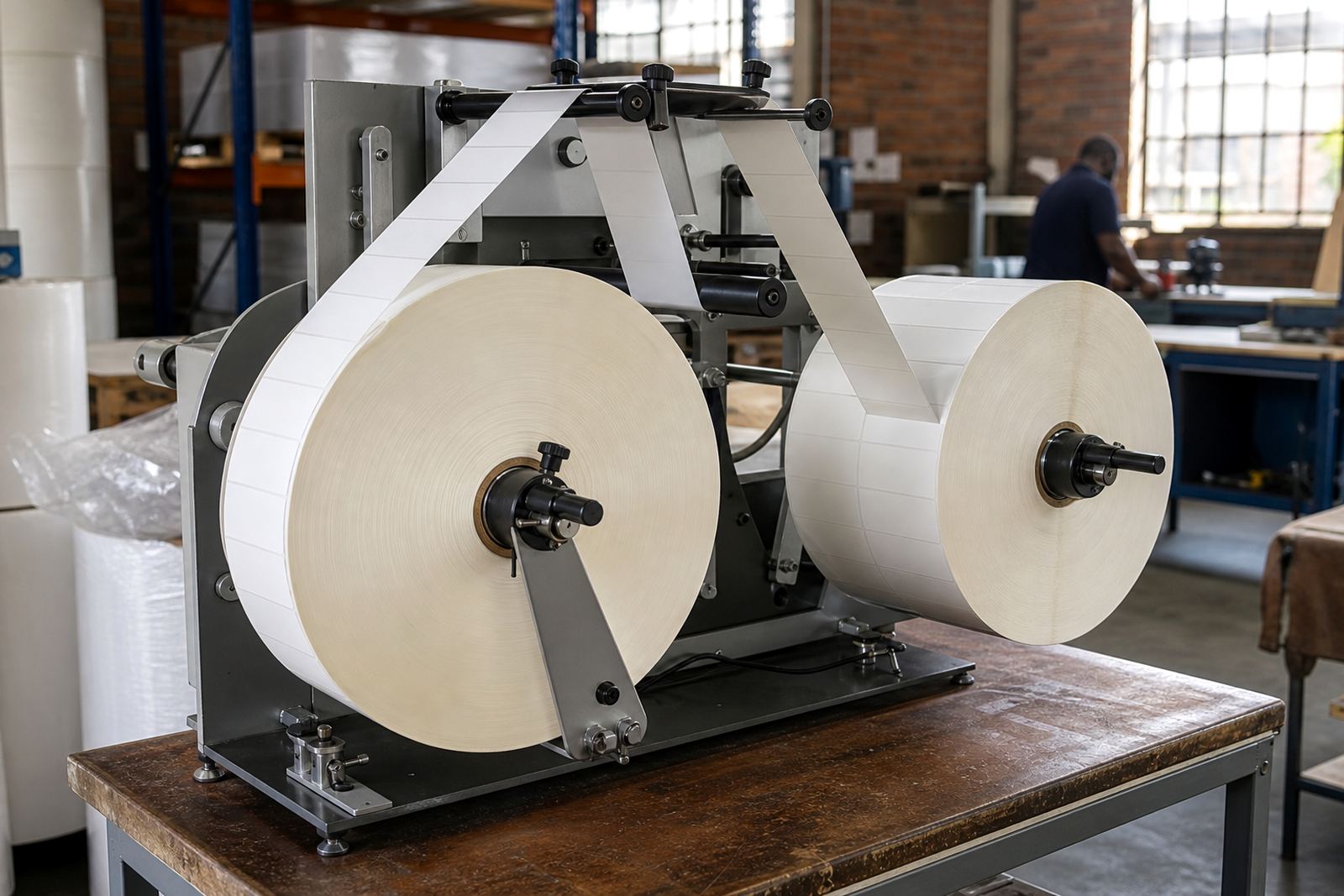
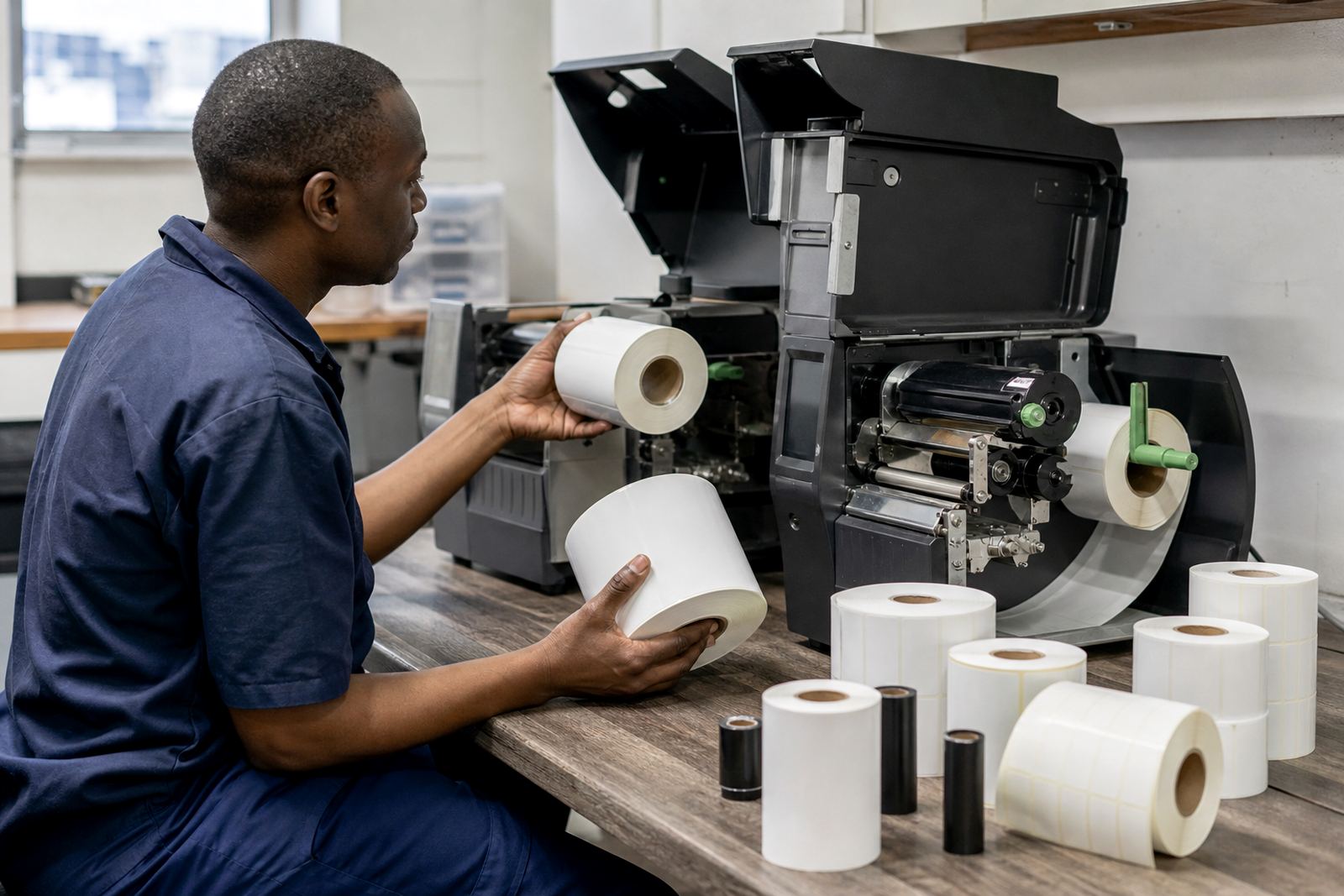
Roll size affects more than storage on the shelf. It affects how often the line stops, how the printer feeds and whether the roll fits the spindle or core holder. Common core sizes are usually selected to suit benchtop printers, industrial units or rewinding setups, and the wrong core can cause feed issues, crooked labels or wasted downtime.
Before ordering, check the printer type, unwind direction, label width, outer diameter and the space inside the machine. Direct thermal rolls are used where the print image is created by heat on the label surface, while thermal transfer rolls use a ribbon for longer lasting print and better resistance to heat, handling and some chemical contact. In a cold room, the print method matters as much as the adhesive.
- Confirm core size before the roll is slit or rewound.
- Match label width and roll diameter to the printer path and spindle space.
- Check whether you need direct thermal or thermal transfer print.
Packing, dispatch and handling for chilled supply routes
Labels for cold storage need careful packing so the rolls arrive usable. If cartons sit in humid yards or in open trucks from Pinetown to Durban, the outer layers can pick up moisture before the rolls are even installed. Good dispatch packing keeps the rolls clean, upright and protected from crush damage.
It also helps to plan the way labels will be used on site.That is where roll length planning, winding direction and sample rolls all help. A small mistake in winding direction can slow a line more than a bad carton of stock ever would.
- Keep rolls wrapped until use to reduce dust and damp exposure.
- Store cartons off the floor and away from direct sun or heater vents.
- Allow labels to acclimatise before use if they were moved from a warm vehicle into a cold room.
A practical check list before a chilled run starts
Before a cold storage label job goes live, it helps to run a short usage review. This is not about making the process fancy, just making sure the label does not fail on the pack line, in the racking aisle or at despatch. A few minutes of checking saves a lot of peeling and rework later.
Use the list below when setting up a new pack size, a new carton type or a different printer. If the application shifts between retail, logistics and manufacturing, the same label may not suit every site. A supply that works in Pretoria may need a different adhesive or face stock for a humid Durban cold room.
- Confirm surface temperature at application.
- Check for condensation, frost or dust on the pack.
- Verify face stock, adhesive and liner for the product type.
- Test barcode scan quality after chilling.
- Confirm storage life, handling and dispatch conditions.
How Label Paper supports cold chain label jobs
From Westmead, Pinetown, Label Paper supplies self-adhesive label stock and thermal rolls for chilled and frozen pack lines across South Africa. The team handles custom slitting, rewinding, core sizing, printer fit checks, adhesive matching and sample rolls so the label format fits the work on the floor, not only the order sheet.
That matters when a line is running under pressure and the label has to perform in cold rooms, distribution depots and retail back areas. Whether the job is for Durban, Johannesburg, Cape Town, Pretoria or Pietermaritzburg, the goal is the same: a label that stays put, prints clearly and reaches dispatch in the right format.
- Westmead Supply for local production and dispatch planning.
- Pinetown Supply for stock conversion and roll preparation.
- Durban Supply, Johannesburg Supply, Cape Town Supply, Pretoria Supply and Pietermaritzburg Supply for national fulfilment support.