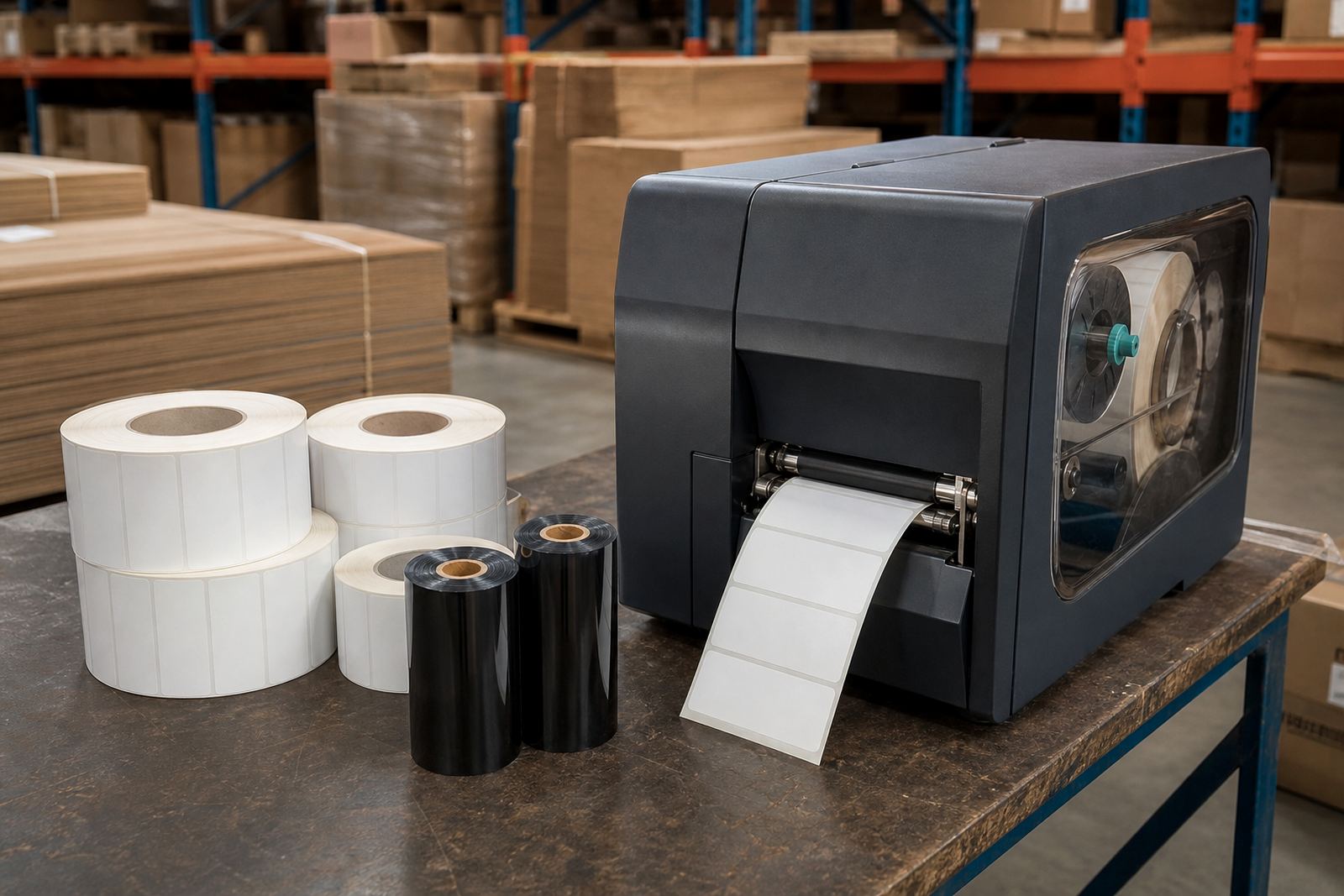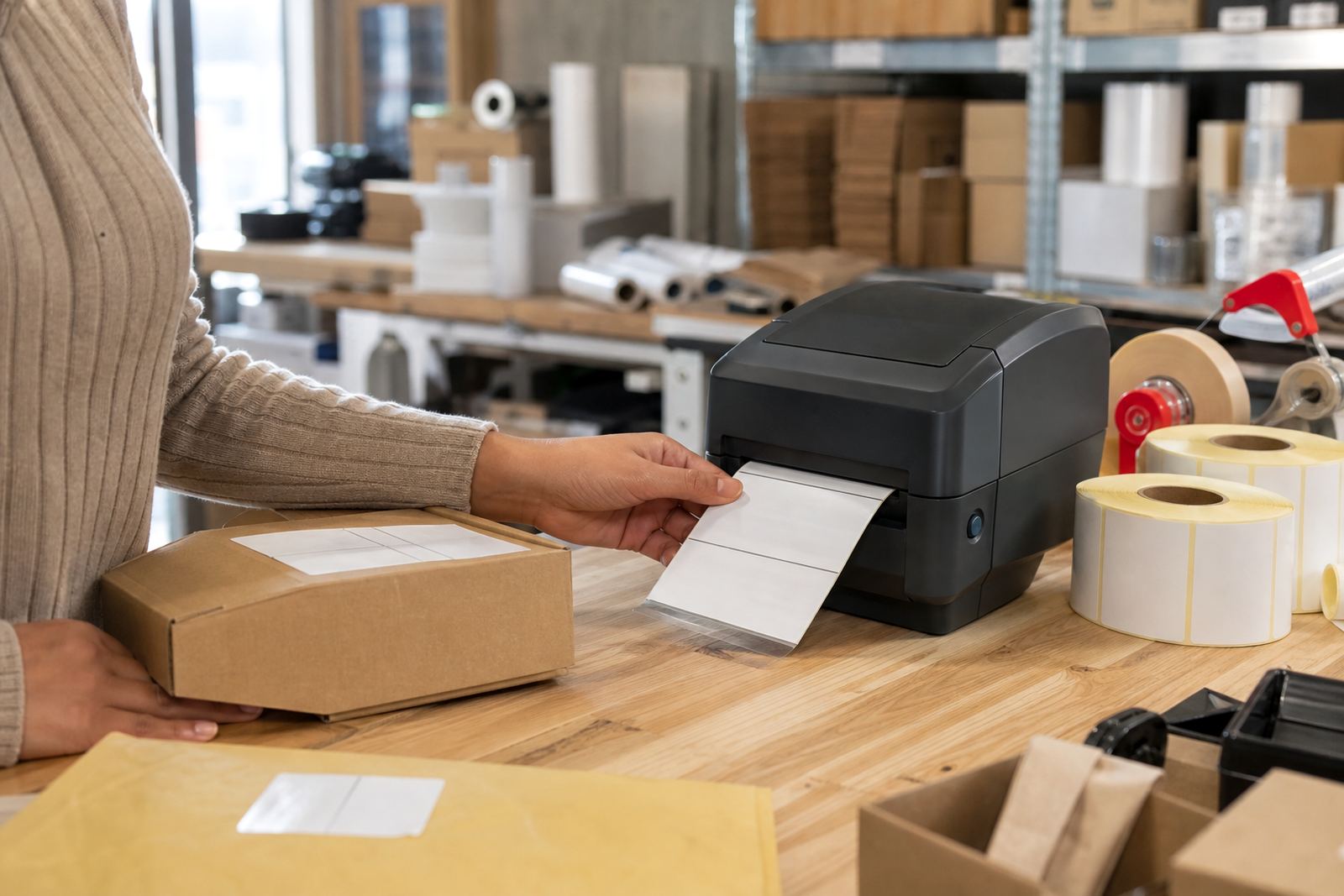
When the heat from the printer does the marking
Direct thermal stock is made for printers that create an image with heat, so there is no ribbon in the print process. That makes it useful for shipping labels, weighed goods, delivery notes, ticketing and other jobs where labels are printed quickly and used within a shorter period. In Westmead, Pinetown and across South Africa, many businesses choose it for dispatch benches, warehouse picking points and counter use where speed matters more than long term exposure.
It is usually the right choice when the label will not sit in sunlight, high heat or harsh handling for long. If you need a label to last through months of abrasion, storage in hot vehicles, or contact with oils and solvents, direct thermal may not be the best fit. For those jobs, a printed label made with a ribbon and a suitable face stock often holds up better.
The jobs where direct thermal earns its place
Direct thermal rolls are not a one size answer, but they do work well in a number of common South African supply chain settings. Retail stores use them for shelf marking, till labels and price changes. Logistics teams use them for courier labels, carton identification and route sorting. Smaller manufacturers often use them for batch labels, internal movement, and basic product identification where the label is applied and used fairly quickly.
It also helps where label changes are frequent and staff need to print many small runs without changing ribbons. On the other hand, coastal humidity in places like Durban can affect storage conditions, so the rolls must be kept dry and away from direct sun or warm windows. A bit of care goes a long way here.
- Good for courier and carton labels
- Useful for retail pricing and short-life marking
- Handy for warehouse picking and despatch bays
- Suitable for food counters and weighbridge style labels, if exposure is limited
Face stock, adhesive and liner all work together
Before ordering, it helps to think beyond the label surface alone. The face stock is the top layer that receives the print. In direct thermal form, this is usually a heat-sensitive paper or similar material chosen for clarity and print speed. A smoother face stock often gives better barcode reading, while a more textured stock can be acceptable for simple text but may show wear faster.
The adhesive matters just as much. Permanent adhesive is common for carton and parcel use. Removable adhesive suits labels that must come off later without tearing the surface. Freezer grade or high tack options may be needed for cold rooms, cold chain packing or difficult substrates. The liner, usually a backing paper or film, affects how the label feeds through the printer and how well it strips during application. If the liner is too weak, skewed feeding and jams become more likely, especially on busy shifts. It is worth matching these parts carefully, not just picking a label size and hoping for the best.
- Choose the face stock for print clarity and handling
- Choose the adhesive for surface type, temperature and removal needs
- Choose the liner for smooth feeding and easy dispensing
- Ask for sample rolls when the label must hold on cardboard, plastic or coated packs
Printer fit is where many orders go wrong
Direct thermal rolls must match the printer as closely as the label itself. Core size is one of the first checks. Smaller benchtop printers often take a 25 mm or 40 mm core, while larger industrial units may need a bigger core and a longer outer diameter. If the core is wrong, the roll will not seat properly, and that can lead to poor feeding or a printer that simply will not close.
Roll width, outer diameter and winding direction must also line up with the machine. Some printers read labels face up, others face down. A roll wound the wrong way can waste time and cause misprints. Printer fit checks are worth doing before a full run, especially if you use mixed machines in Durban, Johannesburg, Cape Town or Pretoria. A label that works on one model may need a different wind or core on another. It sounds small, but it saves plenty of frustration.
- Confirm printer make and model or at least the required core size
- Check label width, label height and roll diameter
- Confirm whether the printer needs face in or face out winding
- Test a sample roll before approving bulk supply
Storage and handling in South African conditions
Direct thermal labels are more sensitive than many people expect. Heat, sunlight and rough handling can dull the print or darken the face stock before use. That is why storage matters. Keep rolls in a cool dry room, away from direct sun, forklift traffic and hot machinery. In a busy warehouse, do not leave cartons open near doors where dust and humidity can get into the pack. Westmead and Hammarsdale sites that handle fast moving stock often benefit from organised racking and sealed cartons rather than loose stacks on the floor.
If the rolls are used weekly or monthly, check the storage rotation plan too. A roll left too long in poor conditions may still print, but barcode quality can slip and that creates avoidable rework. Looking at actual usage helps, because the same label format can behave very differently in a cold room, a hot dispatch bay or a retail back area. Small adjustments here help protect budget.
A practical ordering path that avoids wasted rolls
When you are ready to order, work through the job from end to end. Start with the product type, then the printer, then the environment where the label will sit. If the label is for packaging, sealing or coding, decide whether it needs short term use or longer shelf life. From there, choose the face stock, adhesive and liner combination, then confirm the core size and winding direction. If you are unsure, sample rolls are the safest way to settle the detail before a larger run.
At Label Paper in Westmead, Pinetown, orders are planned with roll length, slitting width, rewinding and dispatch packing in mind so the stock arrives ready for use. That matters for teams in Pietermaritzburg, Cape Town, Pretoria, Johannesburg and Durban that need predictable supply for daily packing lines and warehouse stations. Repeat order planning is also useful when the same labels are used month after month, because it reduces guesswork and keeps printer settings consistent.
- Confirm the application first
- Check printer fit and winding direction
- Match adhesive to the surface and temperature
- Request sample rolls for testing
- Plan storage, usage and repeat ordering