Choose the task the label must perform
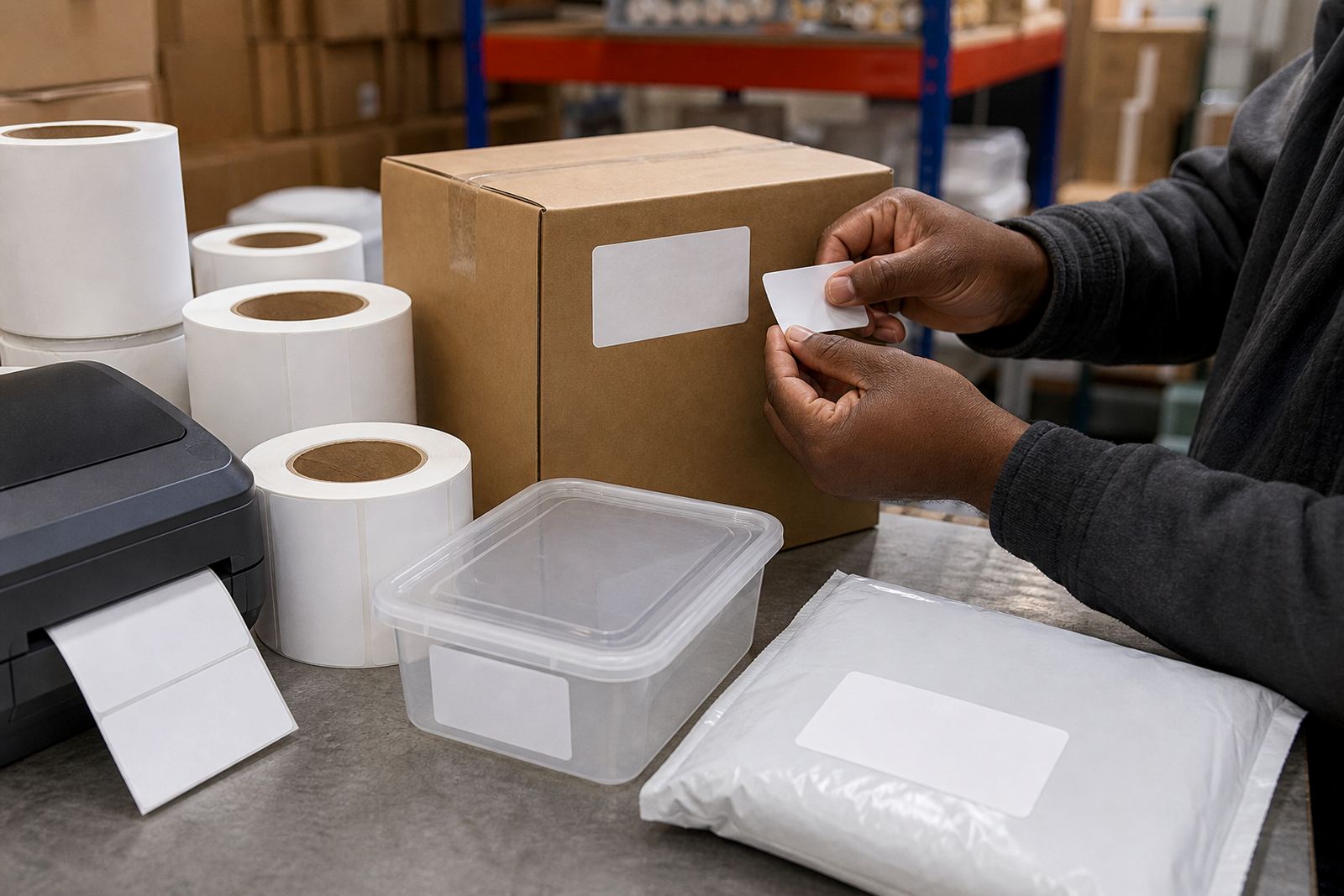
The right paper label starts with the surface it must hold to and the conditions it will face. A carton label for a dry warehouse in Westmead is not the same as a chilled food pack in Durban, or a courier label that must survive dust, handling and a bit of moisture on the way to Johannesburg.
Before choosing, look at five things: the surface, the temperature, the print method, the life of the label, and whether it must be removed later. Smooth cartons, glass, plastic tubs and coated packs all behave differently, so one stock does not suit every line.
- Flat cardboard cartons: usually suit standard permanent or removable paper stock
- Chilled or damp areas: ask for an adhesive that holds in lower temperatures
- Short life labels: lower-cost paper face stocks can work well
- Retail shelf labels: choose clean print, neat cut edges and easy application
Face stock choices that keep print readable
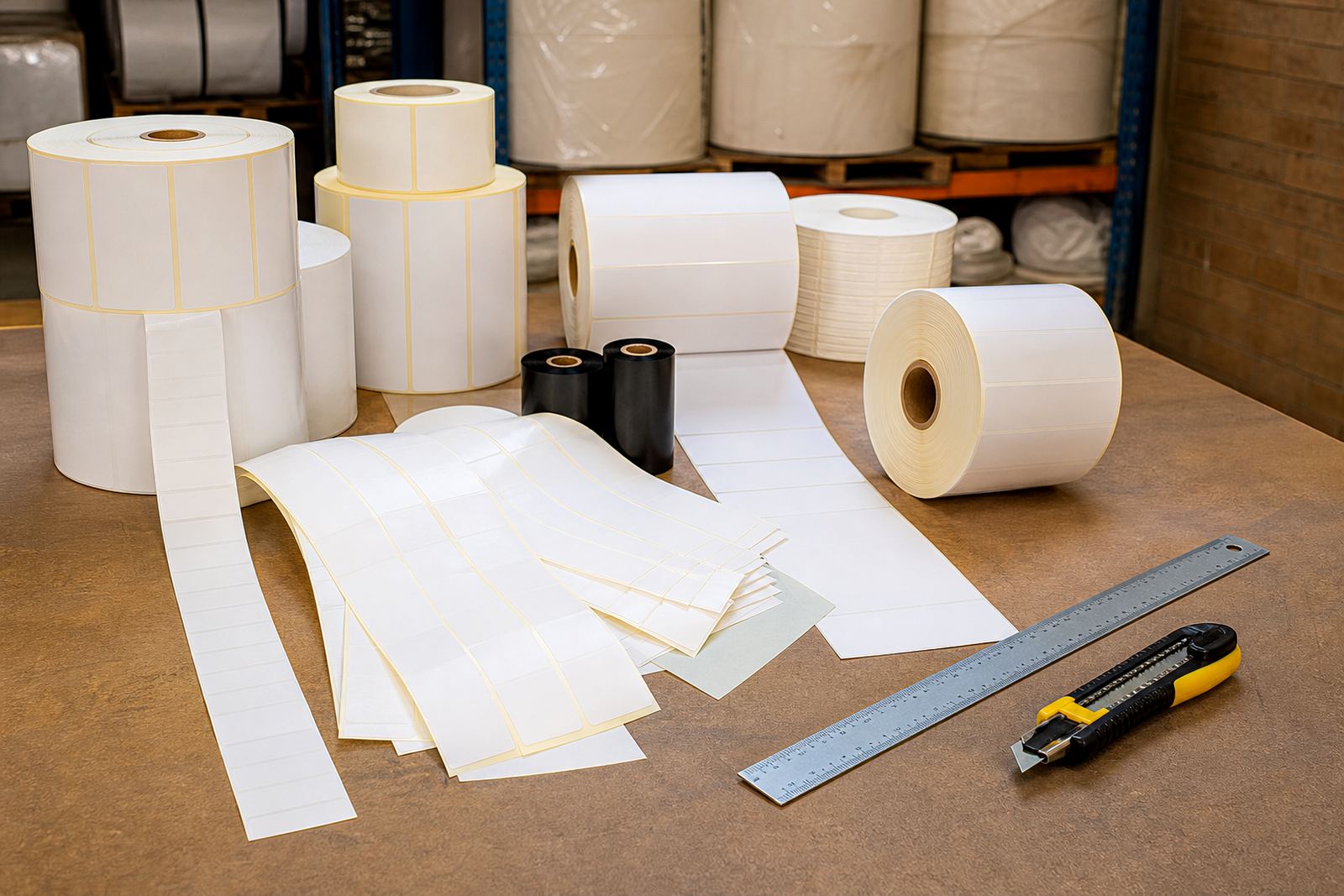
Paper face stock is the top layer that takes the print. For everyday use, the common options are matte paper, semi-gloss paper and vellum type paper. Matte stock gives a plain, readable finish for shipping labels, internal identification and carton sealing. Semi-gloss paper gives a brighter look and can suit retail packs where the label must look neater on a shelf. Vellum type paper sits in between, with a smoother feel and good print detail.
When choosing face stock, think about the print content. Small barcodes, batch codes and warning text need a surface that prints clearly and does not spread the ink or thermal image. If the label must carry a logo or product name, test whether the finish still looks clean after handling. A label can look fine on a sample sheet then curl slightly on the line, so a proper sample roll is worth asking for.
- Matte paper: general purpose, easy to read, practical for logistics
- Semi-gloss paper: better visual finish for retail packs and presentation labels
- Vellum paper: smooth enough for good print, still economical for everyday use
- Special checks: barcode scan, tear resistance, and whether the print rubs off
Adhesive matching for cartons, plastic and cold rooms
The adhesive matters as much as the face stock. A paper label can fail simply because the glue is wrong for the surface or the temperature. Permanent adhesive is the common choice for shipping, product identification and most sealed packs. Removable adhesive is better where the label must lift off without leaving too much residue. For harder surfaces, a stronger tack may be needed, especially on curved bottles, coated cartons or slightly dusty packs.
In cold rooms and humid coastal areas, adhesive performance changes. Durban and other coastal routes often bring moisture into the mix, while inland storage in places like Pretoria can involve hotter daytime conditions. If labels are applied to chilled packs, the adhesive should bond fast and stay put as the pack sweats. On rough or fibrous cartons, a standard adhesive may need more dwell time, so application method matters too.
- Permanent adhesive: best for most packaging, sealing and dispatch use
- Removable adhesive: useful for temporary identification and rework
- High tack adhesive: better for tricky surfaces and faster grab
- Cold temperature adhesive: suited to chilled storage and damp handling
Liner, roll winding and core size need to suit the printer
The liner is the backing paper that carries the labels on the roll. It has to feed smoothly through the printer and peel cleanly at the applicator or manual peel edge. Most everyday label stock uses a paper liner, although the weight and release level can vary. If the liner is too weak it can tear, and if release is inconsistent the labels may lift unevenly or feed badly.
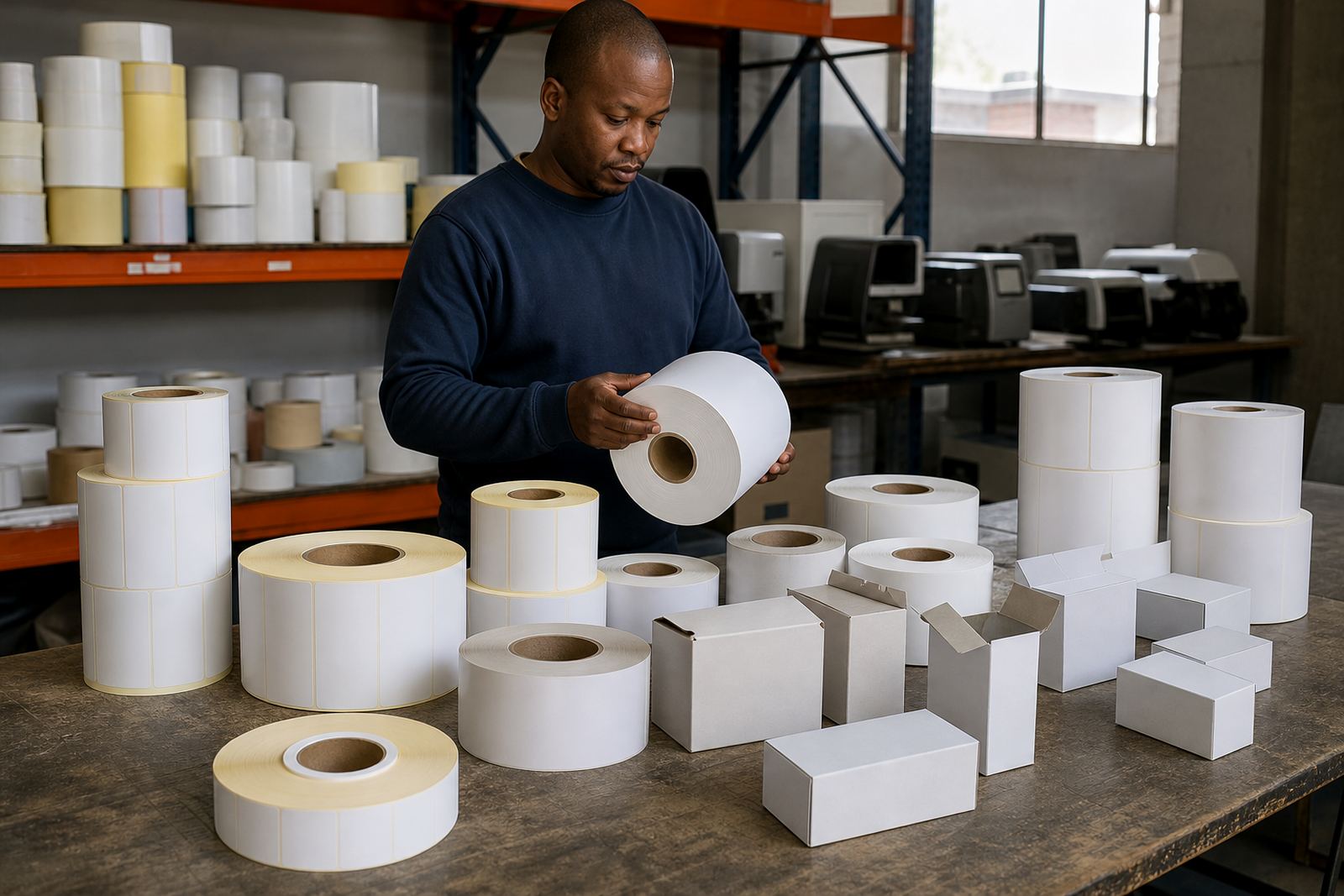
Core size and winding direction must match the printer. Smaller benchtop printers often use a 25 mm or 40 mm core, while larger industrial printers may take a 76 mm core. The wrong core size can stop a roll from fitting at all. Winding direction also matters because the print head must meet the label face the correct way. That is why printer fit checks and sample rolls save time before a full run is cut.
- Check the printer core size before ordering any roll
- Confirm whether the roll must unwind from the top, bottom or side
- Measure the roll outer diameter if your printer has a tight chamber
- Ask for rewinding or conversion if the feed direction must change
Direct thermal or thermal transfer: choose the print method first
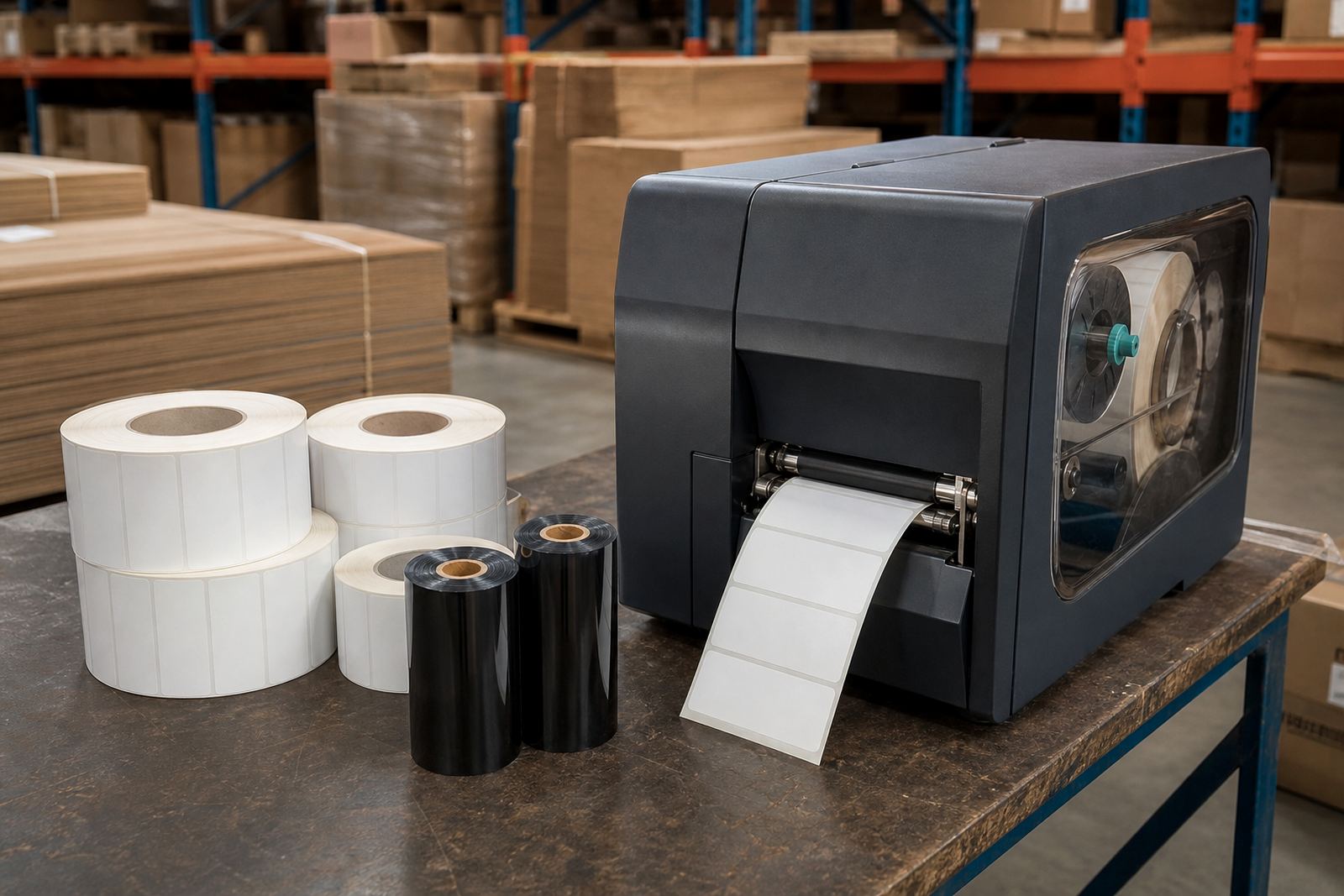
Direct thermal rolls print by heat directly onto the label face. They are useful for short-life labels such as courier slips, weigh labels and fast-moving dispatch work. They do not need a ribbon, which keeps setup simple, but the print can fade faster in heat, sun or friction. Thermal transfer uses a ribbon to place the image onto the label. It is better where the print must last longer, resist rubbing and stay legible through storage or handling.
If you are printing in retail, logistics or manufacturing, think about how long the label must remain readable. A packing label for same-day movement may suit direct thermal, while a product label that sits on a shelf or pallet for longer may need thermal transfer. The printer type, ribbon size and label surface all need to match, otherwise you get poor image quality or wasted rolls. A quick usage review can show where the print method is costing more than it should.
- Direct thermal: no ribbon, quicker setup, shorter label life
- Thermal transfer: ribbon required, stronger print, longer durability
- Short dispatch use: direct thermal often works well
- Longer storage or handling: thermal transfer is usually safer
A short ordering check before you place repeat stock
Once the label construction is right, keep the spec narrow so repeat runs stay aligned. Note the face stock, adhesive, liner, core size, winding direction, label width and length, plus the print method. If a line moves from hand application to machine application, the roll may need a different wind or packing format to suit the dispenser. That level of detail reduces rework in Pinetown, Hammarsdale or any busy warehouse where teams change from shift to shift.
For businesses sending orders from Cape Town to Pietermaritzburg, good roll planning also helps with dispatch packing. Rolls should be protected from dust, crushing and moisture, especially in transport during summer humidity or winter rain. If you are unsure, ask for sample rolls, adhesive matching or a usage review before a larger conversion is done. It is cheaper to confirm the fit now than to find out after a pallet arrives and the printer will not take it.
- Keep a written spec for each label format
- Store rolls flat, dry and away from direct sun
- Test one roll on the exact printer model in use
- Recheck stock if the pack size, carton or surface changes