When film stock is the better call
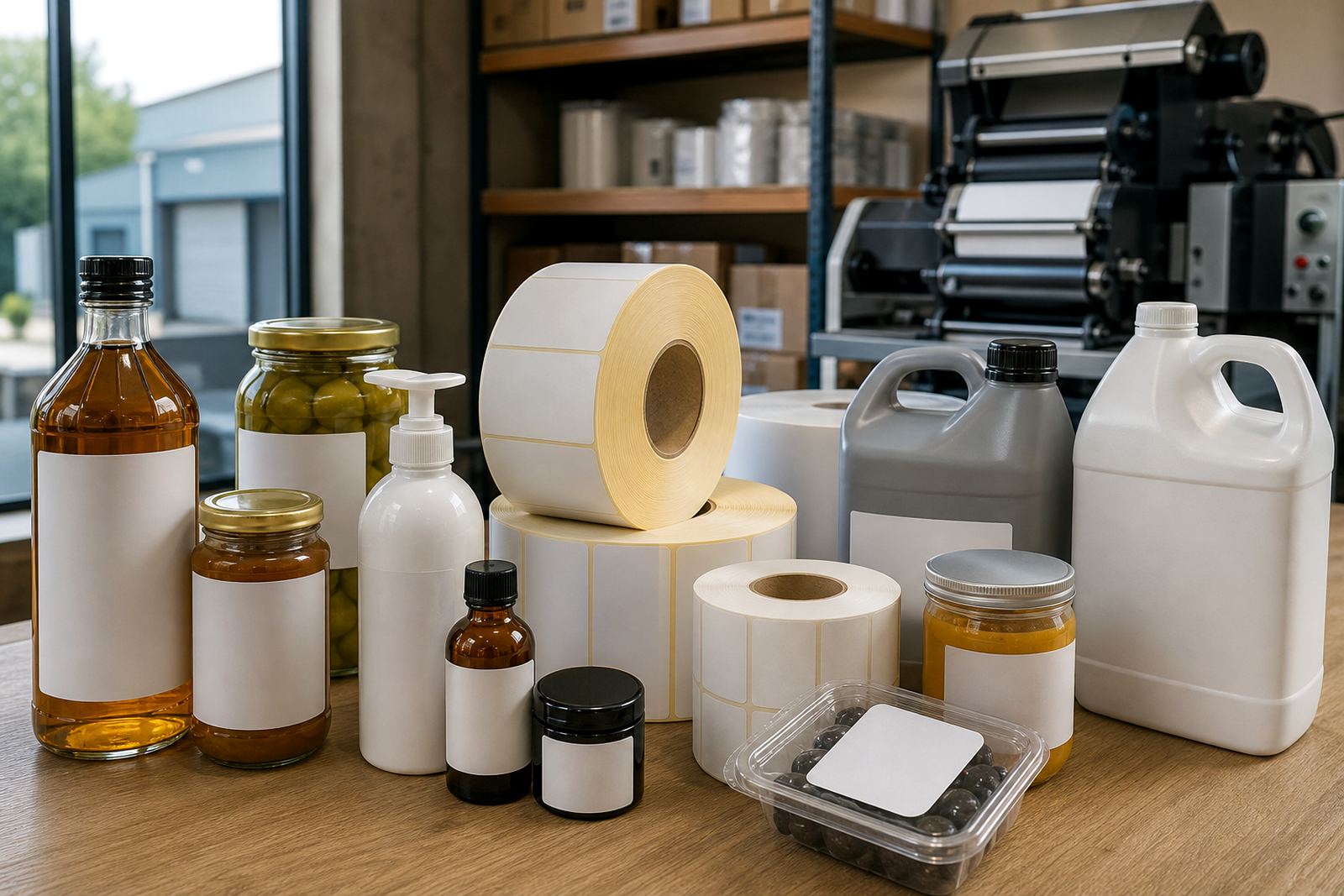
Filmic label materials are used where paper labels would lift, scuff, absorb moisture or lose print clarity. In Westmead, Pinetown and other busy production areas, we see film chosen for bottled goods, chemical containers, frozen packs, warehouse labels and items that move through humid stores or cold rooms. It is a practical choice when the label must stay legible and attached after handling, transport and cleaning.
Not every job needs the same film. Some labels need a glossy finish for product presentation, while others need a matt surface for better overprint or barcode reading. If the pack is exposed to water, oil or frequent rubbing, the face stock and adhesive both matter. A good label build starts with the conditions the pack will face, not just the printer you have on the floor.
- Use film where moisture, condensation or light washdown is expected
- Choose it for chilled goods, personal care items, chemicals and hard-wearing cartons
- Check if the label must stay on glass, plastic, metal or coated board
- Confirm whether the label needs a glossy look or a non-reflective finish
Face stock choices that handle the real job
Film face stocks are generally polypropylene, polyethylene or polyester. Each behaves a bit differently. Polypropylene is widely used for clean-looking packaging labels and resists moisture well. Polyethylene is more flexible and suits squeezable packs or curved surfaces. Polyester is the harder-wearing option where heat, abrasion or long service life matter. The right choice depends on the container shape, the surface energy of the pack and how much abuse the label will take.
For food and retail packaging, clarity and print contrast are important. For industrial labels, durability and scuff resistance often matter more than appearance. If a label has to remain readable through warehouse movement, stacking and pallet wrap, the face stock should match that duty. Smooth face films work well for sharp print, while certain textured or matt finishes can help reduce glare under bright lights.
- Polypropylene for general packaging and neat presentation
- Polyethylene for curved, squeezable or flexible packs
- Polyester for tougher use, heat and longer service life
- Gloss or matt finish selected to suit viewing and printing conditions
Adhesive matching for cold rooms, boxes and bottles
The adhesive can make or break the label. A film face stock may be correct, but if the adhesive is wrong the label can lift at the corners, slide on a chilled pack, or fail on a dusty carton. We match adhesive to the surface and the temperature it will face. Permanent adhesive is commonly used for most logistics and retail work. Removable adhesive is used where labels must come off cleanly. Some applications need stronger tack for difficult surfaces, low temperature performance or better grip on textured packs.
Condensation is a common issue in South African supply chains, especially when product moves from cold storage into warmer loading areas. In these cases, a label needs enough initial tack to bond before moisture interferes. On plastic drums, bottles and jars, surface cleanliness also matters. Oil, dust and release agents can reduce bond strength. A good adhesion check should always be part of the order before full production starts.
- Permanent adhesive for long stay applications
- Removable adhesive for temporary or retail use
- Cold-performance adhesive for chilled and frozen handling
- Stronger tack where the surface is curved, textured or slightly difficult
Liner, roll length and core size need to suit the printer
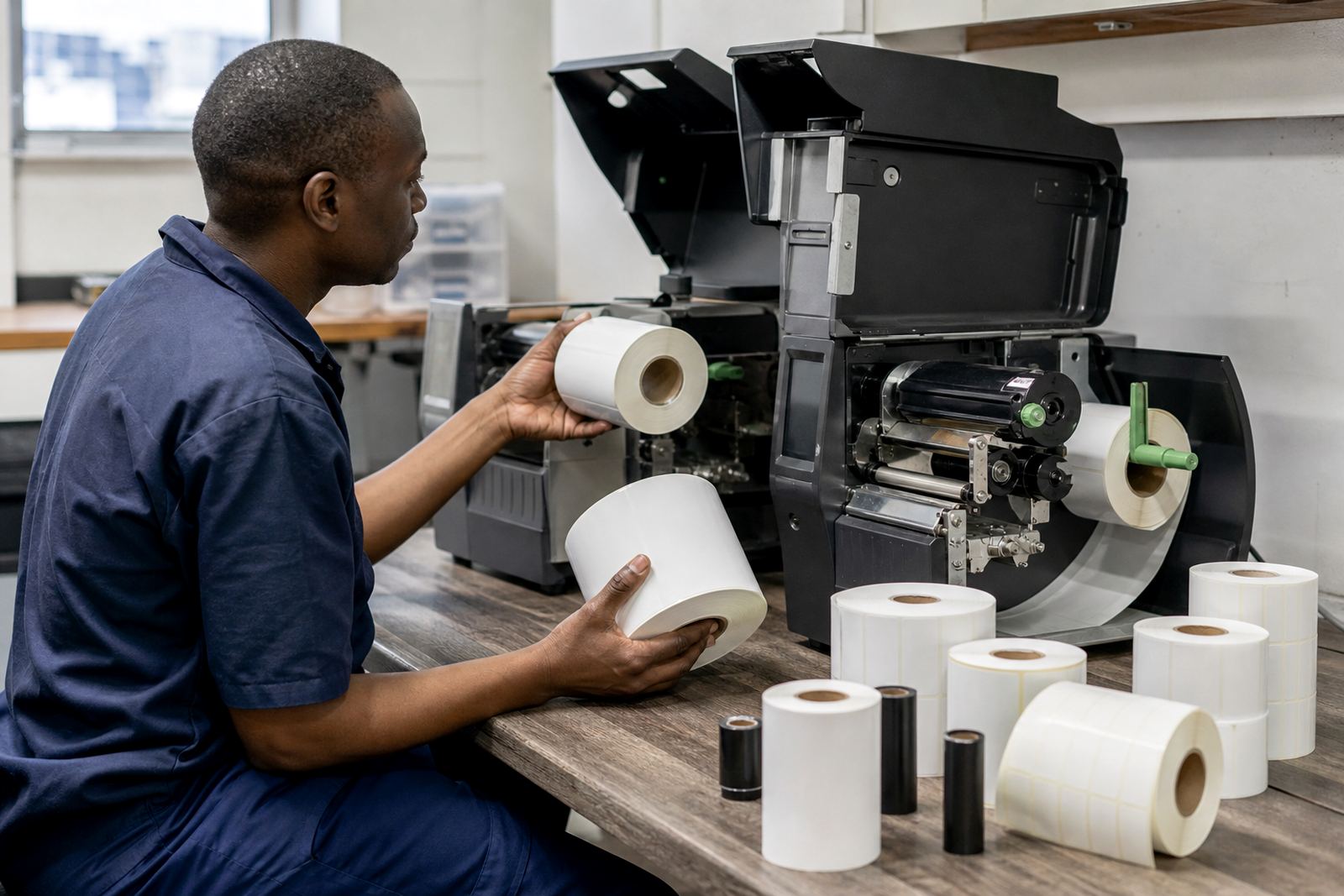
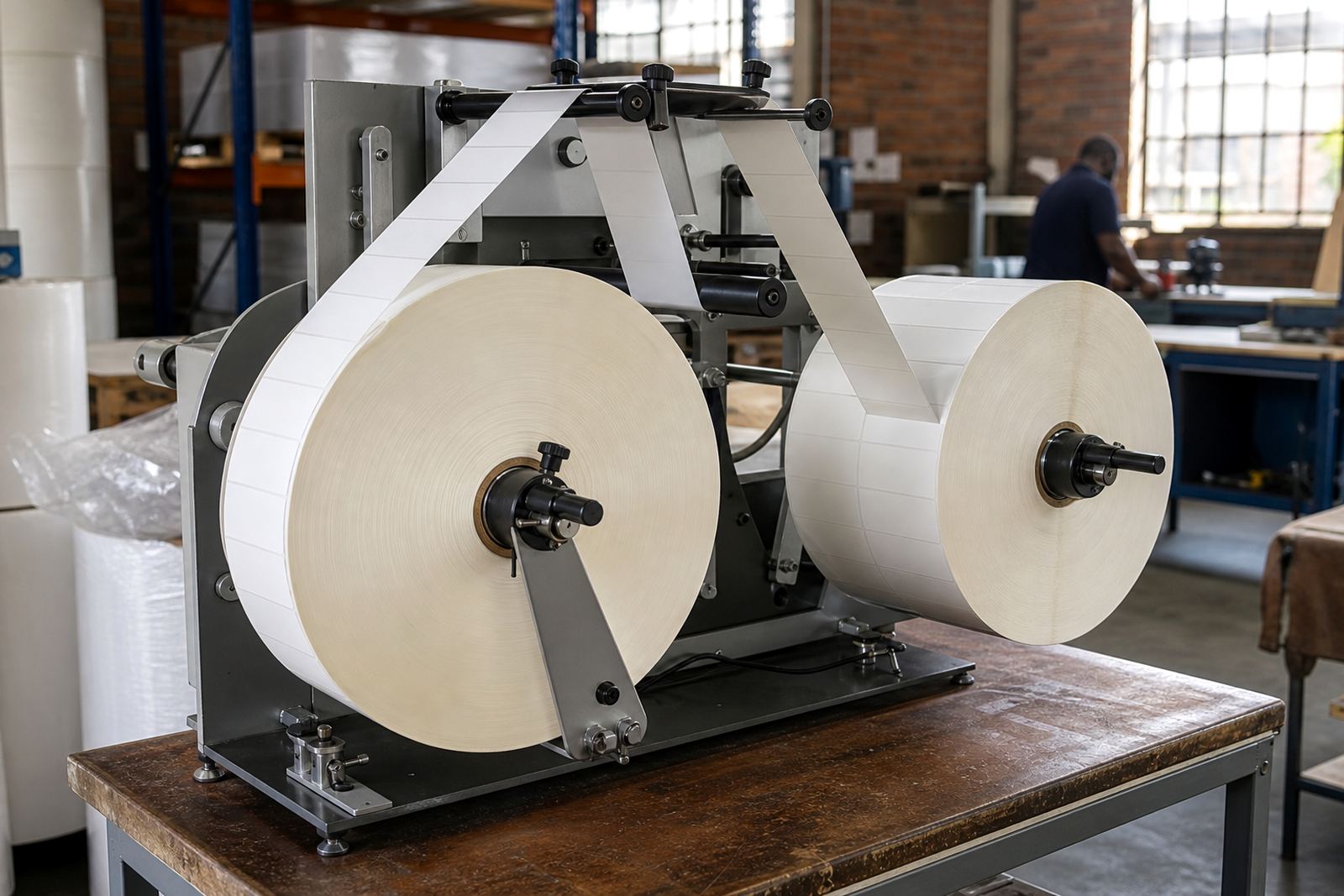
Even the best film label can cause trouble if the roll is not built to fit the printer. Core size, outside diameter, winding direction and gap or mark sensing all need checking. Benchtop and table-top printers often take smaller cores, while larger industrial printers can run bigger rolls for fewer changeovers. If the roll is too heavy or the core is wrong, feeding becomes uneven and print timing suffers.
Core sizing is especially important where the same label stock is used across different sites. A label for a warehouse in Johannesburg may run on a different machine than the one used in Durban or Cape Town.Roll length planning should also take print volume into account so the team is not changing rolls every short run.
- Check core diameter before placing the order
- Confirm printer type and maximum roll diameter
- Match winding direction to the applicator or printer path
- Plan roll lengths to reduce changeovers during busy shifts
Direct thermal or thermal transfer for your line
Thermal rolls are not all the same. Direct thermal prints without a ribbon and is useful for shorter-life labels such as courier labels, weighing labels and some retail tickets. It is quick and convenient, but the print can fade with heat, sunlight or time. Thermal transfer uses a ribbon and prints onto a wider range of materials, including film stocks. It is the better choice when you need more durability, better resistance to scuffing or stronger barcode life.
If the label is going onto film stock, thermal transfer is usually the safer option for long-life use. It gives more control over print quality on polypropylene, polyethylene and polyester. Direct thermal can still be useful in controlled conditions, but it is not the right fit for every job. Think about how long the label must remain readable, whether it will face moisture and whether the print needs to survive storage or transit.
- Direct thermal for short-life, quick-turn labels
- Thermal transfer for longer life and tougher handling
- Film stock generally pairs well with thermal transfer
- Check ribbon type and print darkness for barcodes and fine text
A working checklist before you place the order
Before choosing film stock, it helps to walk through the use case in practical terms. Where will the product sit, how will it move and what will touch the label. A small test roll can save a lot of trouble later. Sample rolls are useful when the job has a new container, a new printer or a label that must work across multiple branches. We often review the print image, feeding, adhesion and label release before full production starts.
Use this checklist to narrow the spec:
- What surface is the label going onto: glass, plastic, board, metal or shrink film
- Will it face moisture, oil, refrigeration or outdoor exposure
- Does the label need to stay on for days, months or longer
- Which printer is running it and what core size does it take
- Do you need a gloss finish, matt finish or extra scuff resistance
- Will the roll run on one site or across several branches
For buyers in Durban, Pinetown, Pretoria, Pietermaritzburg, Cape Town and Johannesburg, a clean specification makes reordering easier and keeps stock consistent across the business. If the job changes later, roll length planning, rewinding and adhesive matching can be adjusted without starting from scratch.
How we set up film stock orders at the point of supply
Our Westmead, Pinetown base supports film label stock orders for packaging, retail and logistics customers across South Africa. The team handles custom slitting, rewinding, core sizing, winding direction, sample rolls, adhesive matching, face stock selection, printer fit checks, dispatch packing, repeat order planning and usage review. That means the order can be set around the way your operation actually runs, not just around a standard roll size.
Whether the requirement is a narrow label for shelving, a durable pack label for moisture exposure or a larger roll for warehouse throughput, the setup is checked against the printer and the application. Clients reach us through the enquiry form on our contact page and the order can be planned around the site, the machine and the run length. In practice, that reduces stoppages, wasted labels and unnecessary roll changes.