Start with the printer, not the label name
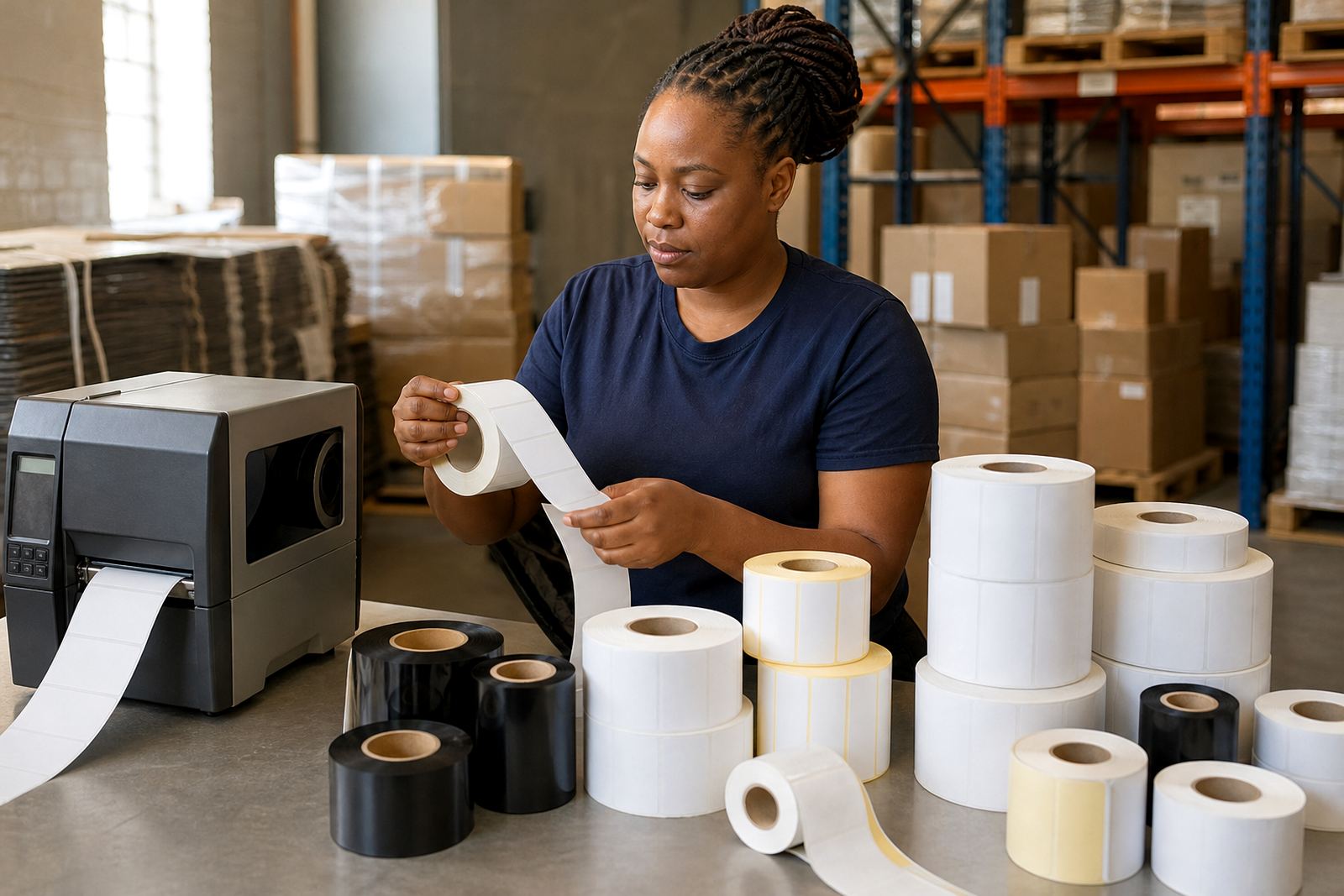
Before choosing any stock, match the roll to the printer model and the job. Benchtop thermal printers, industrial print units and wider packaging printers all take different core sizes, outside diameters and media widths. A 25 mm core is common on smaller units, while 40 mm or 76 mm cores are often used on larger machines. If the roll is too heavy or the core is wrong, the media can skew, slip or stop mid run.
For Westmead, Pinetown and Durban customers handling daily dispatch work, it also helps to check whether the printer uses a fixed gap sensor, black mark reading or continuous feed. That one detail affects how the label stock is slit and wound, and it can save a lot of wasted stock on site.
- Check the printer’s accepted core size first
- Confirm the maximum roll diameter and label width
- Match the feed type, gap, black mark or continuous
- Check whether the machine needs thermal transfer ribbon or direct thermal stock
Face stock choice affects print quality and how the label wears
Face stock is the top layer that carries the print. Paper face stocks are generally used for cartons, shelves and sealed packs where the label will not face much moisture or abrasion. Top coated papers give cleaner print and better barcode edge definition, while uncoated papers are often used when the job is short life and cost sensitive.
When the label needs to handle cold rooms, condensation, rough handling or light oil contact, synthetic face stock is usually the better option. It stays flatter and can hold a sharper print for longer. In humid areas like coastal Durban, the right face stock can make the difference between a label staying readable and one that lifts at the corners after a few days.
- Paper face stock for cartons, retail stickers and general packaging
- Top coated paper for cleaner barcode print and sharper text
- Synthetic face stock for moisture, handling and longer wear
- Ask for a sample roll if the pack runs through a cold room or freezer area
Adhesive matching for cartons, tubs, bags and cold rooms
The adhesive does the holding, so it must suit the surface and the conditions. Permanent adhesive is common for standard packaging and retail labelling where the label should stay put. Removable adhesive is used where labels need to come off later without tearing the pack. For dusty cartons, curved tubs or rough recycled board, a stronger tack may be needed from the start.
If the stock will go into chilled storage or onto products with light moisture, the adhesive has to grab fast and keep holding even when the surface is not perfect. We also look at the release liner because a liner that is too weak or too tight can make dispensing messy, especially on slower manual application lines. One bad match can cause peeling corners and rework, which costs time no matter how small the job.
Direct thermal or thermal transfer, that choice matters
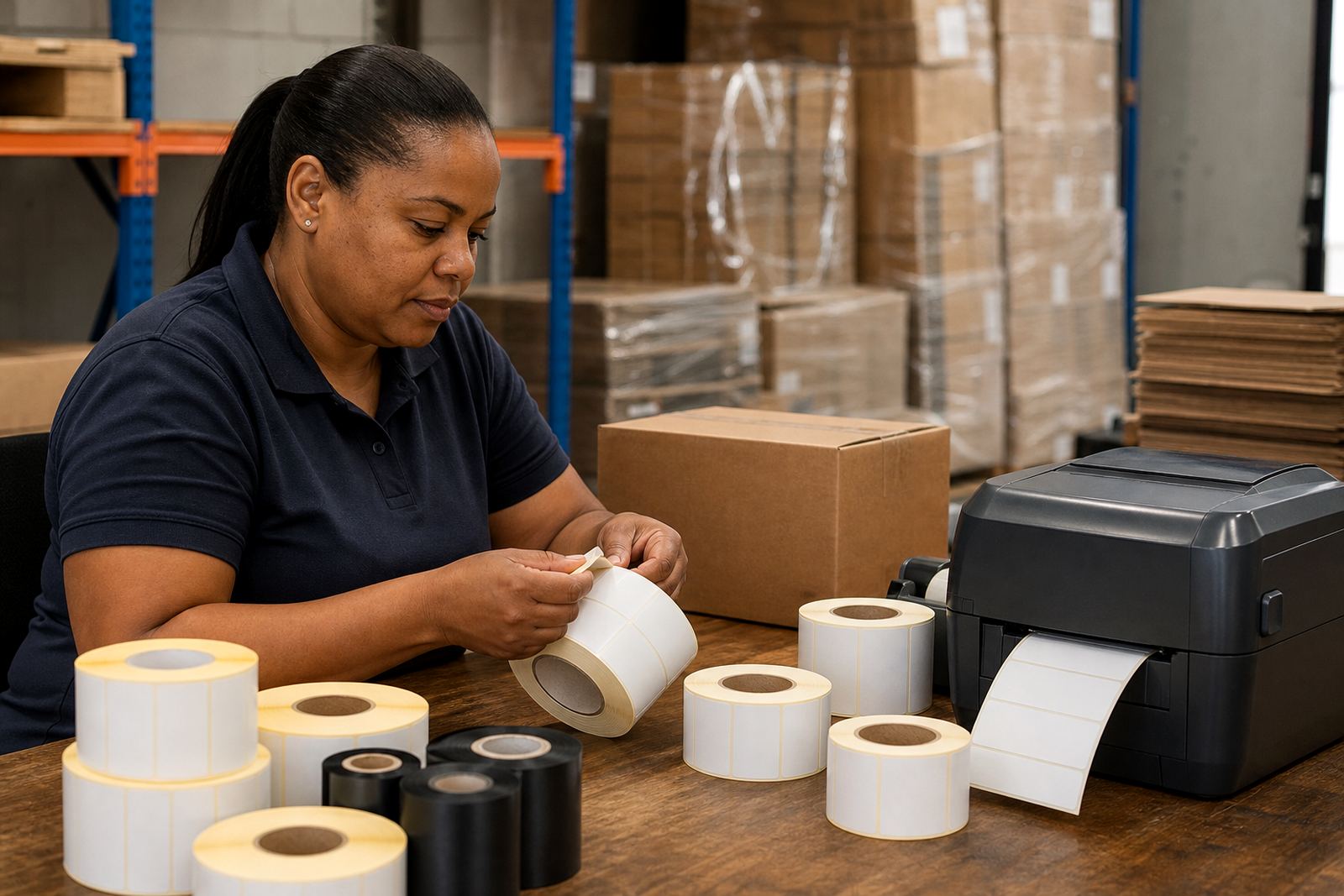
Direct thermal rolls print without a ribbon and are suited to shorter life labels such as courier labels, weigh scale stickers and dispatch use. They are convenient, but the print can darken or fade with heat, UV exposure and rubbing. Thermal transfer rolls need a ribbon, but they give a much tougher print that suits product labels, warehouse racking and goods that sit longer in storage.
When a label is meant for retail shelving or internal logistics, direct thermal may be enough. When the label must survive transport, moisture or long storage, thermal transfer is usually the safer option. If your team is unsure, we check the printer setup and the label end use before suggesting stock, rather than sending a roll that only half fits the task.
- Direct thermal for short term dispatch and courier work
- Thermal transfer for longer life and better resistance
- Confirm whether the printer uses a ribbon holder
- Check if the ribbon width must match the label width
Winding direction and core size can stop feeding problems
A label roll can be technically correct and still fail if the winding direction is wrong. The print side in or out, the unwind direction and the lead edge position all matter for how the printer pulls the stock. If the roll feeds backwards, the printer may print on the liner or miss the start point entirely. That sort of fault often looks like a machine issue, but it is really a roll setup issue.
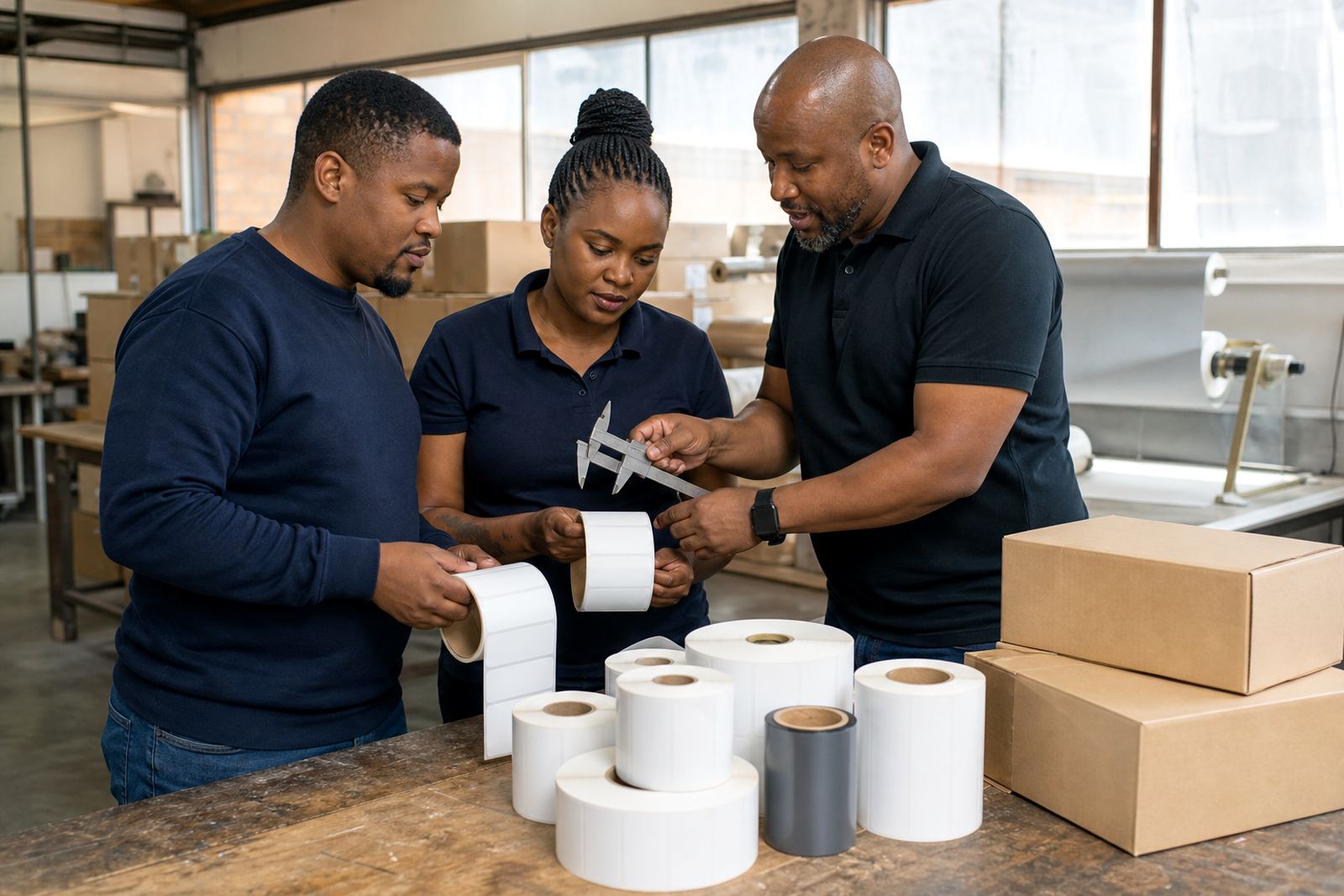
Core size also affects how stable the roll sits on the spindle. A loose fit can wobble, while a tight fit can bind and make the feed jerky. For custom converting work, we look at roll length, unwind direction, core size and outer diameter together so the roll is ready for the printer on the first run.
A quick check before you send the order details
When a customer in Johannesburg, Cape Town, Pretoria or Pietermaritzburg sends through a request, the fastest way to avoid the wrong stock is to give the printer model, label size and the job it must do. If you already have a sample roll, that helps even more. If not, a clear note about the surface, whether the pack is cold, oily or dry, and how long the label must last is usually enough to narrow it down.
- Printer make and model if available
- Label width, length and core size
- Direct thermal or thermal transfer use
- Surface type, such as carton, plastic, glass or cold pack
- Expected life of the label and any moisture exposure
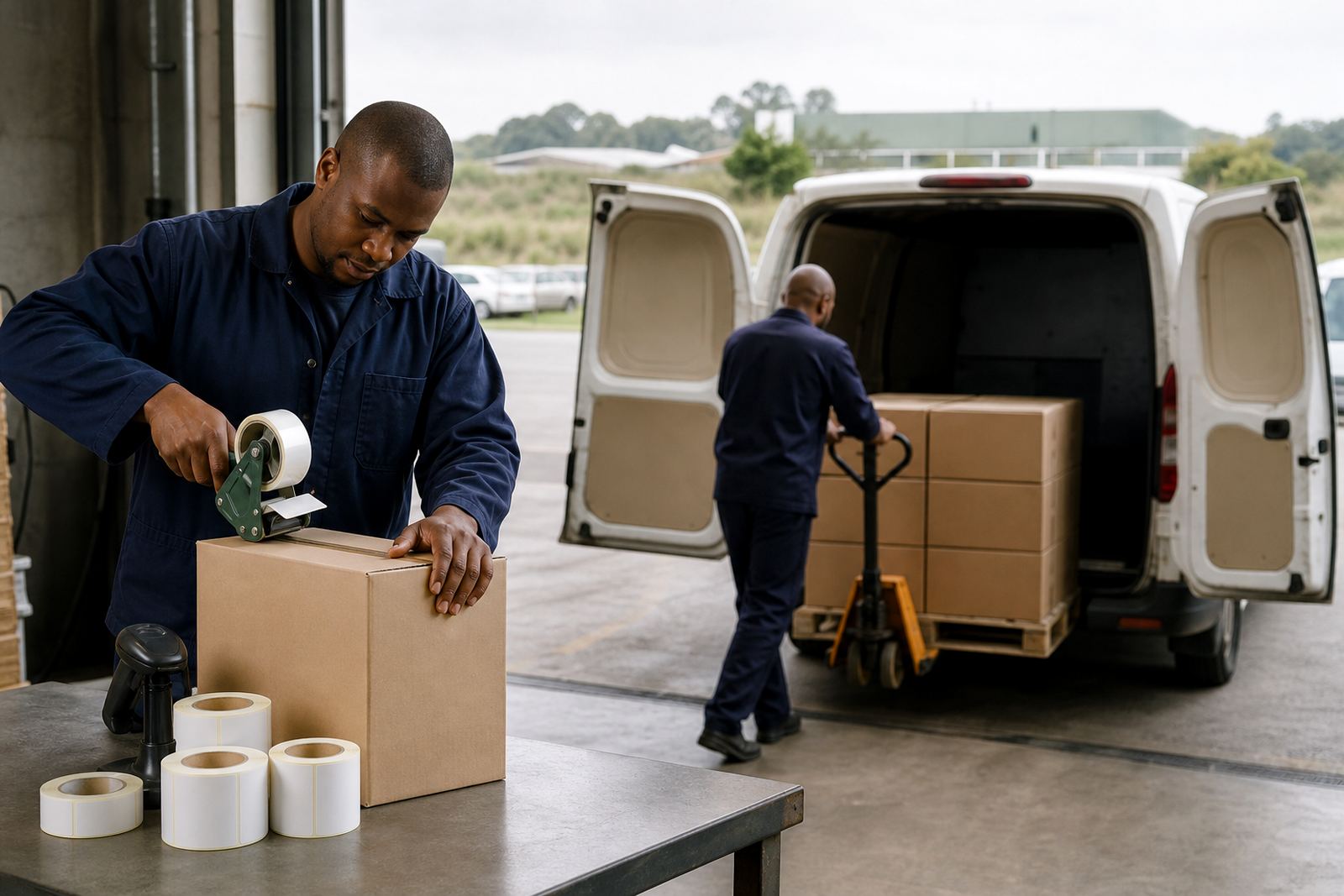
We can also plan repeat order lengths so your team is not stuck with half used rolls that do not suit the next run. That matters for dispatch packing, retail relabelling and manufacturing lines where the same format is used week after week.