What makes a label roll fit your job, not just your printer
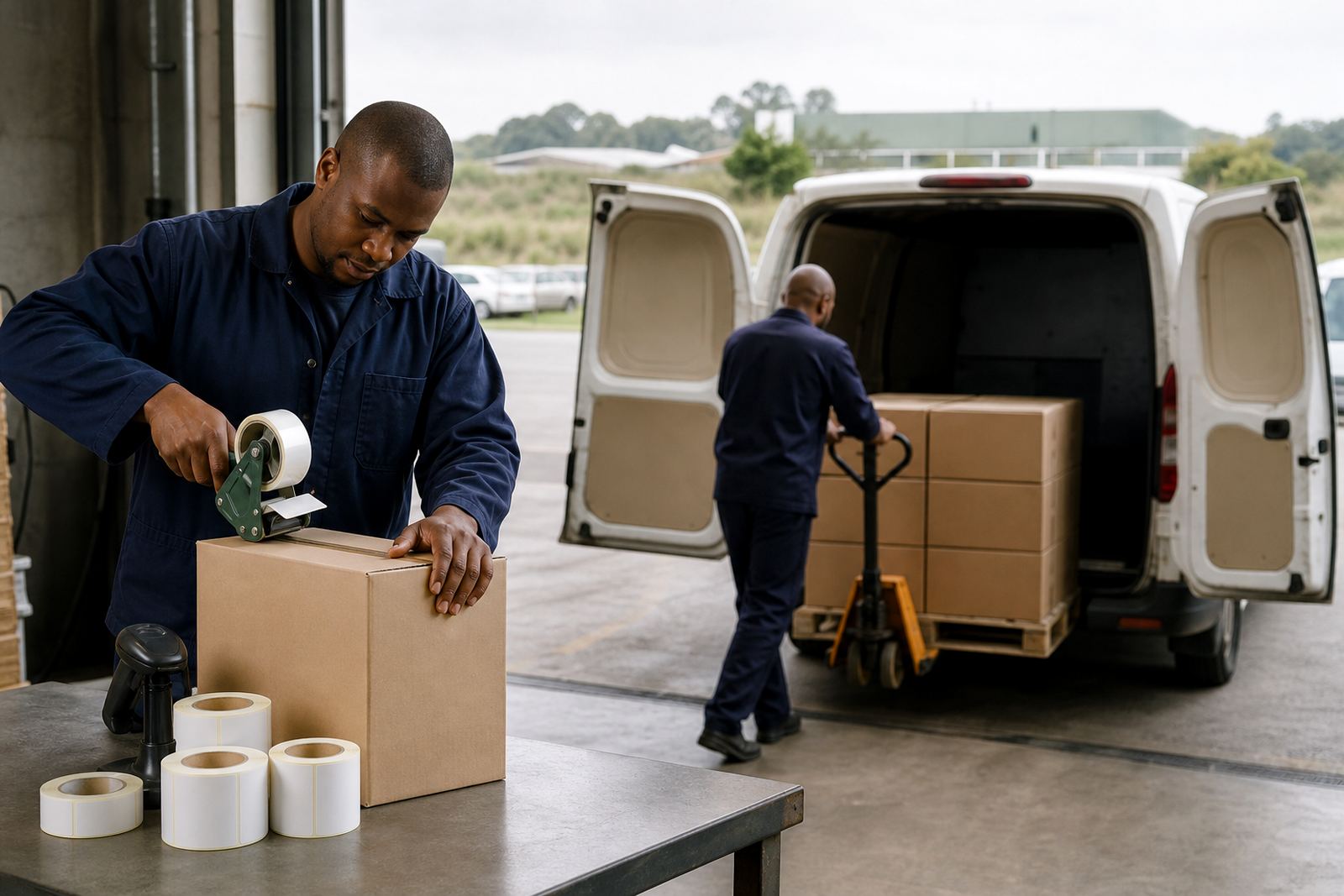
The right label is a match between the face stock, adhesive, liner and roll build. A label may run through the printer fine but still fail on the carton, bottle, pouch or pallet if the adhesive is wrong for dust, cold rooms, moisture or a curved surface.
When we assist with a job, we first check the label use, then the print method, then the roll size and winding direction. That order saves time and avoids waste, especially when a site in Durban, Johannesburg or Cape Town needs labels that can handle heat, humidity or long storage periods.
- Face stock carries the print and can be paper, semi gloss or synthetic.
- Adhesive can be permanent, removable or freezer grade depending on the surface.
- Liner strength matters for smooth feeding through benchtop and industrial printers.
- Roll diameter and core size must suit the printer holder and unwind path.
Direct thermal or thermal transfer, which one should you ask for
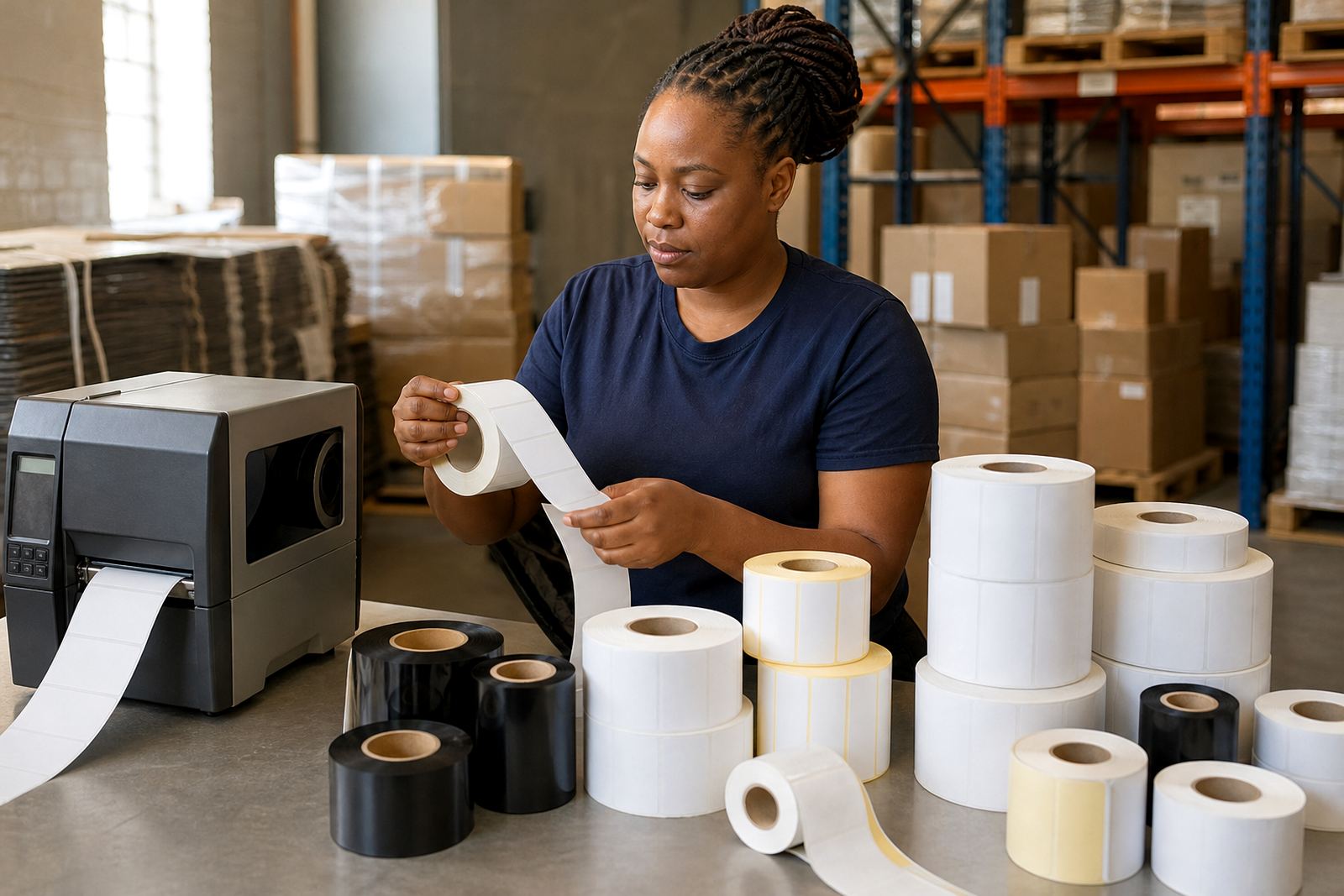
Direct thermal labels are printed without a ribbon. The heat in the print head darkens the coated face stock, which makes them practical for short to medium life labels such as courier labels, parcel tags and receipt style work. They are best kept out of prolonged sun and high heat because the print can fade over time.
Thermal transfer labels use a ribbon, which gives a more durable print on suitable face stocks. This is often the better choice for warehouse labels, product identification, asset tags and any label that must stay readable for longer. In humid coastal areas like Pinetown and Durban, that extra durability can matter a lot.
- Use direct thermal for fast, short life jobs.
- Use thermal transfer for better resistance to smudging and fading.
- Check that your printer accepts the ribbon width and core setup before ordering.
Core sizes, roll lengths and winding direction explained plainly
Core size is the cardboard tube in the centre of the roll. Common core sizes need to match the printer spindle or holder, and the wrong core can cause feed problems even when the label width is correct. Roll length also matters, because a longer roll is not always practical if the printer compartment cannot take the outer diameter.
Winding direction tells you how the labels face as they unwind. That affects whether the printer can read the gap, black mark or notch properly and whether the print lands on the label in the right position. If you are unsure, send the printer model and the label use through the enquiry form on our contact page, and we can check the fit before production.
- Typical core sizes include smaller benchtop cores and larger industrial cores.
- Roll outside diameter must suit the printer housing and feed path.
- Perforations, gaps or black marks must align with the sensing method.
Choosing the face stock and adhesive for South African conditions
Paper face stocks are common for retail and general packaging because they print well and are cost effective. Synthetic face stocks are used where moisture, scuffing or handling is a concern. If a label will face cold rooms, outdoor storage, oily surfaces or repeated rubbing, the material choice becomes more important than the print method alone.
Adhesive selection should reflect the surface, the temperature at application and the expected life of the label. Some cartons have fibrous, dusty or recycled surfaces that need a stronger bond. Smooth plastics may need a different adhesive again.
- Permanent adhesive for cartons, bottles and general pack labels.
- Removable adhesive for temporary identification and internal handling.
- Freezer or high tack options for colder or more difficult surfaces.
How to check printer compatibility before you place an order
Printer fit checks are one of the easiest ways to prevent downtime. Start with the printer type, then confirm whether it uses direct thermal or thermal transfer. After that, check the label width, gap size, roll diameter, core size and unwind direction. If one of those details is off, the printer may still run but the labels can skew, skip or stop feeding.
Many customers send through a sample roll request first. That gives a proper test on the actual machine, in the actual packing area, before a larger run is made. It is especially useful when a site has more than one printer, or when a label needs to work across retail, logistics and manufacturing lines.
- Confirm printer model and print method.
- Measure the available roll space inside the printer.
- Check whether the machine needs black mark, gap or notch sensing.
- Test one roll before approving a repeat order.
Ordering through Westmead Supply without wasting time
We work from Westmead, Pinetown and supply label stock and thermal rolls to Durban, Johannesburg, Cape Town, Pretoria and Pietermaritzburg, plus surrounding industrial areas. When you send an enquiry, it helps to include the label width, length, material preference, adhesive type, printer model and how the labels will be used. That gives us enough detail to advise on slitting, rewinding and dispatch packing.
For repeat jobs, we can keep the chosen spec consistent so the next run matches the last one. If the application changes, for example from retail shelf labels to courier labels, we can review the old usage and adjust the face stock or adhesive rather than starting from scratch.
- Use the enquiry form on our contact page for new jobs and scheduled reorders.
- Ask for sample rolls when the printer setup is still being confirmed.
- Tell us if the labels must cope with cold rooms, moisture or rough handling.
- Share any special winding direction or core requirement upfront.
When a label spec needs a second look
Some jobs look straightforward until the first pack run exposes a problem. A label can peel on a dusty carton, fade on a hot shelf, or jam because the roll was wound for the wrong side of the printer. If that happens, the fix is usually in the spec rather than the machine.
Our support process is practical: review the current label, check the failure point, then adjust one variable at a time. That may mean changing face stock, changing adhesive, altering the core, or tightening the roll length planning. It keeps the order grounded in the way the labels are actually used, not just how they look on paper.