Built for the shifts that do not wait
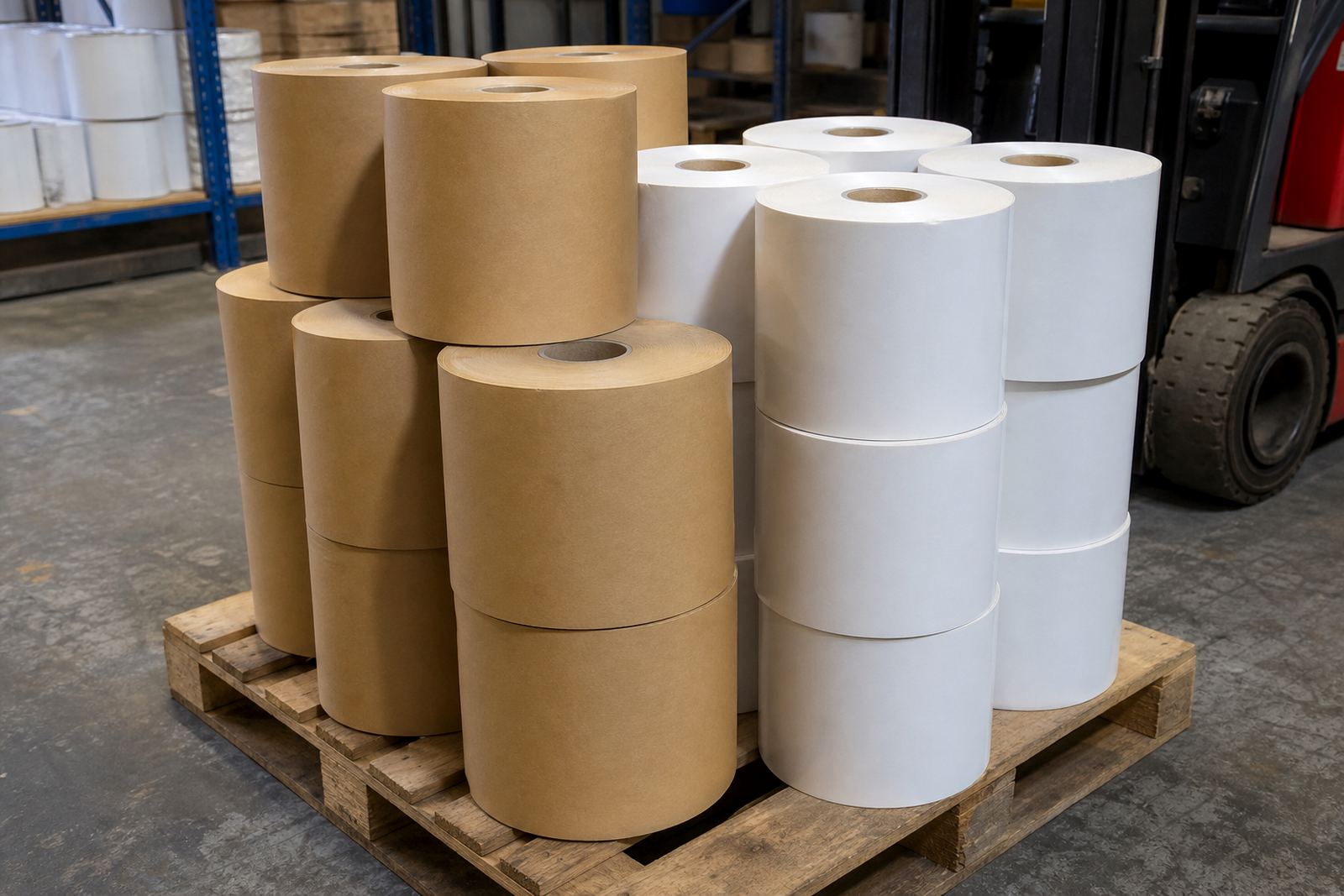
Long run rolls are larger rolls of label stock or thermal material made for jobs that keep moving. They suit packing lines, warehouse despatch, retail distribution and manufacturing runs where a small roll would be changed too often. The value is in the build: more metres on the core, fewer interruptions, cleaner handling and better rhythm when operators are working through cartons, pallets or batches one after another.
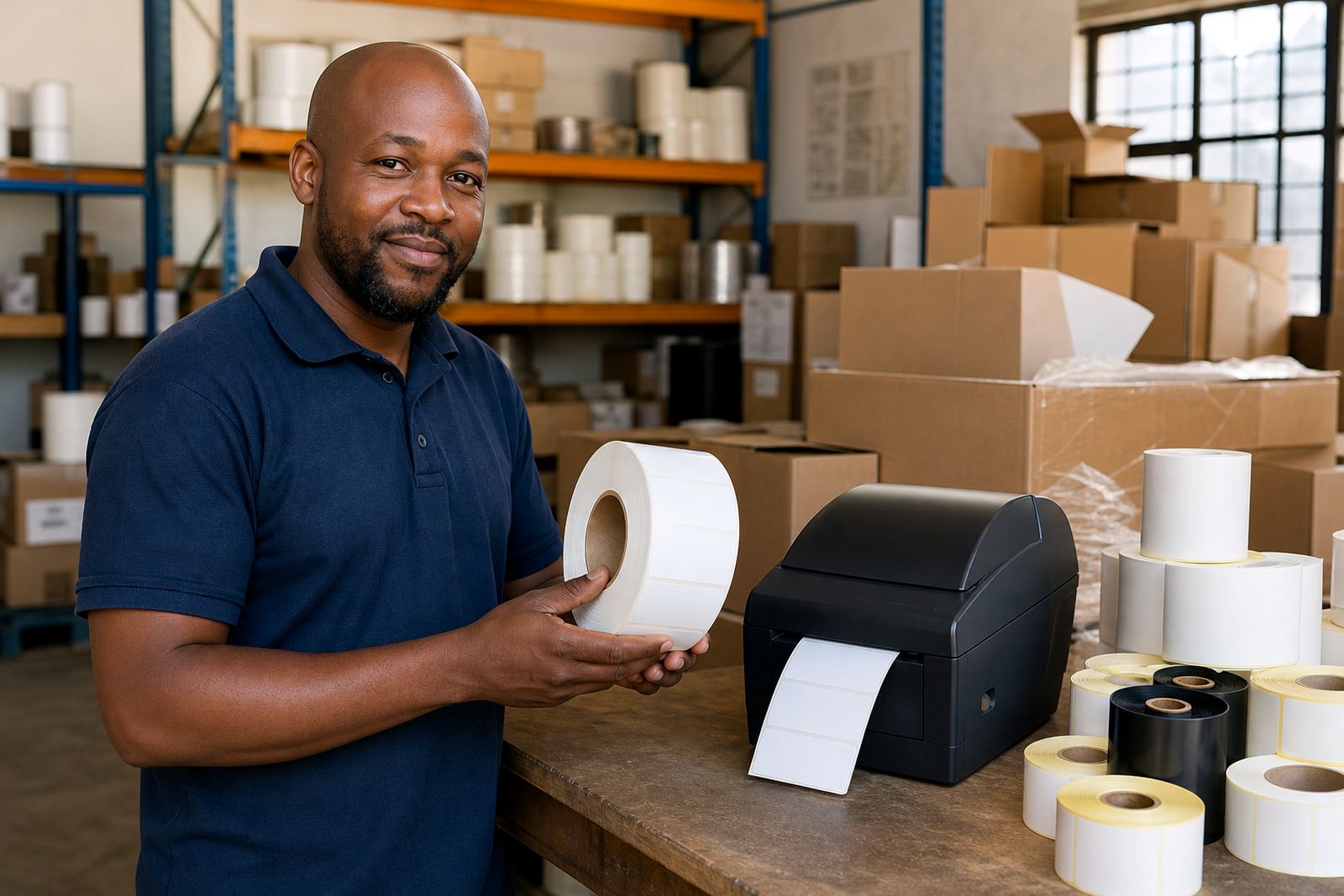
We supply long run builds in self-adhesive label stock for print-and-apply and benchtop or industrial printer use, plus thermal rolls for direct thermal labelling and thermal transfer applications. The right roll depends on the printer path, core size, outer diameter and how the labels are being used in heat, moisture or contact with oils and handling. In coastal areas like Durban, the chosen face stock and adhesive matter just as much as roll length.
- Longer print cycles with fewer roll changes
- Available as label stock or thermal rolls
- Suitable for packaging, sealing, dispatch and coding
- Can be slit to match printer width and throughput
The parts that make the roll work properly
A long run roll is more than just extra metres. The face stock, adhesive, liner and winding all need to suit the printer and the job. Face stocks may be paper based for general labelling, or synthetic where the label must hold up better against moisture, scuffing or short term outdoor exposure. Adhesives can be permanent, removable or repositionable, depending on the surface and whether the label must stay put on cartons, bags, bottles or sleeves.
The liner also matters because it affects dispensing and how the roll feeds through the machine. Glassine and other release liners are common on self-adhesive stock, while thermal rolls are supplied with the correct coating for direct thermal printing or with a thermal transfer face for ribbon use. If the roll is too wide, too tight on the core, or wound the wrong way, it can track badly or trigger stoppages during a run.
- Face stock: paper or synthetic, depending on use
- Adhesive: permanent, removable or repositionable
- Liner: chosen for smooth release and clean feed
- Winding direction: set to match the printer path
Sizes that keep the line moving longer
Long run rolls are usually specified by width, roll diameter, core size and the number of labels per roll or metres of material per roll. Smaller benchtop printers often use 25 mm, 40 mm or 76 mm cores, while larger machines may take bigger cores and larger outer diameters. We plan the build around the printer feed path and the space available on the holder, because a roll that is too large for the machine may not run smoothly even if the label size is correct.
For thermal rolls, the choice between direct thermal and thermal transfer depends on how long the print must remain readable. Direct thermal is useful for shorter life labels and faster changing stock. Thermal transfer uses a ribbon and gives better resistance where labels face handling, light or longer storage. The exact size also needs to line up with label application, so a 100 mm x 150 mm shipping label is treated differently from a narrow barcode label or a wraparound product label.
- Widths from narrow barcode rolls to wider dispatch labels
- Core sizes matched to printer holders and spindle sets
- Outer diameter planned for the machine and run length
- Label pitch and gap set for clean sensing
Where long run rolls earn their keep
These rolls suit operations that work in batches and want fewer interruptions. In logistics, they help with carton labels, pallet markers and route labels. In retail and distribution, they support shelf labels, price labels and stock movement. In manufacturing, they are useful for product identification, batch coding, seal labels and work-in-progress tracking.
In humid coastal stores, cold rooms or dusty warehouse settings, the material choice should be matched to the environment. Paper stock is often enough for dry indoor use, while synthetic face stock and the correct adhesive are better when cartons may sweat, wrapfilm is in play, or the label will be handled many times before reaching the customer. If the label must stay legible through storage and transport, that detail should be confirmed before the roll is cut.
- Warehousing and despatch bays
- Retail back-of-house and stock rooms
- Manufacturing lines and batch labelling
- Cold chain, coastal humidity and high handling areas
Fitting notes for smooth printing and fewer stoppages
Getting the fitting right is as important as choosing the label itself. The roll must sit square on the spindle, unwind in the correct direction and feed with the right tension. If the printer uses gap sensing, black mark sensing or a ribbon path for thermal transfer, those settings must match the stock. A label roll that is wound the wrong way round can cause the print head to work harder than it should and lead to wasted material.
When ordering for a specific printer, it helps to confirm the exact model, core size, maximum roll diameter and whether the machine needs direct thermal media or thermal transfer media. If the line uses applicators or manual peel and stick work, the unwind direction and label orientation must also be checked. We can help with printer fit checks and sample rolls where a changeover is being planned or where the current roll is not feeding well.
- Confirm printer model and media path
- Check core size, outer diameter and roll width
- Confirm direct thermal or thermal transfer use
- Set unwind direction and label orientation correctly
Care in storage and day to day handling
Long run stock should be stored flat in a cool, dry place away from direct sun, wet floors and heavy dust. Heat can affect adhesive and coating performance, while damp air can weaken edge quality over time. In Westmead and across coastal KZN, sealed cartons and tidy racking help keep the rolls in good condition, especially when stock is held for larger seasonal runs.
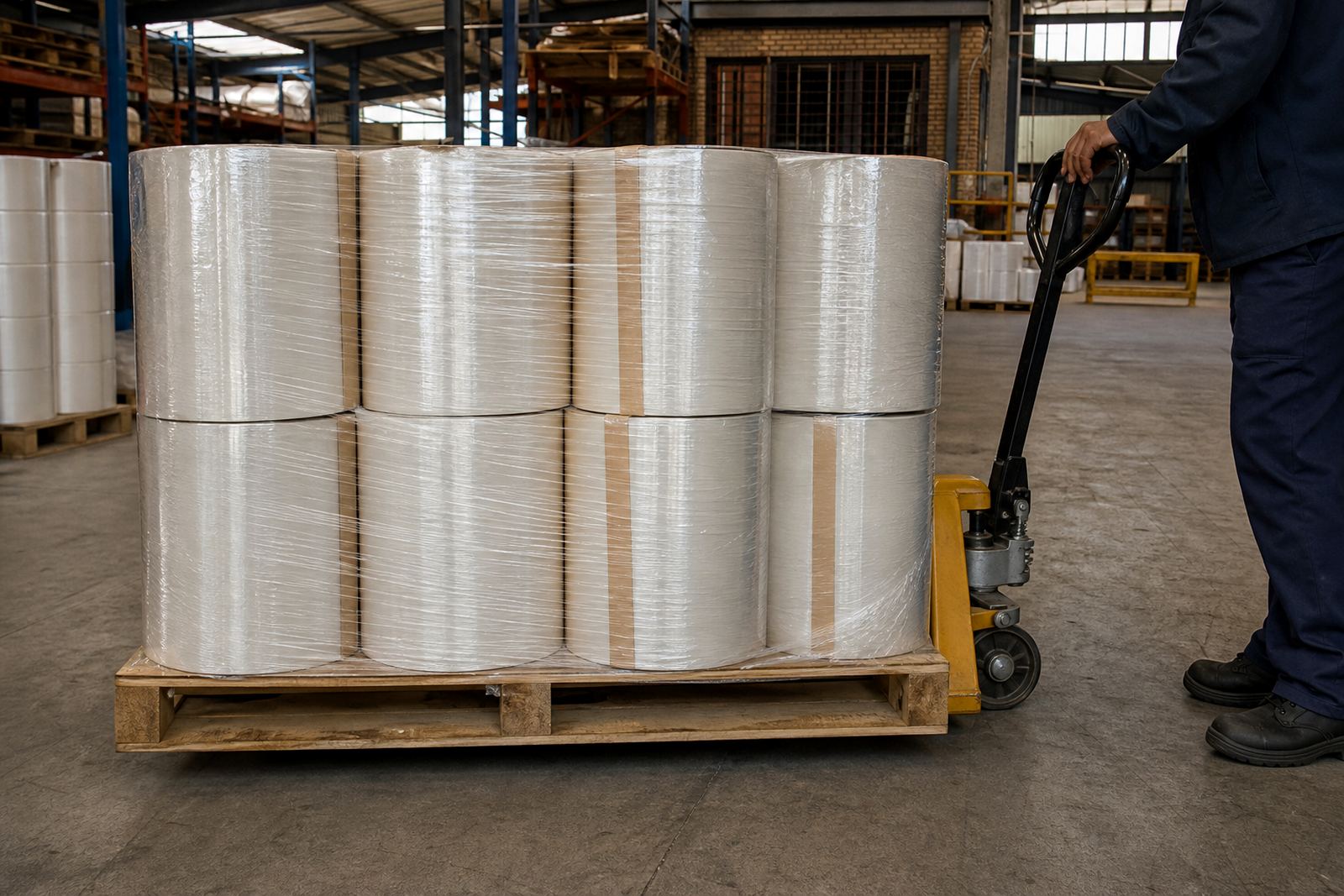
Handle the rolls by the core or outer wrap where possible and avoid denting the edges. A damaged edge can cause tracking issues, liner breakage or poor dispense. If rolls are being transferred between stores, despatch should protect the corners and label faces so the stock arrives ready for the printer, not crushed in transit. The same care applies whether the order is going to Durban, Johannesburg, Cape Town or Pretoria.
- Store flat and dry, away from direct sun
- Keep cartons sealed until use where possible
- Protect edges during transfer and dispatch
- Use older stock first
The order details worth checking before we cut
To make a long run roll that works properly, the order should confirm the label size, material type, adhesive behaviour and the printer it must suit. The same roll can behave very differently on a benchtop printer, a larger industrial unit or a manual pack bench. If the labels are for shipping, stock control or product identification, the print life required should also be stated so the correct face stock and print method can be selected.
Please have the following details ready: label width and length, core size, roll diameter limit, direct thermal or thermal transfer requirement, unwind direction, quantity per roll or metres per roll, and whether a sample roll is needed first. If the labels are going onto corrugated cartons, plastic tubs, pouches or chilled packs, say so at the outset. That helps us choose the adhesive and wind the roll correctly, with less back and forth later.
- Label size and shape
- Core size and maximum roll diameter
- Printer type and print method
- Surface type and storage conditions
- Required roll length or label count
Key facts
| Product type | Long run self-adhesive label rolls and thermal rolls |
|---|---|
| Core sizes | Commonly 25 mm, 40 mm and 76 mm, subject to printer fit |
| Roll build | Wide range of diameters for extended print cycles |
| Print methods | Direct thermal or thermal transfer, depending on application |
| Face stocks | Paper and synthetic options for varied packaging and logistics use |
| Use areas | Packaging, retail, warehousing, manufacturing and dispatch |
| Service options | Custom slitting, rewinding, core sizing and printer fit checks |