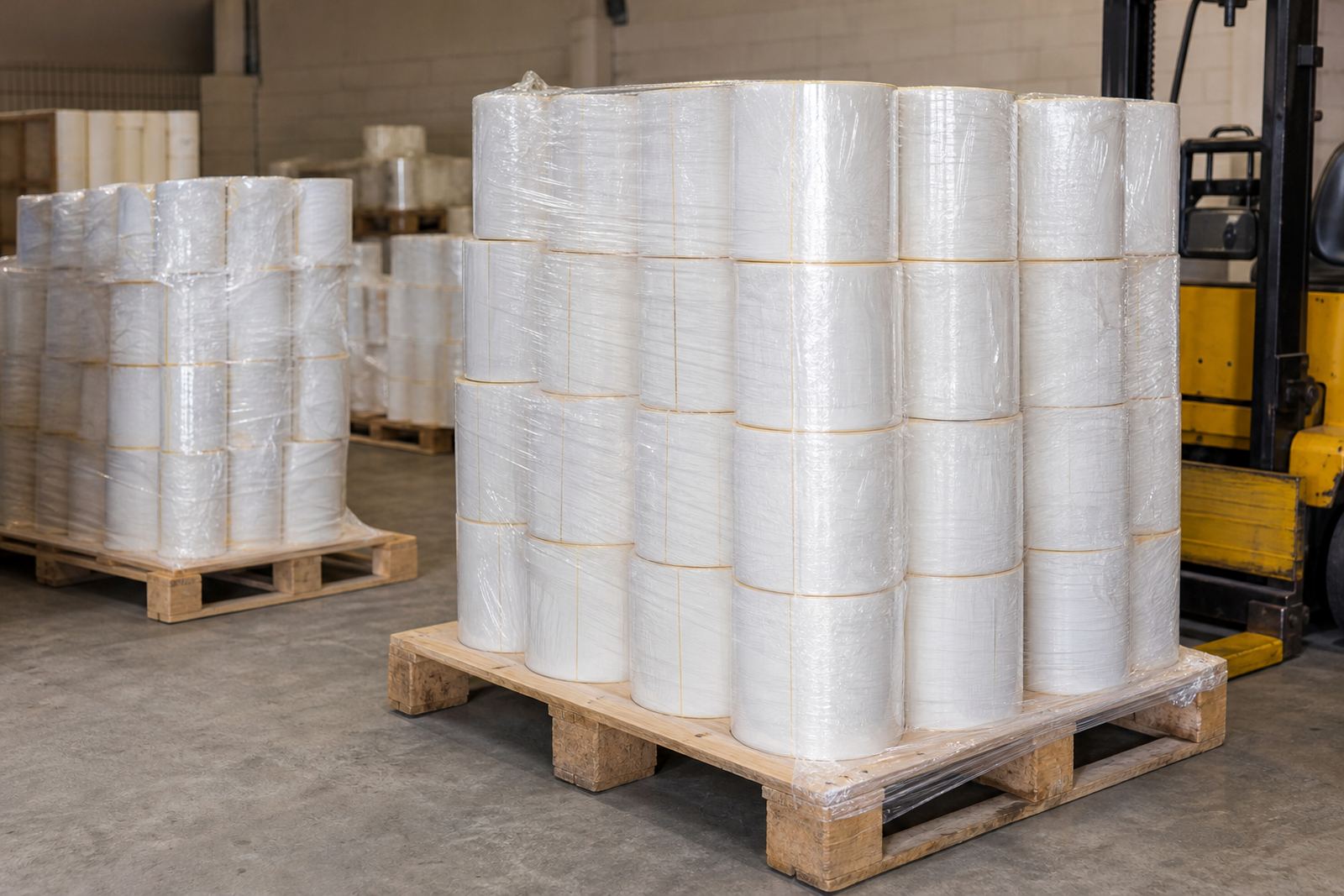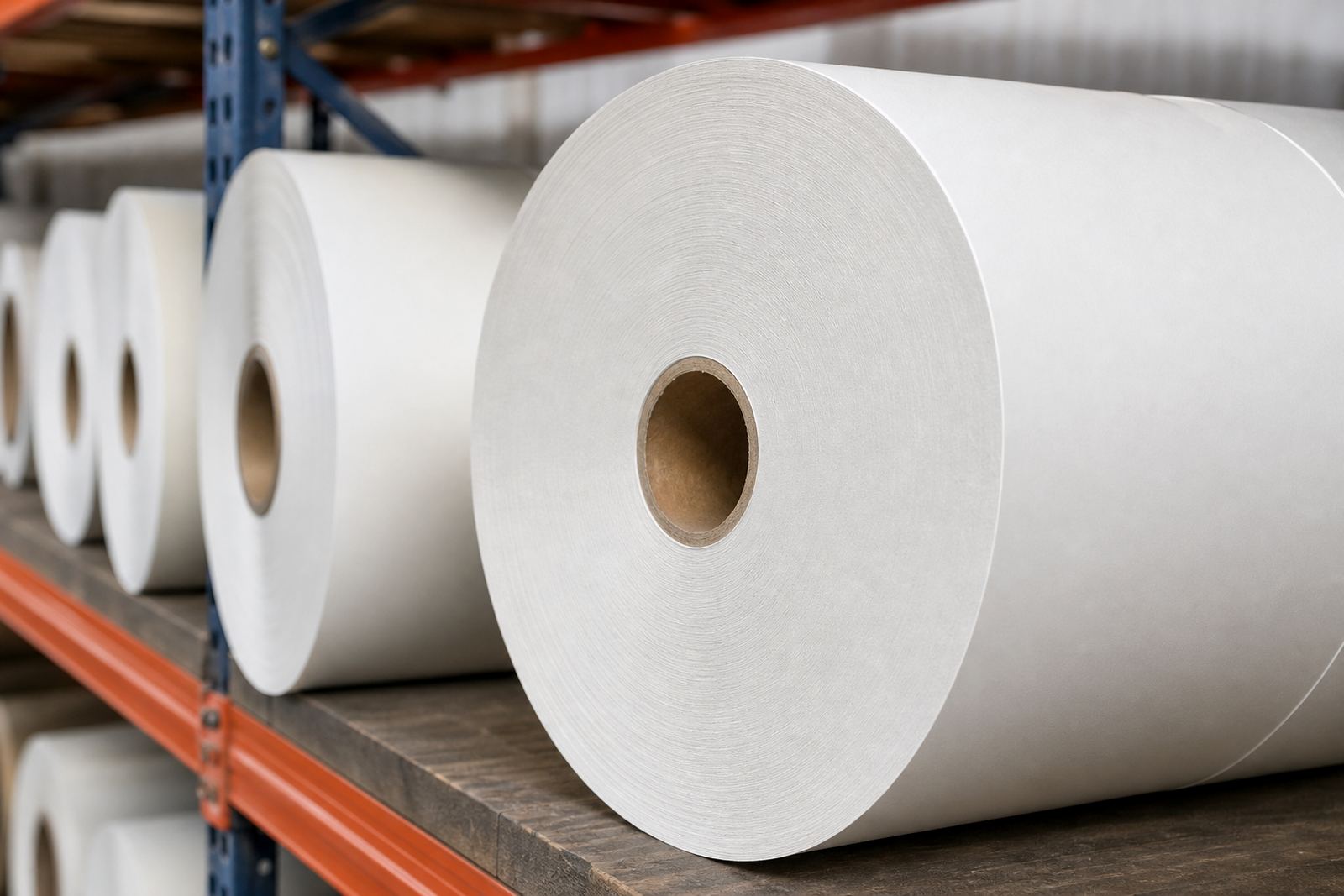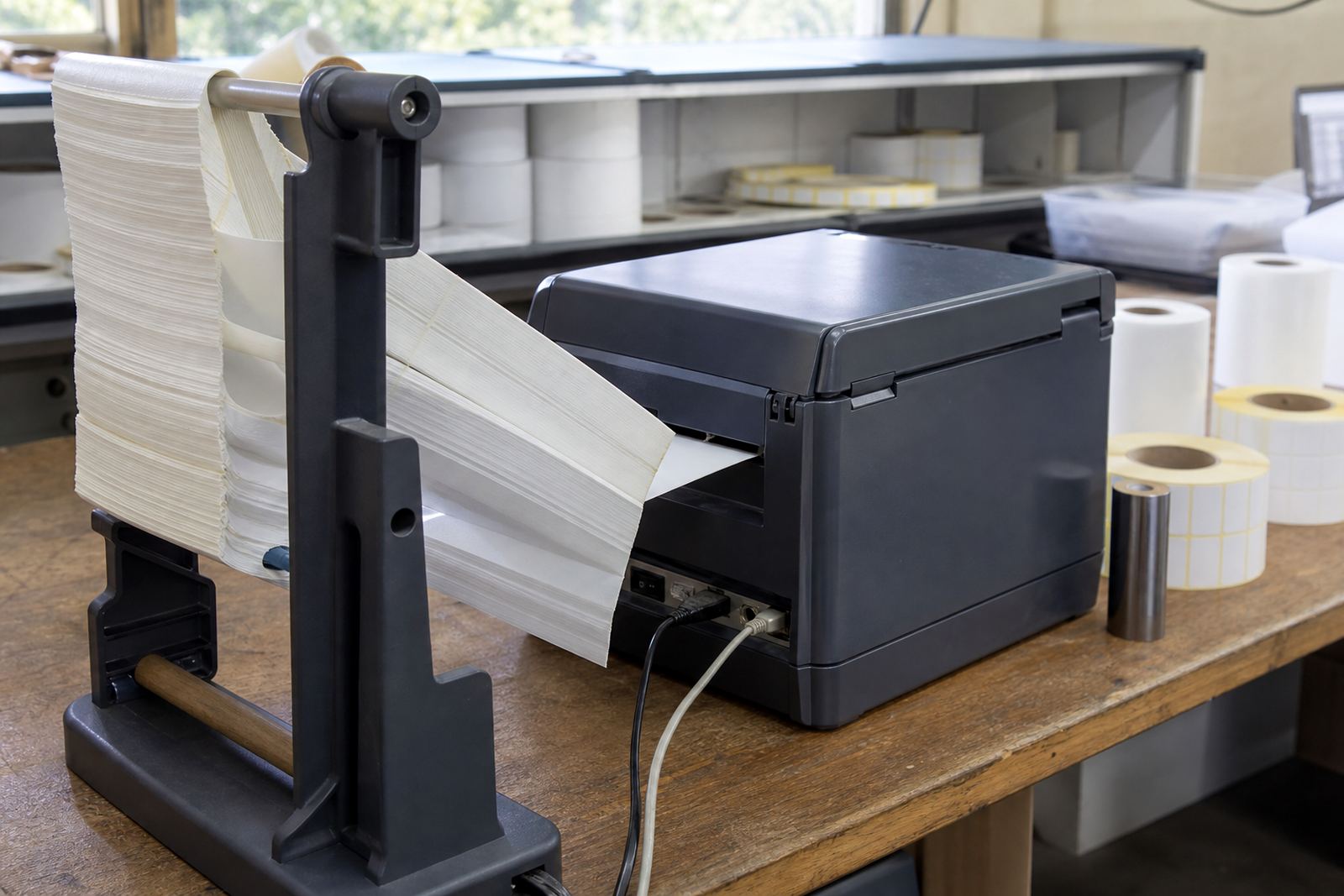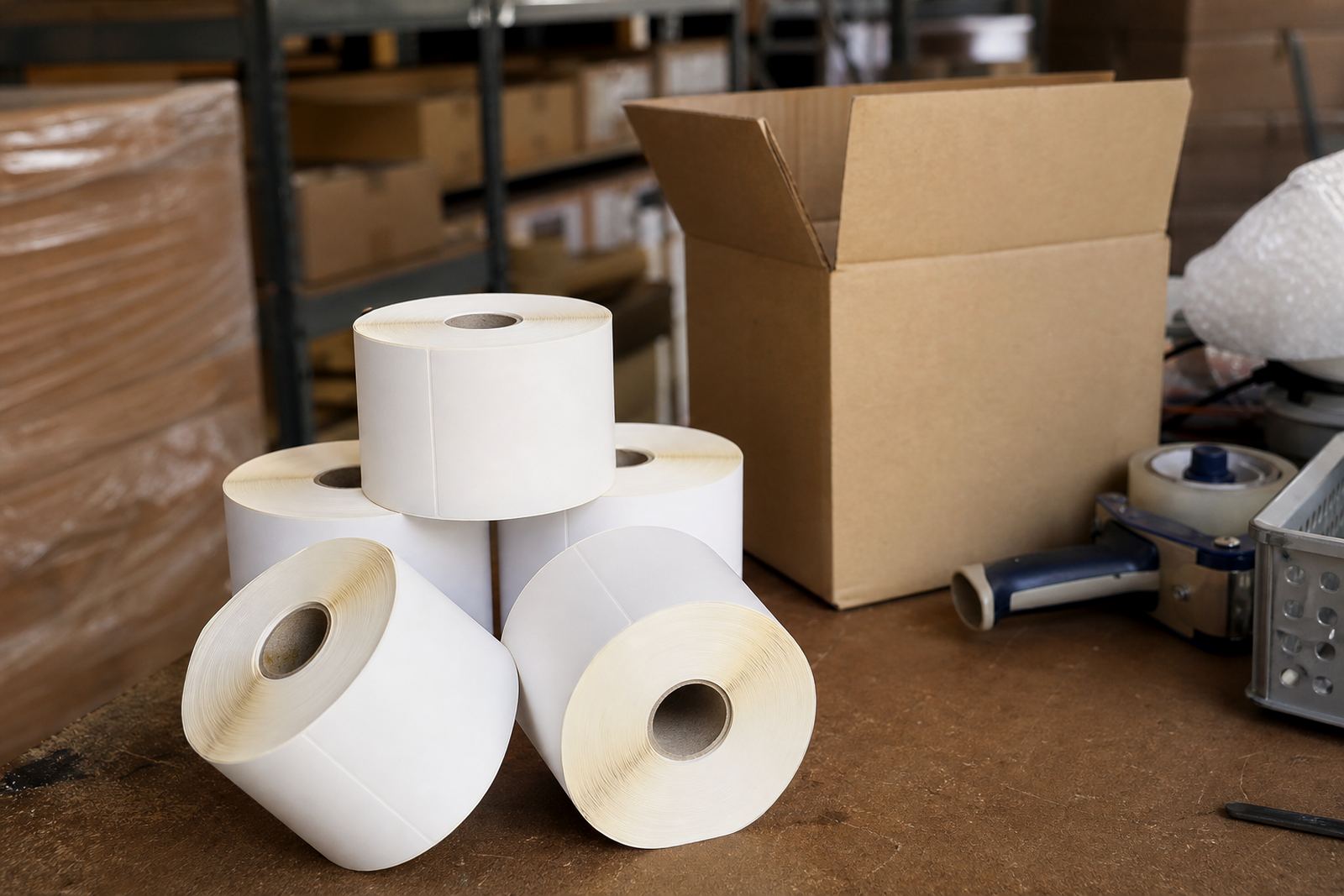
A middle core that fits more than one kind of printer bay
A 40mm core roll sits between the smaller hobby style cores and the larger industrial cores, which makes it a practical choice for light industrial label work and counter printers. In day to day use, that extra core width can help the roll sit more securely on the spindle, with less wobble during long print runs and less strain on the unwind path when labels are being pulled through quickly.
For South African operations that print labels in batches, this size is often chosen for barcode labels, ingredient labels, dispatch stickers and product identifiers.
- Core size: 40mm internal core diameter, matched to the printer spindle or roll holder
- Typical use: light industrial labelling, counter printers, packing stations and small batch runs
- Suitable formats: cut labels, die-cut labels and continuous stock, depending on the printer path
Face stocks and adhesives that behave properly on the shelf
The label face stock, adhesive and liner all matter just as much as the core. For 40mm core rolls, the face stock can be made up in direct thermal paper, thermal transfer paper, vellum, semi-gloss, matte paper or certain synthetic options, depending on the job. If the label must survive handling, cool rooms, moisture or contact with oily packaging, the material choice needs to be selected carefully, not just by size.
Adhesives are usually chosen for how the label will behave on cartons, punnets, bottles, sleeves or shipping packaging. A permanent adhesive is suited to most shipping and product labels, while removable or high tack options are better where the label must lift cleanly or hold on difficult surfaces. On Durban and coastal routes, humidity can change how a label grips, so the adhesive match needs proper attention when the stock will travel or sit in warm stores.
- Paper face stocks for general purpose printing, retail tickets and carton labels
- Synthetic face stocks for better moisture resistance and scuff handling
- Adhesives available for permanent, removable and high tack applications
- Liner options can be selected to suit dispensing speed and printer feed stability
Direct thermal or thermal transfer, knowing which way the roll is meant to print
Direct thermal labels are used when the printer prints by heat onto the coated label face, usually without a ribbon. They suit short to medium life labels such as parcel labels, weigh station stickers, dispatch notes and some retail labels. Thermal transfer labels use a ribbon between the printhead and the label face, which gives better resistance to rubbing, light and handling, especially on products that stay in circulation for longer.
With 40mm core rolls, the printing method must match the stock build. Some printers take one format better than the other, and the wrong combination can cause poor darkness, lift at the edges or poor sensor reading. We check the roll width, outer diameter, unwind direction and core fit so the stock feeds properly and the printer does not jam at the start of a shift. That matters when staff are printing in a hurry and need the roll to load correctly the first time.
- Direct thermal: suited to short life labels and fast moving dispatch work
- Thermal transfer: better for longer lasting labels and more durable marking
- Printer settings may need adjustment for darkness, speed and sensor position
Sizes, wound direction and spindle details that stop wasted stock
40mm core rolls are made in different widths and outer diameters, depending on the label size and the printer bay. A narrow label on a large outer diameter roll may not sit properly in a compact printer, while a wider label with a heavy adhesive can need a tighter rewind and a stronger liner. The working details matter, because an apparently small mismatch can cause wasted stock or interrupted output.
When ordering, it helps to confirm the label size in millimetres, the number of labels across the roll, the roll outer diameter, the core inside diameter, the winding direction and whether the labels are inside wound or outside wound. That is especially useful where the printer reads a gap, black mark or notch sensor. If the roll is reversed or the unwind is wrong, the printer can miss the registration and start pushing out blank gaps.
- Widths can be slitted to suit common benchtop and light industrial printers
- Winding direction must match the printer path and unwind side
- Black mark, gap or continuous sensing should be confirmed before dispatch
- Roll length planning helps reduce changeovers during busy periods
Where 40mm core rolls earn their place on the floor
This size suits packing tables, retail counters, stock rooms and smaller production areas where labels are printed in regular batches but the printer still needs a secure core fit. It is widely used for box labels, barcode labels, shelf labels, expiry labels and logistics labels that move from printing to application in a short time. In Westmead, Pinetown and surrounding industrial areas, the same roll format is often used for contract packing, courier dispatch and food packaging work.
For operations in Johannesburg, Pretoria, Cape Town, Durban and Pietermaritzburg, the right label stock needs to travel well too. If the labels are going into cold chain goods, warm stores, or vehicles moving between depots, the face stock and adhesive must be chosen for that handling route. Municipal waste and packaging rules can also affect how labels are used on cartons and collection packs, especially where traceability or identification is needed at receiving points.
- Packaging rooms that need steady feed on compact printers
- Retail counters printing shelf, price or item identification labels
- Logistics and dispatch teams working with cartons and courier bags
- Manufacturing and light processing lines needing batch marking
Fitting checks before a roll goes onto the printer spindle
Before loading a 40mm core roll, the printer fit should be checked against the spindle size, side guides, sensor location and the roll width. Some printers have tighter bays that prefer a neat outer diameter, while others can take a broader roll if the unwind is clean and the core is true. If the core is too loose or too tight, the roll can bind, drift or rub against the housing.
We also look at whether the stock is intended for a direct thermal printer or a thermal transfer printer, because the wrong stock can waste ribbon, darken unevenly or fade too quickly. Where there is more than one printer model in the building, it helps to test a sample roll first. That saves time on the line and reduces scrap when stock is being loaded in a rush after a shift change or power interruption.
- Check spindle width and the real core inside diameter
- Confirm printer model, sensor type and max roll diameter
- Match unwind direction to the feed path
- Request sample rolls when changing stock or printer type
Ordering details that save time on the next print run
To prepare 40mm core rolls correctly, confirm the exact label width and height, material type, adhesive type, core size, outer diameter, unwind direction and whether the labels are perforated, gapped or continuous. If there is a special release requirement, or the labels must peel off cleanly from cartons or plastic, that should be stated before the roll is slit and wound. The more precise the order, the less chance of receiving a roll that prints fine but behaves badly on the line.
For repeat work, it helps to keep a usage record showing which printer model, ribbon type or label face stock worked best. That makes repeat order planning easier and helps avoid mistakes when one site in Pinetown uses a different printer setup from a warehouse in Cape Town or Johannesburg. The enquiry form on our contact page is the place to send those details, so the stock can be planned to suit the actual job and not just the name of the label.
- Label size in mm, plus label per roll count if known
- Face stock, adhesive type and liner preference
- Printer make/model, core fit and winding direction
- Application site, storage conditions and expected label life
Key facts
| Product name | 40mm Core Rolls |
|---|---|
| Core inside diameter | 40mm |
| Formats available | Direct thermal and thermal transfer |
| Typical face stocks | Paper, semi-gloss, matte and selected synthetic options |
| Common adhesive types | Permanent, removable and high tack |
| Compatibility | Suitable for selected benchtop, counter and light industrial label printers |