Labels that stay put on plant, racking and stock bins
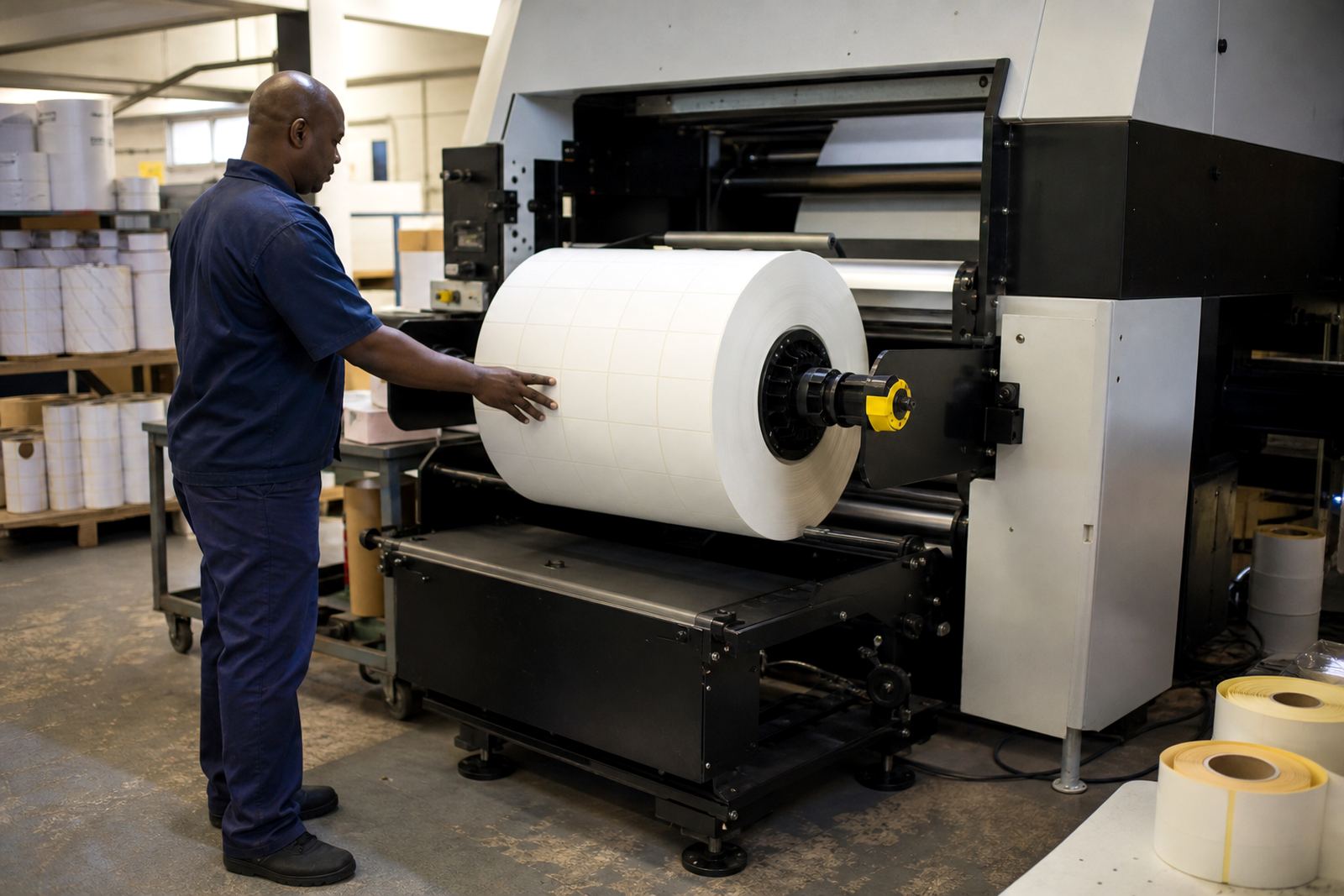
Asset label stock is made for identification work where the label must stay readable through daily handling, cleaning and movement. It is commonly used on tools, computers, shelving, cages, pallets, filing cabinets, metres, warehouse bins and service equipment. In a busy depot or factory, the point is not just to print a code, but to keep that code visible long after the item has been shifted, wiped down or exposed to dust and moisture.
We supply self-adhesive label face stocks in material choices suited to different surfaces and conditions. Paper face stocks suit short to medium life indoor marking, while synthetic face stocks such as polypropylene or polyester are used where extra tear resistance, scuff resistance or moisture resistance is needed. The adhesive can be selected for standard grip, stronger initial tack, or cleaner removal where the asset tag may need to be replaced later on.
- Face stocks for white or coloured asset labels
- Paper or synthetic face material depending on wear and handling
- Permanent, removable or freezer grade adhesive options
- Supplied in roll format for machine application or hand labelling
Size choices that match your printers and filing system
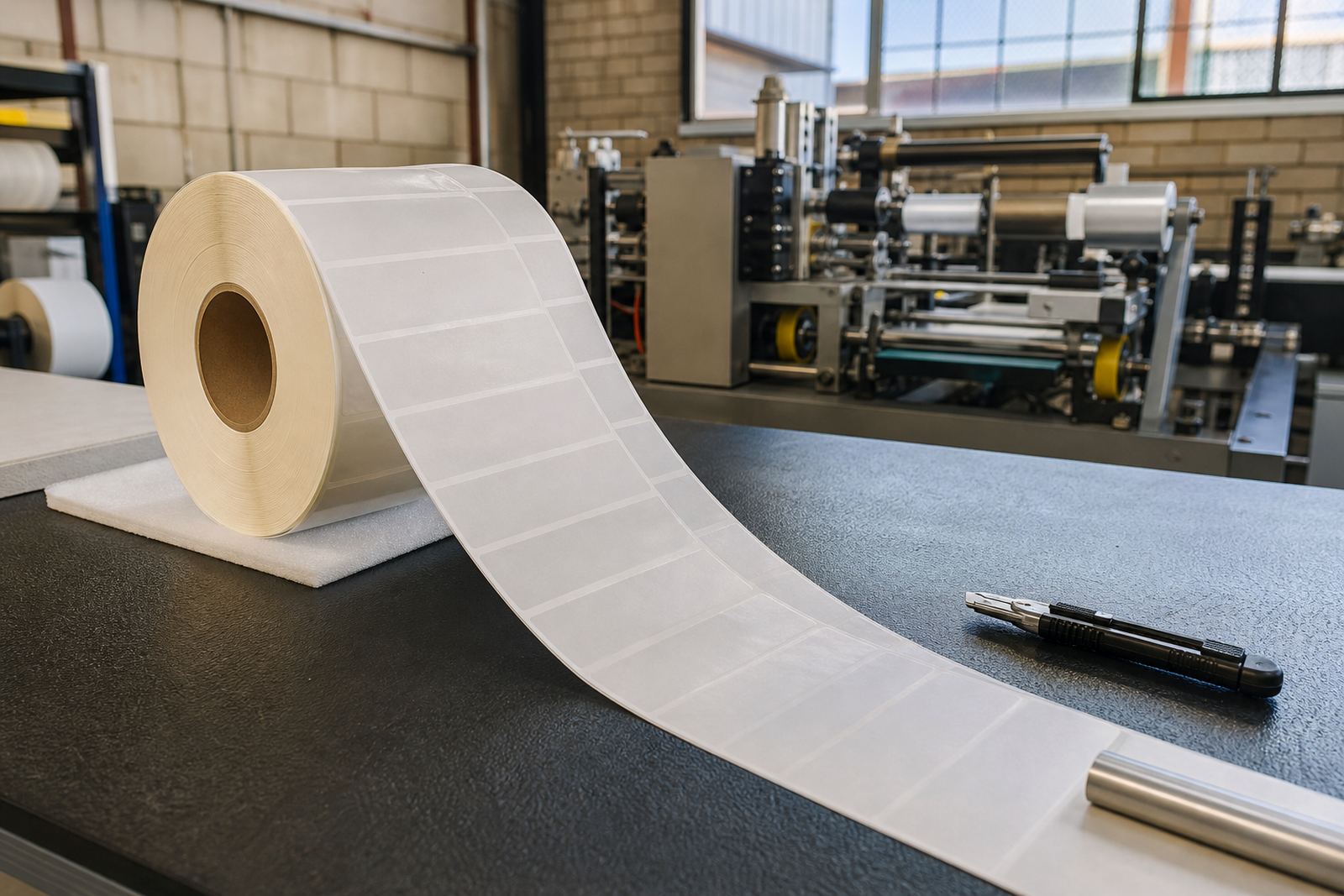
Asset labels are often ordered as rectangles, small squares or narrow strips, depending on the item being marked and the amount of data that must fit on the label. Common finished sizes include 25 x 50 mm, 25 x 75 mm, 50 x 25 mm and 100 x 50 mm, but we also slit rolls to customer widths for less standard applications. Core size matters as much as label size, because the roll must feed properly through the printer and unwind without wobble.
We plan roll length around the printer, the label size and the daily usage rate. Smaller benchtop printers often suit 25 mm or 40 mm core rolls, while larger industrial units may call for a 76 mm core. We also check unwind direction, gap size, notches and sensor marks where needed so the printer reads the stock cleanly. That saves stoppages and wasted labels, especially where label runs are long and the shifts are busy.
- Finished sizes cut to the application
- Core sizes commonly matched to benchtop and industrial printers
- Gap, black mark or continuous stock options
- Roll length planned for daily throughput and changeover time
Direct thermal or thermal transfer for the job at hand
For asset marking, the print method must suit the life of the label. Direct thermal stock is used where the printhead heats the label face directly and no ribbon is required. It is practical for short term internal use, dispatch, temporary shelf labels and fast moving stock rooms. Thermal transfer stock uses a ribbon to transfer the print onto the label face, which gives better resistance to heat, abrasion and handling. That makes it a better fit for plant rooms, logistics stores and equipment that is touched often.
Printer compatibility is checked from the outset, because a clean print depends on the right combination of stock, ribbon and machine settings. Some label printers are better suited to benchtop runs, while others handle larger rolls and higher volumes. We can match face stock and adhesive to your existing printer model details, the platen width and the core size, so the stock feeds straight and prints stay sharp.
- Direct thermal for short term marking and fast turnover
- Thermal transfer for longer life and tougher handling
- Ribbon type matched to the label face stock
- Printer fit checks for benchtop and industrial units
Where asset labels earn their keep
This product suits warehouses, workshops, distribution centres, stores, offices, maintenance teams and production areas. In Durban and other coastal areas, humidity can affect some papers and adhesives, so a synthetic face stock or stronger adhesive is often the better pick. In Gauteng, where stock movement is quick and racking is dense, clear labels on shelves and bins help with picking accuracy and stock control. For municipal or internal asset registers, labels need to stay legible enough for audits and issue records, not just the first day they are printed.
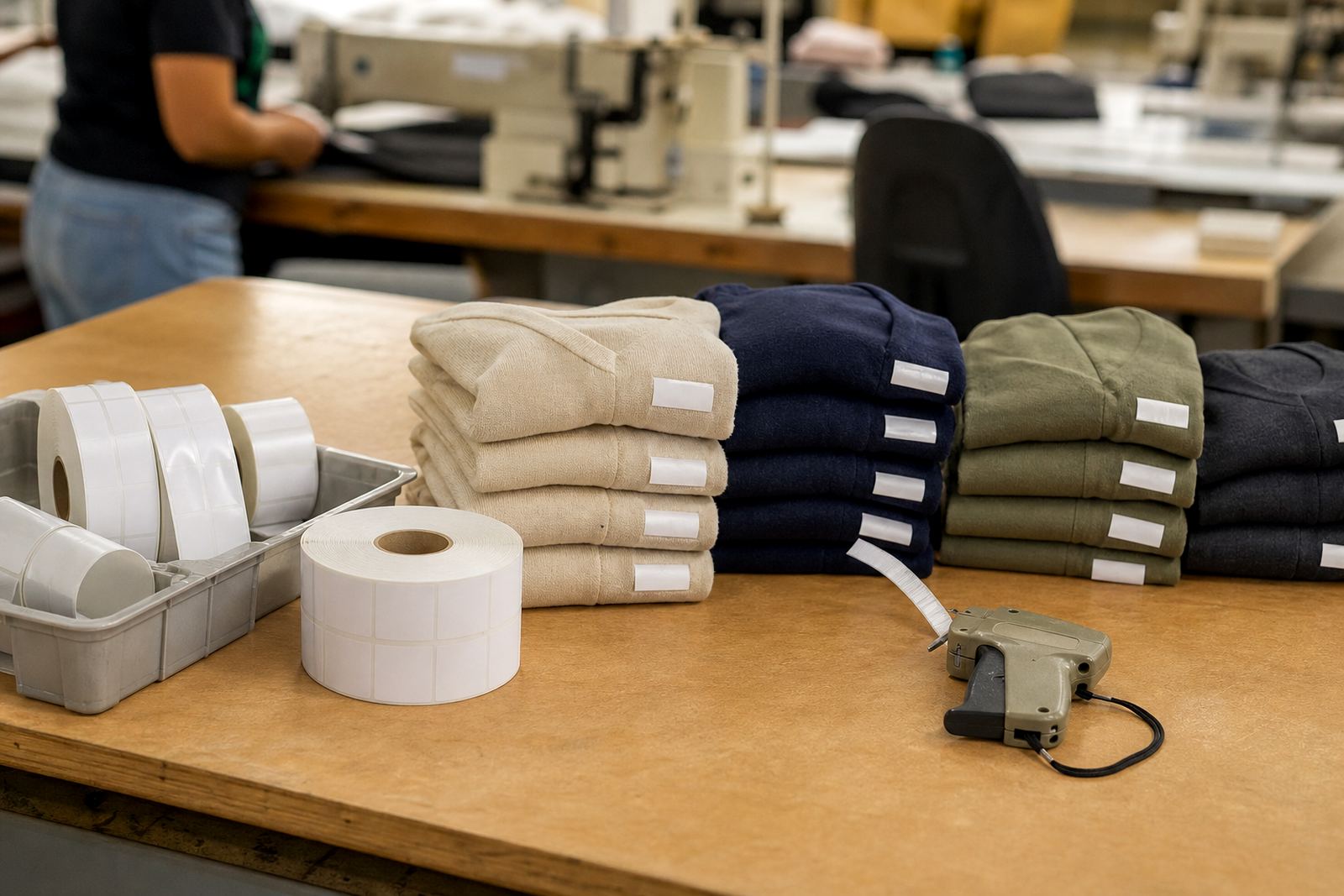
Asset label stock also helps with shelf marking, cage identification, tool control and equipment numbering. It is useful where a company wants to reduce lost items, improve location tracking and keep internal stock systems neat.
- Warehouses and distribution depots
- Maintenance stores and workshop equipment
- Office furniture, files and IT assets
- Shelves, bins, cages and stock locations
Fitting and handling that keeps the label readable
Self-adhesive asset labels should be applied to a clean, dry surface with enough pressure to bond properly. Dust, oil, powder coat residue and damp surfaces can weaken the grip, so surface preparation matters. On painted metal, glass, plastic and laminated panels, the surface finish affects the adhesive choice. A rough or low-energy surface often needs a more suitable adhesive than a smooth board or plastic casing. If the item has a curve or recessed area, the label size and flexibility need to suit the shape or the edges can lift.
Where labels are being applied by hand, it helps to keep the release liner under control and avoid touching the adhesive face. Rewind direction and roll wind can also influence handling on applicators and in label dispensers. We can supply sample rolls when a client wants to test a few stock options first, especially where the label must sit neatly on smaller items or a slightly irregular surface.
- Apply to clean, dry and grease-free surfaces
- Check curve, texture and coating before final ordering
- Use sample rolls for trial fitting and print tests
- Confirm wind direction for dispensers or applicators
Care, storage and the small details to confirm before we cut
Label stock lasts better when it is kept in a cool, dry storeroom away from direct sunlight, high heat and damp floors. Rolls should be kept in their packaging until needed and stacked so they do not deform. On sites near the coast, moisture can affect carton edges and adhesive performance if stock is left open. If the label face is synthetic, the print will usually hold up better in demanding conditions, but the ribbon and printer setup still need to be correct for the job.
Before ordering, the useful details are straightforward: finished label size, face stock type, adhesive requirement, core size, roll length, printer make or model, quantity needed and whether you need direct thermal or thermal transfer. If the labels are for internal stock locations, equipment tags or shelf marking, say how long the label must last and what it will face in daily use. That lets us plan the slit width, winding direction and dispatch packing properly. It also avoids the stop-start of reprints, which nobody wants when the stock room is already under pressure. A quick note on use gives us the right stock first time, not the sort of label that peels early or prints poorly.
- Keep in a dry place, away from direct heat and sun
- Keep rolls sealed until use to protect adhesive and face stock
- Confirm size, core, unwind, printer and print method
- Tell us the surface type and the expected wear level
Key facts
| Product type | Self-adhesive asset label stock and thermal label rolls |
|---|---|
| Face stock | Paper, polypropylene or polyester, depending on use |
| Adhesives | Permanent, removable or stronger tack options |
| Print methods | Direct thermal or thermal transfer |
| Core sizes | Commonly 25 mm, 40 mm or 76 mm core options |
| Format | Finished labels, slit rolls or custom wound rolls |