The kind of white film that bends with the pack
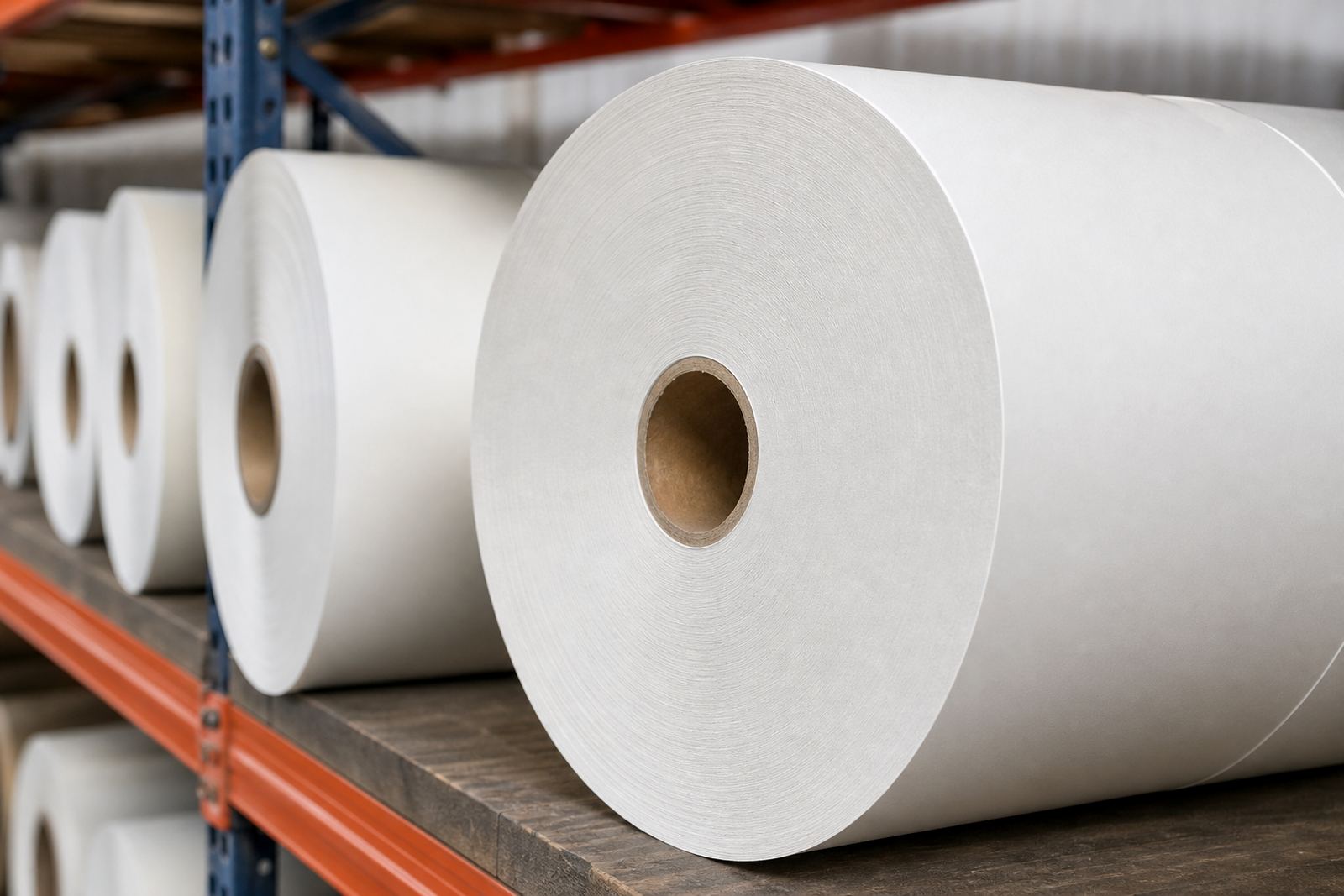
White polyethylene face stock is a soft, conformable film used for pressure-sensitive labels on containers that flex in the hand or during filling, packing and transport. It is commonly chosen when paper labels would wrinkle, split or lift on curved surfaces, especially on toiletries, detergents, food tubs and chemical packs. The film gives a clean white base for branding, barcodes and variable data, while keeping the label workable on rounded or uneven packaging.
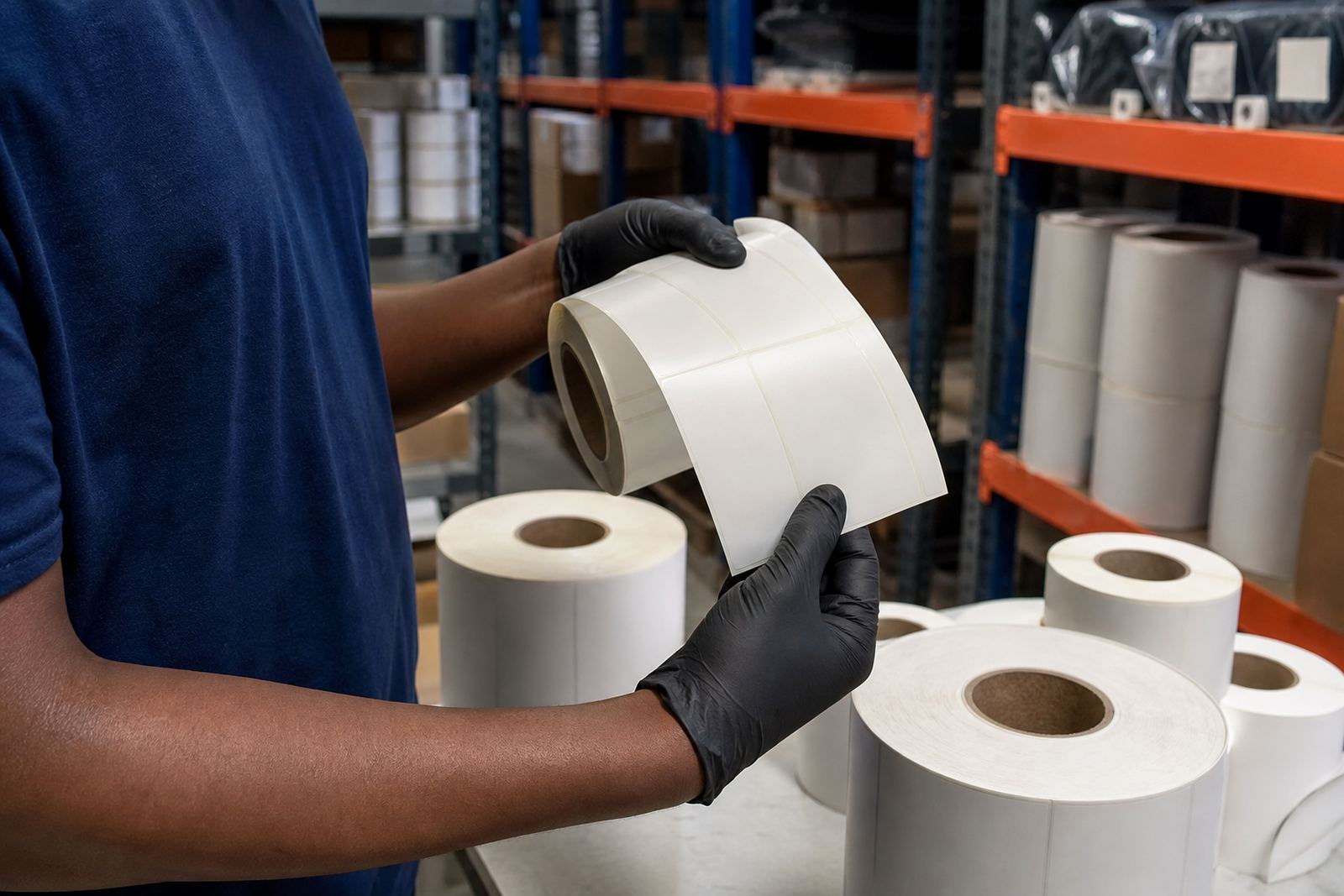
In trade terms, this stock is selected for its stretch and grip rather than stiffness. It can be paired with permanent or removable adhesives depending on the pack and the end use, and it is supplied with a release liner suitable for label converting, dispensing and thermal printing setups where a face stock needs to feed neatly through the line.
- Flexible face stock for curved and squeezable containers
- Suitable for pressure-sensitive self-adhesive labels
- Available with different adhesive builds for packaging requirements
- Can be slit, rewound and roll-formed to your printer spec
Where white polyethylene earns its keep
This material works well on products that are picked up, squeezed, stacked or stored in damp spaces. In Durban and other coastal areas, the extra humidity can make weaker label stocks lift at the corners, so a conformable film is often the better call. It is also useful where a pack has a radius, seam or slight texture and the label needs to sit flat enough for barcode reading and product presentation.
Typical uses include household containers, personal care items, cleaning products, ready-to-use food packs, sampler tubs and some industrial bottles. On logistics packs, the stock can be supplied for warning labels, contents identification or handling information where the label must stay legible after repeated handling. For cold rooms, chill chains and wipe-down surfaces, adhesive choice matters just as much as the film itself.
- Curved bottles and squeezable containers
- Refrigerated or moisture-prone product packs
- Retail shelf-ready packaging and repack units
- Logistics labels that need a neat finish on shaped packs
Roll build, core size and printer fit
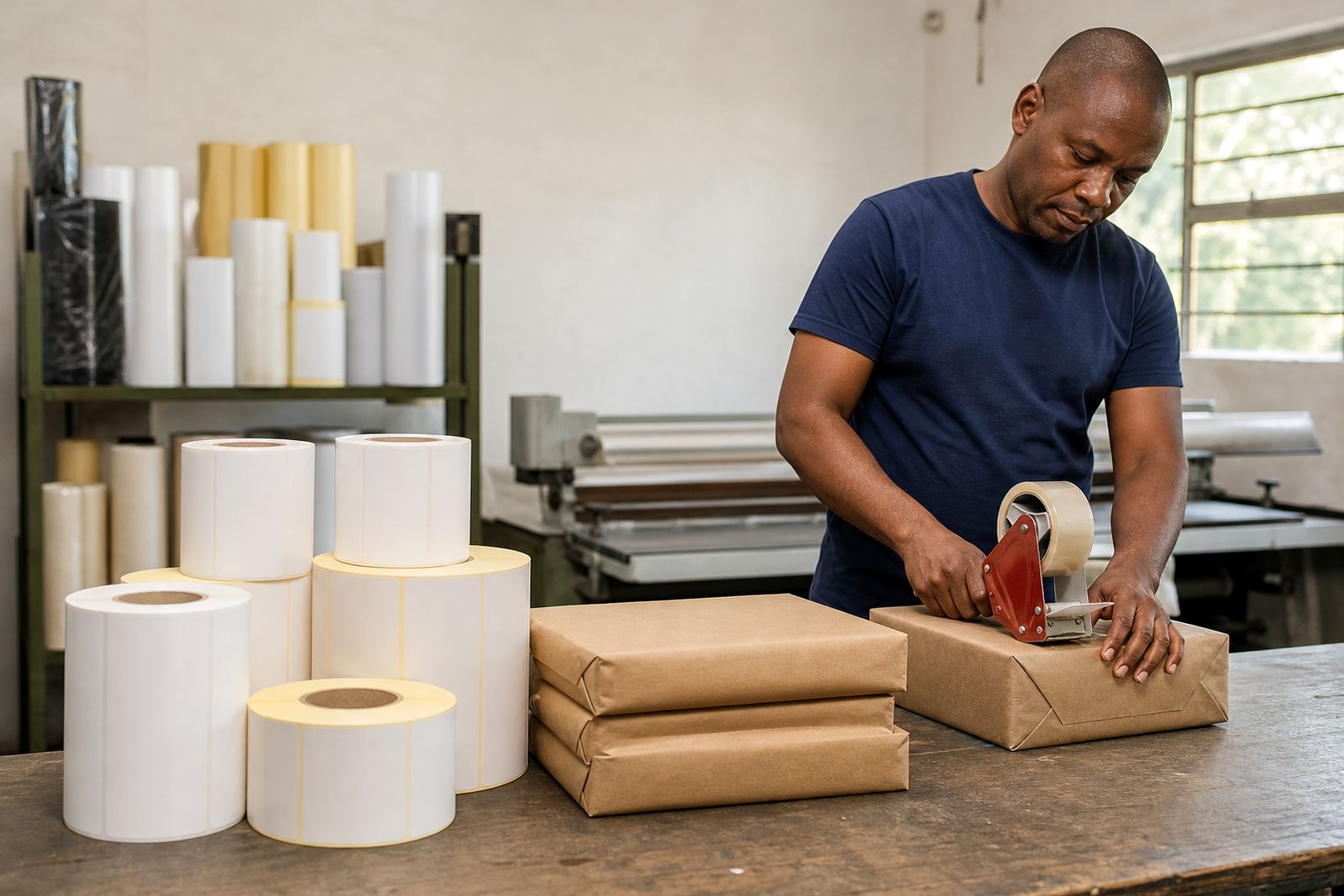
White polyethylene can be converted into a wide range of roll sizes, depending on the printer or applicator being used. Core size, outer diameter, unwind direction and gap or black mark format all need to line up with the machine. Common core sizes are 25 mm, 38 mm and 76 mm, with 76 mm often used for industrial thermal transfer printers and larger runs. Smaller benchtop units usually need a narrower roll build and a tighter outer diameter.
We plan roll length around your label size, printer speed and ribbon use where thermal transfer is involved. If your operation uses direct thermal, the facestock choice, heat settings and storage conditions need careful checking because the print system behaves differently from thermal transfer. If you are fitting labels onto an automatic applicator, the roll winding direction and core tolerance matter, sometimes more than the label size itself.
- Core sizes: 25 mm, 38 mm, 76 mm
- Roll length matched to printer speed and label dimensions
- Direct thermal and thermal transfer options can be planned separately
- Unwind direction and winding tension set to suit your machine
Adhesive, liner and face stock choices that change the result
The face stock is only one part of the build. White polyethylene can be supplied with permanent adhesive for long hold, removable adhesive for temporary application, or speciality adhesive selection for cold, damp or difficult surfaces. The liner can be chosen for clean release and stable feeding through conversion and print lines. If the surface is oily, slightly curved or exposed to refrigeration, the adhesive has to match the pack or the label will lift at the edges.
For clients in manufacturing, retail and logistics, we often review the full label structure before production starts. That includes the facestock weight, adhesive coat, release liner thickness and whether the rolls should be supplied as single labels or as continuous web for overprinting. A label that looks right on paper can behave differently on a real container, so the sample roll stage saves trouble later, no doubt.
- Permanent, removable and application-specific adhesive options
- Release liner selected for smooth stripping and feeding
- Suitable for pressure-sensitive label construction
- Sample rolls can be supplied for printer and pack testing
How the label is fitted and handled in the plant
Installation depends on whether you are feeding labels through a benchtop printer, an industrial thermal transfer unit or an applicator on the pack line. The label must unwind cleanly, track straight and hold a stable print area so barcodes and batch details remain readable. If the roll is over-wound or under-wound for your printer, feeding issues can start very quickly. That is why core sizing and unwind direction are checked before dispatch.
For packs that are filled hot, chilled or wiped down after packing, allow the adhesive to develop properly before full handling. On squeezable containers, the label should be applied with enough pressure to seat the film without trapping air. On textured or moulded packs, a flat hand roller or application pad can help press the film into the surface and improve hold.
Care, storage and the bits worth checking before ordering
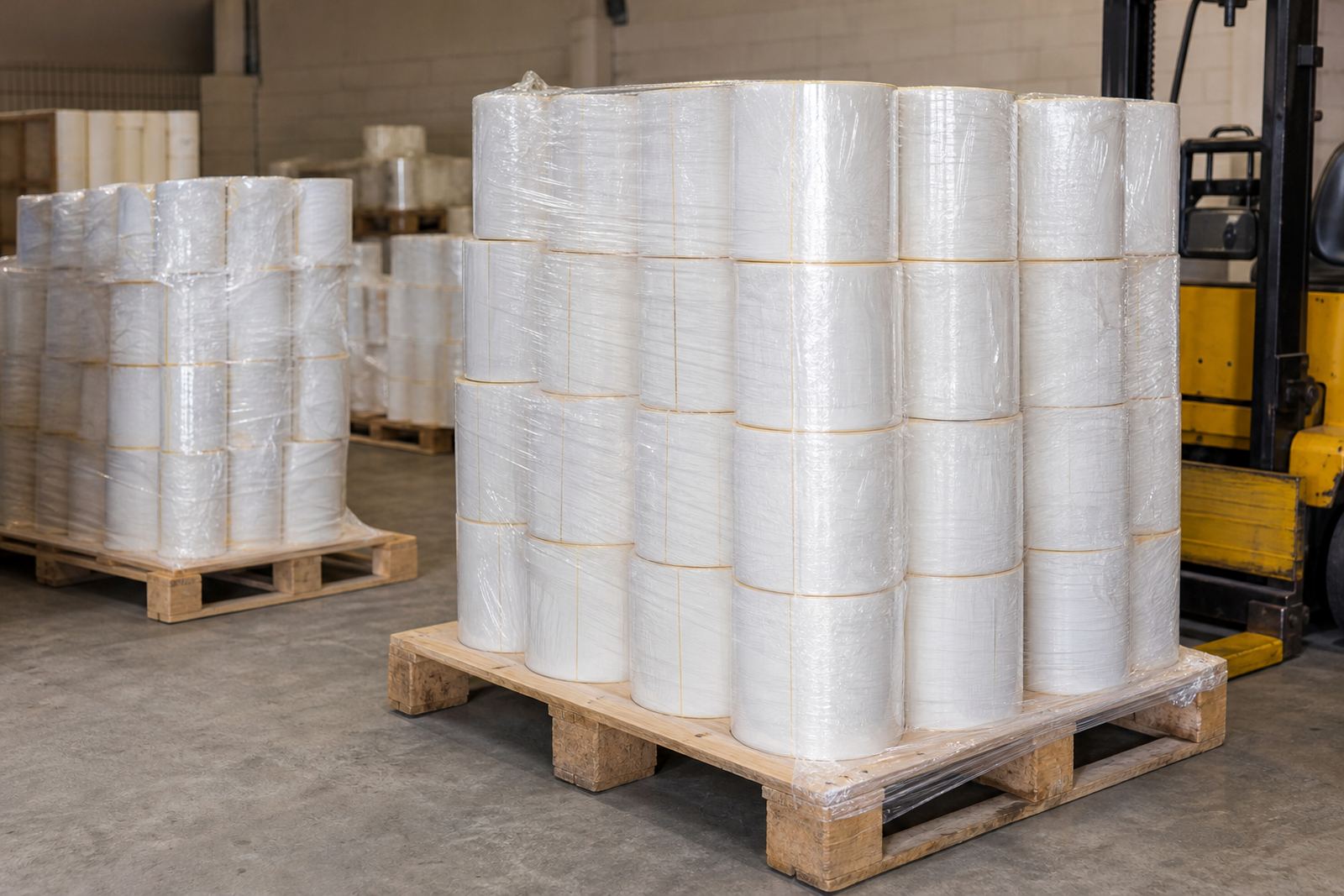
White polyethylene should be stored flat or in a clean carton away from dust, direct sun and excessive heat. Keep rolls in a dry space, because moisture and temperature swings can affect adhesive performance and print quality. If you are using direct thermal, protect printed labels from heat, abrasion and long exposure to strong sunlight. For thermal transfer, choose the correct ribbon type for the finish you need and the printer speed you are running.
Before placing an order, confirm the label dimensions, core size, roll direction, adhesive type, facestock finish and the printer model or applicator spec. It also helps to note whether the labels are going onto HDPE, PET, glass, coated cartons or a slightly textured surface. If the pack is refrigerated, squeezed often or exposed to cleaning chemicals, say so at the start so the build can be matched properly.
- Label width, height and corner shape
- Core size, outer diameter and unwind direction
- Printer model, applicator type and thermal method
- Pack material, surface texture and storage conditions
Key facts
| Product | White polyethylene self-adhesive label face stock |
|---|---|
| Material | Flexible white film stock for conformable labelling |
| Common core sizes | 25 mm, 38 mm, 76 mm |
| Print methods | Direct thermal or thermal transfer, depending on the setup |
| Adhesives | Permanent, removable or application-specific options |
| Typical uses | Curved bottles, squeezable containers, tubs, retail packs and logistics labels |